
A couch ramp must meet a soft, sometimes rounded sofa edge and stay steady while the dog walks in both directions. Measuring only the sofa height misses those details. This guide explains how to inspect the top support, floor run, grip surface, and approach path before introducing a dog to a new ramp. Dogs with arthritis or a history of injury may need a veterinarian to recommend the right assistance; see our veterinary disclaimer.
Measure the landing your dog actually uses
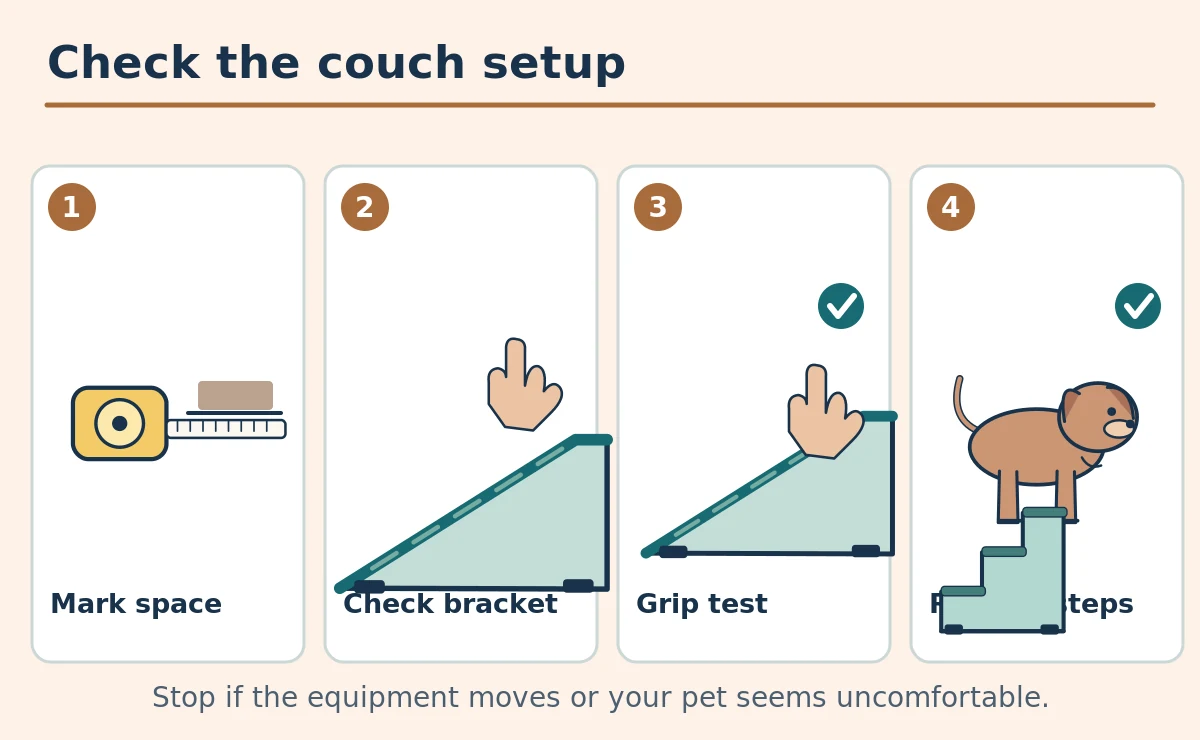
Measure from the floor to the part of the sofa where the dog usually places front paws, allowing for a cushion that compresses when touched. Do not use the height of the sofa back or arm. Look at the depth and shape of the seat cushion edge. A ramp that stops against a soft lip can shift as the cushion moves. Check whether the chosen model requires a firm furniture frame or a dedicated anchor. Never improvise an anchor by pushing a loose board under a cushion.
Plan the run before ordering
Mark the proposed ramp footprint on the floor with painter’s tape. Include room at the base for your dog to turn and room along the side for people to pass. A short ramp rising to a high couch will be steep even if a seller calls it compact. A longer ramp offers a gentler approach but may block a doorway or hallway. Measure both alternatives in the real room and consider whether the couch can move to make a safer path.
Check top contact against the sofa structure
The ramp’s upper bracket or lip must rest against a support the maker approves. Rounded cushions are not the same as rigid frames. Press lightly on the empty ramp at the top, middle, and lower end to spot rocking or sliding. Watch for a top edge that lifts when the bottom is loaded. Protective pads should prevent scratches without making the connection slippery. A visually flush join is not enough if the furniture or ramp flexes under gentle movement.

Choose a continuous, grippy walking surface
Dogs need traction for stopping midway and descending slowly. Compare textured rubber, tightly attached carpet, and cleated designs by how they feel under a gentle paw press. Oversized ridges can be uncomfortable, while loose carpet edges can catch nails. Check whether the walking surface remains grippy after routine cleaning. Avoid adding a loose towel over the incline, because it can roll underfoot. A secure surface should extend all the way to the top landing.
Leave enough width and edge awareness
Measure your dog’s natural body width plus space for paws to track comfortably without brushing raised rails. A narrow plank may require precise balance, particularly for a large or unsteady dog. Side rails can help define the path, but they do not make a flimsy ramp safe. Observe the dog’s tail and turning behavior near furniture legs. If the ramp forces a sideways step at the landing, adjust the approach rather than encouraging an awkward pivot.
Practice at ground level and a shallow angle
Set the ramp as the manufacturer permits for low-level practice. Reward sniffing the surface, then small voluntary steps with treats or a favorite toy. Keep training sessions short enough to end before frustration. Never pull a leash to haul the dog upward or hold a treat beyond the couch in a way that invites a leap. Train descent as well as ascent. If the dog freezes or rushes off the edge, make the task easier instead of repeating the same attempt.
Place the ramp where people will not trip
A couch ramp can extend into a room farther than expected. Check nearby coffee tables, charging cables, lamps, and swinging doors. Leave a clear human walking route and avoid crossing the ramp with electrical cords. If children play beside the couch, keep the area supervised and explain that the ramp is not a slide or play structure. A non-slip floor mat may help the base only when approved and flat. Fold or remove equipment only after the pet is elsewhere.
Consider foam, wood, and framed designs
Lightweight foam slopes may compress beneath a dog and shift on smooth floors. Rigid wood or framed ramps can feel more stable but may be heavier and harder to move. Look for actual support capacity and the intended furniture attachment, not material labels alone. Some compact ramps use adjustable height slots; verify that both adjustment points engage equally. If the model requires tools, check fasteners periodically. Any creaking, wobbling, or newly exposed screw is a reason to stop and inspect.

Keep a ground-level resting option
A dog should never have to use a ramp to reach its only comfortable bed. Provide a washable floor-level resting space and water nearby. If the dog refuses the incline, leave the alternative available rather than withholding comfort. This is especially helpful when dogs are tired, recovering, or unwilling to walk through a busy living room. A ramp is a convenience and possible accessibility aid, not a requirement to climb onto human furniture.
Clean while preserving traction
Vacuum loose fur from carpeted grip and wipe surfaces according to the manufacturer’s instructions. Do not saturate wooden parts or leave soap residue on rubber tread. Allow the walking surface to dry fully before reuse. Inspect the contact pad and base after moving the couch for cleaning. A ramp that once fitted well may change angle or lose support when furniture legs are shifted. Recheck placement rather than assuming the original setup remains safe.
Respond to discomfort instead of pushing training
A dog that hesitates, yelps, slips, or changes gait may be uncomfortable or frightened. Stop and avoid repeated attempts. Lower the resting area and seek veterinary input if mobility changes are new, painful, or persistent. For some dogs a veterinarian may recommend using ramps, assisted handling, or avoiding elevated furniture altogether. Proper equipment can reduce an avoidable jump, but cannot diagnose or treat a joint problem.
How We Research
We follow the HubPet editorial approach and compared veterinary and animal-welfare recommendations on traction, voluntary training, and safe access with the practical measurements above. Equipment examples are illustrative rather than tests of a specific brand. Manufacturer instructions determine the approved unfolding, contact, and cleaning methods. We separate routine setup advice from medical decisions and recommend veterinary assessment for pain, sudden mobility changes, injury, or recovery needs. This article does not claim that a ramp or stair prevents all falls.
Sources
VCA Animal Hospitals: Accessible home for dogs — guidance on mobility, stable access, and positive introduction.
American Kennel Club: Dog stairs and ramps — guidance on mobility, stable access, and positive introduction.
Canine Arthritis Resources and Education: Lifestyle modifications — guidance on mobility, stable access, and positive introduction.
Follow the ramp maker’s supported-contact instructions. A soft cushion edge alone may compress and allow slipping.
No. Carpet that shifts, curls, or collects slick residue can be unsafe. Inspect attachment and traction before use.
Do not substitute an extremely steep ramp. Consider moving furniture, using a different access route, or providing floor-level rest.
No. Reward voluntary exploration in small steps and let the dog turn away. Pain or reluctance warrants an easier option and veterinary advice.
Cushion compression and furniture motion can alter the contact point. Reevaluate the support system and stop using the ramp if it shifts.