
This article is general information, not veterinary advice. If your pet seems unwell, is in pain or may have eaten something harmful, contact your vet or an animal poison control line right away. Read our vet disclaimer.
How to build trust with a newly adopted dog starts with making daily life predictable and giving the dog control over social contact. Dogs Trust guidance says a rescue dog may need time, quiet, a safe den, and a routine before close interaction feels comfortable.
How to Build Trust With a Newly Adopted Dog: Start With Safety
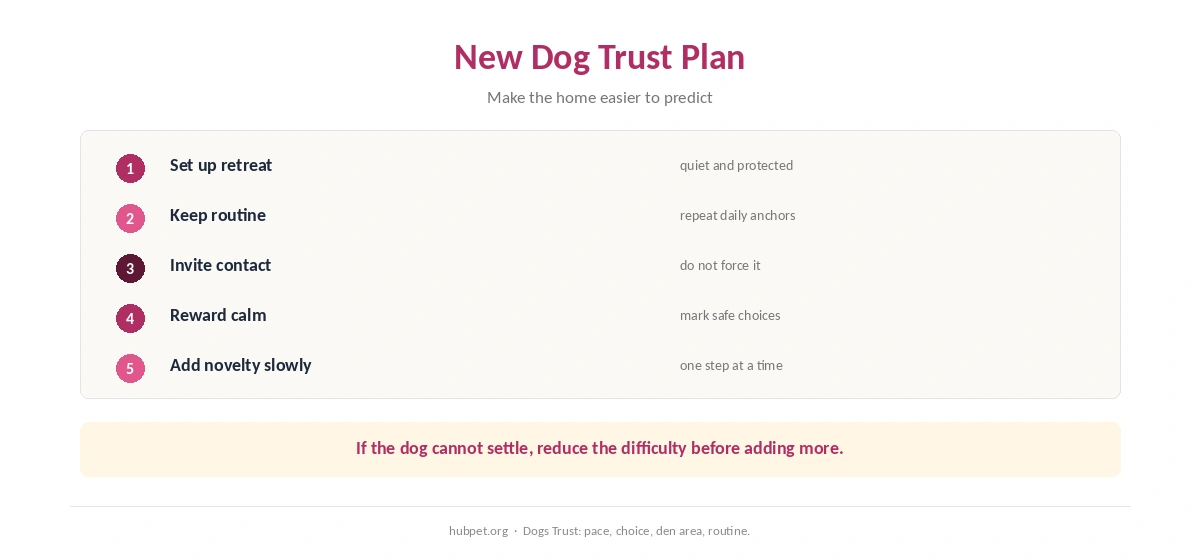
First, prepare the home so the dog does not need to solve every problem at once. A quiet retreat, clear access to water, and a low-traffic resting place create an easier starting point. Our pet-proofing guide can help remove hazards before curiosity increases.
Next, protect the dog’s ability to step away. Dogs Trust advises letting rescue dogs settle at their own pace and avoiding forced fuss or interaction. That same idea appears in our calm-space guide: a retreat only works when people leave the animal undisturbed there.
How to Build Trust With a Newly Adopted Dog Through Predictability
A repeated routine can make the next part of the day easier to predict. The RSPCA recommends a consistent pattern for walks, meals, play, rest, and bedtime when a rescue dog comes home. The practical answer to how to build trust with a newly adopted dog is to make safe outcomes repeatable. Use our predictable-routine framework to keep the pattern simple rather than filling every hour.
- Let the dog approach first. Sit or stand neutrally and allow the dog to choose whether to come closer.
- Reward calm investigation. If the dog sniffs, looks, or approaches comfortably, offer a valued reward without crowding.
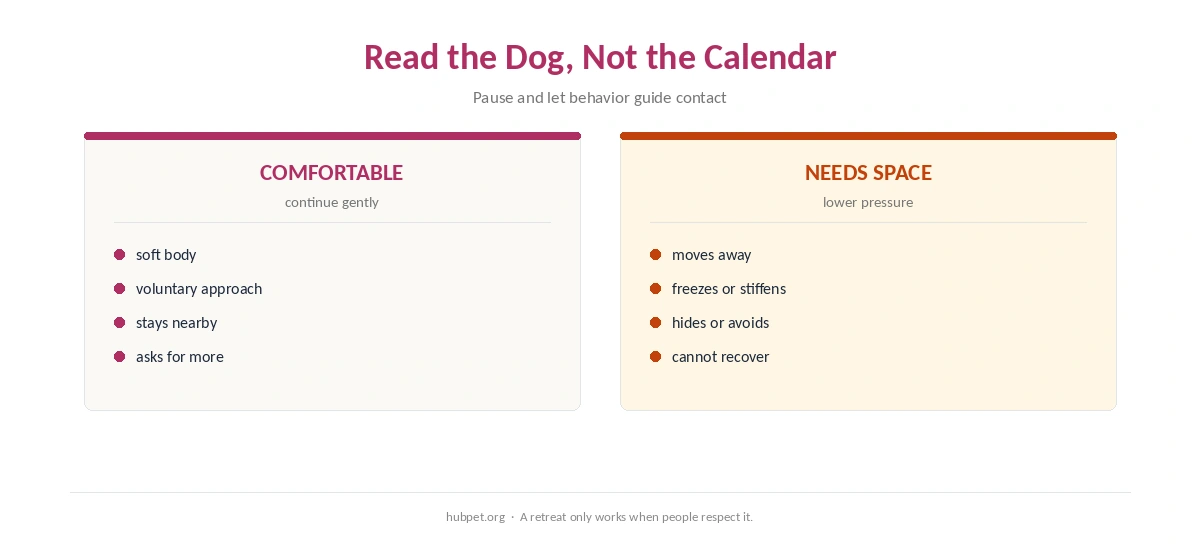
- Pause after brief touch. Stop and see whether the dog asks for more contact instead of continuing automatically.
- Keep early outings familiar. Repeat easy routes before adding busy locations or long social visits.
- Teach tiny skills. Use short reward-based sessions so success comes quickly and pressure stays low.
- Protect rest. Do not wake or follow the dog into the designated retreat just to create interaction.
Reward-based learning also helps trust because the dog can predict what earns good outcomes. AVSAB’s 2021 humane training position recommends reward-based methods for dog training and behavior modification. Start with positive reinforcement and keep practice as short as the dog needs.
If training feels difficult, lower the challenge instead of increasing pressure. Our short-session guide shows how to end before attention drops. The training-mistakes guide also explains why unclear criteria can look like refusal.
Trust Is Built From Choices, Not a Deadline
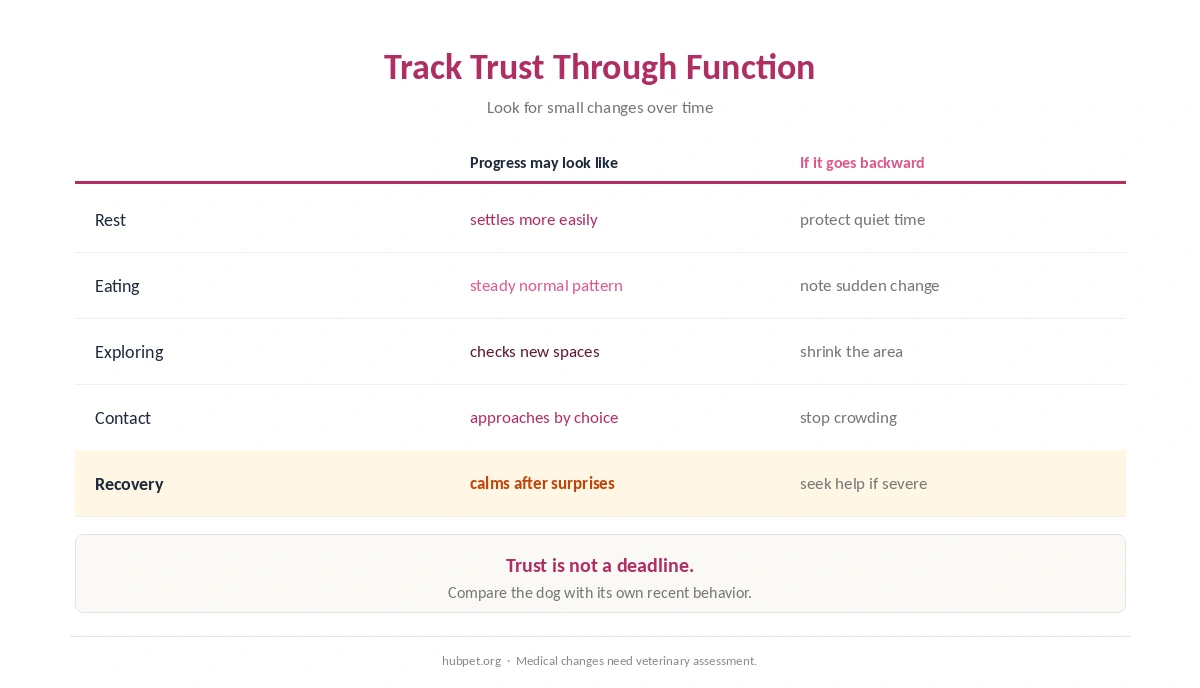
There is no useful universal day when a newly adopted dog should be fully settled. Dogs Trust notes that adult rescue dogs may hide, avoid contact, or need quiet at first. Therefore, compare the dog with its own recent behavior rather than with a fixed calendar or another dog. For a closer look at this part of daily care, see how to Support a Rescue Pet in the First Month.
| What you notice | What it may tell you | Low-pressure response |
|---|---|---|
| The dog rests in the safe area | The retreat may feel useful | Keep it protected from interruptions |
| The dog approaches, then moves away | The dog may want contact in small doses | Pause and let the dog choose again |
| The dog explores more rooms | Confidence may be growing | Expand access gradually |
| The dog startles at visitors | The social step may be too large | Reduce visitor pressure and add distance |
| The dog cannot settle after routine events | Stress may still be high | Simplify the day and seek help if it persists |
New people can be a major jump in difficulty. At this stage, how to build trust with a newly adopted dog still means preserving choice as novelty increases. Before inviting a crowd, use guest-anxiety planning and doorbell practice. Keep the dog’s retreat available throughout the visit.
Other pets also need a gradual plan. For a dog-and-cat household, follow dog-to-cat introductions. For a broader setup, the new-pet introduction checklist helps separate management from direct interaction.
When to Get Professional Help
A sudden behavior change can have a medical cause, so contact a veterinarian if the dog unexpectedly becomes touch-sensitive, stops eating, seems painful, or cannot perform normal activities. Merck Veterinary Manual guidance updated in 2026 says veterinarians should rule out medical contributors when behavior changes. Our pain-signs guide explains what to watch for without diagnosing the cause.
For persistent fear, aggression, or severe distress, ask your veterinarian about a qualified behavior professional. Meanwhile, fearful-dog confidence support focuses on distance, choice, and gradual exposure rather than forcing the dog through a scary situation.
How We Research
HubPet reviewed sources on October 11, 2026. We used Dogs Trust guidance for settling a rescue dog, the RSPCA rescue-dog home guide, the AVSAB humane training position, and Merck Veterinary Manual dog behavior guidance updated in 2026. Read our editorial method on How We Research.
There is no single deadline. Look for gradual changes in resting, exploring, approaching, eating, and recovery after surprises, and adjust the pace to the individual dog.
Offer contact only when the dog approaches comfortably. Pause after brief touch and let the dog decide whether to continue.
Yes, when it is reward-based and easy to leave. Clear cues and predictable rewards can make interactions easier to understand.
Dogs Trust recommends reducing disruption while the dog is first settling, then adding visitors gradually as the dog becomes more comfortable.
Give the dog access to a protected retreat and avoid pulling the dog out. If hiding comes with illness signs, pain, or a persistent inability to function normally, contact a veterinarian.
How to Build Trust With a Newly Adopted Dog: Bottom Line
How to build trust with a newly adopted dog is less about creating intense bonding moments and more about reliable everyday choices. Keep the home safe, preserve rest, use a predictable routine, reward calm behavior, and let the dog control distance. The first-week checklist can help you organize those basics without rushing the relationship.