
How to train a dog to ignore distractions on walks starts somewhere easier than the busy sidewalk. Teach attention and simple reward-based responses in a quiet place, then add one distraction at a time. The AVSAB current position page reaffirms its 2021 recommendation that reward-based methods should be used for dog training and behavior modification.
Dogs Trust uses the same progression in its attention and target-training guidance. The goal is not to make the dog stop noticing the world. Instead, teach the dog to notice something and then choose an easy response you can reward. That foundation also supports loose-leash walking.
How to Train a Dog to Ignore Distractions on Walks: Short Answer
How to train a dog to ignore distractions on walks means controlling difficulty. Start with a name response, hand target, or check-in at home. Then move to a quiet outdoor space. The Dogs Trust name-training guide, accessed 2026 specifically recommends beginning in a calm setting and returning to basics when a new place is harder.
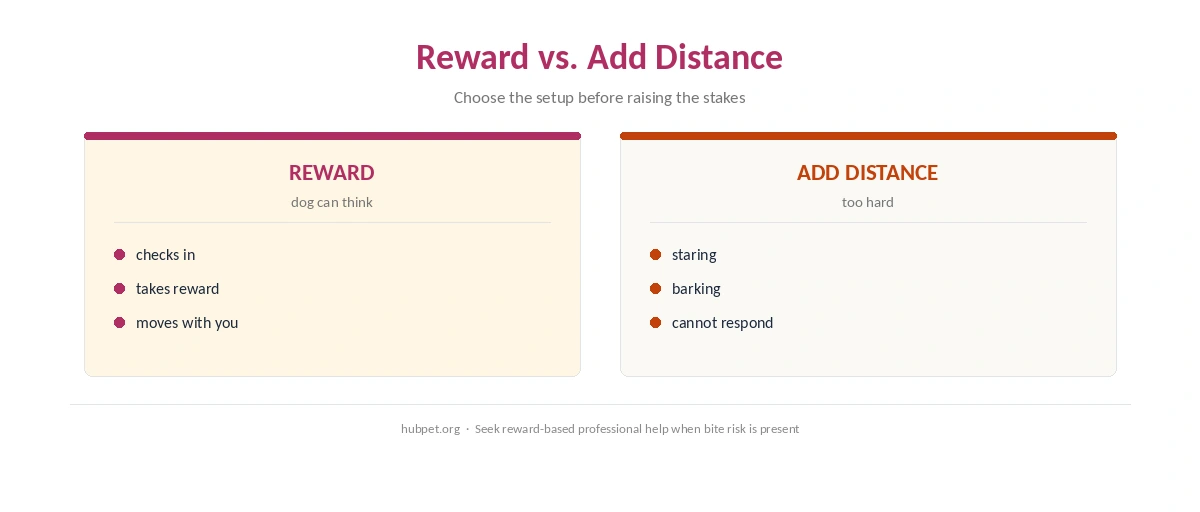
Next, reward the dog before the distraction becomes overwhelming. If the dog cannot eat, orient to you, or perform the easy cue, create more distance. The same idea appears in fear-confidence work and doorbell training: reduce intensity before asking for more.
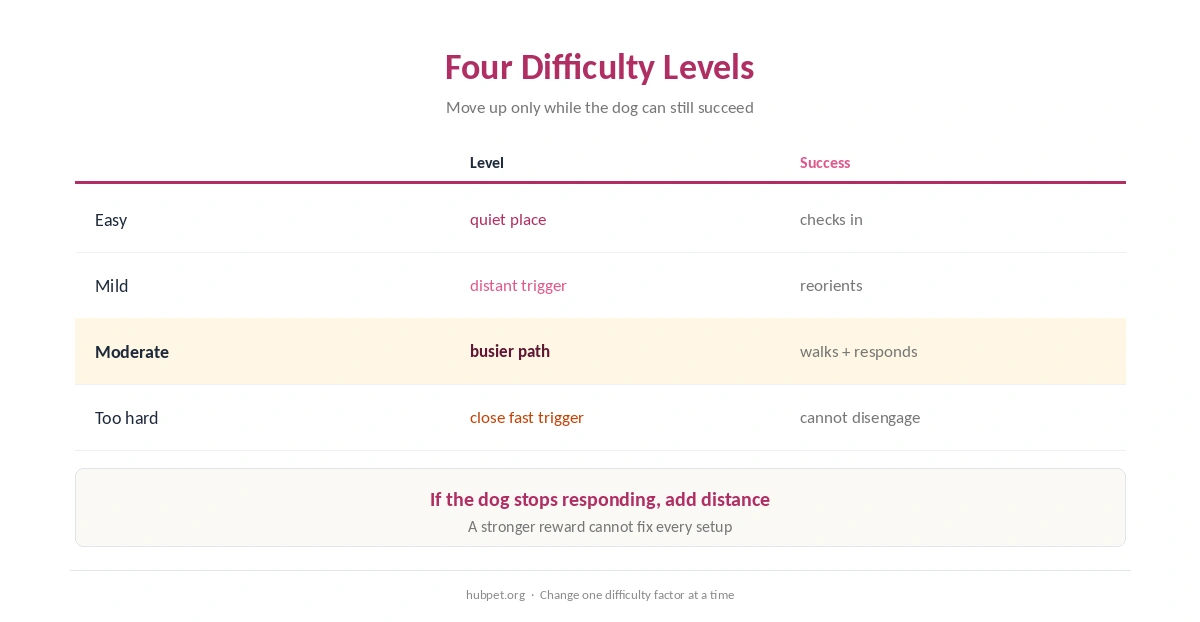
| Level | Example | Your criterion |
|---|---|---|
| Easy | Quiet room or yard | Dog checks in readily |
| Mild | Distant person or calm dog | Dog notices and can reorient |
| Moderate | Busier path with space | Dog can walk and respond |
| Too hard | Close fast trigger | Dog cannot disengage or recover |
How to Train a Dog to Ignore Distractions on Walks Step by Step
First, build a check-in behavior. Say the dog’s name once or wait for a voluntary glance, then reward immediately. The Dogs Trust name-training guide uses repeated reinforcement for looking back at the handler. Meanwhile, basic home training gives a low-distraction place to rehearse the same learning pattern.
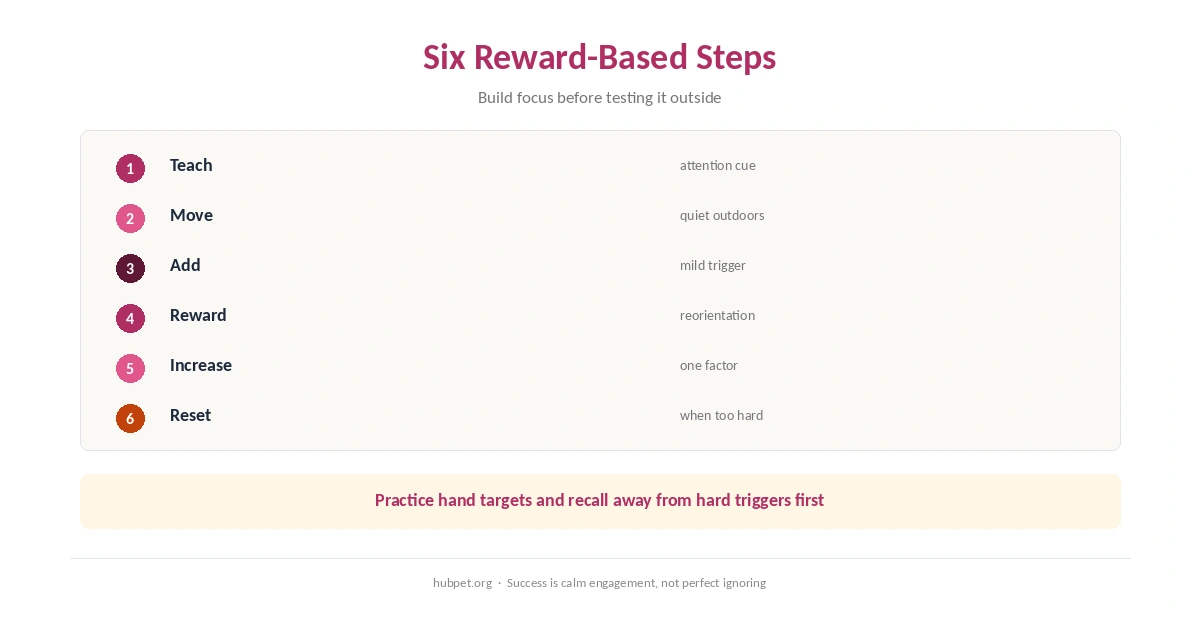
- Practice the attention cue in a quiet room until the dog responds easily.
- Move to a familiar outdoor area and reward voluntary check-ins.
- Add one mild distraction at a distance and reward the dog for reorienting to you.
- Walk parallel to the distraction instead of heading straight toward it.
- Increase difficulty gradually by changing only one factor at a time.
- If the dog stops responding, add distance or return to an easier location.
A hand target can provide another simple job. The Dogs Trust target-training guide, accessed 2026 says targeting can help a dog focus away from distractions. Practice it before the walk, not for the first time beside a squirrel or barking dog.
Recall can also support the plan, but do not rely on it in an unsafe situation before it is strong. Build it separately with reward-based recall training. For objects on the ground, use leave-it training rather than yanking the dog away after it already has the item.
Choose Distance Before a Stronger Reward
A better treat cannot always compensate for a setup that is too hard. Dogs Trust notes that rewards may need to become more valuable in distracting places. However, distance still matters. If the dog is barking, lunging, or frozen on the trigger, use the management in reactive-dog walks first. This is why how to train a dog to ignore distractions on walks begins with distance and setup, not stronger pressure.
For dog-to-dog triggers, the trigger-response guide for delivery drivers shows how context and repeated rehearsal can strengthen a reaction. Training should match the individual pattern rather than forcing every dog to pass every trigger at close range.
For environmental distractions such as people, food, or movement, plan the route so the dog can succeed. The guides to door-trigger barking and waiting at the door show how repeated practice in easier setups can replace chaotic rehearsals.
What Not to Do During Distraction Training
Do not punish the dog for noticing a distraction. Also do not drag the dog closer to “get used to it.” AVSAB 2021 supports reward-based training and warns that aversive methods carry welfare risks. Training should teach a response, not add fear or conflict.
Likewise, do not ask for a long stay when the dog can barely look away from the trigger. Break the skill into smaller pieces. The stay-training guide and wait-for-food guide both show why duration and difficulty should grow gradually.
When to Get Professional Help
Get qualified reward-based help if distractions routinely trigger snapping, attempts to bite, redirected biting, or reactions that are unsafe to manage. Use distance and avoid close exposure while a professional builds a behavior plan.
If ordinary distractions are manageable but the dog struggles only in one difficult setting, return to easier practice rather than labeling the dog stubborn. The positive-reinforcement guide and redirection guide provide the same principle: make the desired choice clear and worth repeating.
How We Research
HubPet reviewed these sources on October 11, 2026: the AVSAB position statements page, the Dogs Trust name-training guide, and the Dogs Trust target-training guide. Read more about our research process.
Teach attention in a quiet place, then add mild distractions at a distance and reward the dog for reorienting to you.
Increase distance or move to an easier setting. The current setup is probably too difficult for useful learning.
No. Use reward-based training, lower the difficulty, and teach a clear alternative response.
Yes. A practiced hand target can give the dog a simple rewarded action when a manageable distraction appears.
Get qualified reward-based help when reactions are unsafe, involve bite risk, or remain unmanageable despite distance and easier practice.
The Bottom Line on How to Train a Dog to Ignore Distractions on Walks
How to train a dog to ignore distractions on walks is really about teaching reorientation and choosing the right difficulty. Build attention first, add distractions gradually, reward successful choices, and create distance when the dog cannot respond. Reward-based practice should replace punishment, not compete with it.