
How to help a dog stay calm when the doorbell rings is a training problem best solved before real visitors arrive. Start with a quiet version of the sound, reward the behavior you want, and increase difficulty only while the dog can still respond. The Dogs Trust visitor-training guide, accessed 2026 uses this gradual approach and recommends rewarding calm responses.
The goal is not to suppress barking through intimidation. Instead, teach a predictable job such as going to a mat, then rehearse that job around a low-intensity doorbell. This matches the AVSAB Humane Dog Training Position Statement, 2021 and reaffirmed on its current position page, which supports reward-based methods for training and behavior change.
How to Help a Dog Stay Calm When the Doorbell Rings: Short Answer
How to help a dog stay calm when the doorbell rings starts with management. First, reduce surprise practice by asking household members to text before entering when possible. Then use mat-settle training so the dog already knows where to go before the bell becomes part of the lesson. A useful companion training page is how to Train a Dog to Settle During Guest Visits.
Next, separate the sound from the visitor. Play a very quiet bell sound, mark calm behavior, and reward. If the dog rushes, barks hard, or cannot take the reward, make the sound easier. This same principle appears in confidence-building for fearful dogs and reward-based redirection: change the setup before asking for more self-control. A useful companion training page is how to Prevent Overexcitement During Play.
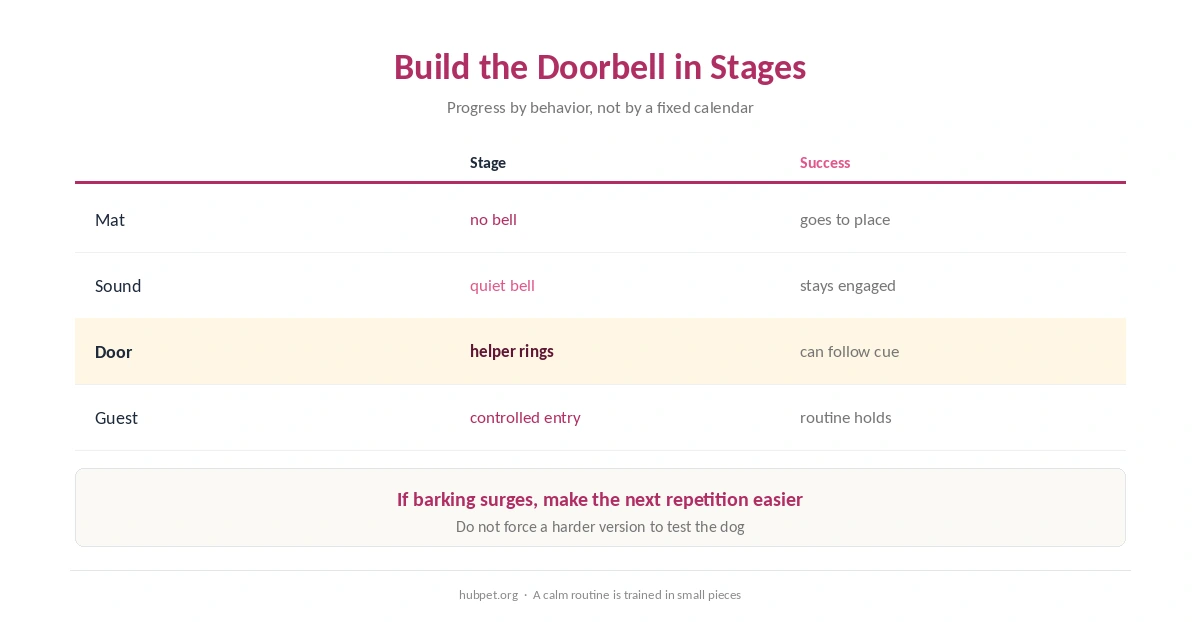
| Stage | Practice | Success looks like |
|---|---|---|
| Foundation | Mat cue without the bell | Dog moves to the mat readily |
| Quiet sound | Low-volume bell or knock | Dog notices and can stay engaged |
| Real door | Helper rings once | Dog can follow the mat cue |
| Visitor entry | Guest enters after dog settles | Dog remains manageable behind the plan |
How to Help a Dog Stay Calm When the Doorbell Rings Step by Step
Before training, set up a station away from the front door. A bed, mat, or gated area can work if the dog already feels comfortable there. Use the same location each time. Predictability from predictable routines can make the sequence easier to learn.
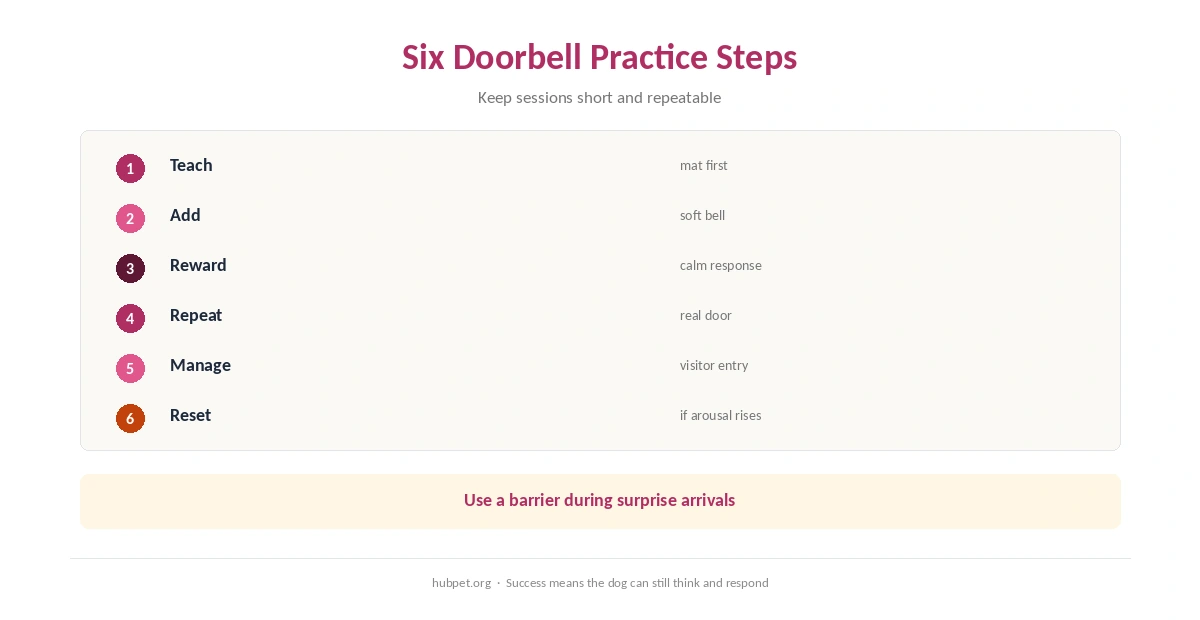
- Practice going to the mat when nothing is happening. Reward the dog for arriving and staying briefly.
- Add a soft knock or doorbell recording. Reward the dog while the sound stays easy enough for calm behavior.
- Gradually vary the volume. If barking surges, lower the intensity instead of repeating the loud sound.
- Ask a helper to ring the real bell once. Cue the mat and reward there.
- Let the helper enter only after the dog can stay within the plan. Use a gate or closed door when needed.
- Repeat short sessions. End before the dog becomes frustrated or overexcited.
Keep the visitor routine separate from greeting practice. Some dogs do better when a guest sits down before the dog enters the room. Others need more distance. The earlier guide on reducing pet anxiety around guests explains how to preserve space and choice while people settle in.
Do not wait for a full barking episode and then try to overpower it with a cue. In practice, the better moment is before arousal peaks. The quiet-cue guide can help with brief pauses, while the doorbell plan should change the trigger-response pattern itself.
Management Makes Doorbell Training Easier
Real-life repetitions can undo careful practice if every ring becomes a sprint to the door. Therefore, use temporary management during training. A note for deliveries, a muted smart bell, or a barrier can reduce surprise rehearsals. The article on why dogs react to delivery drivers explains why repeated door events can become a strong pattern. In practice, how to help a dog stay calm when the doorbell rings also means preventing surprise rehearsals while the new routine is still fragile.
Also meet the dog’s basic needs before planned visitor practice. A dog that is already restless may struggle to settle. Use a play-and-rest balance and controlled indoor activities rather than trying to exhaust the dog immediately before the session.
Rewards should be easy to deliver and valuable to that dog. However, avoid practicing around a food bowl or prized item if the dog guards resources. In that situation, use the management principles in the resource-guarding guide and seek qualified help for any bite risk.
What Not to Do at the Door
Do not use fear, physical force, or a dominance contest to stop the response. AVSAB 2021 says reward-based training should be used for common skills and behavior problems. The background in the dominance-theory explainer shows why social-rank stories are a poor basis for household training.
Likewise, do not demand a long stay before the dog understands the mat routine. Build duration in small pieces. Skills such as waiting briefly for food work best when the criterion is clear and attainable, and the same learning principle applies here.
When to Get Professional Help
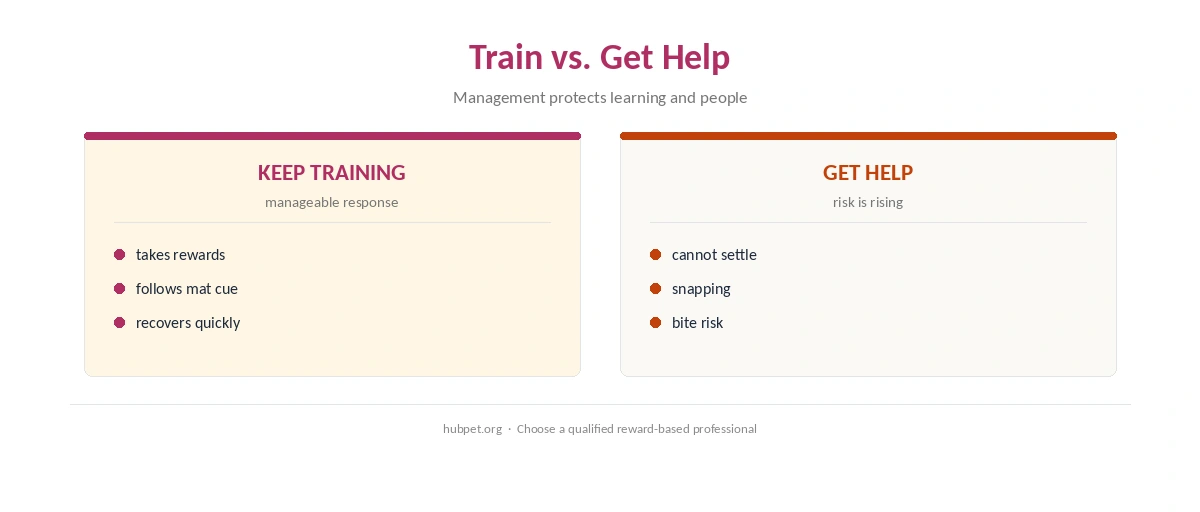
Get help from a qualified reward-based trainer or behavior professional if the dog cannot stay below a high level of arousal even at very low trigger intensity. Also get help if door events involve snapping, attempts to bite, or behavior that puts visitors at risk. Management should come first while a tailored plan is built.
If the dog can learn calmly in other settings but falls apart only at the door, bring a short video and a written trigger log to the professional. Meanwhile, keep practicing easy foundation skills such as leave-it training away from the doorway so learning sessions remain successful.
How We Research
HubPet reviewed these sources on October 11, 2026: the Dogs Trust visitor-training guide and the AVSAB position statements page, which identifies the 2021 Humane Dog Training statement as its current position. Read more about our research process.
Reduce the trigger intensity, reward calm behavior, and teach a predictable alternative such as going to a mat.
Use management first. A barrier or separate room can prevent the dog from rehearsing a chaotic greeting while training progresses.
Yes. A recording lets you start quietly and increase difficulty only when the dog can remain engaged.
Keep them short enough that the dog can still succeed. Stop before repeated barking or frustration takes over.
Use secure separation and get help from a qualified reward-based behavior professional rather than testing the dog with more visitors.
The Bottom Line on How to Help a Dog Stay Calm When the Doorbell Rings
How to help a dog stay calm when the doorbell rings is mostly about rehearsal quality. Teach the mat first, add the sound gradually, reward the response you want, and use barriers during real arrivals. If the dog cannot cope at low intensity or people are at risk, stop testing the situation and get qualified help.