
This article is general information, not veterinary advice. If your pet seems unwell, is in pain or may have eaten something harmful, contact your vet or an animal poison control line right away. Read our vet disclaimer.
How to support a shy cat starts with safety, choice, and predictable interaction rather than forced contact. The FelineVMA guidance on setting up the environment for success, accessed in 2026 says cats need safe hiding and climbing options, separated resources, and positive, predictable human interaction. It also advises introducing unfamiliar sights, sounds, and smells gradually when possible.
Shyness can reflect temperament, limited social experience, a stressful change, or fear in a specific context. Therefore, do not judge progress by how quickly a cat accepts petting. Instead, watch whether the cat eats normally, explores more, plays, rests in the open, and chooses to approach. The guide to recognizing stress in cats can help you read the whole pattern. A useful companion behavior page is why Cats Hate Water.
How to Support a Shy Cat: Build Safety Before Sociability
A shy cat needs places where nobody reaches in after them. Provide a quiet retreat, a covered hiding option, and vertical space that the cat can access without crossing a busy route. The FelineVMA 2025 indoor-cat position statement lists a safe place, separated resources, play opportunities, predictable social interaction, and respect for feline senses as core environmental needs.
For a newly arrived cat, begin with the same low-pressure setup used in the first-week cat checklist and helping a pet adjust to a new home. Keep food, water, litter, scratching, rest, and hiding options easy to find. Meanwhile, avoid moving the cat from a chosen hiding place just to encourage interaction. For a closer look at this part of daily care, see how to Help a Newly Adopted Cat Feel Safe at Home.
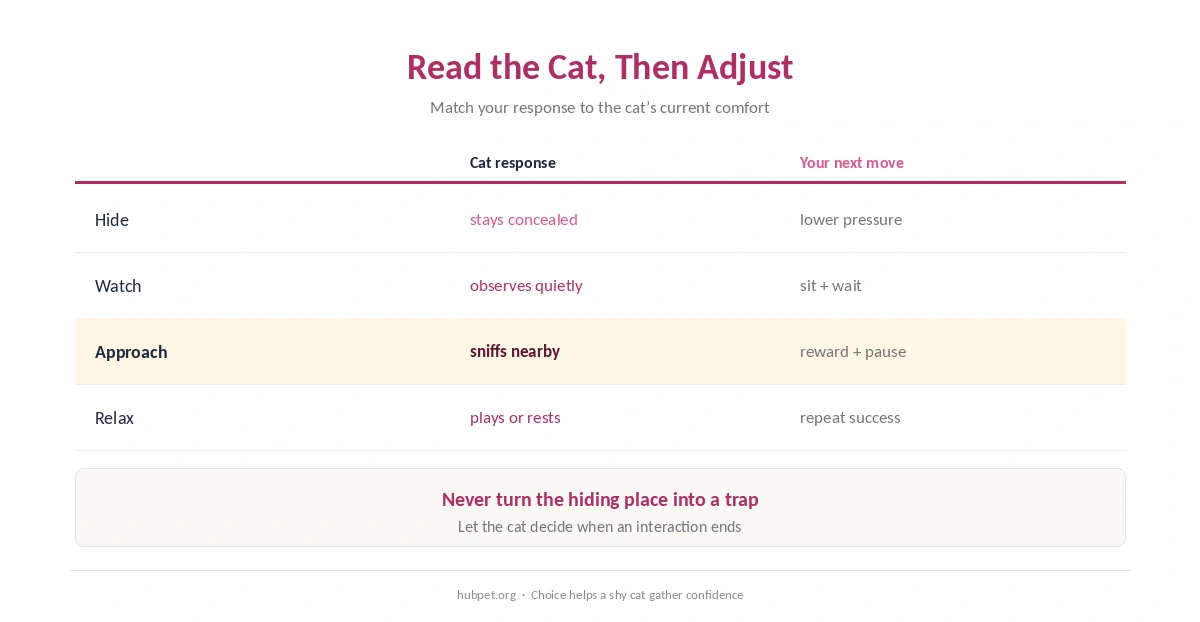
| What the cat does | What you do | Why it helps |
|---|---|---|
| Stays hidden but eats and uses the litter box | Keep the room quiet and visit briefly | The cat can gather information without added pressure |
| Watches from a perch or doorway | Sit sideways and stay still | A calm, non-direct posture gives the cat more control |
| Approaches, sniffs, then leaves | Let the cat leave | Retreat remains safe, so approaching does not become a trap |
| Plays or takes a reward nearby | Repeat at the same distance | Successful repetitions build a predictable pattern |
How to Support a Shy Cat With Predictable, Cat-Led Interaction
How to support a shy cat also means letting the cat control the start and end of contact. The FelineVMA 2026 respectful-handling statement says choice and a sense of control can reduce feline distress. In the home, that means offering a hand to sniff, using slow movements, and stopping before the cat feels trapped.
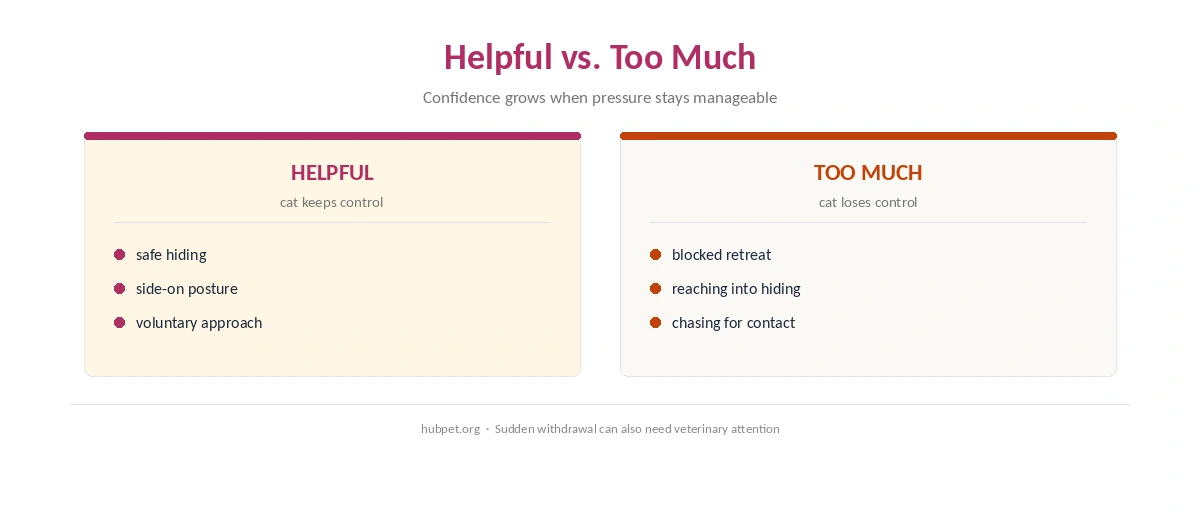
Use rewards the cat actually values. Some cats choose food, while others prefer play or social contact. The indoor-cat stimulation guide and toy-rotation guide offer low-pressure ways to create positive activity nearby. However, do not lure the cat so close that taking the reward leaves no comfortable escape route.
In practice, how to support a shy cat often means creating small routines around your presence. For example, enter the room, sit in the same place, toss a reward away from you, and leave after a short calm visit. In addition, let the cat use safe climbing spaces and a calm retreat during social practice. A shy cat often needs more control, not more intensity.
- Start at the distance where the cat can remain relaxed enough to eat, play, groom, or rest.
- Turn your body slightly sideways and avoid looming over the cat.
- Offer a preferred reward, then pause instead of immediately reaching to touch.
- Let the cat retreat without following, blocking, or pulling the cat back.
- Repeat short successful interactions before changing distance, duration, or number of people.

When Shyness May Need Veterinary or Behavior Help
A gradual personality does not automatically mean a problem. However, sudden hiding or withdrawal deserves more attention. AAHA feline-anxiety guidance, accessed in 2026, notes that changes in routine and behavior can signal distress and recommends veterinary discussion when a cat becomes more withdrawn or lethargic. HubPet also explains why sudden hiding matters and how to reduce stress at home.
Contact your veterinarian when the change is new, marked, or paired with appetite, litter-box, grooming, mobility, or sleep changes. Review signs a pet may be in pain rather than assuming the cat simply became antisocial. For ongoing fear that sharply limits normal life, ask about a qualified feline behavior professional.
If the shy cat shares the home with other animals, check whether resource access feels safe. The multi-pet household checklist and guide to helping pets get along can help you separate resting, feeding, play, and retreat options. In addition, the cat-social-needs guide explains why more company is not automatically the answer to shyness.
How We Research
HubPet reviewed these sources on October 11, 2026. We used the FelineVMA environment guidance, the FelineVMA 2025 indoor-cat position statement, and the FelineVMA 2026 respectful-handling statement. Our research process favors cat-led interaction, environmental choice, and gradual positive exposure over forced social contact.
Give the cat a secure hiding place, easy access to essential resources, and brief predictable visits. Let the cat choose when to come out rather than removing the hiding option.
Do not reach into a retreat and force touch. Offer calm presence nearby and let the cat approach when ready.
Yes, if the cat values food and can take it without feeling trapped. Place or toss the reward so the cat can still retreat comfortably.
There is no universal schedule. Judge progress by relaxed behavior and voluntary exploration, not by a deadline.
Contact a veterinarian for sudden withdrawal, marked behavior change, reduced eating, litter-box changes, mobility changes, or other signs that could reflect illness or pain.
The Bottom Line on How to Support a Shy Cat
How to support a shy cat is less about making the cat social and more about making interaction safe. Protect hiding and vertical space, keep resources easy to reach, use short predictable visits, reward voluntary approach, and preserve retreat. If shyness appears suddenly or normal daily behavior changes, involve your veterinarian.