
This article is general information, not veterinary advice. If your pet seems unwell, is in pain or may have eaten something harmful, contact your vet or an animal poison control line right away. Read our vet disclaimer.
How to comfort a pet after a vet visit starts with a quiet return home, familiar routines, and following the clinic’s instructions exactly. AAHA guidance published in 2026 recommends a calm recovery space after appointments, while Merck’s 2025 emergency aftercare guidance says discharge instructions should guide activity, food, water, wound care, and medication when those apply.
After a routine appointment, some pets want contact and others want distance. Give both options instead of insisting on cuddling or play. How to comfort a pet after a vet visit depends on what that individual chooses once home. For pets that already use a retreat, the setup in the calm-space guide can make the transition more predictable.
How to Comfort a Pet After a Vet Visit Right Away
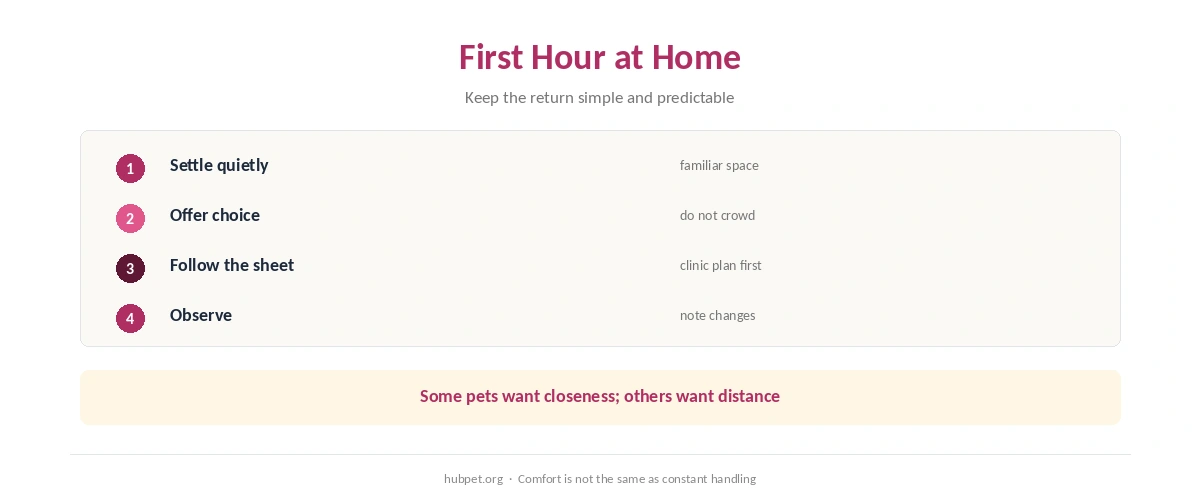
Keep the first part of the homecoming simple. AAHA’s 2026 guidance advises a quiet recovery area and allowing cats to settle at their own pace. Therefore, reduce traffic, keep greetings low-key, and let the pet choose whether to rest near people or in a familiar hiding place. The same choice-based approach appears in the guest-anxiety guide.
If your pet had a procedure, sedation, anesthesia, bandaging, or a new treatment plan, follow the written discharge instructions first. Generic internet advice cannot account for the procedure or your pet’s condition. Merck’s 2025 review tells owners to follow veterinary directions for activity, medications, wounds, food, water, urine, and stool. Use the first-aid checklist for preparedness, not as a substitute for the clinic’s recovery plan. For the matching checklist, see pet Recovery Support Checklist.
| Situation | Calm response | What not to assume |
|---|---|---|
| Pet seeks a quiet corner | Let them rest with essentials nearby | Distance does not automatically mean a behavior problem |
| Pet stays close to you | Offer calm company if they choose it | More attention is not always better |
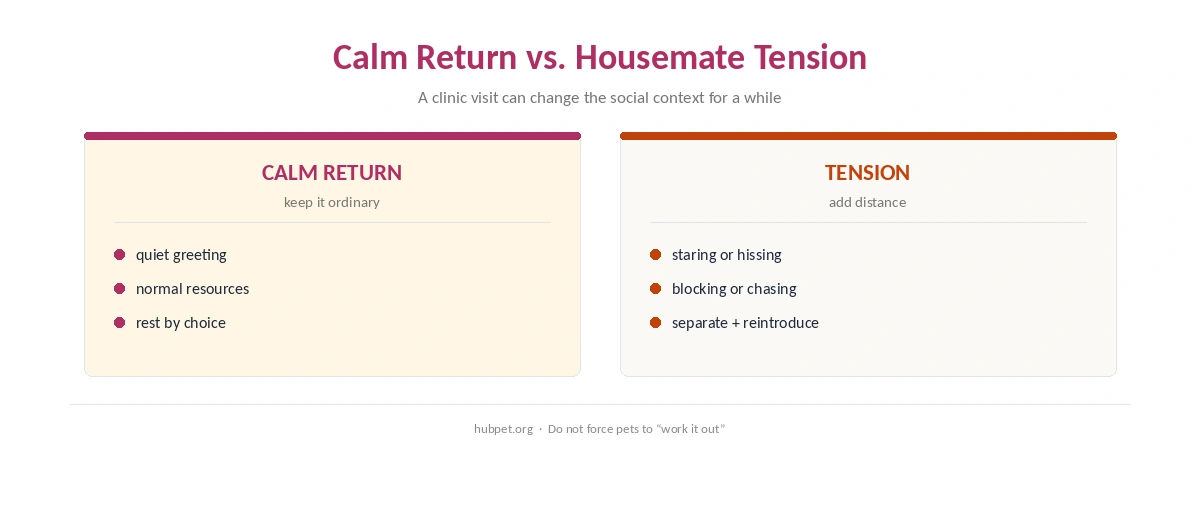
| Housemate cat hisses after the visit | Create space and separate briefly if needed | Do not force an immediate reunion |
| Pet had a procedure | Follow the discharge sheet first | Do not invent a home recovery routine |
How to Comfort a Pet After a Vet Visit in a Multi-Pet Home
Cats can react differently when a housemate returns from the clinic with unfamiliar smells. If staring, hissing, blocking, or chasing begins after the return home, increase distance instead of making the cats “work it out.” Use the gradual principles in introducing two cats and the new-pet introduction checklist for a calm reintroduction.
For dog-cat homes, keep exits and elevated cat spaces available. Supervise until both animals are calm. The dog-to-cat introduction guide and the multi-pet relationship guide explain how barriers, distance, and calm reinforcement reduce pressure. Also review the adjustment guide for a choice-based setup. Do not let a curious housemate corner the returning pet.
Keep daily essentials easy to reach. For cats, that includes litter, water, resting places, and hiding choices; for dogs, it includes a comfortable rest area and normal toilet access unless the veterinarian prescribed restrictions. The routines in the daily cat checklist and the daily dog checklist can help you notice what has actually changed.
When to Call Your Vet
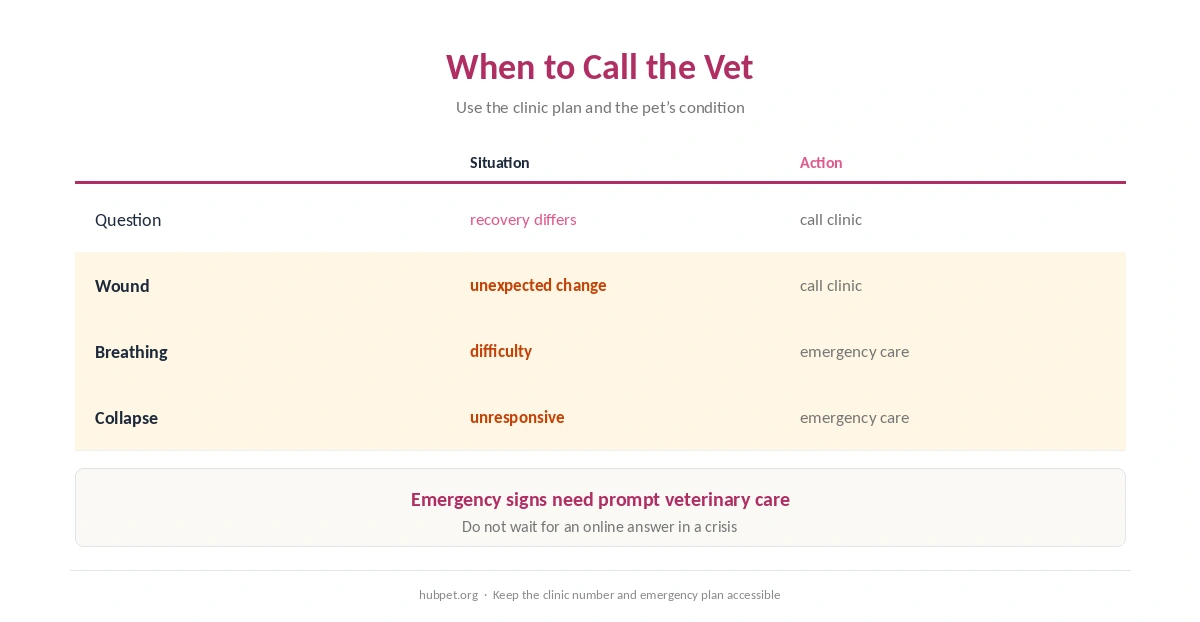
Call the veterinary team when recovery does not match the instructions you received. Call as well when you are unsure whether a change is expected. Merck’s 2025 aftercare guidance tells owners to report abnormal food or water intake, urination, bowel movements, wound changes, or other problems after emergency care. After anesthesia, AAHA’s 2020 anesthesia guidance also directs owners to report concerning changes in behavior or mentation.
Go now: difficulty breathing, unresponsiveness, seizures, major bleeding or trauma, sudden paralysis or extreme weakness, or other emergency signs need prompt veterinary care. Those signs come from AAHA’s 2024 emergency guidance; keep the HubPet emergency-signs page available so you do not have to search during a crisis.
If the main issue is intense fear around future appointments, tell your veterinarian before the next visit. AAHA 2026 guidance recommends planning ahead when pets freeze, try to escape, vocalize intensely, or become aggressive around veterinary care. In that situation, how to comfort a pet after a vet visit also includes preparing for the next one. The steps in the vet-visit checklist can support that conversation.
How We Research
HubPet reviewed post-visit and recovery guidance on October 11, 2026. We used AAHA’s 2026 veterinary-visit guidance, the Merck Veterinary Manual review updated in 2025, and AAHA’s 2024 emergency-signs article. Our research process explains why procedure-specific discharge instructions take priority over general advice.
Give them a quiet familiar retreat and let them choose when to reappear. If hiding comes with illness signs, severe pain, or a worrying change, contact your veterinarian.
Do not add activity automatically. Follow the clinic’s instructions, especially after sedation, injury, illness, or a procedure.
A returning cat may smell or behave unfamiliar. Create distance and use a gradual reintroduction if tension develops rather than forcing contact.
Only use medication exactly as directed by your veterinarian. Do not start human medicines or leftover prescriptions on your own.
Difficulty breathing, unresponsiveness, seizures, major bleeding, sudden paralysis, or extreme weakness need urgent veterinary care.
The Bottom Line on How to Comfort a Pet After a Vet Visit
How to comfort a pet after a vet visit is mostly about reducing demands: provide a quiet familiar place, preserve choice, follow discharge instructions, and watch the individual pet rather than forcing interaction. If recovery looks medically wrong or an emergency sign appears, contact veterinary care instead of trying to solve it at home. For the related care topic, see how to Help a Pet Recover From Stressful Events.