
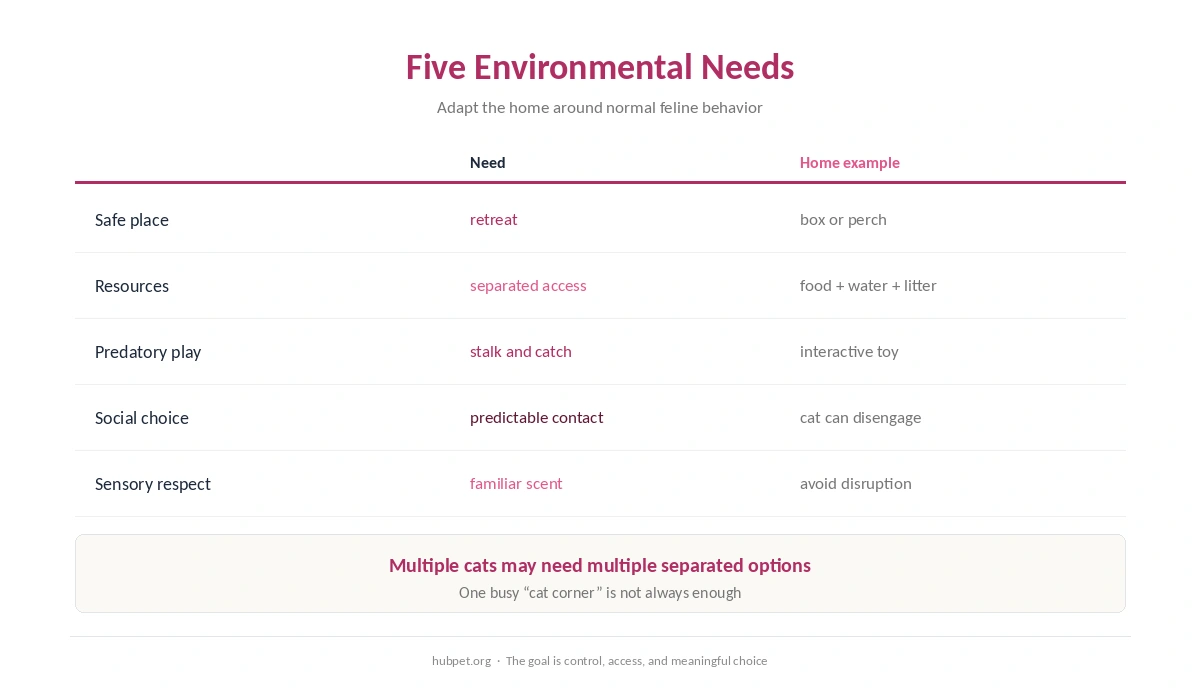
How to keep indoor cats mentally stimulated is less about buying more toys. Give the cat safe choices to hide, climb, scratch, hunt, play, observe, and interact. The 2013 AAFP/ISFM Feline Environmental Needs Guidelines organize those needs into five pillars. They cover a safe place, separated key resources, play and predatory behavior, positive predictable human interaction, and feline sensory needs.
Indoor living can meet a cat’s needs well. However, the environment has to provide choices that outdoor space might otherwise offer. A useful plan spreads opportunities through the day and the home. Do not rely on one long play session or one toy basket.
How to Keep Indoor Cats Mentally Stimulated: Start With the Five Needs
Begin with security. Cats need places where they can withdraw and rest without someone cornering them. The calm-space guide helps with the quiet side of the setup. The enrichment-corner guide shows how to organize optional activities without crowding essential resources.
Next, separate important resources. The cat should not have to choose between eating, drinking, toileting, scratching, resting, and play in one small zone. The 2013 guidelines emphasize choice and physical separation, especially in multi-cat homes. That can reduce competition and makes the home feel larger from the cat’s point of view.
| Need | Indoor option | Watch for |
|---|---|---|
| Safe place | Box, covered bed, perch, quiet retreat | Cat can enter and leave freely |
| Hunting and play | Wand play, chase, search, food puzzle | Cat gets to stalk, chase, and catch |
| Scratch and climb | Stable scratcher, perch, vertical route | Surfaces match the cat’s preference |
| Observation | Window view, elevated resting spot | Cat can also move away from the view |
| Social choice | Short play or petting sessions | Cat can end the interaction |
Build Play Around the Hunting Sequence
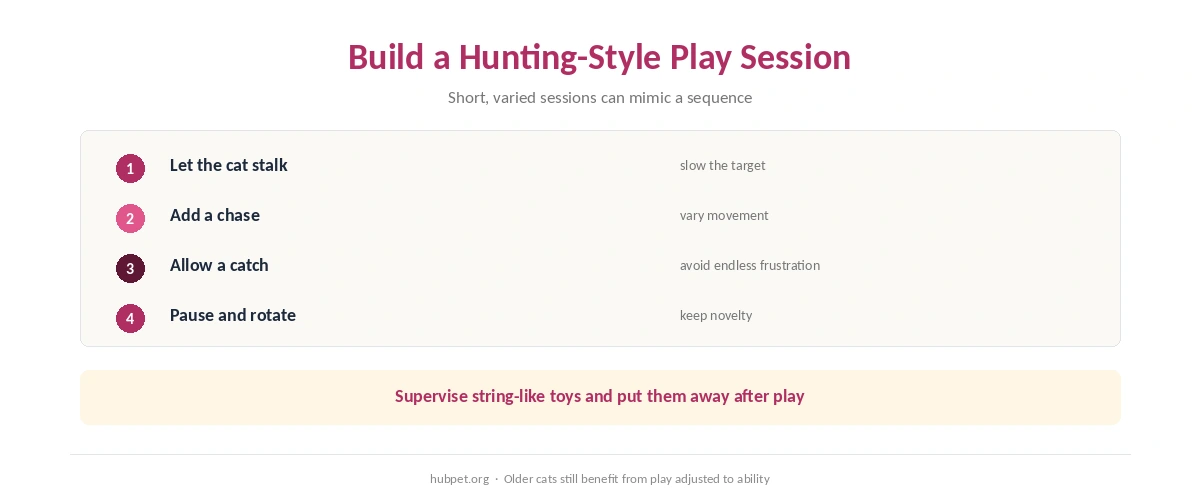
The 2013 AAFP/ISFM guidelines recommend play that lets cats perform parts of predatory behavior. Move an interactive toy like prey instead of waving it continuously in the cat’s face. Let the cat stalk, chase, and make successful catches. Put string-like toys away after supervised play so the cat cannot access loose parts unattended.
Cats also differ in what captures their attention. The cat gift-bringing guide explains the predatory context behind some household “presents.” Why cats get zoomies and why cats knock things off surfaces give two more examples. People should not automatically label active exploration bad behavior.
If the cat prefers searching and hiding to chasing, use boxes, safe paper, or hidden toys. The why cats sit in boxes article explains why enclosed spaces can be attractive. Rotate some toys instead of leaving every option out all the time. The feline guidelines specifically recommend rotation to reduce habituation. This variety is one part of how to keep indoor cats mentally stimulated across the week.
How to Keep Indoor Cats Mentally Stimulated Without Overdoing It
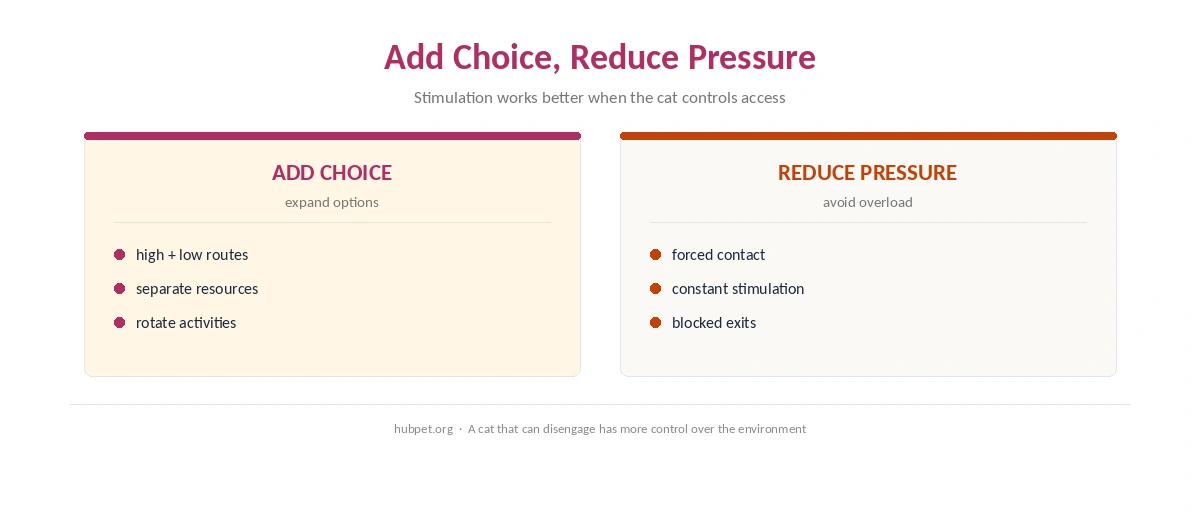
More stimulation is not always better. A cat should be able to retreat from play, people, noise, and visual activity. Short sessions can end while the cat still shows interest. There is no need to keep the cat busy continuously. Older cats still need play, but the 2013 guidelines note that owners may need to adjust the type and intensity.
Scratching is another normal behavior, not a sign that enrichment failed. Use the scratching behavior guide to understand the function. Then apply the scratching-post guide to make the legal surface easier to choose. Do not punish the cat for using a behavior the environment has not yet redirected well.
For signs that the indoor routine needs more variety, compare your setup with the indoor-cat boredom guide. The daily cat care checklist keeps stimulation in balance with essentials such as clean resources, observation, and normal routine.
Multi-Cat Homes Need Separate Choices
The 2013 guidelines stress that cats sharing a home may belong to different social groups even when they live peacefully. Place key resources in separated locations. That makes it harder for one cat to block another from food, water, litter areas, scratching, rest, or play. This is especially important when one cat consistently waits until another leaves before using a resource.
If cats are still learning to live together, start with the two-cat introduction guide. Simply adding more toys to the same room will not solve social tension. If the issue is social isolation rather than conflict, read the cat loneliness guide. Individual history and social preferences matter.
How We Research
HubPet uses published feline guidance rather than product testing; see how HubPet researches cat behavior and home-life advice. We read the 2013 AAFP/ISFM Feline Environmental Needs Guidelines on October 11, 2026. The review also covered the 2024 AAFP indoor/outdoor lifestyle position statement. HubPet used their environmental-needs framework and avoided claims that one toy, gadget, or schedule suits every cat.
FAQ
There is no single duration that fits every cat. Use multiple short opportunities and adjust the intensity to age, health, interest, and the cat’s response.
They can be one option because they add searching and problem solving. Use them only when they fit the cat’s normal feeding plan and the cat can use them comfortably.
Not necessarily. Rotating some toys can keep them more novel, while favorite safe items can stay available.
A safe view can add visual interest, especially from a comfortable perch. It is only one part of an environment that also includes play, scratching, hiding, and social choice.
Try different behavior categories instead of buying more versions of the same toy. Hiding, climbing, scratching, searching, chasing, or quiet observation may be more appealing.
The Bottom Line
How to keep indoor cats mentally stimulated means designing the home around feline choices. Give the cat safe retreat space and separated resources. Add ways to scratch and climb, chances to stalk and catch, and predictable interaction that the cat can end. That is how to keep indoor cats mentally stimulated while preserving choice. Follow what the individual cat uses, then adjust one part of the environment at a time. For a closer look at the related behavior pattern, see why Cats Watch Out the Window for Hours.