
Rubber brooms promise a quick way to gather dog or cat hair, but the floor under that fur determines whether the tool is appropriate. Flexible rubber teeth can pull strands into a line on some sturdy rugs, while a squeegee-like edge can gather loose hair on smooth surfaces. Neither result proves that a head suits every carpet or floor finish. Start with the manufacturer’s use instructions and a hidden-area test. This practical guide shows what to inspect, where short strokes help, and when a gentler tool is preferable.
What a rubber broom actually does
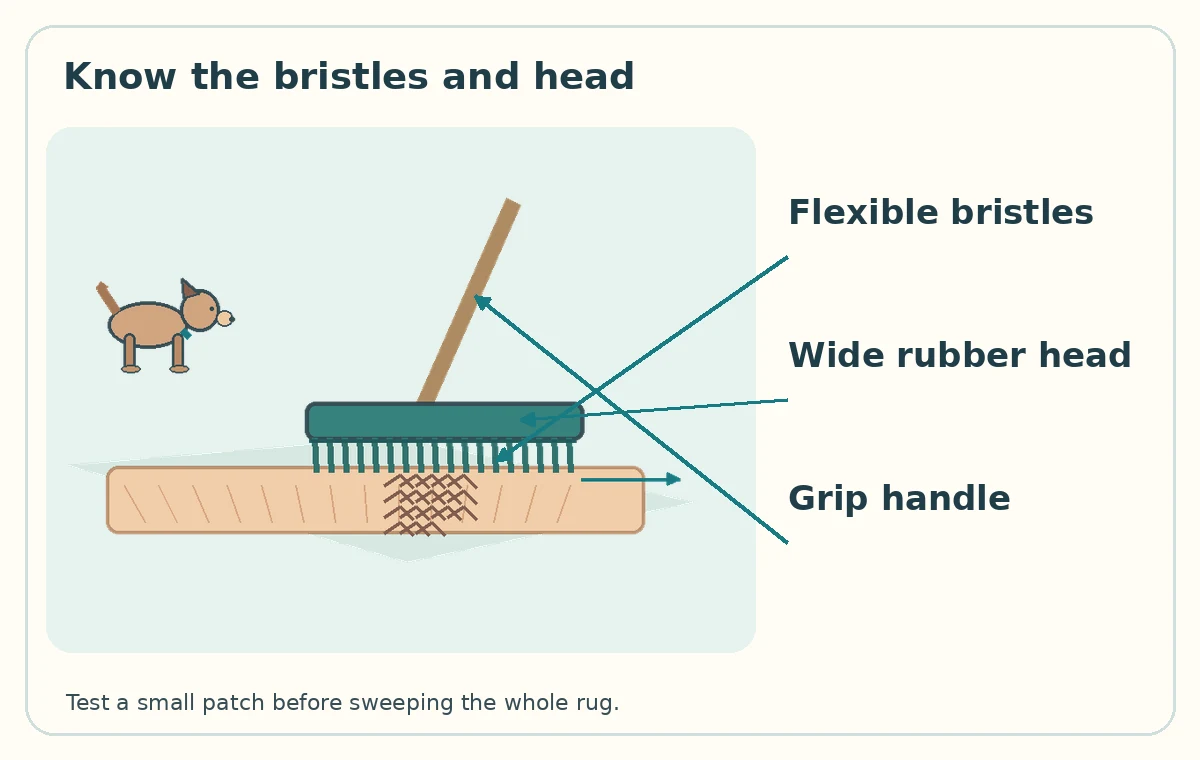
Rubber or elastomer bristles drag loose strands into visible lines or clumps as the head moves over a surface. This differs from vacuum suction, which lifts material through an opening. A broom may help gather fur before vacuuming, but it does not extract embedded fine grit or replace a hygienic cleaning routine. Compare a straight row of flexible teeth, a dense rubber blade, and a combined squeegee head. Each contacts fibers differently. The right head must glide without pulling carpet loops, scratching the finish, or demanding heavy force.
Inspect the bristle rows and head width
Look at the underside rather than only the product photo. Flexible, evenly spaced teeth may grab loose hair from short carpet; a solid edge gathers piles on smooth floors. A wide head covers open areas quickly, but it struggles at furniture legs and tight corners. Check for broken teeth, hard seams, and a sharp housing edge before using it indoors. A brush that works well on entryway carpeting might be the wrong tool for delicate upholstery. Avoid claiming one bristle pattern suits every pile height.
Test hard flooring with almost no pressure
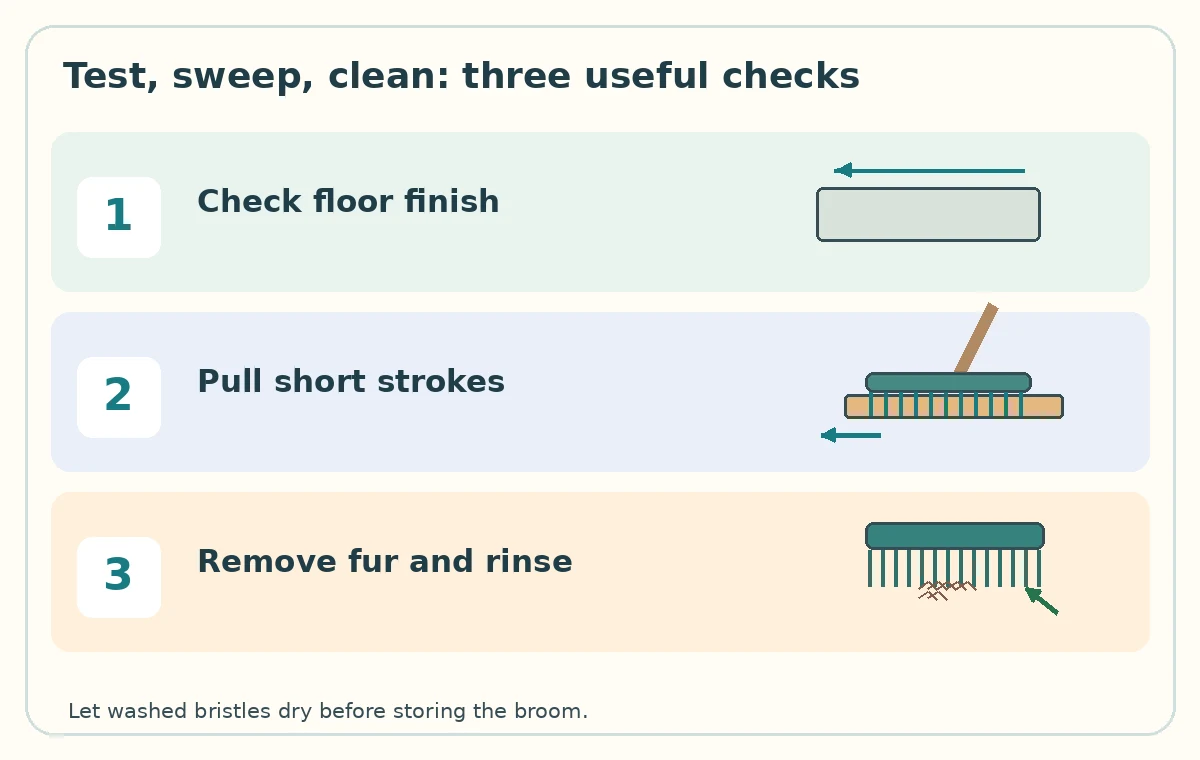
Start on a small clean, inconspicuous area. Draw the rubber head toward you using a smooth motion; check for haze, residue, or marks in reflected light. Finished wood, delicate coatings, and loose floor seams deserve particular caution. Lift the head instead of grinding grit across the finish. Rubber heads sometimes include a squeegee edge, but that does not mean standing water is safe for a wooden floor. Pick up sand or hard debris before repeated sweeping and follow the flooring manufacturer’s instructions.
Use short strokes on ordinary carpet
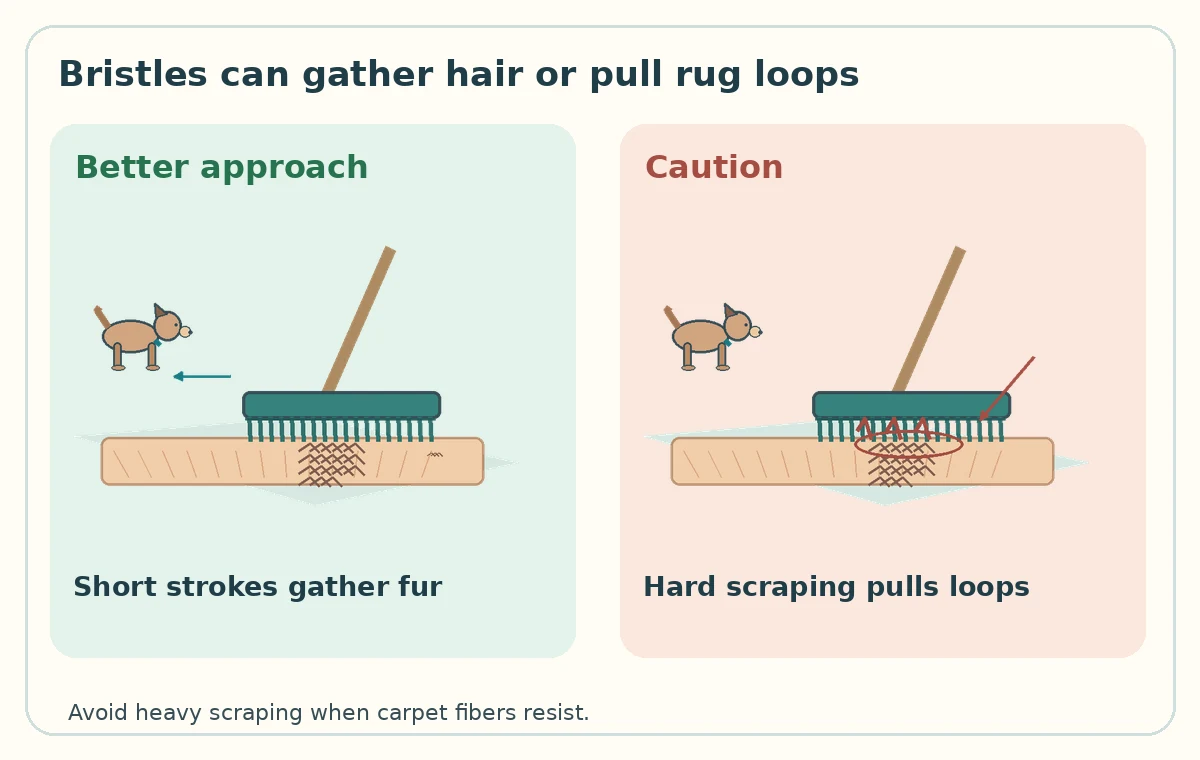
For a suitable sturdy carpet, try several short pulls rather than a hard continuous scrape. If fur gathers without the carpet pile distorting, collect it by hand or with a compatible vacuum. Stop if loops snag or tufts lift. Highly textured rugs, fragile bindings, wool blends, and long shag may need a gentler attachment or professional advice. Never use a pet-hair tool on a rug whose maker forbids brushing. The broom should move hair toward a collection point, not pull material out of the backing.
Compare a clean sweep with over-agitation
A useful result looks like a small roll of loose hair along the sweep path and an unchanged surface behind it. A warning result looks like stretched loops, roughened nap, or a head that stalls and jerks. More pressure is not automatically more effective. Stubborn, matted fur sometimes calls for a vacuum attachment approved for the fiber type. If a test section feels rougher afterward, stop and reassess. The safest method is the one that removes loose hair while preserving the material underneath.
Plan around furniture and room traffic
Clear toys, food bowls, cables, and small objects before sweeping. Move lightweight furniture only if doing so will not scratch the floor or disturb the pet. Keep a resting dog or cat away from repetitive sweeping strokes; the sound and movement can be unsettling. On rugs, keep the edge flat so it does not fold under the head. Choose a handle length that allows an upright stance. A short handle can force awkward bending, while an oversized head may collide with table legs.
Remove collected hair without spreading it
Lift clumps into the trash rather than shaking them across a room. For stubborn strands caught in the bristles, pull them out with gloved fingers or a soft cleaning brush. Do not tap the head against a fragile surface. If the manufacturer allows washing, rinse away dust and let the head dry fully before storage. Keep cleaning products away from pets until surfaces and the tool are safe. A clean broom head helps prevent transferring residue from one floor or room to another.
Know when to switch tools
A rubber broom handles visible surface hair, but dust inside carpet pile and debris in narrow seams are often better addressed by a vacuum. An upholstery nozzle can be safer for fragile furnishings. Use a dry microfiber cloth where the surface maker favors wiping. On stairs, avoid swinging a long broom across a narrow tread where you could lose balance. Match each cleaning tool to the surface, not simply to the fact that there is pet hair. A sensible routine may use two complementary tools.
Buying checklist and common mistakes
Check the manufacturer’s floor recommendations, replacement-head availability, bristle flexibility, handle joint, head dimensions, and washing directions. Test a small area before committing to a room. Avoid abrasive force, sweeping grit across wood, wetting unsupported floor finishes, or working over exposed carpet loops. Store the head so its bristles do not remain bent under weight. If a joint loosens during a stroke, stop and repair it with maker-approved parts rather than risk a head detaching unexpectedly.
A repeatable cleanup and maintenance checklist
Before each session, identify the material, confirm that your equipment is suitable, and start with the gentlest method. Inspect the result under good light before moving across the whole surface. Stop if you notice a snag, a change in finish, abnormal noise, unstable equipment, or discomfort in the pet. Keep cords and small loose tool pieces away from animals. Collect gathered fur into the trash and clean or store the device using the maker’s instructions. These checks matter more than a product claim that any one tool removes all pet hair.
How We Research
HubPet reviewed manufacturer guidance for upholstery, vacuum attachments, and carpet-cleaning tools, along with established humane pet-grooming information. We distinguished instructions for one manufacturer’s product from general safety principles; not every material accepts identical pressure, moisture, or brushroll use. We did not conduct independent laboratory comparisons or test removal percentages. Recommendations prioritize a visible hidden-area test, appropriate equipment fit, gentle technique, and realistic limitations. For unusual skin shedding, painful coat changes, or persistent bald patches, contact a veterinarian. See our editorial method and veterinary disclaimer.
Sources
Euro Broom — rubber broom use and head cleaning. Reviewed for material-care precautions, specific tool use, and stated limitations.
BISSELL — How to Clean Upholstery. Reviewed for material-care precautions, specific tool use, and stated limitations.
American Humane — Grooming Your Pet. Reviewed for material-care precautions, specific tool use, and stated limitations.
It can gather visible fur on certain floors or carpets, but a vacuum remains useful for embedded dust, grit, and crevices.
Only when its maker and your floor finish permit it. Test first and avoid pushing grit across the surface.
Not by default. Begin dry, and only use moisture if the tool and the surface care instructions both allow it.
They may snag long or loose pile. Start with the rug maker’s guidance and use a gentler attachment when in doubt.
Remove trapped hair, follow the manufacturer’s wash directions, and dry the head fully before storing it.