
A pet-hair removal sponge can look harmless because it has no motor or sharp blade. The risk is the friction between the sponge and the upholstery. Some fabrics tolerate a light dry pass; others can fuzz, snag, or develop changes in sheen. The material and the furniture’s care label matter more than a dramatic product demonstration. Here is how to inspect a sponge, conduct a hidden-area trial, collect loose fur, and recognize when a soft vacuum nozzle is a better choice.

What a hair-removal sponge can and cannot do
A sponge marketed for pet hair relies on surface contact and friction to collect loose strands. Materials vary: some are rubbery, some are open-cell foam, and others are washable polymer blocks. Do not assume that a common kitchen sponge or abrasive eraser is suitable for fabric. It may leave particles, snag yarns, or change the sheen. A pet-hair sponge is not a stain remover and cannot sanitize cushions. Consider it a small-area dry pickup tool, especially when a wide vacuum nozzle leaves a few visible hairs behind.
Read the furniture tag before contact
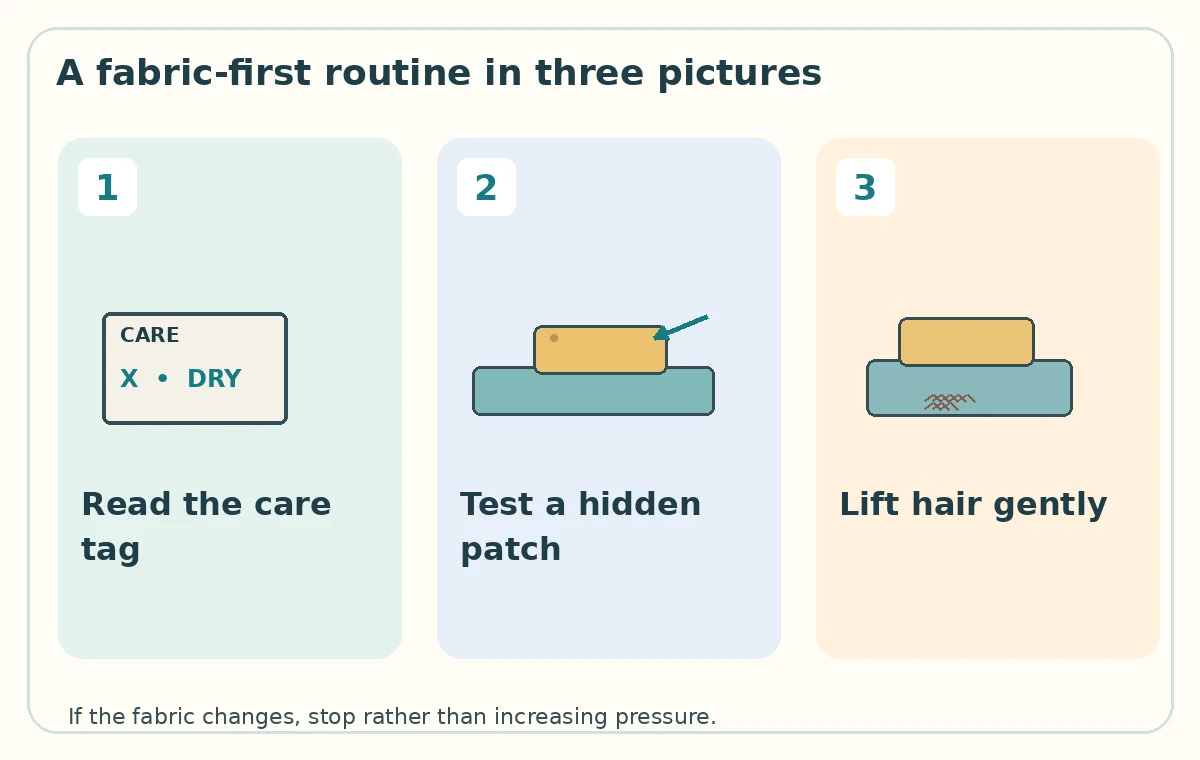
Find the upholstery care label under a cushion or near the frame. Codes and additional manufacturer instructions matter, particularly if you plan to dampen a tool. A fabric marked X generally calls for vacuuming or light brushing only; water and cleaning chemicals are not an invitation to improvise. Even when a fabric permits moisture for stain cleaning, that does not prove a wet sponge is safe for daily hair removal. Follow the furniture maker, not an online shortcut. If the tag is missing, use the most conservative dry method.
Examine the sponge texture and shedding
Look for smooth edges, a consistent face, and material that does not flake when flexed. Test whether the sponge leaves dust on a dark cloth before it touches the sofa. Some sponge types generate crumbs as they wear. Those crumbs can be difficult to extract from textured upholstery and may attract a pet’s curiosity. Avoid a highly abrasive scrub surface unless the furniture manufacturer specifically allows it. A simple, washable head can be easier to maintain, but every material needs its own instructions.
Run a hidden-area trial
Pick a narrow patch behind a cushion or on an unseen skirt. With the surface dry, move the sponge once using the lightest pressure that produces contact. Examine the patch in side light for fuzzing, color changes, flattened pile, stretching, or loose threads. Also check the sponge for dye pickup or crumbling. If the fabric changes, stop. The successful test does not authorize aggressive repeated rubbing across the visible seat; it only shows the initial motion was tolerated in that location.
Work in small sections with controlled pressure
Use a short motion that follows the fabric’s weave or visible pile direction. Collect the fur that rolls into a small line, then lift it to the trash. Avoid grinding a trapped clump into the fibers. On a textured cushion, gently hold the cover flat rather than stretching the seam. Pause frequently to inspect the contact area. If the sponge feels sticky, catches a loop, or makes the upholstery look fuzzy, switch to a soft upholstery nozzle. The goal is hair removal without a cosmetic or structural change.

Compare a gentle pass with a risky scrub
A safe-looking pass keeps the sponge flat, the upholstery supported, and the pile visually consistent. A risky scrub bows the fabric into ridges, scours the same spot repeatedly, and may leave a lighter or darker patch. Hair clinging to a seat seam can be retrieved with a compatible crevice attachment instead. Do not use harsh chemicals, eraser sponges, or random adhesive products to force a result. When a small remaining amount of fur would require damage to remove, accept it and change methods.
Use caution on velvet, boucle, and loose weaves
Velvet needs care with nap direction and pressure; the furniture maker may recommend soft brushing or a particular upholstery nozzle. Boucle and open weaves can snag on rough edges. Decorative piping, tassels, and tufting also need a gentler approach. A hair-removal sponge should not be the first experiment on an expensive or fragile textile. Check the care instructions and avoid moisture unless explicitly allowed. A soft brush or professional care may protect the appearance better than maximum fur pickup.
Clean and store the sponge safely
If the product is washable, follow its stated rinse and drying method. Let it dry in a ventilated location before closing it in a container. Discard a sponge that crumbles, develops sharp edges, or cannot be cleaned. Keep small pieces away from animals; some dogs chew soft blocks readily. Keep a separate tool for upholstery instead of sharing one used on floors or litter-box surroundings. That separation reduces transfer of dirt, cleaning residue, and unpleasant odors between home surfaces.
When to choose an attachment instead
For larger cushion areas, a vacuum upholstery nozzle usually works more efficiently. A crevice tool reaches seams and piping where a sponge cannot sit flat. If the maker allows it, a soft dry brush may suit nap-sensitive materials. Choose based on fabric type, not a dramatic before-and-after claim. Do not purchase a sponge without knowing its material and cleaning directions. If hair remains after a careful short test, compare the alternative methods against the care label before applying more friction.
A repeatable cleanup and maintenance checklist
Before each session, identify the material, confirm that your equipment is suitable, and start with the gentlest method. Inspect the result under good light before moving across the whole surface. Stop if you notice a snag, a change in finish, abnormal noise, unstable equipment, or discomfort in the pet. Keep cords and small loose tool pieces away from animals. Collect gathered fur into the trash and clean or store the device using the maker’s instructions. These checks matter more than a product claim that any one tool removes all pet hair.
How We Research
HubPet reviewed manufacturer guidance for upholstery, vacuum attachments, and carpet-cleaning tools, along with established humane pet-grooming information. We distinguished instructions for one manufacturer’s product from general safety principles; not every material accepts identical pressure, moisture, or brushroll use. We did not conduct independent laboratory comparisons or test removal percentages. Recommendations prioritize a visible hidden-area test, appropriate equipment fit, gentle technique, and realistic limitations. For unusual skin shedding, painful coat changes, or persistent bald patches, contact a veterinarian. See our editorial method and veterinary disclaimer.
Sources
Electrolux — How to Clean a Fabric Sofa With a Vacuum. Reviewed for material-care precautions, specific tool use, and stated limitations.
BISSELL — How to Clean Upholstery. Reviewed for material-care precautions, specific tool use, and stated limitations.
Fritz Hansen — Velvet Care and Maintenance. Reviewed for material-care precautions, specific tool use, and stated limitations.
No. Read the furniture care label and the sponge instructions. Start dry and avoid liquids on fabrics that prohibit them.
It might alter the nap or leave marks. Velvet usually calls for especially gentle, manufacturer-approved tools and pressure.
Abrasive kitchen scrubbers can fuzz or snag textiles. Use only a material that suits the fabric and passes a hidden-area test.
Its material may be breaking down. Stop using it and replace or discard it rather than rubbing residue into upholstery.
Use an upholstery-safe crevice tool or soft brush rather than forcing the sponge into piping or narrow folds.