
This article is general information, not veterinary advice. If your pet seems unwell, is in pain or may have eaten something harmful, contact your vet or an animal poison control line right away. Read our vet disclaimer.
How to create an enrichment corner for pets starts with the animal’s needs, not with buying a pile of toys. AAHA’s 2026 enrichment guidance recommends varied outlets for thinking, foraging, exploring, movement, and positive social contact. For cats, the FelineVMA’s 2025 position emphasizes safe places, separated resources, play and predatory behavior, predictable interaction, and respect for scent.
How to Create an Enrichment Corner for Pets: Pick the Right Job
First, decide what the corner should help your pet do. A dog may need a quiet place for sniffing, food puzzles, or short training practice. A cat may need a perch, a hiding option, a scratching surface, or interactive play. The goal is variety that fits the individual pet, not constant stimulation.
| Need | Corner idea | Keep it useful |
|---|---|---|
| Think | Simple puzzle or training station | Rotate challenges |
| Forage | Safe food-search activity | Use part of normal food |
| Rest | Bed, mat, box or perch | Keep the area predictable |
| Scratch / chew | Species-appropriate outlet | Choose safe materials |

Place the corner where your pet can use it without being trapped by foot traffic. A shy cat may prefer a protected area near a calm space, while a social dog may enjoy a station near family activity. Before adding anything, use the pet-proofing guide to remove cords, choking hazards, toxic plants, and unstable objects.
How to Create an Enrichment Corner for Pets That Stays Interesting
How to create an enrichment corner for pets over the long term is mostly about rotation. AAHA recommends variety, while the FelineVMA stresses opportunities for play and predatory behavior. Therefore, keep only a few safe activities available at once and swap them when interest fades.
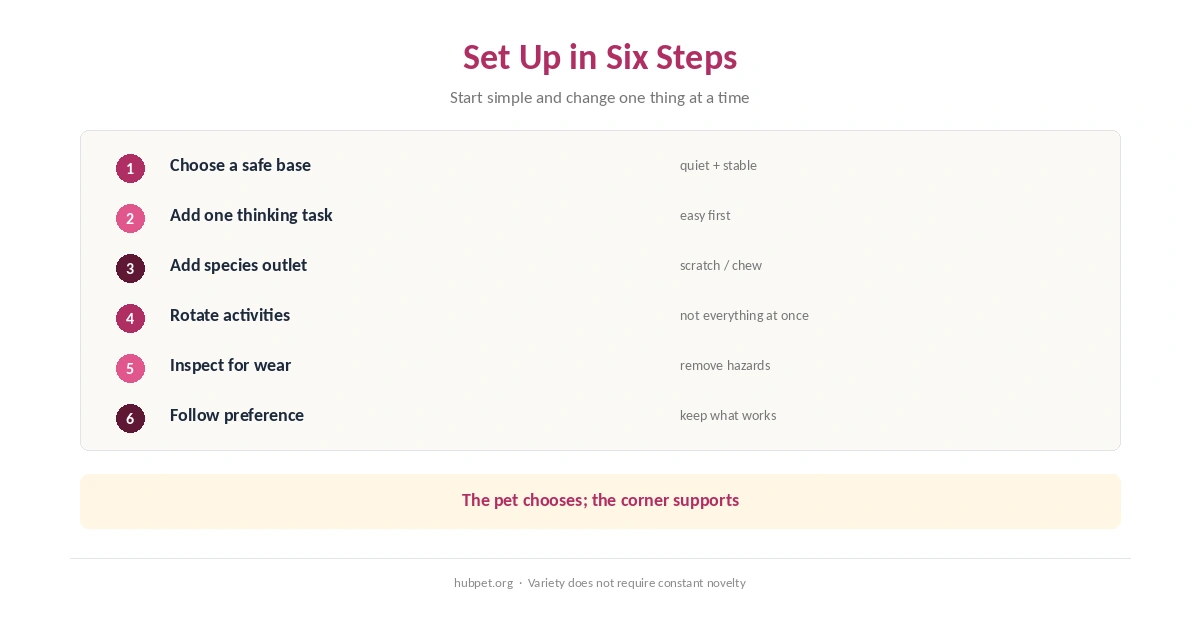
- Choose one quiet base item, such as a bed, mat, box, or perch.
- Add one activity that uses the brain, such as a simple puzzle or reward-based training task.
- Add one species-specific outlet, such as scratching for a cat or safe chewing for a dog.
- Keep fresh water available elsewhere or nearby without crowding the activity area.
- Rotate activities instead of changing the whole environment at once.
- Watch which options your pet chooses and remove anything that creates frustration or unsafe chewing.
For dogs, a mat can later support settle training. Reward-based lessons can use the same principles as positive reinforcement.
For cats, a scratching station can connect with scratching-post training. A cardboard box can also be a hiding option; the evidence behind that behavior is discussed in why cats sit in boxes.
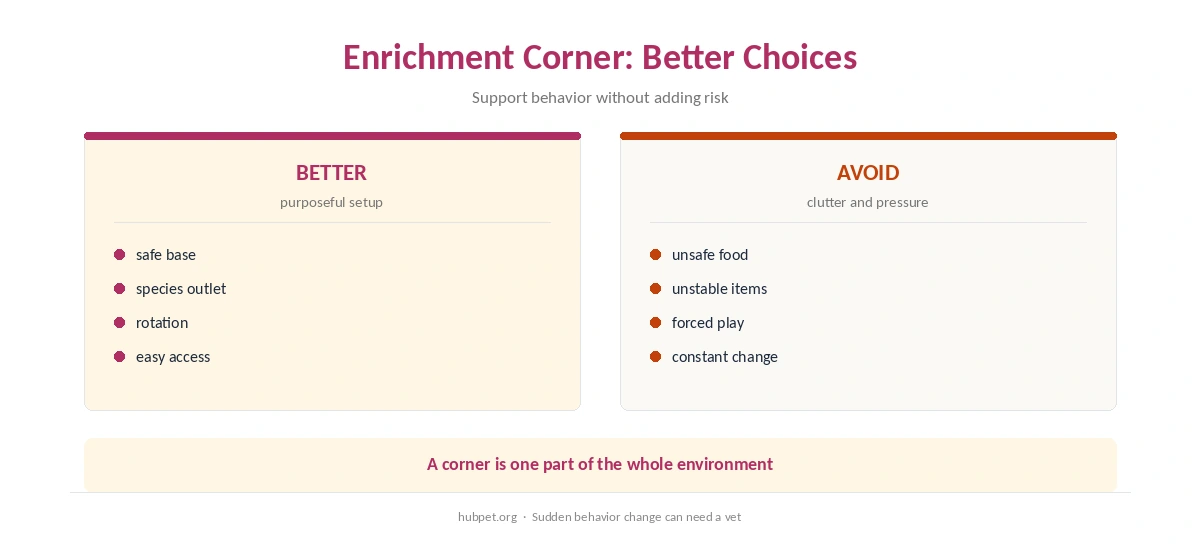
An enrichment corner should not replace walks, social contact, veterinary care, or normal household resources. It is one part of the environment. If an indoor cat seems under-stimulated, the indoor-cat boredom guide covers play and environmental needs. If a dog channels unused energy into furniture, see chewing management.
That is how to create an enrichment corner for pets without turning the home into a pile of unused objects. Keep the setup purposeful and easy to inspect.
Safety Checks for an Enrichment Corner
Keep food activities compatible with your pet’s normal diet, and do not introduce unsafe foods for novelty. Review toxic foods for dogs or toxic foods for cats before using kitchen ingredients. Also check toys and containers for damage, and supervise new activities until you know how your pet uses them.
When to Ask Your Vet for Help
A sudden loss of interest in normal play, food, movement, or social interaction can accompany illness or pain. If that change is new or your pet also seems unwell, contact your veterinarian rather than treating the problem as boredom. Review signs of pain when behavior changes abruptly.
How We Research
HubPet uses veterinary organizations, animal-welfare groups, and veterinary references rather than personal anecdotes. We read these sources on October 11, 2026: AAHA enrichment guidance, 2026, FelineVMA indoor-cat needs position, 2025. See How We Research for our method.
How to Create an Enrichment Corner for Pets FAQ
No. A small predictable area can work if it is safe and suits your pet’s preferences.
No. Rotation can preserve novelty and keeps the area from becoming cluttered.
Sometimes, but each species needs appropriate resources and each pet needs safe access without competition.
They can be part of enrichment when they fit your pet’s normal diet and do not add unplanned calories.
Try a different location or activity. Preference matters, and forcing interaction defeats the purpose.
In short, how to create an enrichment corner for pets means building a small, safe place for normal behavior and then adapting it to the individual. Start simple, rotate options, and let your pet’s choices guide what stays.