
This guide provides general behavior and safety information, not individual veterinary advice. Seek a veterinarian or credentialed reward-based trainer for persistent fear or possible pain; read our veterinary disclaimer. Some dogs bark as the car pulls into a parking lot; others react to every cyclist or dog passing a side window. Excitement, fear, frustration, and travel discomfort can look similar from the driver’s seat. The first rule is road safety. Never reach backward to train the dog while driving. Cornell recommends securing a dog in an appropriate crash-tested restraint or travel crate and introducing car trips gradually. This guide separates safe travel setup from training that takes place when the vehicle is parked or with a passenger. Barking with drooling, nausea, shaking, or refusal to enter the vehicle deserves veterinary advice rather than a longer drive intended to make the dog get used to it.
Work out when the barking begins
Observe the sequence from outside the vehicle or with another adult in the passenger seat. Does your dog react before the engine starts, when the car moves, when traffic passes the window, or at familiar destinations? A dog may bark from anticipation of the park or from distress about motion. Watch for drooling, repeated swallowing, panting in a comfortable temperature, trembling, and restless shifting. Do not diagnose motion sickness from barking alone. Record the time and context and ask your veterinarian about suspected travel discomfort. You can modify the environment while exploring the cause. Training should not create a distraction that makes driving unsafe.
Secure the dog before any road test
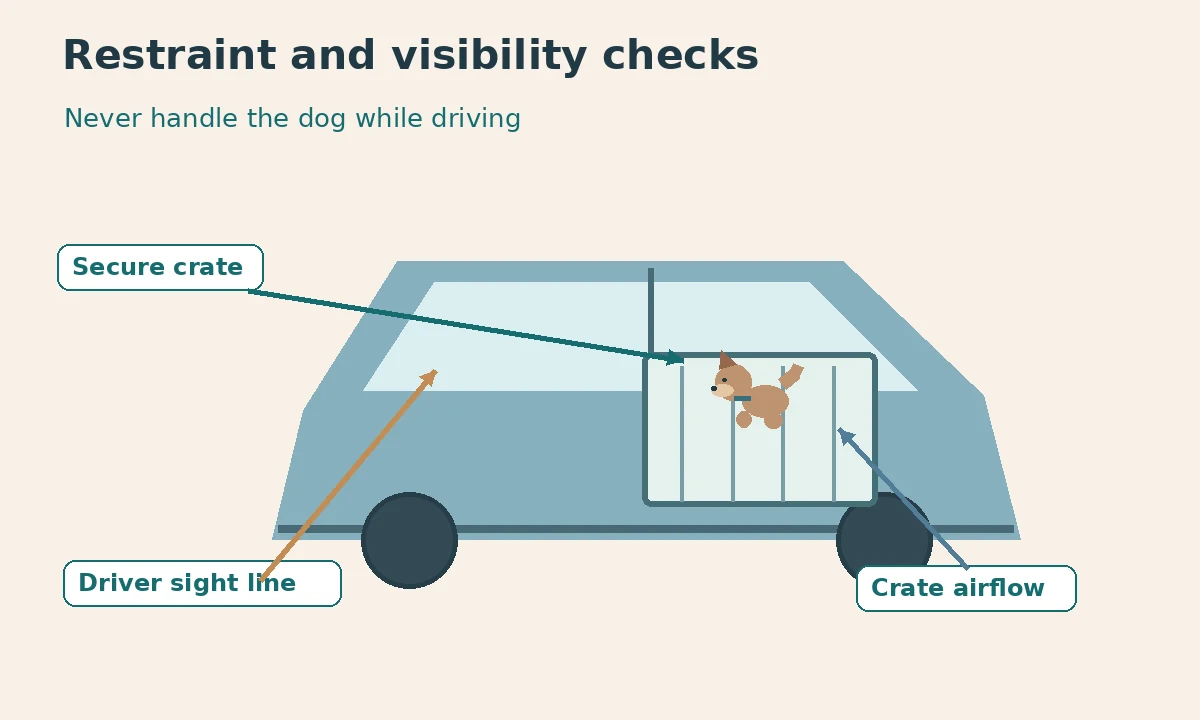
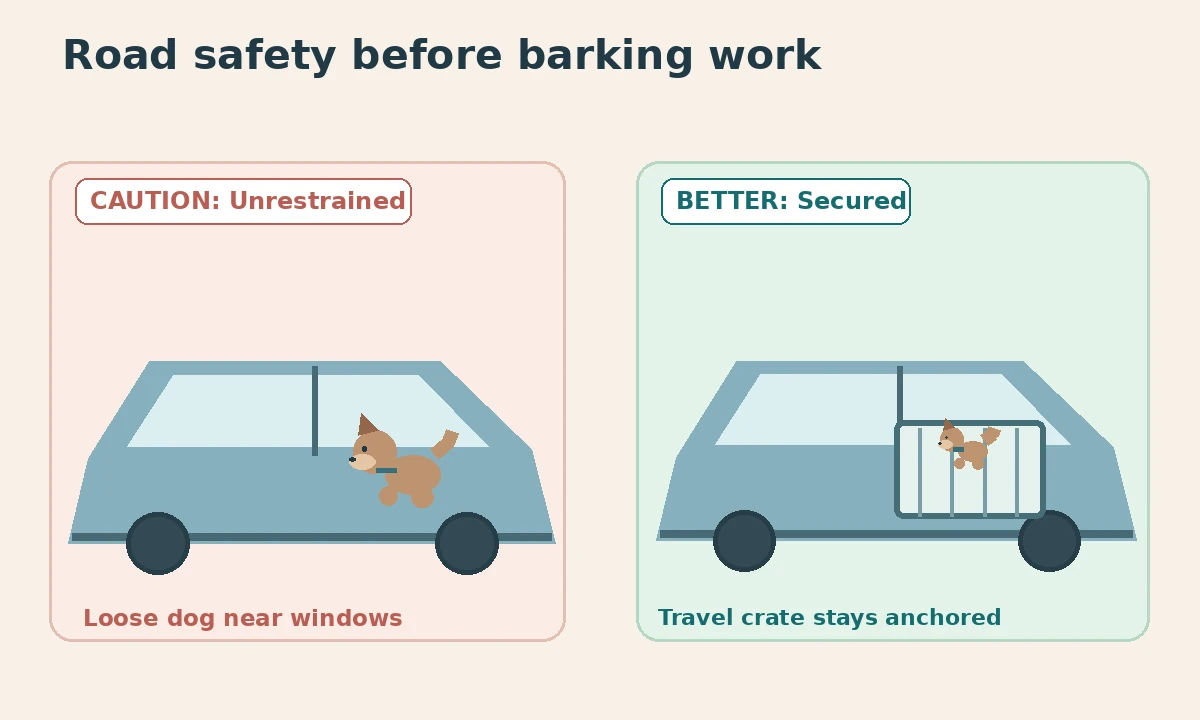
Use a correctly fitted vehicle restraint or properly secured travel crate, ideally with independent crash-test evidence for the intended setup. Follow the product and vehicle instructions rather than fastening a leash to an improvised anchor. Do not let your dog ride loose, sit on a driver’s lap, or put their head out of the window. Check buckles, tether length, doors, and ventilation before starting. A cover or privacy panel must never block needed airflow or the driver’s view. Never leave a dog unattended in a vehicle. Safety equipment prevents dangerous movement; it does not by itself resolve fear or nausea.
Start when the car is parked and quiet
Let your dog approach the parked vehicle without pressure. Reward sniffing near the door or stepping into a familiar carrier, then allow a calm exit. Practice with the engine off before adding gentle engine sound. Keep the car in a safe, ventilated location, and never run an engine in an enclosed garage. If the dog freezes or refuses food, stop and return to an easier step. Sit with the dog only if another adult can supervise safely. Never shut a frightened dog into a vehicle and wait for silence. Comfort during a stationary session matters more than distance traveled.
Reduce unnecessary window stimulation
Some dogs bark when they repeatedly see fast-moving traffic, animals, or people through side glass. A properly secured crate or vehicle-approved shade may reduce these views without affecting the driver’s sight lines or ventilation. Check visibility from the driver’s seat before moving. Avoid makeshift fabric that could collapse onto the dog or interfere with seat belts. If the sound of traffic is the main trigger, visual screening alone may not help. Turn down music and choose a quieter route for early practice when practical. Never hold a barking dog’s face toward a window to prove there is no threat.
Take very short practice rides with help
Once the parked car feels ordinary, make a short, uneventful ride with a calm driver and an adult passenger who can monitor the dog. Choose a familiar quiet route rather than a crowded destination full of other animals. Stop safely if barking becomes distracting; a passenger should never unclip the dog while the car is moving. Reward comfortable behavior when parked. A car ride does not need to end at a dog park to count as success. If nausea, fear, or frantic movement appears, end the outing, record the signs, and consult your veterinarian before attempting a harder trip.
Separate arrival excitement from travel fear
Barking when the car slows near a favorite trail can reflect high anticipation rather than fear of the vehicle. Change the routine gently: arrive at a quiet location, remain parked until the dog is comfortable, then open the door only when the restraint and outside path are safe. Do not demand prolonged stillness from an overwhelmed dog. Check for traffic before unloading, attach the walking leash securely, and keep the dog restrained until an adult is in control. If barking starts much earlier during the drive, consider window triggers or discomfort instead of assuming every reaction means enthusiasm.
Know what not to do from the front seat
Do not throw treats backward, turn around to scold, or attempt to adjust the restraint while driving. Do not use an ultrasonic device, spray collar, or loud correction to suppress a stress response. Avoid feeding during vehicle motion, especially if the dog may be nauseated. Train while parked with assistance; if driving is essential before the dog is ready, plan veterinary support or alternative transport when possible. Keep windows and climate controls appropriate without putting the dog at risk. A driver’s full attention belongs on the road, not on evaluating training progress.
Use a repeatable pretrip check
Before departure, confirm the restraint fit, buckle security, ventilation, and a route with manageable stimulation. During the trip, an adult passenger can watch the dog’s posture, breathing, and responses without handling loose equipment. After parking safely, assess how the dog recovered before opening the vehicle. Keep a brief log of the ride length, destination, visual triggers, and possible physical symptoms. Progress in small, calm steps only. If the dog vomits, drools heavily, panics, or cannot settle in the stationary vehicle, seek veterinary help rather than continuing an escalating practice loop.

How We Research
We compare practical advice from veterinary schools, veterinary hospitals, and established animal welfare groups. The specific recommendations focus on the described trigger, safe management, humane reward-based learning, and signs that require individualized help. We do not treat barking as a diagnosis or promise that any device will silence a dog. For our site approach, visit About HubPet.
Sources
Cornell University — Traveling Safely With Your Dog — guidance on safe barking management, behavior, or related travel considerations.
VCA — Dog Travel and Restraints — guidance on safe barking management, behavior, or related travel considerations.
Battersea — Getting Used to Car Travel — guidance on safe barking management, behavior, or related travel considerations.
Possibly, but fear, outside movement, and motion-related discomfort can also cause barking. Observe the full sequence and body language.
Sometimes a correctly secured, ventilated crate limits triggering views, but it must fit the dog and vehicle and provide safe travel restraint.
No. The driver should not reach backward or run a training session while moving; practice rewards only when parked safely.
Ask your veterinarian about motion sickness or travel anxiety rather than assuming the dog needs more forced exposure.
No. Flying debris and sudden stops create preventable injury risks; keep the dog securely restrained inside the vehicle.