
This guide offers general feeding-equipment and hygiene information, not individual veterinary advice. If a pet has persistent eating difficulty, vomiting, or signs of pain, consult your veterinarian; see our veterinary disclaimer. A ceramic cat food bowl can be pleasingly steady and easy to wash when its surface is smooth and its glaze is intact. But pottery is not all made for food contact, and a chip can turn an ordinary dish into a sharp feeding surface. Before choosing one, check its purpose, usable width, finish, and weight. This article addresses ceramic food dishes rather than fountains or decorative planters. The safest routine is practical: use a clearly food-safe product, keep it stable, inspect the rim, and wash the dish thoroughly after every meal.

Check the food-contact labeling first
Choose bowls explicitly sold for food or pet food contact by a reputable maker. A decorative ceramic object, vintage plate, or unknown handmade glaze should not automatically become a feeding dish. Some ceramic glazes can contain metals, and the safety of the fired finish depends on proper manufacture. Ask for clear material and care information instead of trusting the words natural or premium. Avoid any claim that an unverified bowl has verified lead-free status merely because it looks glossy. Today’s Veterinary Nurse discusses ceramic glaze concerns and advises caution with chipped dishes. A reliable maker should explain cleaning limits, intended use, and whether the bowl can go into a dishwasher.
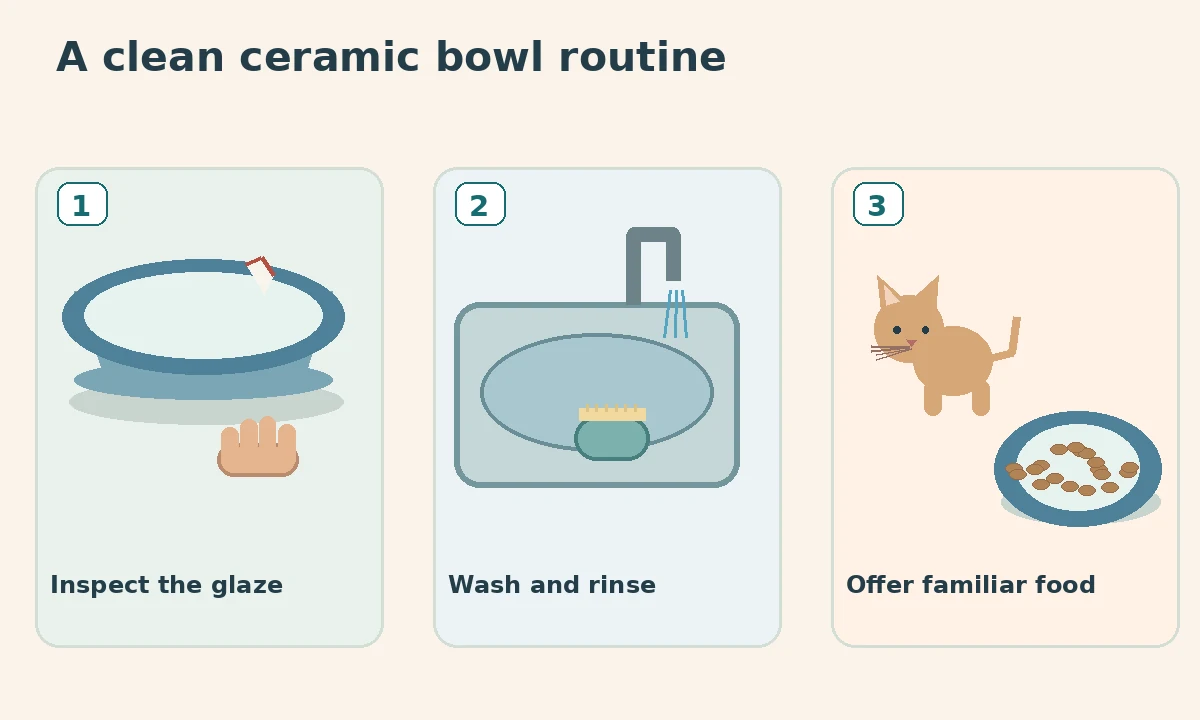
Inspect the rim, glaze, and base
Look at the entire inside surface under bright light. Fine crackle lines, flaking glaze, rough exposed clay, or a chip at the lip can make the dish difficult to clean or uncomfortable to use. Run a finger along the rounded rim to check for a sharp spot. Turn the dish over and feel for an abrasive unglazed ring on the bottom; it may scratch some countertops or floors. Test stability on the actual feeding surface, especially if a cat noses food around the edge. A heavy bowl may resist sliding, but weight does not compensate for a rocking base or a dangerously sharp chip.
Select the shape your cat can reach
A gently curved, broad interior often gives a cat more usable surface than a narrow deep bowl with steep walls. Watch how the individual cat approaches the food and whether the whiskers seem to repeatedly brush a high rim. Do not assume every cat has whisker-related discomfort or that every wide bowl fixes food avoidance. Depth, stability, preference, and other factors all matter. Measure the inner diameter at the food level, not the outer decorative lip. Keep the portion in a shallow area that is easy to reach. If the cat starts eating less, consider medical causes and speak with a veterinarian rather than only changing dishes.
Keep weight useful rather than awkward
Ceramic bowls often stay in place because they are heavier than thin plastic, but a heavy dish can still slide on slick tile or tip if its base is narrow. Check the underside for level contact and use a washable mat if it improves grip without trapping moisture. Move the bowl to a quiet feeding spot where other animals do not crowd it. In a multi-cat home, separate access can matter more than choosing matching bowls. Avoid positioning the dish under shelving that can drop debris into food. When moving the bowl for cleaning, lift it rather than scraping the rough underside across a delicate floor.

Wash after use and inspect while drying
Remove food residue promptly. Use warm water, regular dish soap, and a nonabrasive sponge that reaches the curved base. Rinse thoroughly and dry before the next serving. If the maker labels the bowl dishwasher-safe, follow its temperature and placement instructions; a dishwasher label is not universal for handmade pottery. The FDA advises washing food bowls and scoops after use. Do not soak a cracked or chipped dish to make it look safe again. Inspect the rim as you dry it, because a tiny fresh chip may be easier to notice when the surface is clean and bright.
Handle chips, crazing, and breakage promptly
A sharp chip at the eating surface is a clear reason to retire the bowl. Deep cracks or glaze flaking likewise call for replacement, not glue or a home patch that may contact food. Fine crackle lines in a decorative finish can be hard to evaluate; when the safety or cleanability is uncertain, choose another dish. If the bowl breaks, move your cat away first and collect every fragment before the area you use the area again. Inspect rugs and floor seams for small shards. Do not let pets lick spilled wet food near broken pieces. A replacement should be easy to lift, wash, and check, not merely identical in appearance.
Try one change at a time
If you are switching from another material, offer the ceramic bowl in the same familiar location using the usual food and schedule. Watch whether the cat eats normally and can reach the last few bites. Avoid changing the bowl, food, location, and serving time all at once. If the cat hesitates, keep a clean familiar dish available while evaluating the new shape. A cat that avoids meals or shows drooling, mouth pain, or a sudden appetite change needs veterinary attention. The best ceramic bowl is not the most elaborate design: it is a genuinely food-safe, smooth, appropriately sized dish that your cat accepts and that you can clean after each use.
How We Research
We compare guidance from FDA and CDC on equipment hygiene with veterinary and welfare advice relevant to this dish. We distinguish a product measurement or inspection from unproven health promises, and we favor practical checks an owner can repeat at home. This is editorial guidance, not laboratory testing or a product endorsement. Read more about HubPet.
Sources
Today’s Veterinary Nurse — Choosing Pet Bowls — context for bowl materials, hygiene, feeding access, or safe handling.
FDA — Safe Pet Food Handling — context for bowl materials, hygiene, feeding access, or safe handling.
VCA — Feeding Guidelines for Cats — context for bowl materials, hygiene, feeding access, or safe handling.
CDC — Pet Supplies and Cleaning — context for bowl materials, hygiene, feeding access, or safe handling.
Only if it the maker clearly marks it for food contact. Unknown glaze or decorative finishes do not establish food-contact safety.
Yes if the eating surface has a chip, sharp area, cracked glaze, or an uncleanable defect. Do not glue the contact surface.
No. Check the maker’s care guidance; some finishes and handmade dishes require gentle handwashing and thorough drying.
Weight can help, but a narrow or uneven base may still move or rock. Test it on your actual feeding floor.
Keep a familiar clean dish while trying one variable at a time. Persistent reduced eating or pain signs warrant veterinary advice.