
Padded dog harnesses may feel softer to a person holding them, yet comfort on a moving dog depends mostly on shape and fit. Thick fabric cannot fix a chest strap that blocks the shoulders, a belly band that rides into the elbows, or an adjustable slider positioned against sensitive skin. The best evaluation happens while the dog stands, turns, and walks with natural movement. This guide explains how to read the padding layout, check the important contact points, and notice signs that the harness needs adjustment or replacement.
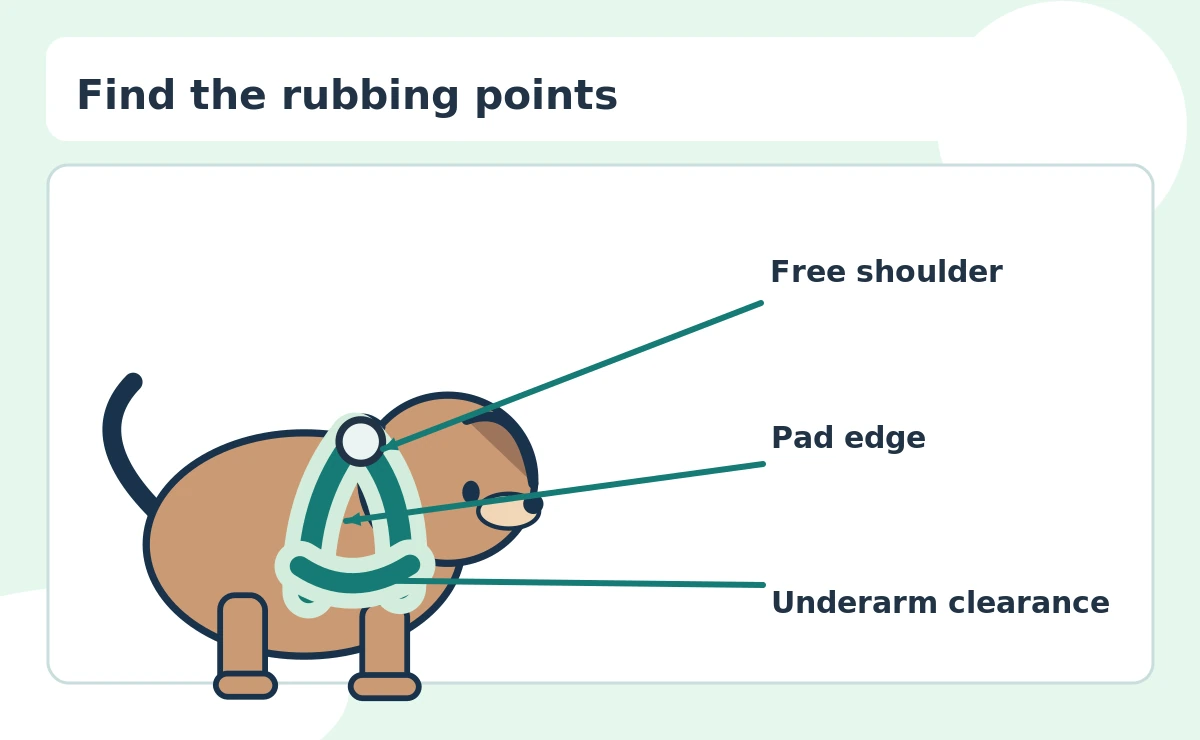
Separate cushioning from fit geometry
Look at the harness on a table before fitting it. Identify the chest panel, shoulder openings, belly strap, neck opening, and attachment ring. Padding should protect load-bearing edges without creating extra bulk that crowds the joints. A broad plush panel may look comfortable but still shift under sideways tension. FOUR PAWS emphasizes freedom of shoulder movement in a suitable harness. Pick a design whose basic strap path follows the dog’s body before judging foam thickness, color, or marketing claims about softness.
Inspect the space behind each front leg
Place the harness on a calm, standing dog and look where the rear edge of the chest section meets the armpit. There should be a visible comfortable gap while the dog stands and walks, following the product’s fitting instructions. Move one front leg forward naturally and see whether a padded edge catches the skin or presses into the elbow. Never pull a leg into an exaggerated position for a photo. If the harness consistently bunches into the armpit, a different chest length or shape may be needed.
Watch a real walking stride
Ask the dog to take a few steps on a non-slip floor. A strap crossing directly over the front of the shoulder can restrict extension even when it has thick fleece. VCA warns that some harness designs place material over the shoulder joint. Observe whether the dog moves both front legs evenly and whether the body panel rides sideways. Do not accept shortening or high-stepping as a normal break-in phase. Take the equipment off and reassess if you notice awkward movement, repeated paw scratching, or reluctance to walk.
Compare fleece, mesh, and smooth edging
Fleece can feel soft but may trap dampness or debris if neglected. Breathable mesh may distribute pressure while remaining easier to rinse, although its cut edges and seams still matter. A smooth woven strap with rounded binding can be comfortable without a thick foam layer. Examine the actual contact edge rather than rubbing the outside decorative surface. Pay attention to folds where mesh meets a strap, especially under the belly. Follow the care instructions so washed padding dries fully before the next wear.
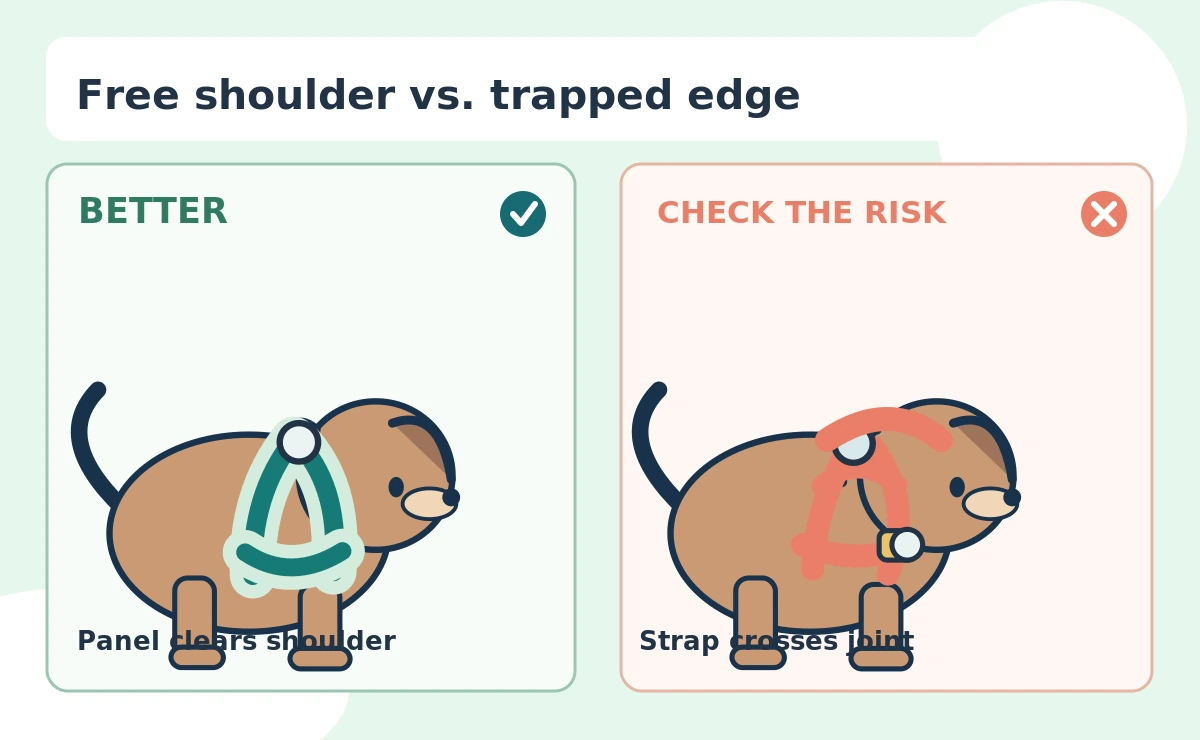
Check every seam and adjustment slider
Run your fingertips along the inside surface of the dry harness. A hard plastic slider, exposed stitching, or seam ridge might end up against the dog’s ribs when the strap is tightened. Adjust the harness on the dog and confirm that the slider stays away from the armpit and joint. Pull gently on the leash ring while the dog remains relaxed to see whether the panel shifts. Do not use extreme force as a homemade strength test. Replace gear with tearing fabric, broken stitching, or a buckle that fails to close reliably.
Look for back-out risks without frightening the dog
A soft vest can be easier to squirm out of if its neck opening is wide or the belly band sits too far forward. Follow the maker’s fit instructions, then check whether the harness slides toward the dog’s head under a gentle backward motion while the dog stays calm. Never pull hard enough to make the dog panic. VCA advises matching a harness to body shape and checking that a dog cannot back out. For escape-prone dogs, ask a qualified professional about purpose-designed secure fits rather than simply tightening every strap.
Recheck after swimming, rain, or bathing
Damp padding may stretch, become heavy, or take longer to dry than the outer surface. After a wet outing, remove the harness, check the skin, and let approved materials dry fully in a ventilated area. Do not leave wet padded gear on the dog while resting unattended. If a pad smells musty, feels gritty, or holds detergent residue, wash and rinse according to the label. Avoid harsh products or fabric softeners not approved by the manufacturer. A clean harness should feel dry and smooth before the next use.
Understand signs of rubbing versus a medical problem
An occasional coat parting where a strap rests may not mean injury, but persistent redness, broken hair, soreness, or licking at one spot needs attention. Remove the gear and allow the skin to settle; contact a veterinarian if the area is painful, swollen, or not improving. Do not cover an open sore with additional foam and continue normal walks. Note exactly where the mark appears relative to the shoulder, sternum, or armpit. That location helps you choose a different design instead of buying another thickly padded version of the same poor fit.

Compare fit with the leash actually attached
An unloaded harness can look balanced while a side pull rotates the chest plate. Connect the leash to the maker-approved ring, keep slack, and walk a small turn in both directions. Observe the chest panel and both front legs. For a front-clip design, confirm that the leash does not rub the foreleg or pull a strap across the shoulder. Avoid constant pressure or leash jerks. Proper adjustment should preserve natural movement during routine turns, not just when the dog stands perfectly still.
Build a repeatable pre-walk check
Before each walk, feel for sand in the padding, confirm both buckles click securely, and look at the inside seam. Check that the harness does not rub behind the elbows, then watch several natural steps. After the walk, remove the gear and inspect the coat where the pads contact the body. Revisit the size after weight changes, a new haircut, growth, or a season with a much thicker coat. A soft product is useful only when its everyday fit remains comfortable and its hardware stays reliable.
How We Research
We compared veterinary and animal-welfare guidance with the physical shape of clips, straps, buckles, rings, and the movement of a walking dog. Because fit differs by breed, body proportions, and manufacturer, our drawings illustrate what to inspect instead of inventing universal dimensions or product tests. For more on our approach see our editorial information and veterinary disclaimer. Seek veterinary help for pain, persistent coughing, skin injury, or sudden mobility changes.
Sources
VCA Animal Hospitals — Collar and Harness Options for Dogs — external guidance on fit, comfortable walking, humane handling, and equipment risks.
VCA Animal Hospitals — Controlling Pulling on Walks — external guidance on fit, comfortable walking, humane handling, and equipment risks.
FOUR PAWS — The Right Harness for Your Dog — external guidance on fit, comfortable walking, humane handling, and equipment risks.
Calgary Humane Society — Dog Walking Equipment — external guidance on fit, comfortable walking, humane handling, and equipment risks.
No. Padding may soften contact edges, but shoulder movement, chest geometry, reliable hardware, and secure fit remain more important.
Look under both front legs, across the sternum and chest, and where adjustment hardware touches the rib cage.
Yes. A broad strap or panel crossing the shoulder joint can limit movement even if its outer surface feels soft.
No. Remove it when the dog is not being supervised, unless a veterinarian provides specific instructions for a medical device.
Remove the harness and check the area. Contact your veterinarian for painful, damaged, persistent, or worsening skin changes.