
Why cats nibble your hand depends on what happens immediately before and after the contact. A kitten might mouth a moving finger during play. An adult cat may give a brief nip when petting has gone on too long. Some cats approach to sit nearby but do not want strokes at all. Never label every nibble a kiss, a threat, or a sign of affection without watching the ears, tail, posture, and context. The first helpful step is to stop moving your hand, offer space, and remember what preceded the behavior. Puncture wounds need prompt human medical advice because cat bites can become infected.
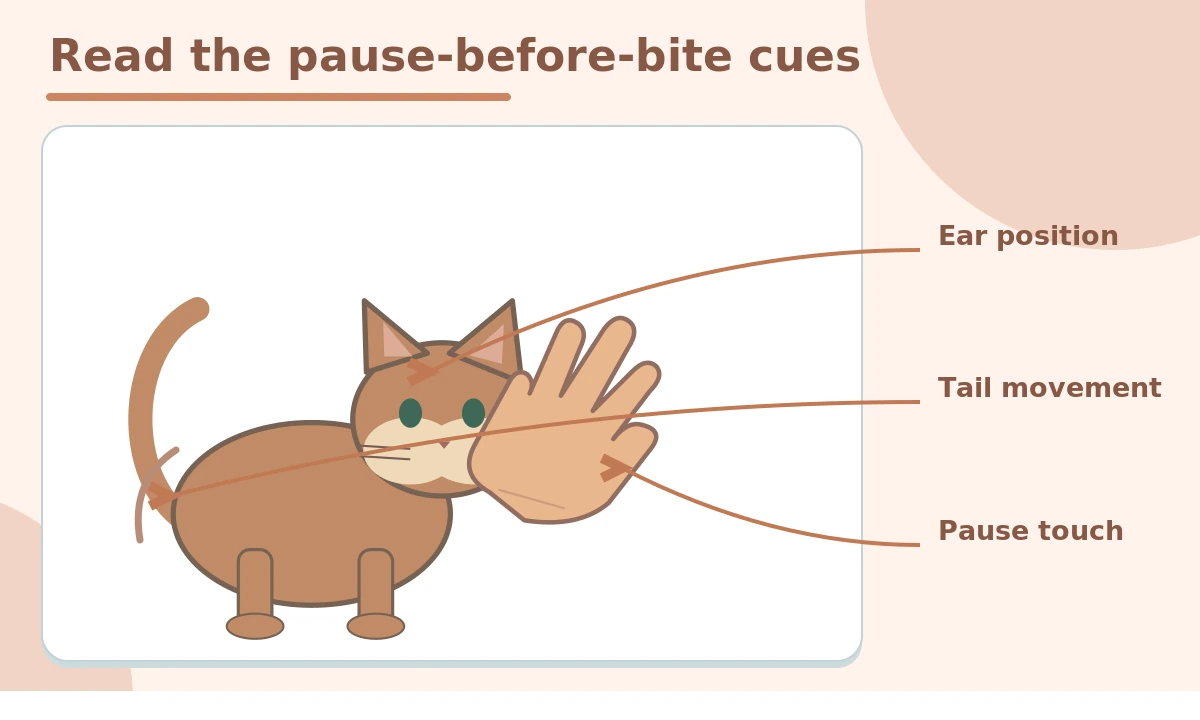
Notice the moment just before the teeth appear
Keep track of whether the nibble follows stroking, a hand reaching over the head, fast finger movement, or an attempt to lift the cat. These are different situations. A cat that walks over and settles near you may want warmth or company rather than physical contact. A sudden hand may startle a cat that was already watching a noise at the window. Watch the shoulders and tail, not just the mouth. The aim is to notice a predictable threshold so you can stop earlier next time. Do not test that threshold by repeatedly reaching in after the cat has warned you.
Learn the quiet signs that petting should stop
Cats may shift their weight away, turn the head toward the hand, flick the tail, tighten the skin along the back, or move their ears sideways before biting. Cornell and ASPCA describe this pattern in petting-related aggression. These signs are not identical in every animal, so learn your cat’s own sequence. Pause at the first change and let the cat decide whether to remain beside you. Do not hold the cat in place or stroke faster to “get it over with.” A calm pause is useful communication. If the cat walks away, that is an appropriate ending, not disobedience.
Separate playful mouthing from a handling objection
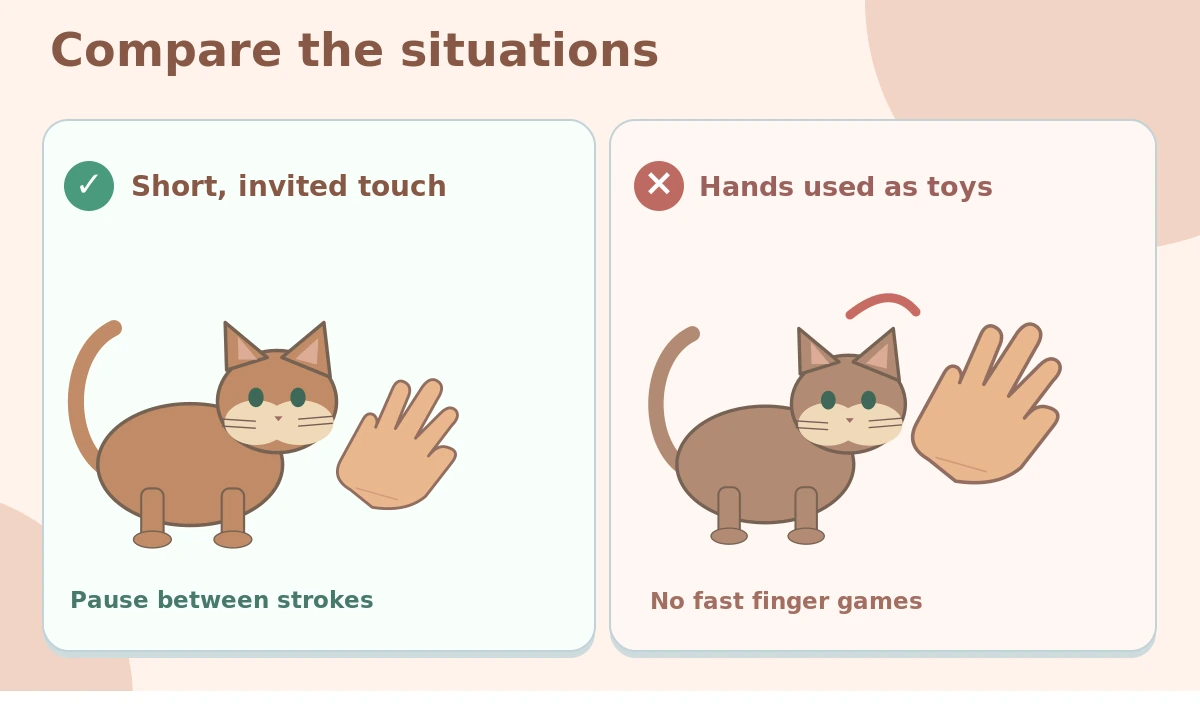
Playful mouthing may appear with stalking movements, toy interest, and quick pursuit of a wiggling hand. Petting-related nips more often appear after repeated touches or an approach the cat did not invite. Some cats show mixed signals, especially during excited greetings. Avoid treating bare fingers as toys; that teaches the cat that human skin is part of the game. Move a suitable wand toy along the floor instead, then put it away after supervised play. When the cat nips during stroking, stop contact and allow a quiet reset rather than trying to distract with rougher play.
Practice shorter, consent-based petting sessions
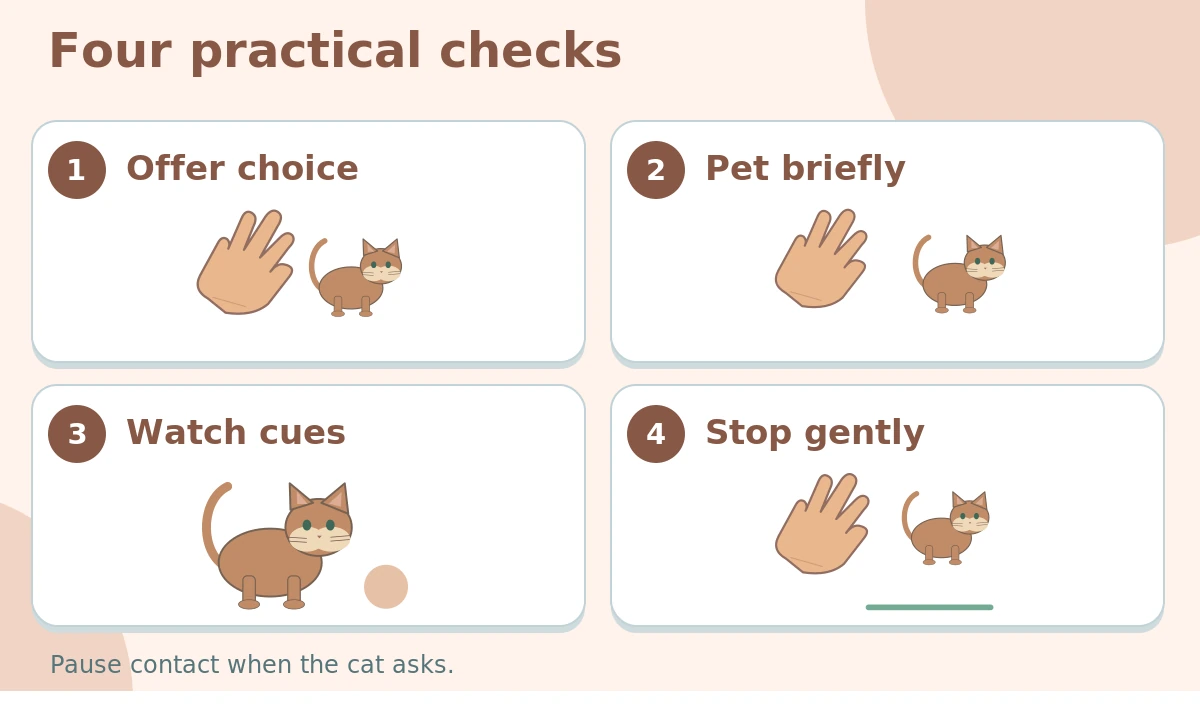
Offer a finger at a comfortable distance and let the cat approach or rub voluntarily. If the cat leans in, offer one or two gentle strokes in an area the cat appears to prefer, often near the cheeks. Then stop and observe. If the cat stays relaxed and seeks more contact, you may repeat briefly. If the cat turns away, freezes, or flicks its tail, finish immediately. A predictable ending helps avoid sudden escalation. Some cats like sitting in the lap but prefer no petting. Respecting that choice can improve comfortable coexistence more than extending every session.
Change play habits without punishment
If the cat chases ankles or hands, schedule short, supervised sessions with toys that keep teeth away from skin. Use an appropriate size and inspect strings or attachments. Reward calm interaction with a treat or a preferred activity, then end play before excitement becomes frantic. Do not push your fingers toward an open mouth, grab the cat, or startle it with water. Fear and frustration can make future handling harder. Teach children to wait for the cat to approach and to end contact whenever the cat looks away or leaves. An adult should supervise all interactions.
Compare harmless contact with a real bite
A brief soft mouth touch that does not injure skin is not the same as a hard puncture. Even a small puncture from a cat may introduce bacteria and deserves prompt human medical assessment. Wash injuries according to medical guidance and do not ignore swelling, redness, fever, or increasing pain. Do not punish the animal after a bite, even if you are frightened. Secure a quiet space and avoid further contact. If bites are frequent, unpredictable, or occur during ordinary movement near the cat, ask a veterinarian to check for pain and discuss a qualified behavior professional.
Check whether discomfort has changed tolerance
Cats with sore teeth, painful joints, irritated skin, or other discomfort may react strongly to touch in a particular region. A cat that previously welcomed handling but suddenly starts nipping deserves a veterinary assessment. Record which area was touched, the cat’s posture, and whether appetite or grooming changed. Do not press on sore areas to confirm your suspicion. If the cat becomes defensive when being picked up, stop lifting except when necessary for safety. A health assessment should come before a complex behavior-training plan. Behavior and physical comfort influence one another.
Design a calmer greeting ritual
On arrival, put bags down, greet the cat quietly, and wait for the cat to choose the distance. If the cat approaches with an upright relaxed tail, offer a brief sniff rather than immediate full-body strokes. Keep a toy nearby for cats that arrive excited and ready to chase. Make sure the cat has a route past your legs and is never trapped in a corner. If a nibble occurs, disengage quietly and consider which signal came first. Over several days, a consistent low-pressure routine often makes patterns easier to recognize without forcing more handling.
How We Research
We compared guidance from recognized veterinary and animal-welfare organizations, then checked each everyday situation against safer handling and observable warning signs. We distinguish common possibilities from confirmed causes and avoid treating drawings as diagnostic tools. For transparency, see our editorial information and veterinary disclaimer. Consult your veterinarian about symptoms, ingestion, discomfort, or a sudden behavior change.
Sources
Cornell Feline Health Center — Feline Behavior Problems: Aggression — practical veterinary or animal-welfare context for recognizing and responding to this behavior.
ASPCA — Aggression in Cats — practical veterinary or animal-welfare context for recognizing and responding to this behavior.
No. It may occur during play, excitement, or a request to stop touching. Read body language and the preceding interaction.
Stop petting, keep your hand calm, and give the cat space. Resume only later if the cat clearly chooses contact.
Avoid using fingers as toys. Offer an appropriate supervised toy and end the game gently if teeth reach skin.
Yes. Cat puncture wounds can become infected even when small. Seek prompt medical advice for a skin-breaking bite.
Arrange an exam for new, worsening, or pain-linked biting, especially with changes in mobility, appetite, or grooming.