
Why cats lick plastic bags is hard to pin down to one cause. Crinkling sounds, traces of food, a new scent, and the feel of smooth material may attract attention. The important question is not only why the cat approaches, but whether licking turns into biting or swallowing. Plastic film, handles, and small fragments can become choking or gastrointestinal hazards. Do not offer bags as toys, even when your cat has only licked them in the past. Put bags away promptly, redirect curiosity to appropriate supervised activities, and ask a veterinarian about repeated chewing or suspected ingestion.
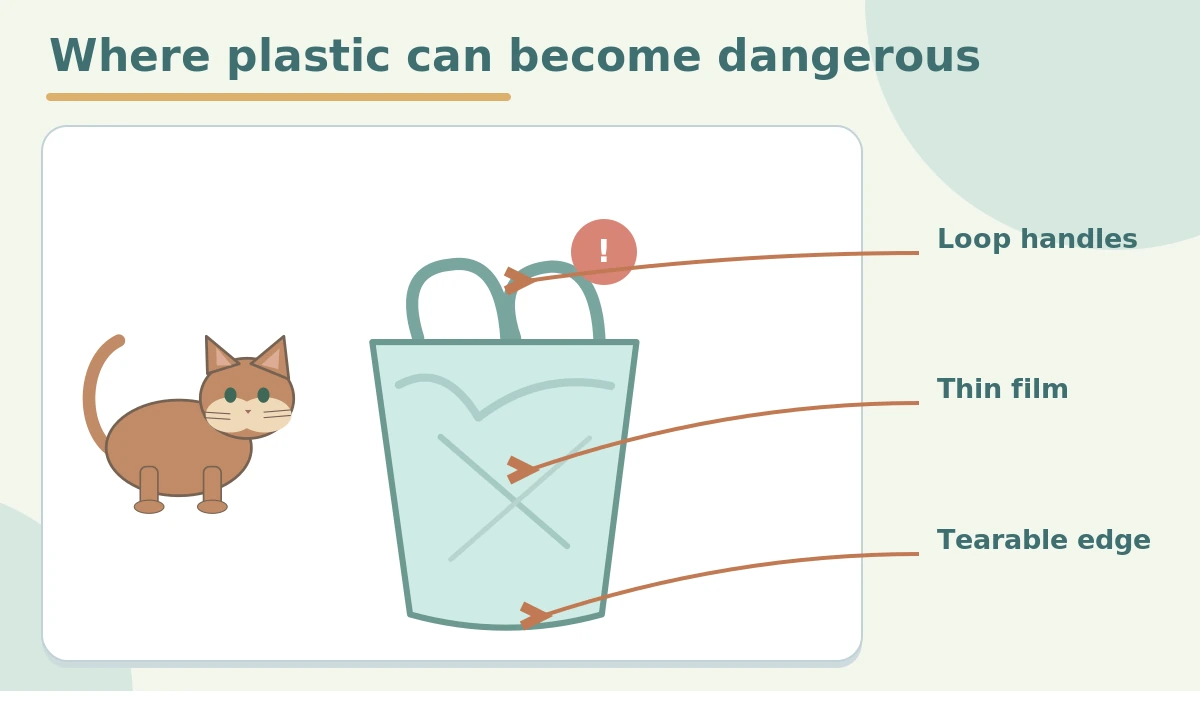
Different bags can attract a cat for different reasons
A grocery bag may smell like groceries, a delivery wrapper may carry unfamiliar odors, and tissue-thin plastic makes a different sound from a firm container. These are plausible triggers, not a diagnosis of your cat’s motive. Watch which items draw attention and whether the cat sniffs, licks, paws, chews, or actually removes pieces. Do not test theories by giving the cat increasingly interesting wrappers. A cat that mouths only one recently used food bag may have a different pattern from a cat that repeatedly seeks many non-food objects. Both patterns deserve safe storage and careful observation.
Licking is not the same as swallowing
A quick tongue touch may end with the cat walking away, while chewing can separate fragments that may be swallowed. Owners sometimes miss the change because film is clear and tears into thin pieces. Inspect any damaged wrapper from a safe distance and note missing sections. Never assume that a small piece will pass harmlessly. Veterinary resources describe serious risks from foreign-body ingestion, including gastrointestinal obstruction. If you suspect ingestion, contact your veterinarian promptly, even if the cat currently looks well. Do not try to make your cat vomit or pull suspected swallowed material back out.
Remove bag handles and film from the environment
Place shopping bags, bread wrappers, packing air pillows, trash liners, and loose plastic ties in closed storage before the cat enters the room. A bag on a high counter remains reachable to many cats. Keep waste bins fitted with secure lids and move food wrappers directly to an inaccessible bin. Do not leave an empty bag on the floor for exploration or hide treats inside it. Handles can loop around the head or legs, creating panic and injury. If your cat repeatedly reaches a cupboard, add a reliable latch rather than depending on verbal correction.
Check whether food smells are part of the pattern
Some bags contain crumbs or residue from meat, fish, or pet food. Clean food preparation surfaces and store wrappers as soon as you finish cooking. Wipe shelves where scraps may have collected, but keep the cat away from wet cleaning products. Consider whether other household members leave takeout or snack packaging on desks overnight. Changing storage can remove the cue without confronting the cat directly. Do not spray essential oils, bitter chemicals, or strong scents onto bags to deter licking. Their safety cannot be assumed, and the plastic remains dangerous even if the smell changes.

Offer better ways to investigate the household
A short supervised wand-toy session, a stable window perch, or a suitable food puzzle may provide more appropriate investigation. Choose toys without loose strings or small detachable pieces, and put them away if chewing becomes destructive. Do not replace one thin plastic bag with another fragile crinkly object. A cat that likes crinkling sounds may enjoy a purpose-built, intact pet toy under supervision, but inspect its seams and replace it when damaged. Never force the cat to take a toy in its mouth. Provide choices and remove unsafe material before inviting play.
Recognize when persistent chewing needs professional help
Repeated ingestion of non-food materials is sometimes called pica and may involve behavioral or medical factors. The term does not explain which factor affects an individual cat. New or frequent chewing, changes in appetite, vomiting, or weight loss deserve a veterinary evaluation. Describe the items targeted, whether pieces disappeared, and any household routine changes. A veterinarian may review oral health, diet, gastrointestinal signs, and behavior. Avoid diagnosing nutritional deficiencies or anxiety from plastic licking alone. Do not use supplements or restrictive feeding changes without advice from the veterinary team.
Respond correctly if you think plastic was swallowed
Remove remaining material from reach, and contact your veterinarian or emergency animal clinic for instructions. If the cat vomits repeatedly, seems painful, stops eating, becomes lethargic, or strains in the litter box, urgent assessment is important. Take a photo of the damaged object and estimate when the event may have happened. Do not give oils, laxatives, bread, or home remedies to push an object through. Do not tug on string-like material protruding from the mouth or rear end. Fast, accurate information helps the clinic decide what evaluation is appropriate.

Build a household storage check that lasts
Put a closed container near the front door for packaging, and agree that nobody leaves bags on the floor after unloading groceries. Check guest rooms, home offices, and under furniture for wrappers that have slid out of sight. Before bedtime, clear the kitchen counter and trash area. Keep pet food sealed in its proper container and give the cat consistent play and feeding routines. If licking continues despite removing easy targets, document the situations without creating new exposure. Prevention must focus on safe access, not simply on stopping the visible behavior.
How We Research
We compared guidance from recognized veterinary and animal-welfare organizations, then checked each everyday situation against safer handling and observable warning signs. We distinguish common possibilities from confirmed causes and avoid treating drawings as diagnostic tools. For transparency, see our editorial information and veterinary disclaimer. Consult your veterinarian about symptoms, ingestion, discomfort, or a sudden behavior change.
Sources
VCA Animal Hospitals — Pica in Cats — practical veterinary or animal-welfare context for recognizing and responding to this behavior.
VCA Animal Hospitals — Ingestion of Foreign Bodies in Cats — practical veterinary or animal-welfare context for recognizing and responding to this behavior.
Food residue, novel odors, texture, or crinkling sounds may play a role, but the exact reason cannot be inferred from one lick.
Even a habit that starts with licking can progress to chewing. Keep bags inaccessible because thin film and handles are unsafe.
Contact your veterinarian promptly for guidance on possible ingestion. Do not induce vomiting or assume the fragment will pass.
Persistent ingestion of non-food material can be consistent with pica, but only veterinary assessment can explore causes and risks.
No. Substitute a purpose-made, age-appropriate toy with secure parts, supervise play, and put away unsafe packaging.