
A new kitten can hide, freeze, or dart away even when the home feels welcoming to people. Strange smells, unfamiliar footsteps, and separation from littermates make the first days demanding. The goal is not to get a kitten out of hiding on a human timetable. Instead, build one predictable room, protect access to food and the litter box, and let small signs of curiosity guide each next step. A kitten who cannot eat, drink, eliminate, or move comfortably needs veterinary advice rather than an extended wait.
Start with one quiet base room
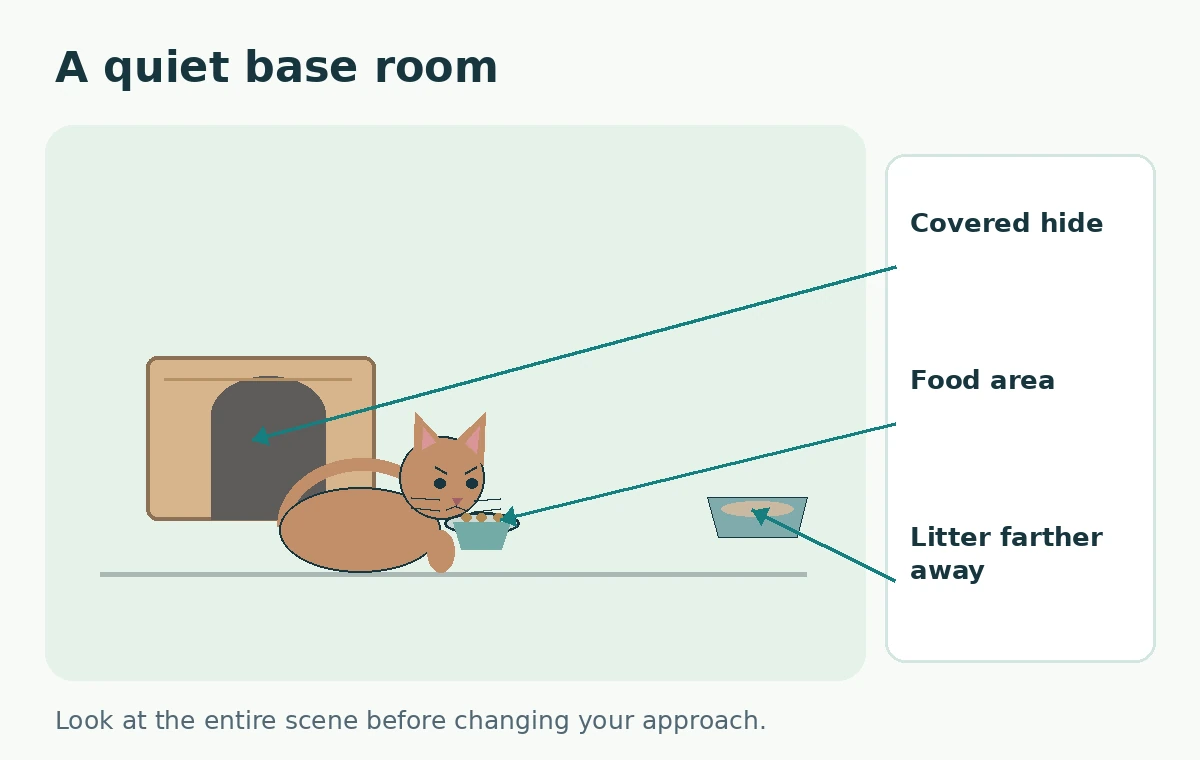
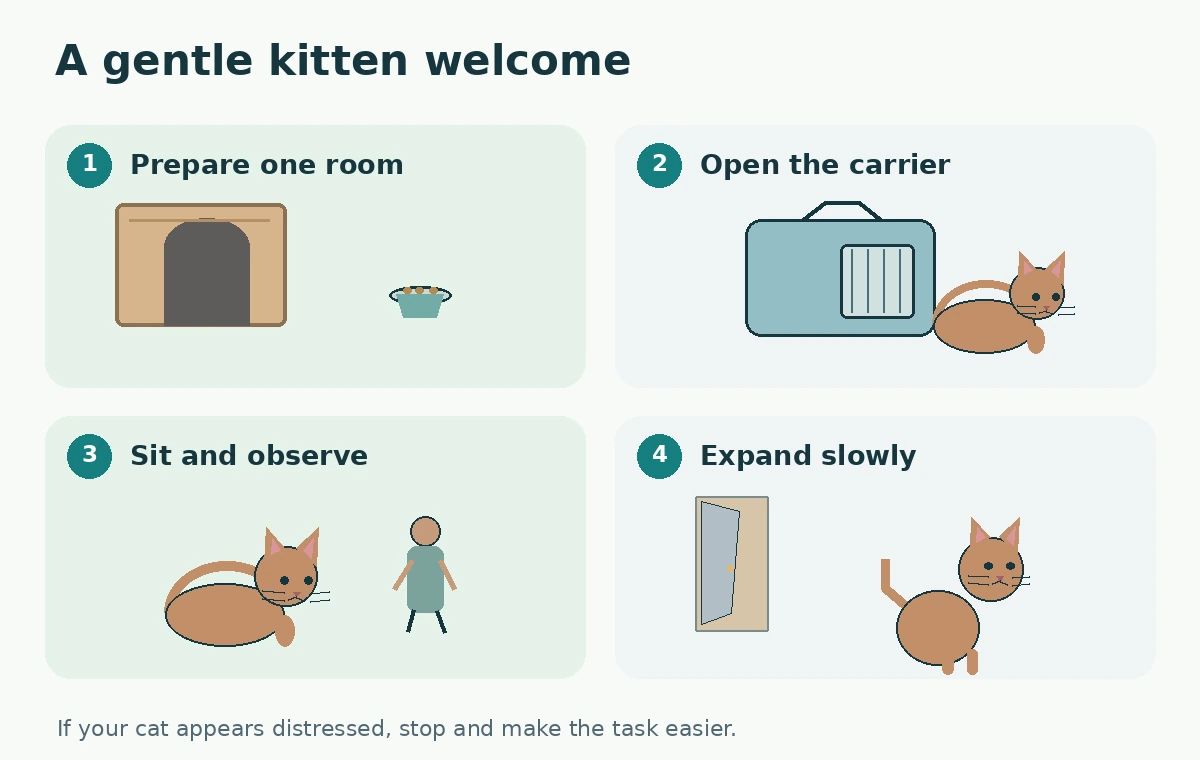
Choose a low-traffic room where household doors can stay securely closed. Set a shallow litter box away from the feeding station. Offer water, a kitten-sized bed, a stable scratching surface, and two hiding options. A small open-front box with soft bedding gives the kitten cover without trapping them. Remove loose cords, string, plants of uncertain safety, and tiny objects. Meanwhile, keep any resident pets outside this room. The room should remain quiet enough for the kitten to hear ordinary sounds without being surrounded by them.
Make a hiding place rather than blocking hiding
Place a cardboard hideaway along a wall so it feels sheltered. Leave its opening accessible to both the kitten and a caregiver observing from across the room. Avoid closing off every possible retreat; the kitten needs control over distance. However, block dangerous gaps behind appliances or inside furniture before arrival. Use safe, accessible alternatives instead. If the kitten chooses a bed or box, do not lift the cover repeatedly to check. Observe from a distance whether the kitten visits the bowl and litter box.
Let the carrier become the first doorway
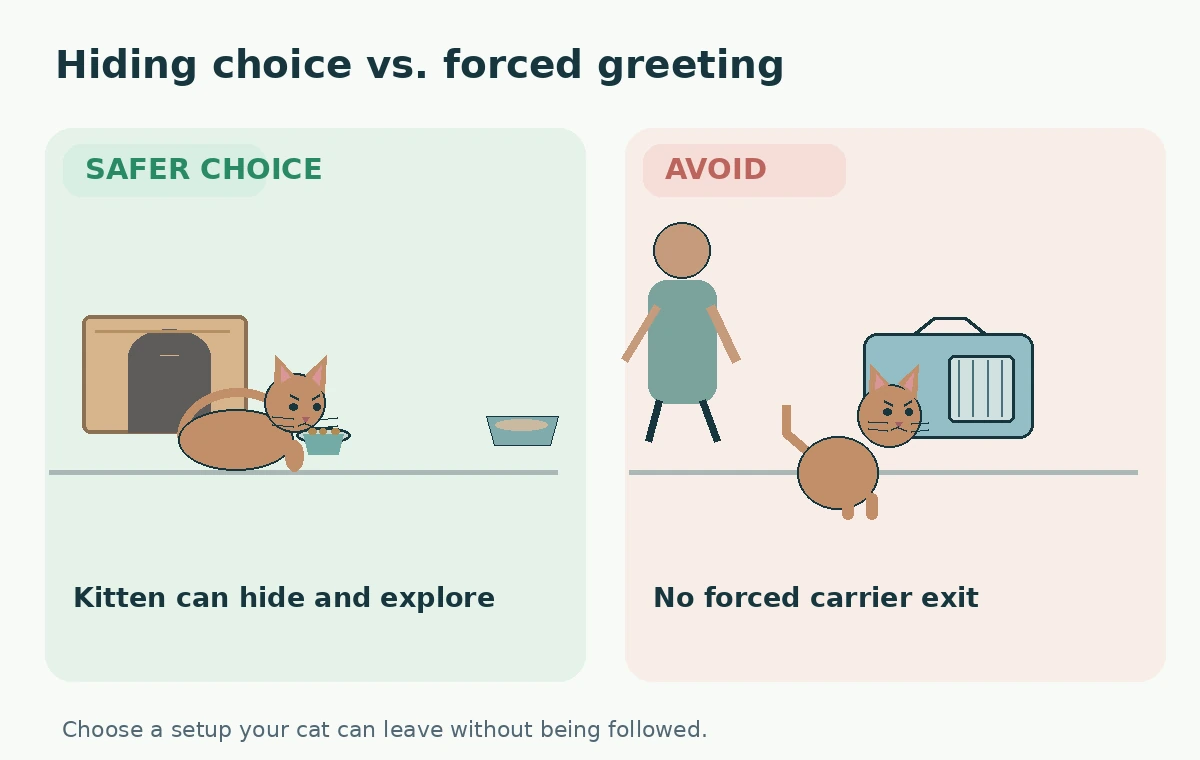
Bring the carrier directly into the prepared room and set it on a stable floor. Open its door and sit several feet away. Do not pull the kitten out or tip the carrier to make them move. A familiar-smelling blanket can remain inside if it is clean and safe. Some kittens explore quickly; others wait until the room gets quiet. Therefore, plan the arrival before a calm part of the day, not just before a party or a noisy home project. Keep outside doors and windows secured.
Read the small signs, not the clock
Notice the whole body: low posture, ears pressed sideways, wide eyes, and fast retreats can signal discomfort. A slow blink or a calm sniff is useful information, but no single expression proves the kitten feels safe. Record simple facts, such as whether food disappears, urine appears in the litter, and the kitten changes resting spots. A kitten may explore mostly while people sleep. Still, persistent lack of intake or elimination warrants a prompt veterinary call. Avoid guessing that a frightened posture explains every physical symptom.
Offer choice instead of a forced greeting
Sit sideways on the floor and speak softly for a short period. Let the kitten approach your hand rather than reaching under furniture. Place a small suitable treat nearby or roll an age-appropriate toy away from your body. If the kitten stays still, end the session calmly. Next time, repeat at a distance the kitten can tolerate. In contrast, following, cornering, or picking up a fleeing kitten can make the room less predictable. Ask visitors and children to respect the same boundaries.
Keep feeding and cleanup predictable
Feed an age-appropriate complete kitten food on a consistent schedule. Place bowls where the kitten does not have to cross an exposed doorway to reach them. Keep the litter tray clean and easy to enter. Check that the kitten actually uses these resources rather than assuming silence means comfort. If another animal waits at the door or stares through glass, shift the resources farther from that pressure. Also, avoid strong-smelling cleaners near the sleeping and feeding area.
Use short play invitations
Try a wand toy at a comfortable distance, always with a person holding the handle. Move the toy like a small creature traveling away from the kitten, not straight at their face. A curious look can count as progress. Allow a successful gentle catch if the kitten participates, and end before their movements become frantic. Store string, feathers, and small attachments out of reach afterward. Never use fingers as prey; kittens need a clear distinction between toys and hands.
Expand the territory only after settling
Wait for relaxed movement, reliable eating, and ordinary litter use before opening another room. Check the new area for hazards first. Leave the base-room door open so the kitten can return without being chased. Let the kitten explore briefly and return on their own terms. If they freeze in the doorway or retreat, simply make the territory smaller again. More space is not automatically better when a young cat feels overwhelmed. Keep other pets separated until a planned introduction can begin.
Avoid common first-week mistakes
Do not set the bed beside a loud appliance or force a frightened kitten to meet every family member. Avoid moving the litter tray daily or changing food repeatedly without a reason. Do not turn a hiding box into a place where hands always reach in. Also, do not assume that a kitten who purrs must be completely relaxed. Watch the overall posture and whether the kitten chooses to remain. Consistent gentle handling will matter more than a single dramatic breakthrough.
Know when behavior may signal a medical problem
Call a veterinarian promptly if the kitten refuses food, seems weak, has breathing trouble, repeatedly strains, vomits, or cannot use the litter tray. Young kittens can deteriorate quickly. Sudden collapse or severe breathing difficulty needs urgent care. For persistent fear after basic needs and medical issues have received attention, ask the veterinarian about a qualified feline behavior professional. This guide supports ordinary adjustment and does not diagnose illness or replace an examination.
How We Research
We reviewed guidance from veterinary and animal welfare organizations, compared the recommended body-language signs and environmental changes, and separated common management from issues that call for a veterinary exam. Our about page describes the project. Behavior varies between cats; this guide is educational and not a diagnosis. For new illness or safety concerns, see our veterinary disclaimer.
Sources
Cats Protection: Bringing a New Kitten Home — evidence-based background on feline comfort, body language, and supportive management.
AAHA: Behavior and Environmental Needs — evidence-based background on feline comfort, body language, and supportive management.
Cats Protection: Bringing a Cat Home — evidence-based background on feline comfort, body language, and supportive management.
No. Let the kitten approach on their own schedule unless an immediate safety or medical problem requires intervention. Make a safer, accessible retreat available.
The time varies widely. Focus on eating, litter use, gradual curiosity, and signs of improvement rather than expecting a fixed number of hours.
Quiet company can help some kittens, but you should not crowd their hiding spot. Keep the room safe and follow age-appropriate care advice from your veterinarian.
Start with quiet observation and supervised, low-pressure toy play. Children should never chase, grab, or drag the kitten from a hiding place.
Seek prompt veterinary guidance for poor appetite, lack of urination, lethargy, respiratory symptoms, or ongoing distress without improvement.