
This article is general information, not veterinary advice. If your pet seems unwell, is in pain or may have eaten something harmful, contact your vet or an animal poison control line right away. Read our vet disclaimer.
How to stop dogs from counter-surfing starts with prevention: keep food and rewarding objects out of reach, block access when you cannot supervise, and reward an alternative behavior. Dogs Trust emphasizes consistency and environment management, while AVSAB recommends reward-based methods for training (accessed 2026; AVSAB position reaffirmed 2025).
How to Stop Dogs from Counter-Surfing by Removing the Payoff
Counter-surfing can maintain itself because an occasional food find is a powerful reward. VCA describes dogs stealing food from tables and countertops as part of a broader stealing pattern. Therefore, how to stop dogs from counter-surfing begins with making the counter reliably unrewarding rather than waiting to correct the dog after a successful theft. In practice, how to stop dogs from counter-surfing depends on making that prevention consistent every day.
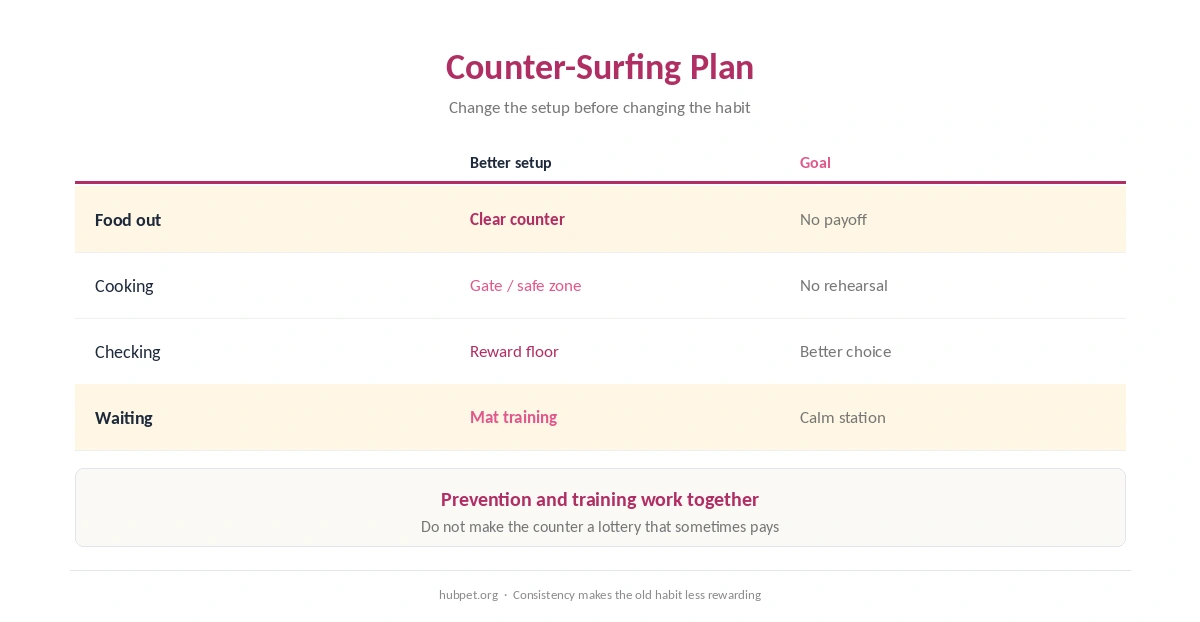
Clear food, dirty plates, wrappers, and crumbs from accessible edges. Use doors or pet gates when food preparation makes supervision difficult. The pet-proofing guide, pet-proofing checklist, and keep-pets-off-counters guide cover the same management principle for a safer kitchen.
| Problem | Better setup | Why it helps |
|---|---|---|
| Food left out | Clear counters | Removes self-reward |
| Busy cooking | Use a gate or safe zone | Prevents rehearsal |
| Dog checks counter | Reward four paws down | Builds an alternative |
| Dog cannot settle | Practice a mat or bed | Creates a clear station |
How to Stop Dogs from Counter-Surfing with an Alternative Behavior
Teach a simple behavior that is incompatible with reaching the counter, such as settling on a mat. Dogs Trust recommends rewarding relaxed behavior and building duration gradually. You can also reinforce stay or use basic home training as foundation work. This is how to stop dogs from counter-surfing without making the kitchen a source of conflict.
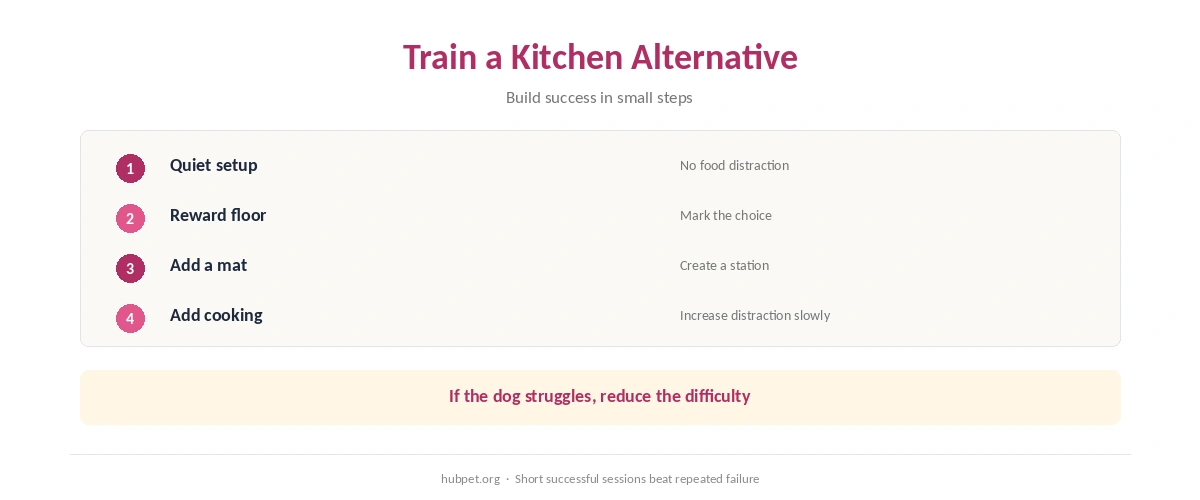
- Start in a quiet kitchen when no food is on the counter.
- Mark and reward four paws on the floor or movement toward the chosen mat.
- Reward again while the dog remains in the safe position.
- Add low-value food preparation only after the dog succeeds without food present.
- Increase duration and distraction gradually instead of testing the dog with a tempting meal too soon.
- If the dog leaves the station, calmly reset the environment and make the next repetition easier.
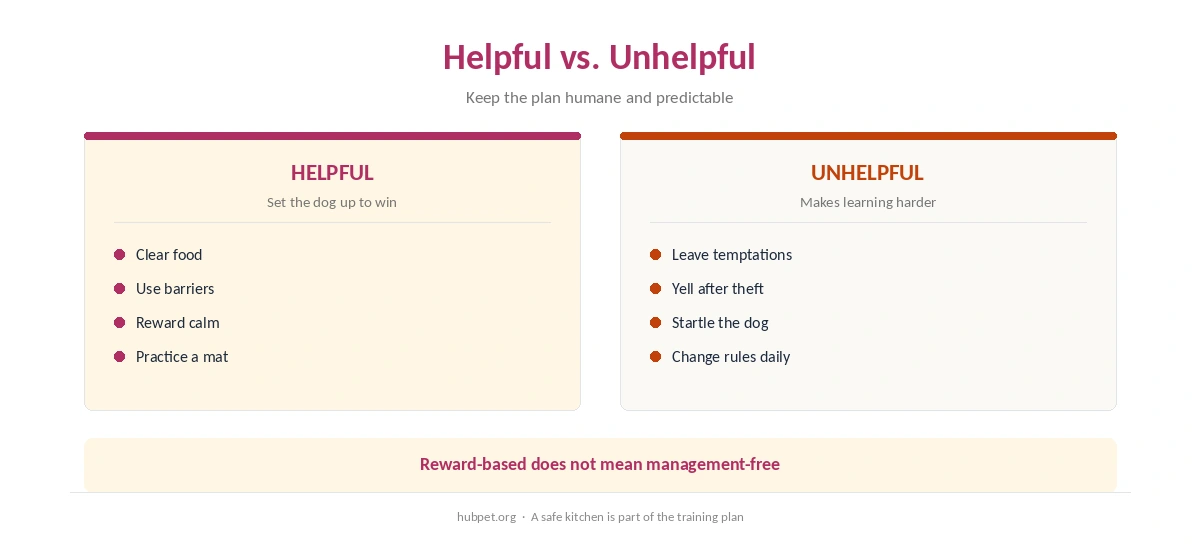
Avoid shouting, startling devices, or other punishment. AVSAB states that reward-based methods should be used for dog training and behavior modification. If counter-surfing happens around meals, the begging-at-the-table guide can help keep family responses consistent. For chewing or stealing household items, use chewing management; secure trash physically as part of the same management plan.
When to Get Professional Help
If stealing leads to guarding, growling, snapping, frantic food-seeking, or repeated ingestion of unsafe objects, get professional help. Start with your veterinarian when appetite or food-seeking changes suddenly. For behavior support, choose a professional who follows reward-based methods. The reactive-dog guide and separation-anxiety guide show why fear or high arousal needs a tailored plan rather than punishment.
Kitchen safety matters because stolen food may be harmful. Keep the foods toxic to dogs guide handy, and use pet emergency signs if a dog may have eaten something dangerous.
How We Research
HubPet uses veterinary organizations and research rather than personal anecdotes. We read these sources on October 11, 2026: Dogs Trust consistency and environment management, accessed 2026, Dogs Trust settle training, accessed 2026, AVSAB humane dog training position, reaffirmed 2025, VCA stealing and food-raiding behavior guidance, accessed 2026. See How We Research for our method.
How to Stop Dogs from Counter-Surfing FAQ
Finding food even occasionally can reinforce checking, so prevention must be consistent.
No. AVSAB recommends reward-based training. Manage access and reinforce a behavior you want instead.
A trained mat, bed, or other safe station can give the dog a clear alternative while food is present.
That can make the task unnecessarily difficult and may reward the old behavior. Add distractions gradually.
Call your veterinarian if food-seeking changes suddenly, becomes extreme, or the dog eats something toxic or unsafe.