
Unscented clumping cat litter often suits cats that dislike strong smells, but a fragrance-free label cannot tell you everything about dust or clump quality. The checks below prioritize your cat’s normal toilet habits and the real handling limits of the material. For health-related decisions, see our veterinary information disclaimer.
Read unscented, fragrance-free and deodorizing as separate claims
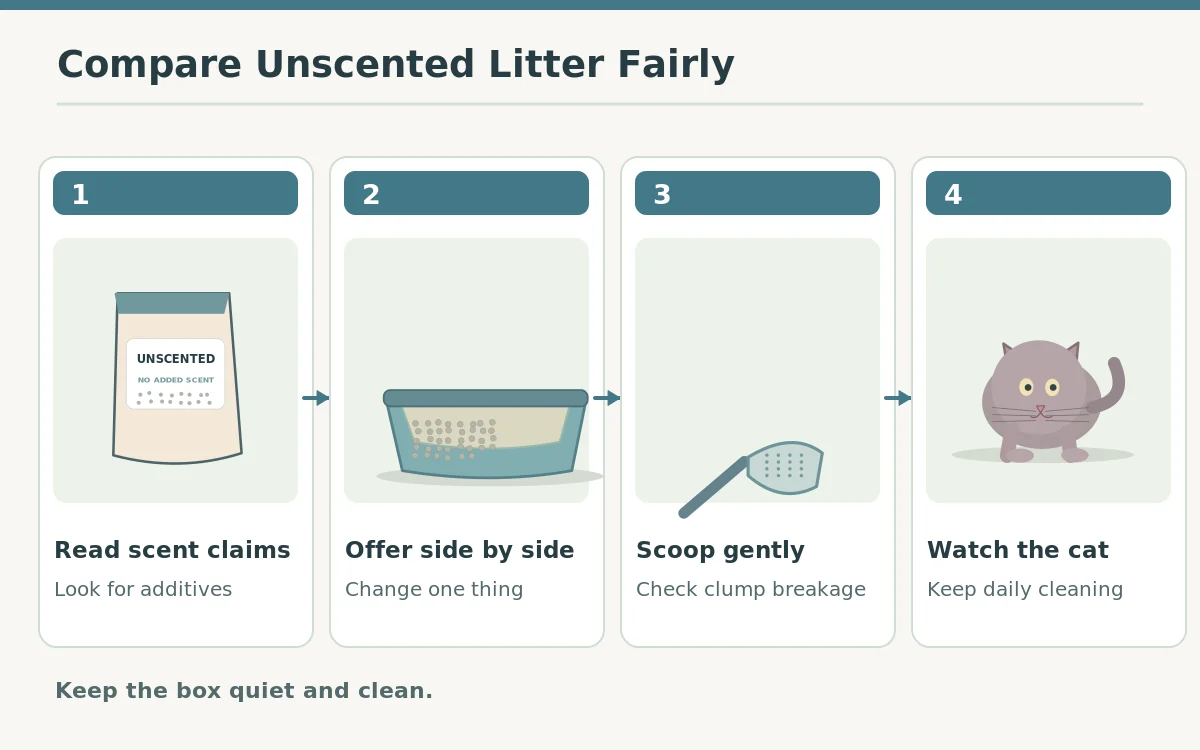
An unscented label usually signals an absence of added fragrance, but different brands use distinct ingredient wording and odor-control systems. Check the complete label for perfume, scent boosters and masking agents. A product may still have a natural material smell. Unscented does not mean dust-free, hypoallergenic or odorless after use. A cat may tolerate one unscented clay formula and refuse another because the grain texture changes. Start with the actual substrate and ingredient list rather than assuming every bag without flowers on the packaging feels the same to the cat.
Why a cat’s nose matters more than a perfume promise
Cats Protection recommends avoiding scented litter because strong smells can discourage use, and ASPCA notes that many cats prefer unscented material. Your cat’s comfort is the primary reason to choose a low-odor substrate; it is not a promise that the room will always smell fresh. Cleanliness still matters. Scoop waste frequently, remove damaged or wet litter from the base and keep the box in a well-ventilated but private location. Do not compensate for a dirty tray with plug-in fragrance, air freshener or essential oils around the litter area.
Inspect particle shape and paw feel before changing
Fine clumping litter may let a cat dig and bury more naturally than larger rough chunks, but there are exceptions. Run clean grains between fingers to notice sharp edges or gritty lumps; do not breathe dust deliberately. Offer a new type in a second tray rather than removing the usual litter immediately. Observe whether the cat buries normally, exits calmly and returns without hesitation. Avoid judging from a single visit because a cat may explore an unfamiliar tray once and then reject it. If the cat has paw discomfort, prioritize a soft surface and ask the veterinarian about persistent pain.

Evaluate clumps at the bottom and top of the tray
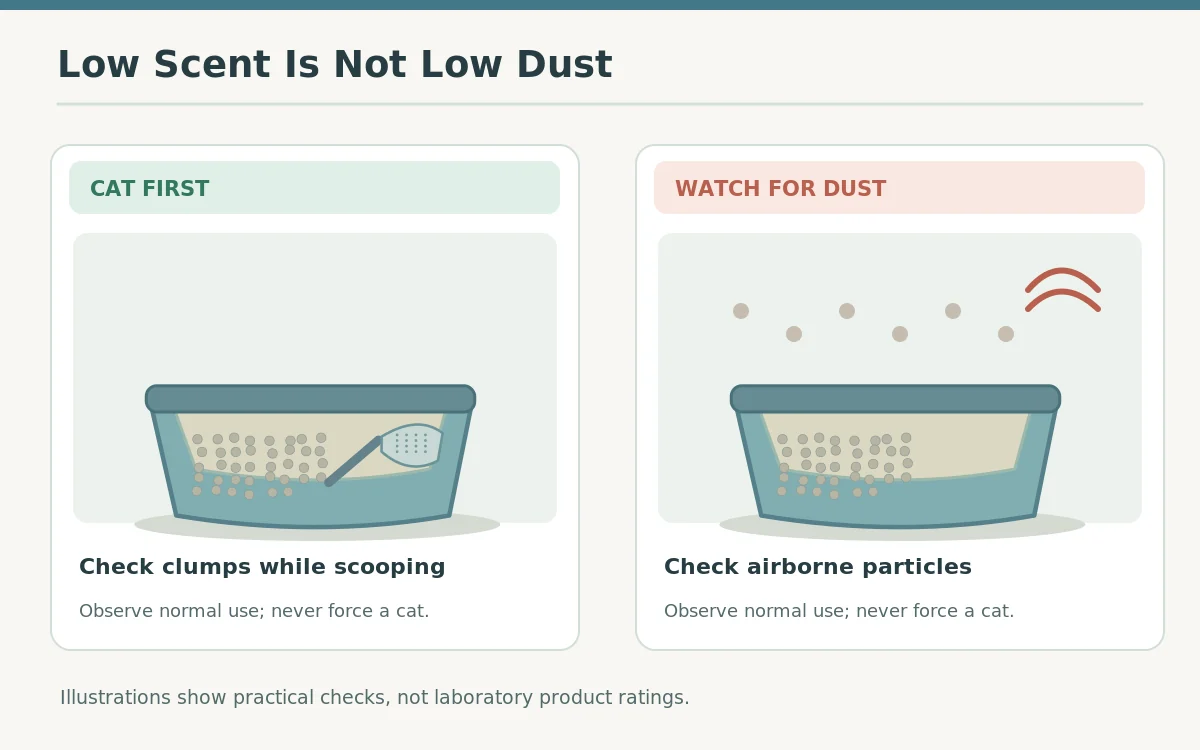
A good clumping result should lift without leaving broad wet patches at the base. In normal daily scooping, see whether urine clumps hold together or fracture into small saturated pieces. Use a scoop opening suited to the grain size. For a cat that digs to the base, some clumps may stick to plastic even with adequate litter; do not use metal scrapers that gouge the surface. Read the manufacturer’s suggested fill depth, then adjust within the cat’s comfortable digging range. Scooping more often can make a bigger difference than switching between similar odor claims.
Low dust is a separate performance question
An unscented bag can still release airborne particles when poured, so evaluate dust independently. Pour gently rather than dumping material from shoulder height. Watch for residue on surfaces during ordinary box use, and keep the area ventilated without directing strong air currents into the litter. A product with very fine particles may feel soft but behave differently during handling. Do not diagnose asthma or allergies from litter dust alone. If a pet coughs, wheezes or shows ongoing breathing discomfort, consult a veterinarian rather than relying on a package claim.
Do not mistake odor masking for hygiene
Clumping technology removes many wet sections when you scoop, but feces, missed fragments and a dirty scoop can still produce odor. Provide enough toilets for your household, located where cats cannot block one another’s access. Cats Protection suggests one tray per cat plus an extra, in separate places rather than all lined up. Wash trays regularly with mild cat-safe products and dry fully before refilling. Strongly fragranced cleaners can leave a residual scent the cat dislikes. Make routine cleanup the foundation, and treat any special odor-control claim as a secondary convenience.
Compare ingredients and litter weight against your needs
Some unscented clumping formulas use clay minerals; others use plant-derived ingredients or blends. Check whether the label discloses additives and whether the filled tray becomes too heavy to carry safely. Scoop weight, packaging size and the distance from storage to the box all affect practical use. Keep a stable tray that your cat can enter without high jumps, especially if mobility changes. For multi-cat households, evaluate clumps with normal traffic rather than relying on a single product demonstration. Keep unused material dry and prevent heavy stacked bags from falling.
Change substrate slowly and monitor the cat
If your cat currently accepts a scented litter, do not abruptly remove all familiar material on the same day you move the box or change its shape. A clean second tray with unscented litter can provide a clear choice. Gradual mixing may also work for some cats, but a side-by-side test better separates texture preference from fragrance preference. Watch for accidents, repeated unsuccessful visits or new hesitation. Sudden inappropriate urination can have a medical cause; contact the veterinary clinic rather than assuming the cat is being stubborn.
Decide using a practical five-point scorecard
Rate each candidate after normal use: paw acceptance, clump removal, dust while filling, odor after regular scooping and cost per week. Record whether the cat consistently uses the tray rather than responding only to how the litter smells to you. A cheaper unscented formula that produces dusty, fragile clumps may not offer better value. Conversely, an expensive low-dust claim is unhelpful if the cat avoids the substrate. Keep the setup familiar while you compare, and settle on the option that supports dependable toileting with manageable cleaning.
How We Research
We compared feline welfare and public-agency guidance cited below, separated general litter-box preferences from product-specific claims, and identified what owners can safely observe during normal use. Our comparison of unscented clumping cat litter does not claim laboratory testing, brand endorsement, veterinary diagnosis, measured dust scores, or proof that an eco label applies to used pet waste. Product instructions, local disposal rules and the individual cat’s response take priority. See how we approach editorial research. Reviewed October 28, 2026.
Sources
Cats Protection, How to Choose the Best Cat Litter for Your Cat. View the guidance. Accessed October 28, 2026.
ASPCA, Litter Box Problems. View the guidance. Accessed October 28, 2026.
RSPCA, Litter Training Your Cat. View the guidance. Accessed October 28, 2026.
RSPCA Australia, How Do I Encourage My Cat to Use a Litter Tray?. View the guidance. Accessed October 28, 2026.
Safety note: For sudden litter-box avoidance, repeated straining, obvious pain, breathing difficulty or abnormal urination, contact a veterinarian rather than attempting to treat the problem by changing products. Follow safe hygiene and local waste-disposal rules.
Product language varies. Check the ingredient list and packaging instead of relying on an unscented headline alone.
It can support cleanup through removable clumps, but daily scooping and a clean box are still essential.
No. Fragrance and dust are different properties, and dust varies by product and handling.
Not always. Keep the familiar tray available and offer a second tray to observe preference without pressure.
Seek veterinary advice for sudden toileting changes, repeated straining, pain, or persistent accidents.