
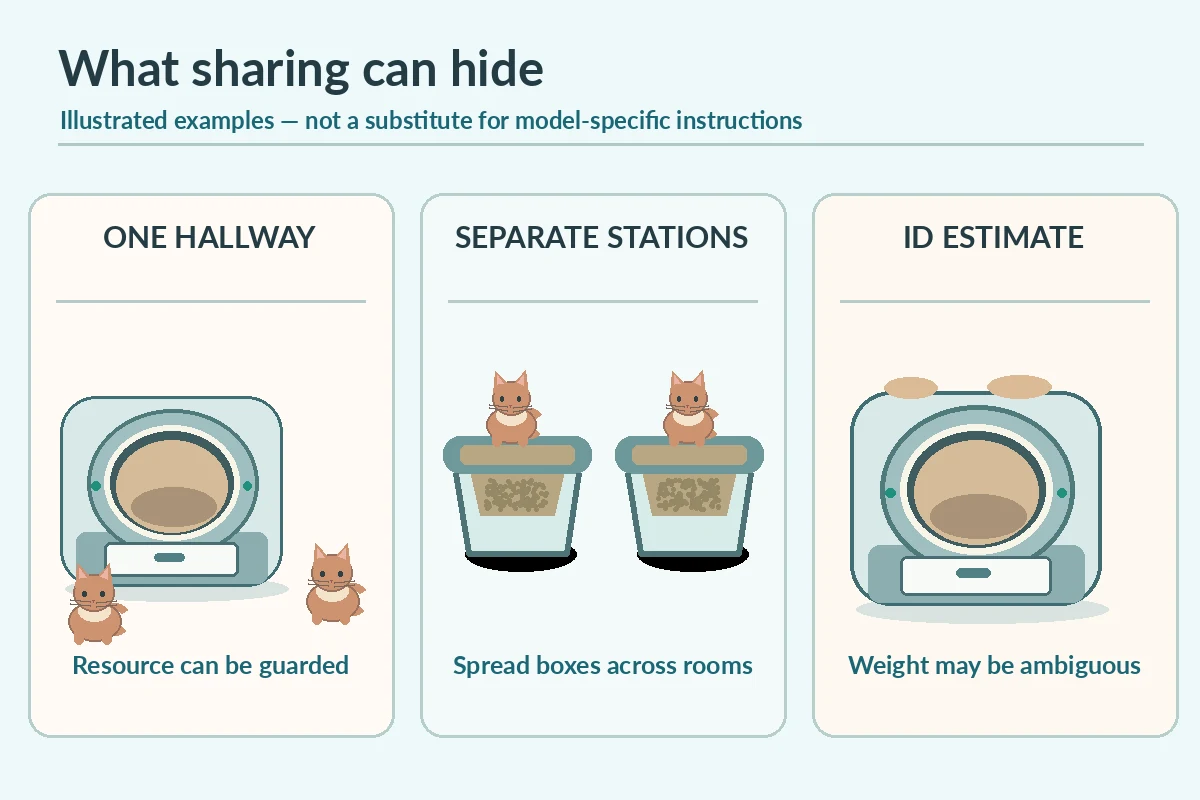
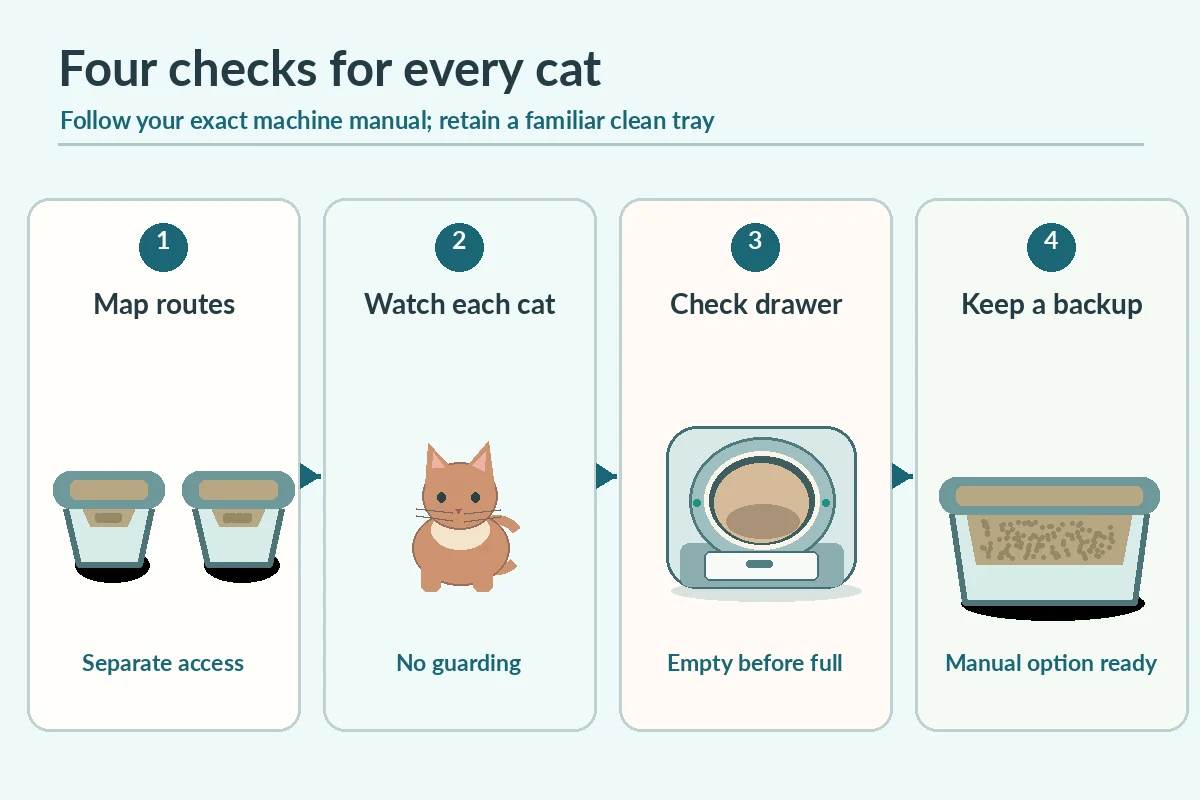
One machine may process several cats’ waste, but that does not automatically give each animal a private, reliable toileting option. A self-cleaning device can process waste after each visit, but a shared location may still create conflict. AAHA’s feline guidelines describe the familiar starting principle of one box per cat plus one extra, while emphasizing separate accessible locations. The AAFP/ISFM house-soiling guidelines consider social groups and the distribution of stations as important as raw box count. A single robot in one narrow utility room is still a single resource that another cat can guard. Map the home first: identify places where each animal can approach a tray without passing through the territory of a less-friendly cat.
Observe whether cats truly share resources
Cats that eat side by side are not necessarily comfortable following one another into a confined toilet. Observe resting partners, mutual grooming, blocking, staring, and waiting around box entrances. One confident animal may appear to monopolize the robot while another visits only at quiet hours. If a cat repeatedly backs away when another animal enters the room, add a traditional open tray elsewhere. Avoid interpreting silent resource avoidance as a preference for the floor. Each cat needs a predictable way to eliminate without being watched or intercepted.
Measure usable entry and turning room for everyone
The machine must suit the largest cat and the least agile one, not merely an average-weight adult. Compare entry height, interior floor area, and the space needed to turn, dig, and leave. A tiny cat can use a roomy unit, but a tall lip may become difficult for a senior with sore joints. When multiple sizes live together, a lower open box can provide meaningful access that an impressive robotic shell does not. Evaluate the path around the machine too: allow floor space for safe approaching and a clear escape route.

Estimate real waste-drawer workload
More cats create more visits, clumps, and drawer changes. Manufacturers sometimes give capacity estimates based on one typical cat, which can mislead a multi-cat buyer. Ask how capacity is measured and what happens when the drawer fills midweek. A liner that bunches or blocks the chute may cause jams before a nominal full indicator. For a practical trial, inspect the drawer every day at first and note how many days pass before it needs service. Do not leave waste longer simply because the advertisement says the compartment is large.
Do not confuse weight readings with individual IDs
Some devices infer which cat entered by weight. Two similarly sized animals can be confused, and one cat’s weight may vary between visits as posture, litter load, or placement changes. Even models with cameras or RFID features need careful configuration and testing. Treat automated visit histories as rough household trends rather than veterinary records. If you need to monitor a medically vulnerable cat, consult the veterinarian about a plan with directly observed litter habits; an app estimate cannot confirm which animal produced a particular clump.
Think through the cleaning-cycle traffic
Several cats may enter in quick succession. The machine might reset a timer repeatedly, leaving clumps behind longer than expected. Movement or sounds after a visit can make another cat hesitate. Read how the unit interrupts cycles and whether a subsequent cat can approach while cleaning runs. Observe the first days of use without forcing cats toward the device. If the machine becomes a crowded bottleneck, add another quiet station rather than shortening the cycle delay in an attempt to push cats through faster.
Separate equipment uptime from litter-box availability
A single power outage, sensor error, full waste drawer, or failed motor can make the only robot unusable. A reliable arrangement includes an accessible manually scooped tray on another route. Consider which person will empty and clean the drawer while you travel and whether the app shows useful errors without masking a real problem. Keep the conventional backup ready; a spare box packed in a closet is not a functioning resource. The cost of a second robot is not necessarily the most effective way to improve feline access.
Check cleanability with more cats and more mess
An automatic cycle does not remove residue from the liner, side walls, entrance, or underside of a hood. Multi-cat households may need deeper cleaning sooner than advertised. Confirm that removable parts come apart without tools that are easy to lose, that drawer liners fit, and that the manufacturer sells wear parts. Follow the specific instructions before washing any electronic components. Choose a layout that gives a human enough room to pull the waste drawer out completely without scraping it against walls.
Trial success means every cat can toilet comfortably
Watch actual use over several weeks: separate locations, normal digging, easy exits, and no cat repeatedly waiting or guarding. Consider a simple paper log listing each cat’s known visits and any accidents. App data can supplement this log, not replace it. If a cat seems distressed or urine patterns change, keep a familiar clean pan available and seek veterinary guidance. The right answer may be one robot plus two open trays, or conventional boxes alone. Comfortable access matters more than reaching a target number of automatic units.
How We Research
For this HubPet guide, we compared automatic litter boxes for multiple cats against published feline welfare guidance and model-specific operating instructions. We separated a machine’s documented capabilities from general assumptions and prioritized a cat’s voluntary use, normal exit access, and low-stress toileting. The original diagrams are illustrative, not photographs, certifications, independent hardware stress tests, or endorsements. This guide does not claim that a particular product is risk-free. Compare the current manual for the exact device and consult your veterinarian about individual toileting concerns. Read more about our editorial approach on About HubPet.
Sources
AAHA/AAFP, General Litter Box Considerations: Read source. Reviewed October 27, 2026.
AAFP/ISFM, Guidelines for Diagnosing and Solving House-Soiling Behavior in Cats: Read source. Reviewed October 27, 2026.
Whisker, Litter-Robot Frequently Asked Questions (model-specific safety and litter): Read source. Reviewed October 27, 2026.
Whisker, Litter-Robot 4 Support: Kitten Sensor Limits and Litter Compatibility: Read source. Reviewed October 27, 2026.
Safety note: If your cat strains, repeatedly attempts to urinate with little or no urine, shows pain, or suddenly stops normal toileting, seek prompt veterinary care. This is general education, not veterinary diagnosis. See our veterinary disclaimer.
They may share it, but also need appropriate separate toileting choices. One machine in one location is not a substitute for multiple access points.
There is no universal robot count. Start with the overall number and spread of usable litter stations, then observe each cat’s access.
Sometimes it estimates identity, but similar weights, posture, and sensor conditions can cause errors. Do not treat the data as definitive.
No. Inspect the litter bed, entrance, drawer, and cat behavior each day; mechanical faults and misplaced liners can happen before the drawer looks full.
Provide alternative litter stations in different quiet locations and review routes and conflict signs. Consider veterinary or behavior support if avoidance persists.