
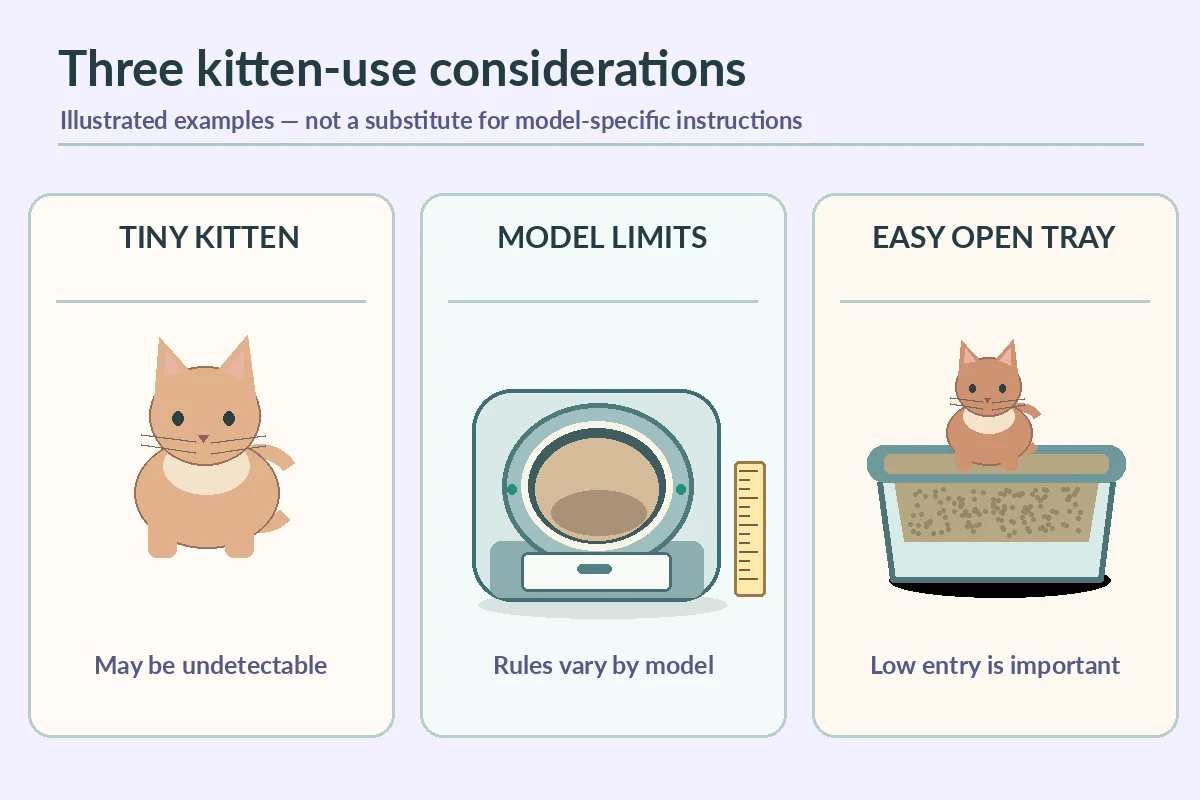
A kitten may enter a robot long before its safety sensor reliably detects such a small body. The most important question is whether a kitten is reliably detectable by the particular unit’s safety system. Being tall enough to climb through an opening does not prove that the machine’s sensors will register the cat. Some sensors depend on weight, others on an optical beam, and a machine may combine several methods. Manufacturers publish different thresholds for different generations. Never apply a number from one brand or model to another. If you cannot confirm instructions for your exact unit, use a conventional low-sided litter box instead of unattended automatic operation.
Understand why published limits differ
Whisker’s current FAQs describe a 3-pound minimum for automatic use on certain newer Litter-Robot models and a 5-pound minimum on older models; PetSafe ScoopFree documentation for some models recommends leaving the unit unplugged for kittens younger than six months. Those are manufacturer-specific instructions, not universal biological rules. Check the current manual, update notices, and model identification before using any threshold. A kitten close to a cutoff still deserves close observation and easy access to an ordinary tray. Device safety is broader than one number on a scale.
Keep an easy-entry conventional litter box ready
A young kitten may need a low step-in height, familiar substrate, and a quiet location it can reach quickly. A high robot threshold or unfamiliar enclosed opening can create an avoidable barrier. Use a roomy, stable open tray in a consistent place and scoop it regularly. The AAFP/ISFM veterinary environment guidance emphasizes appropriately sized, easy-access trays and familiar substrate. If you want to introduce the robot later, retain the ordinary tray through the learning period. Do not remove the established option to pressure a kitten into trying the new machine.

Introduce the robot while it stays inactive
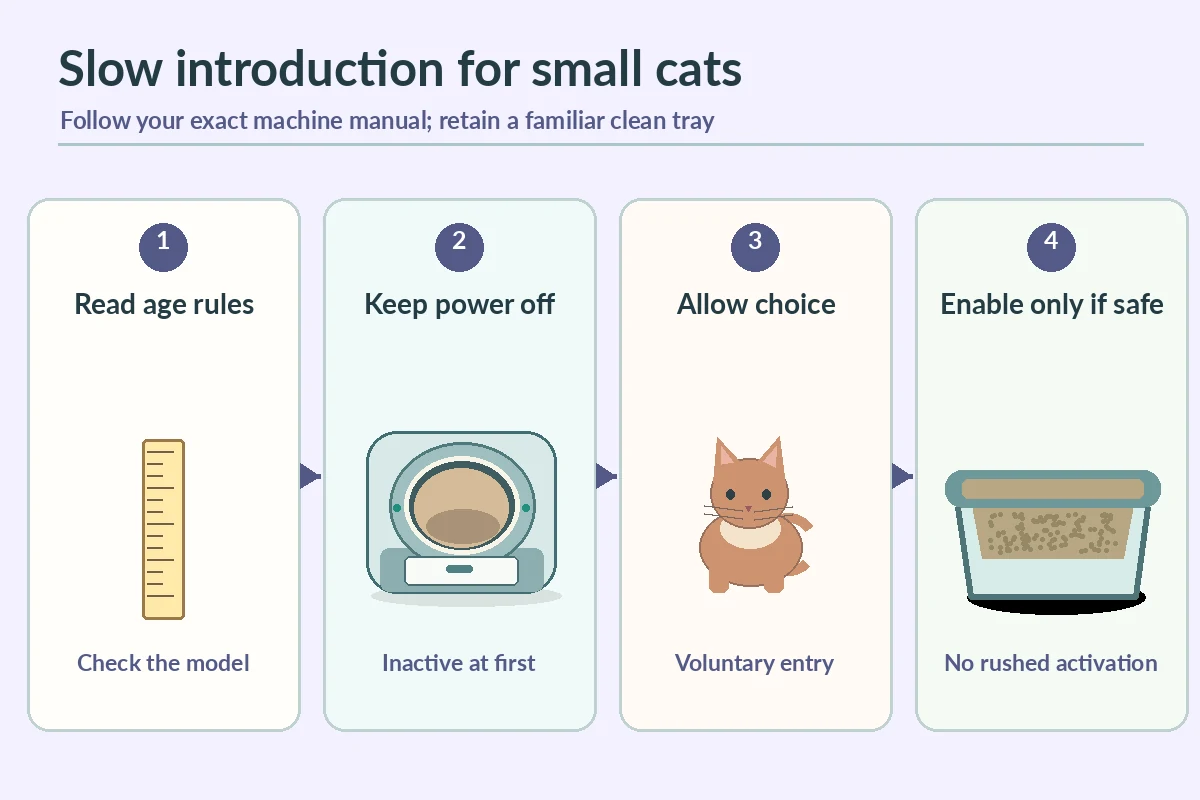
Start with the machine turned off or unplugged as its own instructions require. Let the kitten inspect the shell without the motor, lights, or spinning movement. Keep the familiar litter nearby and do not physically place or confine the kitten inside a robot. If the kitten visits the inactive litter bed voluntarily, note whether entry and exit are easy and relaxed. Do not assume familiarity with the object equals readiness for automatic cycling. A machine that starts a motor near a sensitive kitten may make toileting less predictable, even if sensors technically detect the animal.
Know what supervised manual cycling means
Some manufacturer instructions permit turning the device on only to start a cleaning cycle after the kitten has left, then turning it off again. This should be done only exactly as specified for your model; not every machine offers a safe manual mode. Confirm the kitten is fully away from the opening, follow the product delay rules, and never use a sensor override. A supervised cycle is not permission to leave low-weight kittens with automation enabled all day. If any safety step is unclear, scoop a conventional box instead.
Assess room to turn and paw comfort
A kitten may get into a tight compartment but struggle to turn or exit when startled. Examine the inner floor, lip height, moving seams, and overall stability. Look for granules that catch in paws or an awkward incline that makes the kitten jump into a litter surface. Avoid rough pellets unless your kitten accepts them and the machine supports them. Provide a clean, easily reached alternative on the same floor where the kitten lives. Training success is comfortable voluntary elimination, not the number of robot app notifications.
Keep the box in a calm location
The machine should not sit next to loud appliances, busy hallways, or a doorway that shuts when people leave for work. Young kittens benefit from predictable routes to food, rest, and toileting; those resources should not be packed into one corner. Introduce equipment gradually rather than moving a litter tray and changing the substrate on the same day. Observe whether the kitten sniffs, digs, covers, and leaves without rushing. If the robot causes fear, power it down and keep the familiar arrangement rather than trying to make the kitten tolerate surprise noise.
Recheck changing body weight and capability
Kittens grow rapidly, but weight alone does not tell you if a particular sensor or doorway is suitable. Consult the device’s minimum body weight and other restrictions at the time you intend to enable automatic mode. Follow any model-specific calibration or surface requirements, and monitor the first approved cycles closely without intervening near moving parts. Keep a backup option even after the kitten begins to use the robot. Retain a regular litter tray until the cat reliably chooses the new system and the equipment works without repeated errors.
Recognize when to stop experimenting
If a kitten repeatedly avoids the robot, begins eliminating outside its tray, or seems startled by equipment noise, restore the familiar low-entry box and postpone automation. Elimination changes can also indicate illness, so seek veterinary advice if a change persists. Repeated attempts to urinate with little or no output require urgent care and must not be blamed on a new machine. The best purchase can be the one you wait to activate. Convenience for an owner should never come ahead of predictable, safe access for a small animal.
How We Research
For this HubPet guide, we compared automatic litter boxes for kittens against published feline welfare guidance and model-specific operating instructions. We separated a machine’s documented capabilities from general assumptions and prioritized a cat’s voluntary use, normal exit access, and low-stress toileting. The original diagrams are illustrative, not photographs, certifications, independent hardware stress tests, or endorsements. This guide does not claim that a particular product is risk-free. Compare the current manual for the exact device and consult your veterinarian about individual toileting concerns. Read more about our editorial approach on About HubPet.
Sources
Whisker, Litter-Robot Frequently Asked Questions (model-specific safety and litter): Read source. Reviewed October 27, 2026.
Whisker, Litter-Robot 4 Support: Kitten Sensor Limits and Litter Compatibility: Read source. Reviewed October 27, 2026.
PetSafe, ScoopFree Original Self-Cleaning Litter Box Manual (model-specific limits): Read source. Reviewed October 27, 2026.
AAHA/AAFP, General Litter Box Considerations: Read source. Reviewed October 27, 2026.
ISFM/AAFP, Cat Friendly Veterinary Environment Guidelines (litter access and texture): Read source. Reviewed October 27, 2026.
Safety note: If your cat strains, repeatedly attempts to urinate with little or no urine, shows pain, or suddenly stops normal toileting, seek prompt veterinary care. This is general education, not veterinary diagnosis. See our veterinary disclaimer.
Do not assume so. Follow the exact model’s minimum weight, age, and sensor instructions; a conventional low-sided tray is the safest fallback.
No. Some newer models list three pounds, older ones may require more, and some specify age restrictions. The instruction manual governs.
Many products can be used as an inactive tray, but only if the manufacturer permits it and the kitten can enter and exit easily.
Keep the familiar tray, allow voluntary exploration while inactive, and follow the model-specific steps after all safety requirements are met.
Keep a quiet low-entry conventional box available, stop automatic cycling, and reintroduce slowly or postpone the switch without punishment.