
A puppy may outgrow a travel harness faster than expected, and an attractive puppy booster seat may not offer meaningful crash protection. Choosing a puppy car restraint means matching the animal’s present size to equipment with clear instructions and credible testing, then revisiting fit throughout growth. CDC and ASPCA recommend secured carriers or back-seat restraint systems and short practice drives. This article focuses on buying and introduction decisions, not on medical treatment. For persistent nausea, fear, injury, or pain, consult a veterinarian; review our HubPet veterinary disclaimer.
Start with your puppy’s current body measurements
Measure the chest where the harness manufacturer directs and record the puppy’s current weight. Compare those numbers with the model’s fit and test limits. A vague “small puppy” label tells you little, especially across breeds with different chest proportions. Do not deliberately buy a very loose harness for anticipated growth; loose straps can slip or change load distribution. If no appropriate tested harness fits the puppy yet, investigate a securely installed, appropriately sized carrier with documented vehicle performance. Revisit the choice as the puppy gets bigger.
Separate booster-seat comfort from restraint performance
Soft car boosters may give small dogs an elevated view, but a comfortable cushion is not a safety rating. Look for evidence on the complete travel system: dog restraint, fastening method, weight range, and crash testing. A basket with a single collar clip does not become crashworthy merely because the packaging calls it a car seat. Avoid placing the puppy in the front passenger seat near an active airbag. The important result is that the puppy is restrained according to verified instructions, not that the animal can see through every window.

Choose the rear-seat location before you shop
Inspect the rear cabin while parked. Look at usable belt geometry, airbag instructions, footwell gaps, and where a carrier could be securely installed. Test that adults can buckle in without moving the puppy’s attachment. Do not place a loose carrier on a passenger’s lap. CDC advises securing travel crates so they cannot slide or shift during stopping. If the car is very small, contact the equipment manufacturer about approved seat positions instead of choosing an improvised location. Remember that vehicle fit can matter as much as puppy fit.
Use a carrier for some very small puppies
A sturdy carrier may provide a clearer starting setup when a puppy is too small for available tested harness sizes. Verify that the model is suitable for car travel and has an approved fastening method; ordinary fabric bags and household crates are not automatically crashworthy. The puppy should be able to stand, turn, and lie in a natural posture. Add only bedding that does not interfere with doors, ventilation, or attachments. Introduce the carrier outside the car first, and never leave the puppy unsupervised with chewable loose straps.
Introduce the equipment away from traffic
Place the harness or carrier on the floor in a calm room and reward relaxed investigation. Use short sessions rather than fastening everything on a reluctant puppy immediately. Next, move to a parked car with the engine off; give the puppy time to settle before installing the restraint as directed. When those steps are easy, take a brief drive to a familiar, positive destination. Stop the session if the puppy panics, repeatedly vomits, or attempts to escape. A veterinarian can help distinguish motion sickness from fear-related behaviors.
Review collar, tether, and chewing hazards
Never attach the vehicle restraint to a neck collar alone. Puppies often mouth new straps, so check for accessible loose webbing and keep the connection away from the muzzle where permitted by the product instructions. Do not add an extension tether just to make more room for play; Center for Pet Safety advises that extensions can undermine crash performance. Avoid wrapping a belt around a toy or bedding. During trips, keep a passenger available for supervision when possible, but that person’s hands are not a substitute for the verified restraint.

Plan for short trips and frequent breaks
A young puppy may need bathroom breaks more frequently than an adult dog. Build rest stops into journeys, offer water, and keep the puppy leashed before opening any car door. Choose calm boarding and exit rituals to prevent bolting into traffic. If vaccination status limits suitable public places, ask your veterinarian about safer rest options. Avoid feeding while the vehicle is moving and discuss recurrent car sickness with your veterinarian. Even a perfect restraint is not a solution to dehydration, heat, discomfort, or excessively long confinement.
Recheck fit as growth accelerates
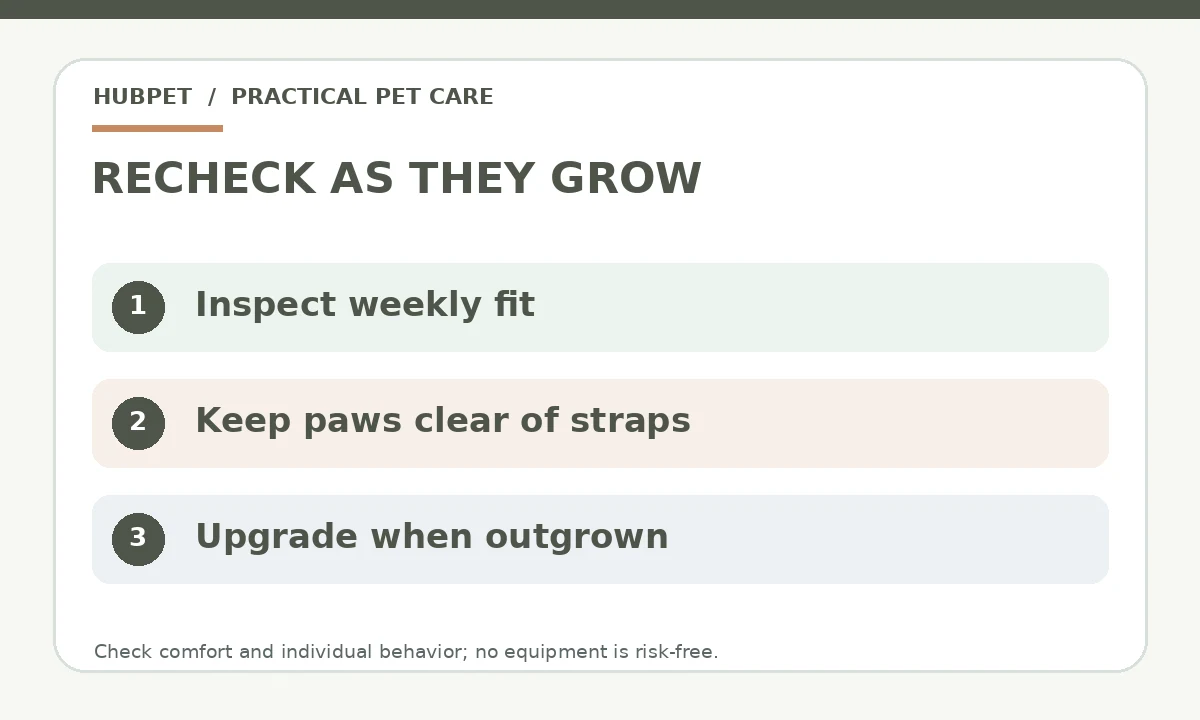
Set a reminder to inspect the harness or carrier every week during rapid growth. Re-measure the dog’s chest and weight, then check whether the model remains inside its permitted range. Look for rubbing behind the elbows, a chest panel that has shifted, and buckles sitting on bony areas. Replace outgrown equipment; do not cut or sew structural straps to extend use. A later switch to a larger system may need a fresh gradual introduction. Keep both purchase details and current measurements together so caregivers use the correct equipment.
Check who else drives with the puppy
Family drivers sometimes assume all pet harnesses clip into the same buckle. Show each person the specific installation method and keep the official instructions accessible. Check that the puppy is never allowed to roam between seats during the journey or jump out immediately when the door opens. Secure heavy bags separately, especially in a small vehicle where luggage could slide toward the carrier. If another dog travels too, plan independent restraint positions so puppies cannot tangle belts or crowd each other during braking.
Make a purchase plan that survives growth
Choose the system that fits safely now, has documented use for your dog’s weight, and works with the current vehicle. Estimate how soon a size change may be required, but do not accept a dangerously loose fit to save money. If purchasing a crate or carrier, evaluate its individual fastening method rather than relying on the word “travel.” Prioritize a calm introduction and predictable loading routine. A simple, well-documented system used correctly beats a fashionable booster seat paired with an untested tether.
How We Research
Our editorial team compared current pet travel, vehicle restraint, and safety-testing guidance with the specific shopping question in this guide. The review distinguishes sourced safety principles from practical inspection prompts. Our team did not test specific products, and this guide does not claim any car accessory prevents injuries or fits every dog. Our team reviewed source pages on October 27, 2026. Learn about our process on the About HubPet page. For distress, injuries, or medical questions, consult your veterinarian.
Sources
Centers for Disease Control and Prevention: Pet travel safety. Reviewed October 27, 2026.
ASPCA: Travel safety tips. Reviewed October 27, 2026.
Center for Pet Safety: CPS Certified Products. Reviewed October 27, 2026.
Center for Pet Safety: Extension tether safety advisory. Reviewed October 27, 2026.
Merck Veterinary Manual: Traveling by car with pets. Reviewed October 27, 2026.
Do not use a loose harness outside its fit limits. Choose a system that fits now and recheck as the puppy grows.
No. Comfort, elevation, and crash performance are separate claims that require different evidence.
Yes, if the carrier is suitable for the puppy and correctly secured in the vehicle according to its instructions.
Practice in brief calm steps and seek veterinary help for significant nausea or panic rather than forcing travel.
Check before each trip and re-measure frequently during growth, especially after weight or body-shape changes.