
Pet-care safety note: If your animal is ill, has injured skin, or may have contacted a household chemical, contact your veterinarian. Read our veterinary information disclaimer for the limits of general website guidance.
A dog paw cleaner cup is a narrow container with a flexible interior. With clean water, it loosens grit from the underside of a paw. It can help when muddy walks are routine, especially where multiple paws need a quick rinse at the door. The cup is not a disinfectant, a treatment for sore skin, or a substitute for checking between toes. A plain damp cloth may be faster for light dust. Decide whether the mess is loose surface dirt, thick mud, salt residue, or a sticky substance that needs veterinary advice rather than more scrubbing.
Measure the actual paw, not the breed label
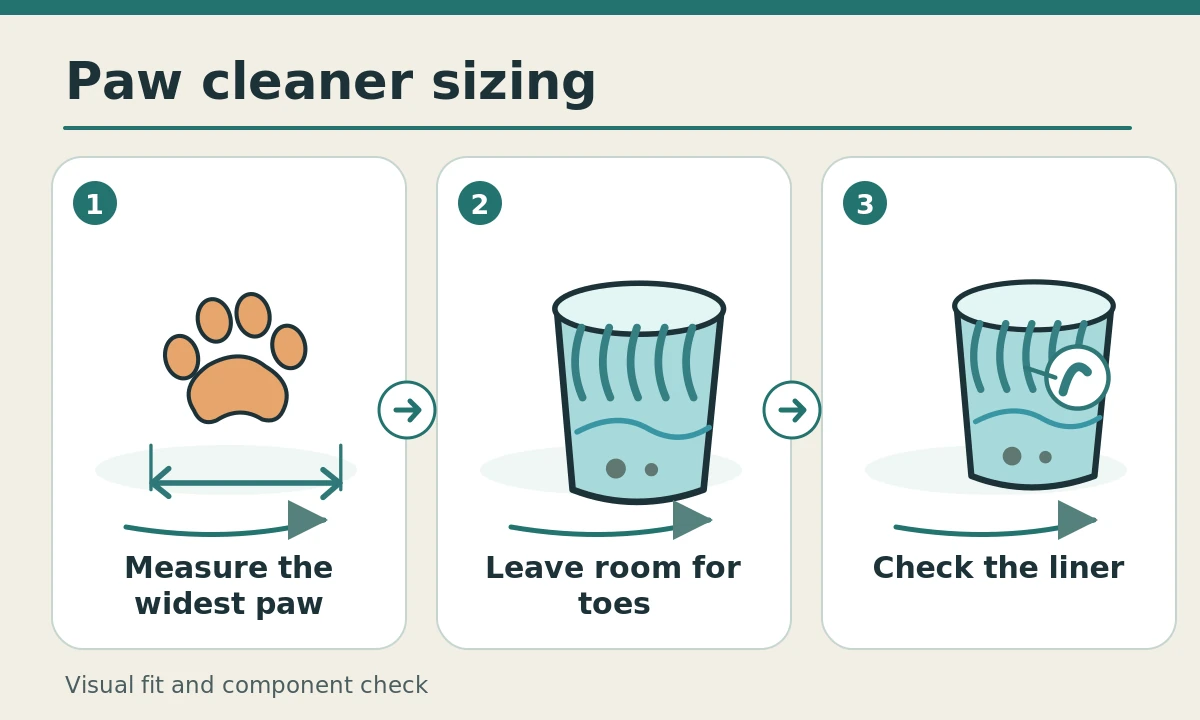
Make a paper trace of the widest paw while your dog stands normally, or measure its width with a soft ruler without squeezing the toes. Look for the cup’s stated internal opening and the usable interior width after accounting for its bristle liner. The paw should slide in freely without forcing the toes together. Also check depth: a very deep cup can touch the leg awkwardly while an overly shallow one may splash out. Breed-size tags are only a starting point; two dogs in the same breed may have very different feet.
Inspect the bristles and inner edge
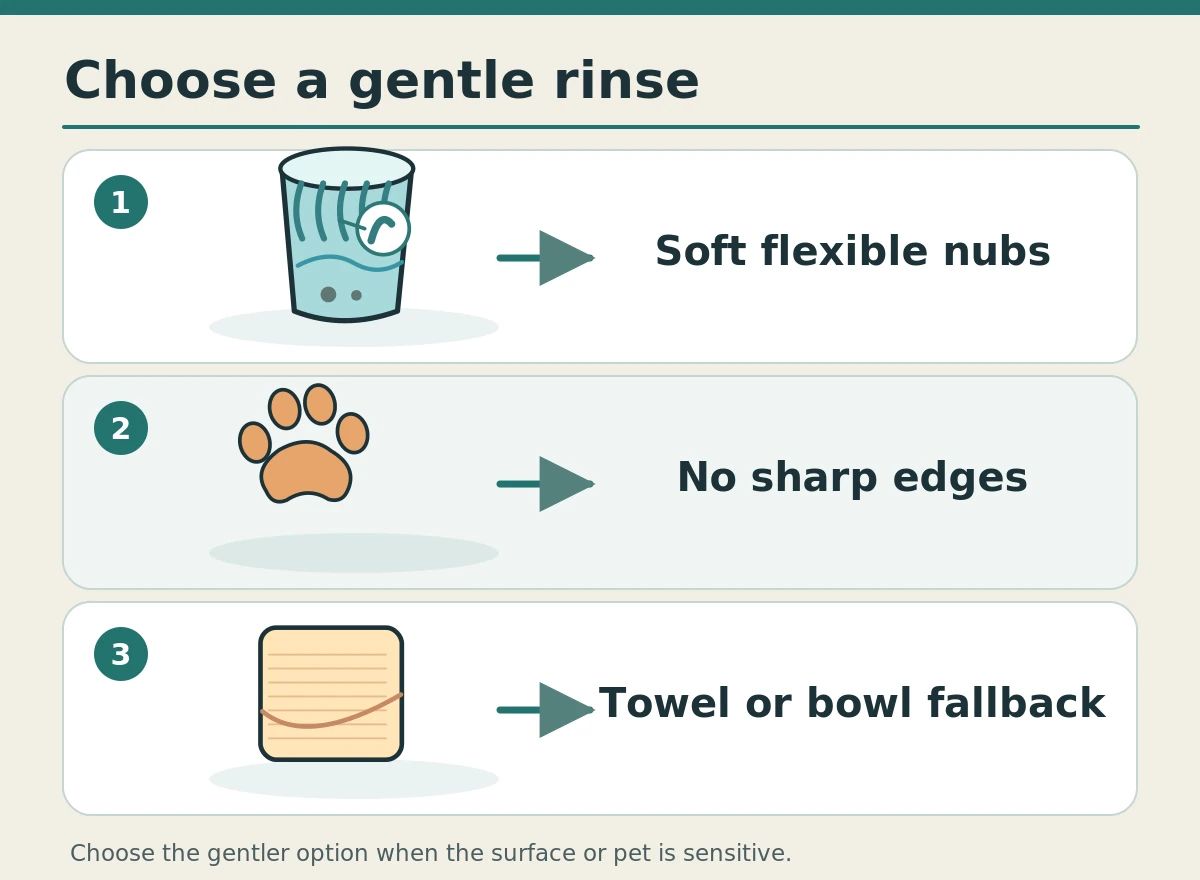
Look for flexible silicone or similarly soft nubs that bend when you press them against your fingers. The rim should be smooth, and the liner should not trap nails or snag fur around the pads. A cup with stiff ridges can scrape skin if someone pumps or twists it aggressively. Check that the liner comes out for thorough washing; otherwise grit can stay hidden at the base. A clear or removable reservoir makes it easier to spot muddy water and stop before you reintroduce dirt onto the next paw.
Make the entry comfortable before adding water
Let your dog sniff the empty cup while you offer a small reward. Touch the cup to the outside of a front paw, then remove it. Practice a brief, voluntary paw lift on a nonslip mat. If the dog pulls away, freezes, or licks lips repeatedly, return to easier handling rather than holding a foot in place. Some dogs dislike narrow objects enclosing their feet; those dogs may prefer a shallow bowl and washcloth. A helper can deliver rewards, but should not pin the dog down to finish the job.
Use lukewarm water and a light touch
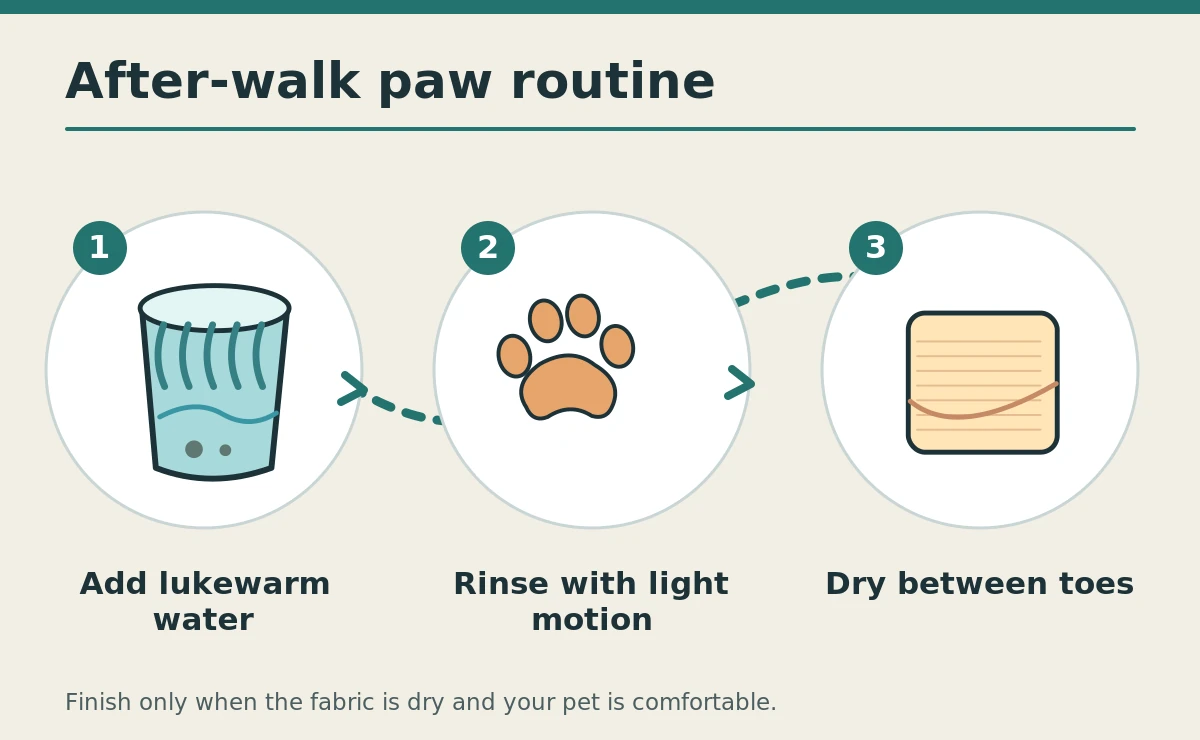
Pour in only the amount of plain lukewarm water recommended for your model. Support the leg naturally at its joint; slide the cup up over the paw rather than pushing the foot down into it. Use a few gentle movements, not forceful twisting. Empty muddy water between paws when needed. Never add an arbitrary dose of detergent, essential oil, bleach, or disinfectant to a paw cup. After exposure to sidewalk deicers or suspected chemicals, rinse adequately and call your veterinarian if you notice licking, redness, or signs of irritation.
Dry the spaces that stay hidden
Lift the paw out and pat the pads and the spaces between toes with a clean absorbent towel. A cup can leave water behind even when the top of the foot appears dry. Pay attention to long feathering between toes and trim nothing sharp near the pads just to speed the process. Feel for remaining grit, check for a pebble or splinter, and stop if a spot is painful. Moisture trapped against irritated skin is a reason to be more careful about drying and to seek veterinary advice if redness or odor persists.
Compare the cup with two low-tech options
For light dirt, a soft cloth has nearly zero setup time and gives you more control for gentle wiping of individual pads. For large paws, a shallow rinse bowl offers enough room and makes it easier to see and remove grit, but can spill. The cup contains much of the splash and is handy for routine mud. However, it may feel uncomfortable for a dog with sensitive toes or a long coat. Select based on your doorway, your dog’s cooperation, and how well you can clean the device afterwards—not on claims that one method sterilizes paws.
Check cleaning and storage before buying
Remove the liner and look for corners, folds, or a base seam where dirt can collect. You should be able to wash each piece according to the maker’s instructions, rinse thoroughly, and dry every part separately. Inspect any lid or handle for crevices. Avoid leaving wet equipment sealed in a bag or car. A washer that is difficult to disassemble becomes less useful over time even if it looks clever in the product photo. Consider how easily the cup can be emptied without spilling onto a clean floor.
Know when a cup is the wrong solution
Skip enclosed washing if the paw has a cut, swelling, tenderness, or an object embedded in it. Do not use a cup to scrub sticky chemicals, tar, fresh road sealant, or unknown substances off a paw; prevent licking and ask a veterinarian or animal poison control how to respond. A dog limping after a walk needs attention to the cause, not repeated washing. For routine sidewalk salt, VCA recommends cleaning paws after walks so residue cannot be licked off, but that does not mean vigorous brushing is necessary.
Run a two-minute doorway routine
Set out a clean towel, plain water, and your chosen tool before bringing the dog into the entry area. Reward a pause on the mat. Wash one paw briefly, wipe it dry, and release it before trying the next. Empty dirty water and rinse the liner afterward. Record whether the dog stayed relaxed and whether grit remained between toes. If the routine takes longer and produces more stress than a washcloth, switch tools. Convenience is a real benefit only when the dog can tolerate the process.
The shopping verdict
Choose a paw washer cup only if the opening fits the largest paw comfortably, the flexible liner is removable, and you can clean and dry every component. Compare those requirements against a towel and shallow bowl before spending money. Make the cup optional in the dog’s handling routine rather than a daily battle. For persistent paw licking, irritation, cracks, or an unusual smell, a veterinary exam matters more than finding a different cup. Keep the goal simple: remove ordinary dirt without hurting skin or overwhelming the dog.
How We Research
We evaluated the paw-cleaning recommendation from VCA, ASPCA guidance about household chemicals, and CDC hygiene guidance. We then used a practical fit-and-maintenance checklist to separate what a cup can actually do (lift dirt) from unsupported sterilizing claims. No physical product was independently tested. See About HubPet for our editorial approach.
Sources
VCA Animal Hospitals: Winter Paw Care and Ice Melt: Read the original source. Accessed October 27, 2026.
ASPCA Animal Poison Control: Poisonous Household Products: Read the original source. Accessed October 27, 2026.
CDC: Ways to Stay Healthy Around Animals: Read the original source. Accessed October 27, 2026.
You can use a gently handled cup as needed for ordinary mud, but daily scrubbing may be unnecessary. Wipe or rinse only what needs cleaning, dry thoroughly, and watch for skin irritation.
A cup is too small if the paw does not slide in freely, toes compress, nails catch the liner, or the dog resists because of pressure. Measure the largest standing paw and compare with the true inside opening.
Use plain lukewarm water for routine dirt unless a veterinarian or the cup and product instructions direct otherwise. Do not improvise disinfectant or essential-oil mixtures.
Both can remove residue when used gently. Thorough rinsing or wiping followed by drying is the priority; choose the method your dog tolerates and inspect between toes.
The cup wets the underside and spaces between toes. Pat each pad and webbing with an absorbent towel. If soreness, odor, or repeated licking persists, contact your veterinarian.