
Tofu cat litter uses plant-derived material, often formed into short pellets, but its name alone tells you little about how it will feel under paws or handle a busy litter box. Some products form scoopable clumps; others break apart or absorb moisture differently. Compare the actual pellet size, ingredients, added fragrance and manufacturer’s cleanup directions before buying a large bag. Above all, a cat that avoids the box is telling you that convenience is not the only consideration. This is general care information, not veterinary advice; read HubPet’s veterinary disclaimer and contact your veterinarian about new elimination problems.
What tofu litter is—and what it is not
Manufacturers use the word tofu for different plant-fiber formulas, so do not assume that every bag has identical ingredients or the same absorption pattern. As a result, read the complete material list and look for information on added fragrances and binding ingredients. Some formulas use relatively long cylindrical pellets; others crumble into smaller pieces. These differences affect how a scoop works and how the substrate feels to a cat accustomed to fine clay grains. A plant-derived ingredient does not prove that a product is safe to eat, safe to flush or well accepted by every cat. Assess the specific bag rather than its green imagery.
Compare pellet shape before comparing price
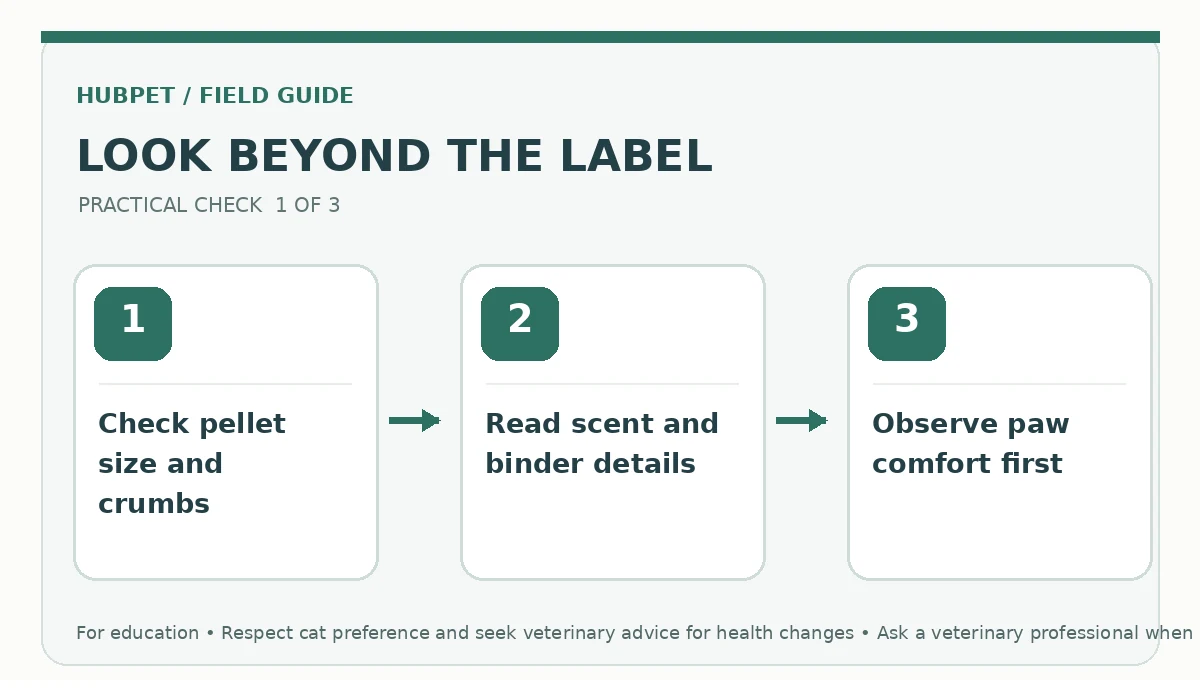
Pour a small sample into a clean tray and examine the actual grain diameter, length and amount of broken dust at the bottom. By contrast, long pellets may sit differently beneath paws and can be more noticeable to a cat accustomed to sand-like material. Very fine crumbs may track on fur even when intact pellets stay in the box. Notice whether the texture makes your cat hesitate, balance on an edge or dig less than before. Litter-box research emphasizes individual substrate preference, so a neat-looking pellet that the cat avoids is a poor choice. Start with the smallest practical quantity.
Test clumping with your own scoop
A product described as clumping should form material you can remove without leaving much wet residue, but performance varies by formula and the volume of liquid. For example, follow the manufacturer’s fill-depth directions and allow a fresh clump to set before lifting it carefully. Try the scoop you already own: large slots can let small crumbs fall through while narrow slots may trap intact pellets. Replace contaminated material rather than repeatedly breaking moist clumps into the clean layer. Clumping ease never removes the need to collect solid waste promptly or to wash the box. Check whether the remaining litter stays dry between cleanings.
Treat scent claims with caution
Some bags add perfume to counter the smell of a used box, but a pleasant smell for a person can discourage a cat. However, cornell and AAFP/ISFM guidance generally favors unscented litter and regular cleaning rather than masking waste with fragrance. Check for naturally distinctive plant aromas as well as added scents; the cat may respond to either. If you notice avoidance, stop assuming the problem is stubbornness. Offer a familiar, clean substrate in another accessible box and watch which one your cat chooses. Keeping the litter box away from food and heavy foot traffic also matters.
Introduce tofu litter through a genuine choice
Keep the familiar litter available in its usual location while placing a second clean box with the new tofu substrate nearby. In addition, give the cat several normal visits to explore both without pressure. If your cat uses the new box freely, you can decide whether to continue the trial; if it hesitates, keep the familiar option and adjust only one variable at a time. A forced overnight swap can turn a product experiment into an elimination problem. Cats with painful paws or mobility limitations may find larger pellets uncomfortable. Discuss any sudden change in urination or defecation with your veterinary team rather than making repeated litter substitutions.
Plan for tracking and daily maintenance
Plant pellets may travel out of a box on paws, and crumbs can scatter once they fracture. Meanwhile, place a washable mat outside an unobstructed entrance, not a thick barrier that a timid or senior cat must step over. Sweep or vacuum the immediate floor so you can judge the real amount of tracking without letting debris build up. Scoop solid waste at least daily and remove wet material as the label directs. Wash the empty box with mild unscented soap or hot water, rinse and dry it before refilling. A scented additive should not stand in for a clean tray.

Read disposal instructions skeptically
Biodegradable is not the same as sewer-approved. Therefore, packaging may advertise convenience, but local rules and plumbing limitations still determine appropriate disposal. Bag used litter and feces according to local waste guidance; do not flush cat waste merely because the litter began as plant material. Keep bags and discarded clumps away from children and other pets. If a dog raids the litter box, manage access with a safe layout rather than relying on a supposedly natural ingredient. Clean storage bins so residual moisture does not weaken the unused litter. Store dry bags sealed and away from humid floors.
Compare total work, not just the bag price
A lightweight bag can seem economical until you consider how much material needs replacing and whether clumps crumble during removal. Instead, track how often you top up, how much clean litter ends up in the trash and whether the chosen scoop remains effective. Record any increase in tracking or time spent washing the pan. You do not need expensive equipment to run this comparison: a weekly note on maintenance and your cat’s behavior is enough. If your cat strongly prefers the old litter, returning to it can be the most economical and welfare-friendly decision.
Use a simple go-or-stop checklist
A workable tofu litter should allow the cat to enter, dig, eliminate and leave without visible discomfort. Also, it should also permit predictable scooping and keep waste smells manageable through routine care. Stop the trial if your cat avoids the tray, strains, repeatedly visits without producing urine, or develops other sudden bathroom changes. Straining or inability to urinate can be urgent; seek veterinary help immediately. Otherwise, take your observations to the vet if the pattern persists. A different grain style may suit another household, but the individual cat makes the final selection.

How We Research
Our editorial review compared veterinary and animal-welfare guidance on cat litter materials, feline substrate preference, accessible box placement, hygiene, and signs that warrant veterinary evaluation. We used published feline guidance as the basis for practical owner choices and contrasted it with the limitations of packaging claims. We did not run comparative laboratory absorption tests, conduct product trials or endorse brands. Texture tolerance, accessible boxes and cleaning routines vary by animal and household; ask a veterinarian about persistent behavior changes. We last reviewed the sources on October 27, 2026. Read about our editorial process on the About HubPet page.
Sources
VCA Animal Hospitals: Understanding different types of cat litter. Accessed October 27, 2026.
Cats Protection: How to choose the best cat litter for your cat. Accessed October 27, 2026.
AAFP/ISFM: House-soiling guidelines. Accessed October 27, 2026.
No. Formulations differ by brand and binder. Test how your actual product handles moisture and whether your scoop removes clumps intact.
Not universally. Many cats prefer a finer, unscented texture; use a second box to let your cat show its preference.
Do not assume so. Follow local disposal rules and avoid flushing cat feces or litter based only on biodegradable marketing claims.
No material label guarantees zero dust. Check fine particles in the bag, how pellets break down and your cat’s reaction.
Stop if your cat avoids the box or develops unusual bathroom habits. Straining or inability to urinate requires urgent veterinary attention.