
A dog sling carrier places a small dog close to your body, which can seem convenient on short outings. Yet a flexible pouch is not suitable for every dog or every journey. Comfort depends on the dog’s posture, the support under its body, secure containment, heat exposure and how the person walks. This guide helps you check those limits before buying or wearing a sling. It is not a treatment for mobility pain or an alternative to properly restrained vehicle travel. If carrying causes yelping, stiffness, breathing trouble or unusual distress, stop and consult your veterinarian; review HubPet’s veterinary disclaimer.
Decide what a sling is supposed to accomplish
Start with a realistic situation: moving a calm small dog a short distance from the home to the car, carrying a pet through a crowded but necessary transition, or allowing brief rest during a controlled walk. A soft sling is poorly suited to long trips, high-impact activities or unattended containment. A dog that struggles to settle in a flexible pouch may prefer a solid-base carrier. Do not use a sling to extend an outing beyond what an older or recovering dog can comfortably tolerate without veterinary advice. If you need to transport a dog because it cannot walk, ask the clinic how best to handle its spine, abdomen and limbs safely rather than improvising a fashion sling.
Measure usable space with the dog in a natural pose
Manufacturer weight ratings describe a component limit, not full-body ergonomic support. Measure shoulder height, chest depth and length from chest to rump while the dog is lying calmly. In the chosen sling, check whether the body can remain supported without folding the back sharply or compressing the ribs. Look for fabric that spreads the load under the chest and hindquarters rather than hanging the entire weight from narrow edges. Many dogs prefer the head out, but an open top also increases escape risk. Reject a sling that holds the dog only by its armpits, squeezes the throat, or requires a continually awkward posture.

Support the spine and hindquarters continuously
Imagine lifting a dog with both hands: one supports the front of the body and the other supports the rear. A sling should provide similarly balanced support throughout the supported journey. Excess fabric can let the dog sink into a deep V-shape, while rigid decorative piping can create pressure points. Try the empty carrier first, then conduct a brief fitting with another adult beside you. Observe whether the dog presses against hard buckles or must brace continuously with its paws. Movement should be gentle; any abrupt bouncing may disturb the spine. For animals with known back disease, joint pain or recent surgery, obtain individualized veterinary guidance before carrying them.
Inspect the top, straps and exit points
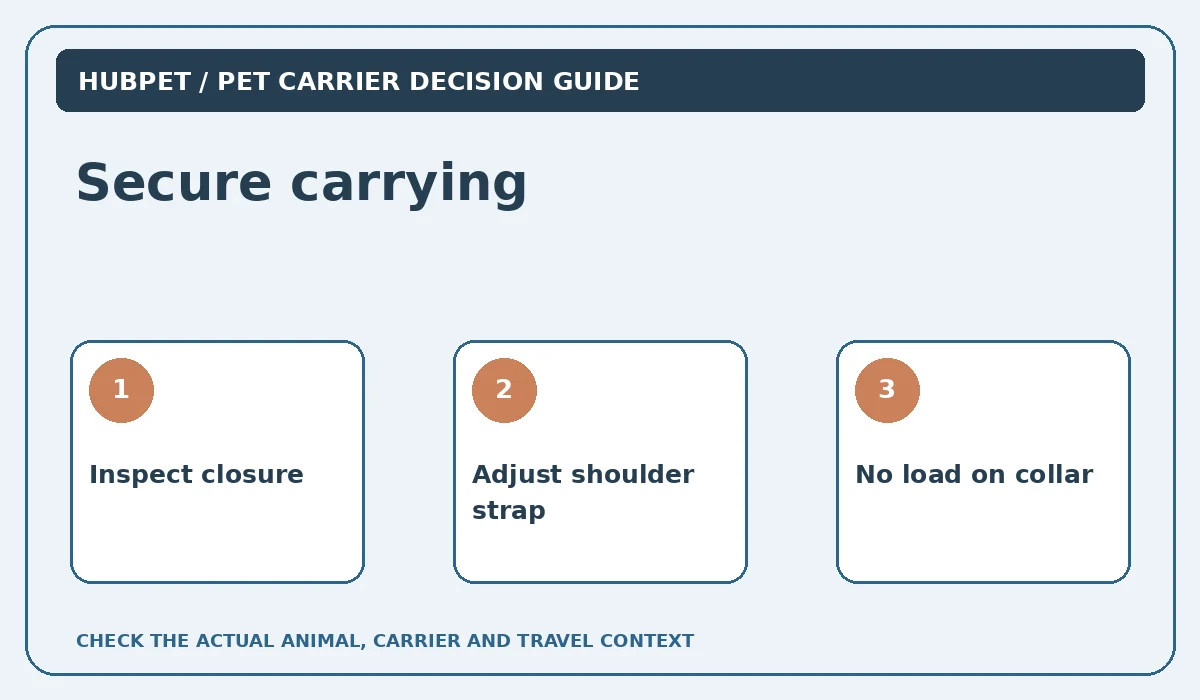
An appealing pouch may have no dependable closing mechanism, especially near the dog’s shoulders. Examine whether a dog can scramble out when startled by traffic, barking or an unfamiliar person. Strong stitching, an adjustable shoulder strap and secure buckles matter more than brand labels. Avoid loose drawstrings near the nose or neck. Do not treat a short internal safety lead as primary containment; never attach a load-bearing tether to the neck collar. If a manufacturer offers a harness attachment, assess it as a secondary safeguard only after the carrier itself remains adequately enclosed. Test every connection indoors before going outside.
Consider the wearer’s posture and balance
A sling transfers the dog’s weight to one shoulder and the torso. Even a small animal may make the wearer lean, strain an arm or lose balance on stairs. Choose a wide, adjustable strap that keeps the animal close without pressing into the neck. Walk around an uncluttered room first, away from children, pets and doorways. If you need both hands for another task, a structured carrier or a helper may be safer. Never jog, cycle or drive while wearing a sling. Check how you would manage a dropped item without bending suddenly over the dog. The human’s stability is part of the dog’s safety.
Prevent overheating and breathing restriction
Soft fabric can trap warmth against your torso, particularly in summer or a crowded indoor space. Thick padding, fleece and wrap-around layers may restrict airflow even if the dog’s face remains visible. Choose breathable material and avoid prolonged direct sun. Flat-faced dogs, puppies and dogs with breathing conditions need special caution and often a different transport method. Look for relaxed breathing and normal posture throughout a trial, not simply silence. Rapid breathing, frantic shifting or drooling warrant an immediate stop and veterinary advice when appropriate. A dog that cannot move away from your body’s heat has fewer choices than one resting beside you.
Introduce the sling without forcing the dog
Set the open sling on the floor and allow sniffing and voluntary exploration. Reward calm contact with small treats, then gently support the dog while placing it inside for a few seconds. Keep another adult beside you during the first fit. Return the dog to the floor before it becomes restless and gradually increase the duration only if it remains relaxed. Lift slowly and use a calm voice; avoid swinging the pouch to prove how secure it seems. If the dog stiffens, claws at the opening or tries repeatedly to climb out, reconsider the equipment. Reward-based introduction reveals preferences better than a forced test walk.
Keep car and air travel rules separate
A wearable sling is not a crash-tested car restraint merely because it has straps. Transport dogs in appropriate secure vehicle equipment rather than on your lap or inside a sling across the shoulder. Airline cabin travel has its own containment, size, and carrier requirements that depend on the airline and itinerary. A sling’s advertised airline suitability does not establish permission. Before any trip, check with the carrier company and your veterinarian about appropriate arrangements. If your dog needs regular transport rather than brief assisted carrying, a structured carrier with a stable base may provide more consistent support and protection.

Make a reusable before-you-leave checklist
Confirm the dog can rest in a comfortable posture, the load is distributed across the sling floor, fasteners engage, and the wearer can walk steadily. Keep the trip short, watch breathing and avoid loud or crowded areas. Carry identification and a leash for secure transitions, but do not open a sling in an unsafe place. Clean according to the manufacturer’s instructions and inspect seams after each wash. Retire the sling if it stretches, sags or rubs against the dog. A practical sling is one you can use calmly and safely for a defined task, not a device that promises to suit every small breed.
How We Research
We reviewed animal-welfare and veterinary guidance on containment, handling, fit, travel stress and equipment limitations, prioritizing practical owner checks over commercial claims. These sources inform the safety recommendations but do not constitute endorsements of individual products. We did not independently crash-test carriers, measure manufacturer specifications in a lab, or receive compensation for this article. Airline and transport rules may change; confirm current requirements with the provider and ask a veterinarian about a specific animal’s health. Learn more About HubPet.
Sources
American Veterinary Medical Association: Traveling with your dog or cat. Reviewed October 27, 2026.
RSPCA: How can I train my pet to feel comfortable in a transport carrier?. Reviewed October 27, 2026.
American Kennel Club: Safety tips for biking with dogs. Reviewed October 27, 2026.
No. Dog temperament, body shape, respiratory health and mobility affect suitability. A structured carrier can be a better choice for some dogs.
The torso and hindquarters need stable support. The dog should not hang by the armpits or have its spine folded into a deep V.
No. A soft wearable sling is not a substitute for appropriate vehicle restraint or secure transport equipment.
No. Containment should come primarily from secure carrier construction. A short harness attachment is, at most, a secondary safeguard.
Start with short reward-based indoor sessions. Relaxed posture and easy breathing are encouraging; freezing, scrambling and repeated escape attempts are warning signs.