
Cat toys work when they invite movements a cat actually wants to make: watching, stalking, chasing, pouncing or gripping a pretend prey item. The price and number of electronic features matter less than safe construction and your cat’s play preferences. This guide compares types, suggests safer use and explains why some popular items should never stay out unattended. For health or ingestion concerns, see the veterinary disclaimer.
Not every cat wants vigorous jumping games. An older animal may prefer following a toy on the floor, while a shy cat may watch for a minute before approaching. Cats Protection encourages short, varied play that allows a successful catch. Our indoor cat enrichment guide shows how toys fit alongside hiding places, climbing options and rest.
Let your cat choose the kind of play
Watch whether your cat tracks moving objects from a distance, waits behind furniture for an ambush, bats small objects or grabs a soft toy with the hind feet. Those preferences suggest which categories to try. A cat can enjoy watching a toy move without choosing to leap after it. Interest looks different in each animal.
Begin with a short, quiet session and adjust speed to the cat’s attention. Do not wave objects directly into the face or force physical interaction. Our article on feline hunting behavior explains why prey-like play remains relevant even when cats receive regular meals.
Use wand toys only with active supervision
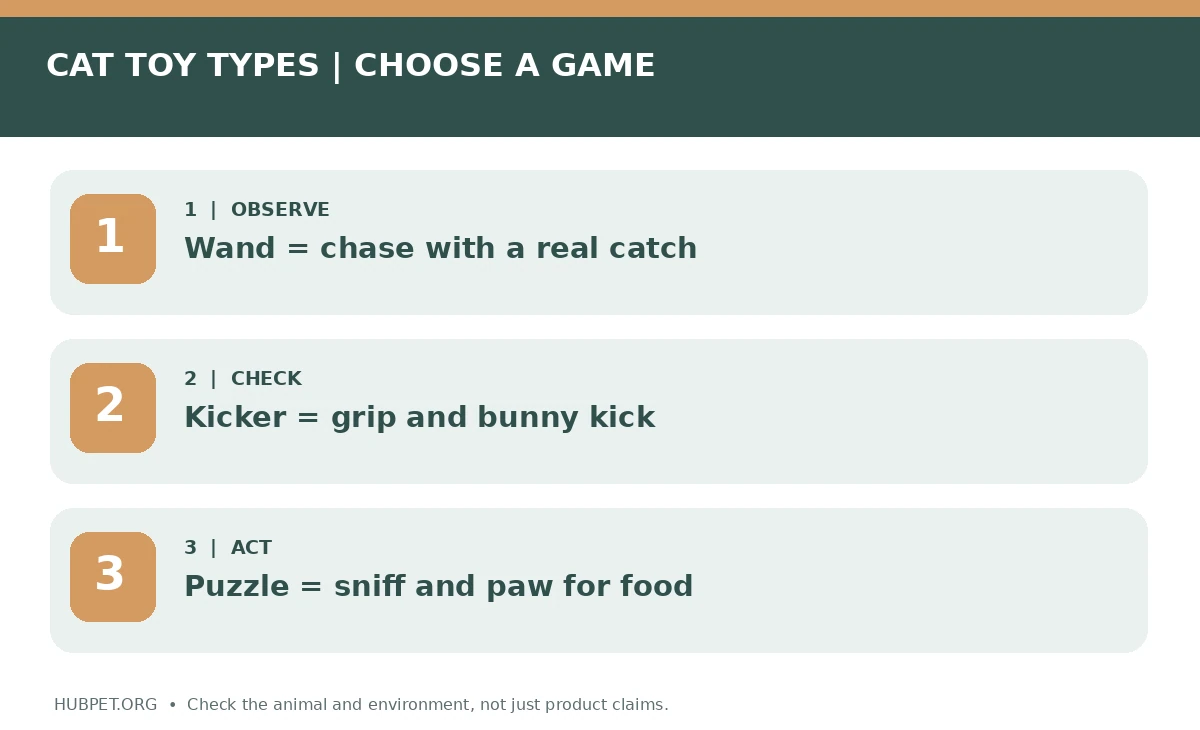
A wand or fishing-rod style toy can keep hands away from claws and let you imitate movement across the floor. Choose strong attachment points and a lure without easily removable eyes, feathers or bells. Move the lure away from the cat, pause near a hiding place and allow the cat to catch it periodically.
Strings, cords and elastic pieces can tangle around limbs or become dangerous if swallowed. Put the entire wand away in a secure location after play. Never leave a dangling lure attached to furniture for unsupervised amusement. Our guide to pouncing on feet discusses redirecting play from people toward suitable toys.
Compare balls and rolling chase toys
Lightweight balls invite batting and short chases. Choose a diameter and construction that prevent the cat from swallowing the item or pulling off a small cap. Avoid brittle plastic that cracks into sharp fragments. Check whether a bell or internal mechanism can escape when the ball develops damage.
Try rolling a toy gently across a clear floor, not firing it toward the cat. Smooth tile may make the game too fast for a timid or elderly pet. Remove loose threads or foil fragments and avoid leaving very small household objects out as substitutes. A cat can enjoy a simple paper ball if it cannot be swallowed or shredded into hazards.
Choose kicker toys for grabbing and wrestling
Long soft kicker toys allow cats to hold an object with front paws and kick with hind feet. Look for firmly closed seams, simple fabric and stuffing that cannot escape during energetic gripping. An item that tears after a few minutes should not remain available. Machine-washable construction is helpful when the fabric becomes dirty.
Some cats respond strongly to catnip or silver vine, while others show little interest. Treat that reaction as an individual preference, not a promise of calm or exercise. Avoid forcing a scented item on a cat that moves away. Replace a damaged kicker rather than trying to hide loose stuffing behind a decorative patch.
Introduce puzzle feeders without meal frustration
A food puzzle can invite searching and gentle paw work. Start with an easy opening that visibly releases a small portion of the normal meal. Let the cat investigate at its own pace; a hungry animal should not have to solve a complex puzzle before receiving necessary food. Check with a veterinarian when special diets or feeding conditions apply.
Choose stable devices with smooth openings and accessible cleaning areas. Food left in small crevices can spoil. Multiple cats may need separate stations so one animal does not block another. Our feeding routine guide helps keep enrichment consistent with a predictable feeding plan.

Treat electronic and motion toys as optional
Battery-powered moving toys can capture attention, but motors and unpredictable movements may startle some cats. Check the battery enclosure, exposed cords, detachable parts and automatic shutoff behavior. Avoid using a motorized toy in an area with stair edges, drink bowls or dangling cables that a cat could reach.
A complicated machine does not create an automatic welfare advantage. If your cat ignores it, hides or watches tensely, turn it off. Replace the challenge with a familiar low-speed wand game or scent activity. A safer toy with an engaged owner can be more useful than unsupervised novelty.
Think carefully about laser pointers
A laser dot creates chase behavior but provides no physical object to capture. Welfare organizations caution that repeated unsuccessful chasing can frustrate cats. Never shine a light into an animal’s eyes, and avoid directing the beam toward stairs or obstacles that could cause a collision.
If a laser game is used at all, transition promptly to a physical toy or suitable reward the cat can catch. For many households, a wand with a tangible lure offers a clearer hunt-and-catch sequence. Watch the cat’s stress level and discontinue any game that leads to frantic searching or persistent agitation.
Separate solo-use toys from supervised-only toys
Some sturdy single-piece objects may be appropriate for independent batting after a careful trial. Items with strings, small bells, glued ornaments or long fibers require direct supervision and secure storage. Classify each toy based on how your cat actually handles it; no packaging claim guarantees safe unattended play.
Check for loose attachments after every active session. A cat that begins chewing a cord or swallowing stuffing needs the item removed promptly. Our pet-proofing guide covers related household hazards, including wires and small objects outside the toy basket.

Use a short play rhythm and let the cat finish
Try brief bursts of movement interrupted by pauses that allow stalking. Change speed and direction naturally rather than shaking the lure constantly in the cat’s face. Let the cat grab the object and hold it for a moment. Some cats prefer a quiet play session before a meal; others choose a different time.
Avoid requiring acrobatic jumps from a senior cat or an animal with mobility problems. Reduce height and play near a secure floor surface instead. Stop if you see open-mouth breathing, limping or an abrupt change in behavior, and seek veterinary advice where appropriate. Our play-and-rest guide offers pacing ideas.
Shop for a small flexible collection
Choose a couple of distinct functions rather than a large box of similar toys: one supervised chase lure, one safe grip toy and perhaps an easy food search object. Compare seam strength, size, detachable decorations, cleaning access and storage. Watch how your cat uses each item in a first supervised session.
Rotate undamaged toys to renew interest without constant purchasing. Keep fragile items out of reach between sessions and retire anything with frayed cords or loosened parts. A simple toy that fits your cat’s natural movements is more useful than a fashionable gadget that creates fear or a swallowing risk.
How We Research
We prepared this guide using animal welfare guidance and practical questions owners can ask about size, materials, supervision, fit and safe use. We did not purchase or independently test products, and we do not rank brands or claim veterinary endorsement. On October 26, 2026, our editorial review considered these sources. Learn more about HubPet and our editorial approach. This material does not replace advice for a specific animal from its veterinarian.
Sources
Cats Protection: Keeping Your Cat Safe at Home. Accessed October 26, 2026.
PAWS: Cat Toys and How to Use Them. Accessed October 26, 2026.
Battersea Dogs & Cats Home: Playing With Your Cat. Accessed October 26, 2026.
Try a mix of supervised wand play, a suitable kicker toy, safe batting objects and simple food searches. Let the cat’s preferences guide your choices.
No. Store string and wand toys after supervised use because cords, ribbons and detachable lures can tangle or be swallowed.
They do not provide something tangible to catch and may cause frustration. Physical wand toys that permit a catch are often easier to use thoughtfully.
Remove items with loose small parts, fraying strings, exposed stuffing, sharp cracks or anything the cat can swallow.
Play preferences vary, and some cats need slow movement or a quieter setting. Try short sessions and a different type instead of forcing interaction.