
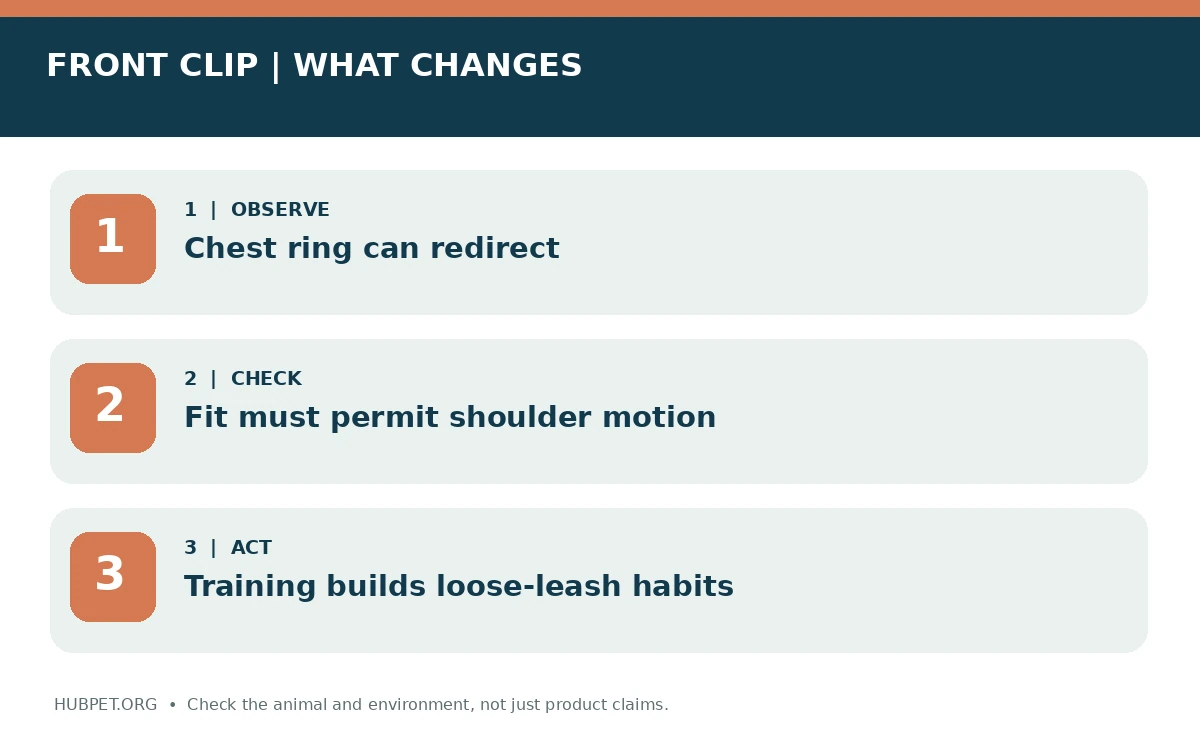
A front-clip dog harness has a leash ring at the chest. That ring can change how leash tension turns a dog, but it cannot teach polite walking by itself. Use this guide to compare front-clip designs, identify fit problems and decide when another setup makes more sense. For medical concerns, see the HubPet veterinary disclaimer.
Equipment and learning address different problems. If your dog strains toward smells, people or other dogs, use a comfortable harness while teaching an alternative behavior. Our existing loose-leash walking guide covers that training sequence; this article focuses on the gear decision.
What a chest attachment changes
When the dog reaches the end of the leash, a front ring may redirect the chest toward the handler. The effect depends on where the ring sits and the direction of the line. A dog can still lunge, drag or spin. Therefore, judge the design under calm walking conditions before relying on it in a busy setting.
Front clips can give some handlers useful steering, especially during practice near mild distractions. However, the ring does not reduce excitement, fear or frustration on its own. If the dog reacts intensely to passing animals, create distance and work on behavior separately. Avoid using repeated corrections or sudden tugs to make the equipment work.
Look at the front panel, not the product label
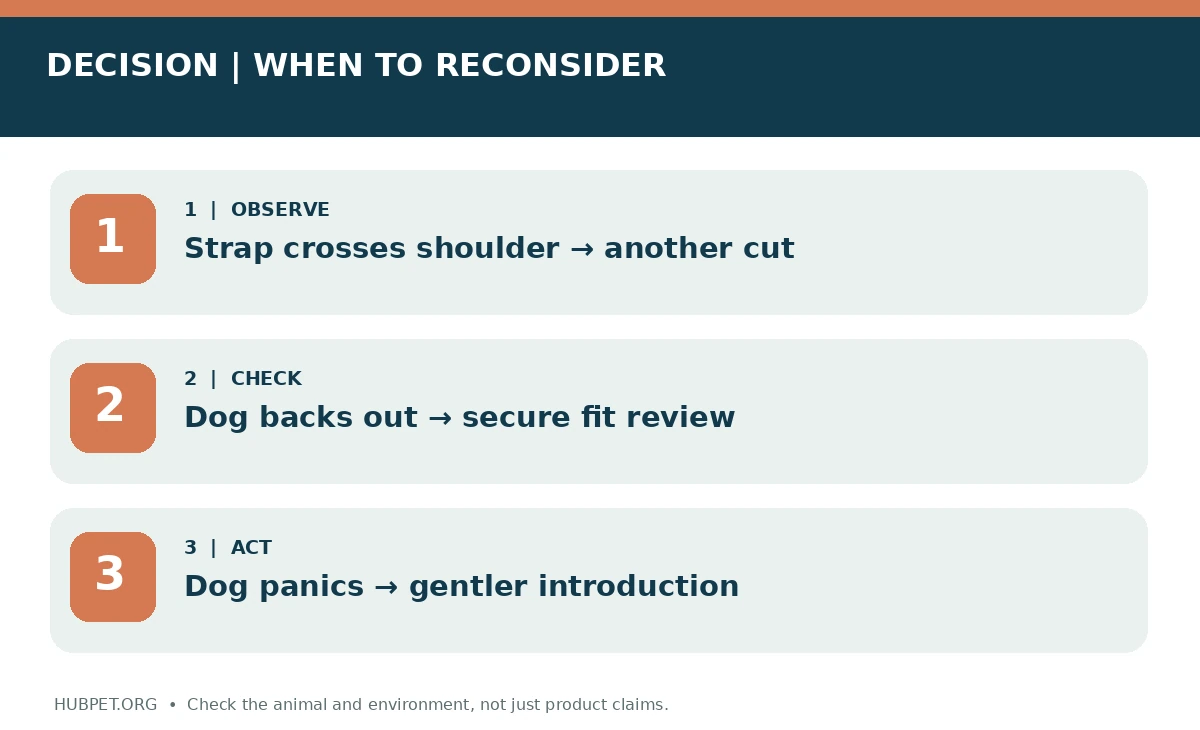
A broad horizontal strap across the shoulder can interrupt front-leg movement. Instead, look at the actual fabric path while your dog walks and trots slowly. The panel should not ride into the throat. Also check that the front ring stays centered when the leash slackens rather than pulling the entire harness sideways.
Even two products called front-clip harnesses may sit quite differently on the same dog. Chest depth, neck width, coat and muscle shape influence the fit. For example, a narrow dog may need a different front adjustment from a round-chested dog. Photos of flat products rarely reveal these differences; a moving fit check matters.
Compare front-only and dual-clip setups
A front-only design offers one leash attachment near the chest. A dual-clip design also has a ring on the back. Meanwhile, a back ring may allow a more neutral line during relaxed sniffing, while the front ring can help manage directional changes during teaching. Neither position creates a universal safety guarantee.
Some dual-ended leashes connect to both rings, but follow the harness maker’s instructions on routing and tension. Do not improvise complex attachments that can catch a foreleg. Instead, practice in a quiet area with a secure clip and short periods of slack leash. Switch to simpler equipment when the dog appears confused or constrained.
Take measurements and fit the harness standing
Start with the maker’s diagram, then measure the dog in a natural standing position. Most designs call for chest circumference near the widest part of the rib cage and a separate neck measurement. Use a soft measuring tape without compressing the coat. If the result falls between sizes, ask for the maker’s sizing advice.
Fasten each strap and check whether you can pass fingers beneath it without creating large gaps. That quick check is only a starting point, not a universal rule. Next, watch the front panel as the dog turns, lowers its head and takes a few steps. Look for shifting, pressure at the armpit and rubbing behind the elbow.
Watch movement before committing
Observe from the front and the side while the dog walks toward a reward. The forelegs should swing without bumping a strap. Also confirm that the harness does not twist enough to pull the ring beneath one leg. A dog who shortens stride, freezes or repeatedly scratches may be showing discomfort.
Check the fit again after ten calm minutes because straps can settle into the coat. If you see redness, trapped hair or a persistent change in gait, remove the harness. For possible pain or existing mobility concerns, ask your veterinarian to assess the dog before buying another restrictive design.

Test escape resistance gently
Some dogs back out of harnesses when startled. In a secure room, hold the leash with slight steady tension while your dog turns and steps backward voluntarily. Do not yank or stage a frightening test. Watch whether the neck opening slides forward, buckles loosen or the chest strap rides across the shoulders.
An additional body strap may help certain shapes, but extra straps can also rub. If escape risk stays high, use a properly fitted backup connection following professional advice. Meanwhile, keep identification current and avoid exposing a fearful dog to situations that exceed its coping skills.
Pair the harness with reward-based walking practice
Begin indoors with a few steps beside your leg and reward a loose line. Then repeat outdoors in a quiet location. When your dog moves ahead, slow down or change direction gently instead of jerking. Reward checking in and returning before the line becomes tight. Short, successful sessions build a useful habit.
For distractions, start far enough away that the dog can notice the trigger and still eat a treat. Gradually practice as the dog relaxes. The American Veterinary Society of Animal Behavior supports reward-based training and rejects fear-based corrections. If you need a training routine, see our calm pre-walk practice.
Check fasteners, edges and cleaning
Examine the front ring, stitched webbing, adjustment sliders and buckle closures. In particular, tug the ring by hand to locate loose stitching before going outdoors. Smooth edges matter under the elbows, where friction can accumulate. Inspect the hardware again after washing, especially if the product has exposed metal parts.
Follow the cleaning label and let the harness dry completely. Damp fabric near the skin can cause irritation. Also avoid leaving a harness on an unsupervised dog; a strap may snag furniture or another animal. Store it away from chewing and replace pieces with damage rather than patching load-bearing seams at home.
Decide when another option is safer
A dog with neck discomfort may benefit from carefully fitted body equipment, but a front clip is not automatically suitable. If the harness presses on the shoulder or the dog resists it, try a different geometry. Dogs with strong escape behavior may need a specialized fit that extends farther along the torso.
For a small handler walking a powerful reactive dog, ask a qualified reward-based professional about safe management. A leash attachment can help with leverage yet cannot prevent every sudden movement. Avoid crowded routes while practicing. Choose the safest environment you can control rather than testing the product at its limits.
Use a short purchase and fit checklist
Before buying, write down chest and neck measurements, normal walking location, attachment needs and the dog’s handling comfort. Confirm the return policy because fit may only become obvious during movement. Once fitted, try calm turns in both directions, check the front ring position, and verify that no strap catches a leg.
After several walks, review the skin under each strap and the security of the adjustment points. If anything migrates, address it before a longer walk. A harness that fits on day one still needs periodic checks as the coat changes, the dog grows or the strap material stretches.
How We Research
We developed this guide by comparing veterinary welfare guidance with product-design questions an owner can check at home. We evaluated fit, handling, supervision, cleaning and reasons to stop use instead of ranking brands or claiming hands-on product tests. Sources were reviewed on October 26, 2026. Learn more about HubPet and our editorial approach. This material does not replace advice for a specific animal from its veterinarian.
Sources
VCA Animal Hospitals: Collar and Harness Options for Dogs. Accessed October 26, 2026.
VCA Animal Hospitals: Controlling Pulling on Walks. Accessed October 26, 2026.
AVSAB: Humane Dog Training Position Statements. Accessed October 26, 2026.
No. The attachment can change leash direction, but pulling habits need consistent, reward-based training and calmer practice settings.
Yes. Some designs place straps across the front of the shoulder or twist under tension. Watch natural movement and reject uncomfortable fits.
Only if the harness and leash instructions support that setup. Keep lines clear of the dog’s legs and avoid improvised configurations.
Look for significant shifting, a ring that slides off center, or an opening that lets the dog back out. Recheck after the dog moves.
Do not leave it on without supervision. Remove it after outings to reduce snagging, rubbing and chewing risks.