
A harness spreads leash contact across parts of the body, but a poorly placed strap can rub skin or interfere with shoulder movement. Harnesses vary widely in shape, adjustment and escape resistance. This guide helps you compare types without claiming any one design fits every dog. For concerns about discomfort or mobility, read the HubPet veterinary disclaimer.
If you already practice walking skills, keep your loose-leash plan separate from the equipment decision. A comfortable fit and reward-based practice work together; neither should be treated as a magic fix.
Identify the job before selecting a style
A neighborhood walk, car-to-door transfer and slippery hiking trail pose different handling problems. Decide whether the priority is ordinary walking, added escape security or a rear attachment for an activity. A product with many straps is not necessarily more comfortable or secure.
Consider your dog’s proportions, coat length, skin sensitivity and behavior near the leash. For example, a deep-chested dog may require extra adjustability to prevent backing out. If the dog has pain or a movement problem, consult a veterinarian before choosing equipment that changes pressure.
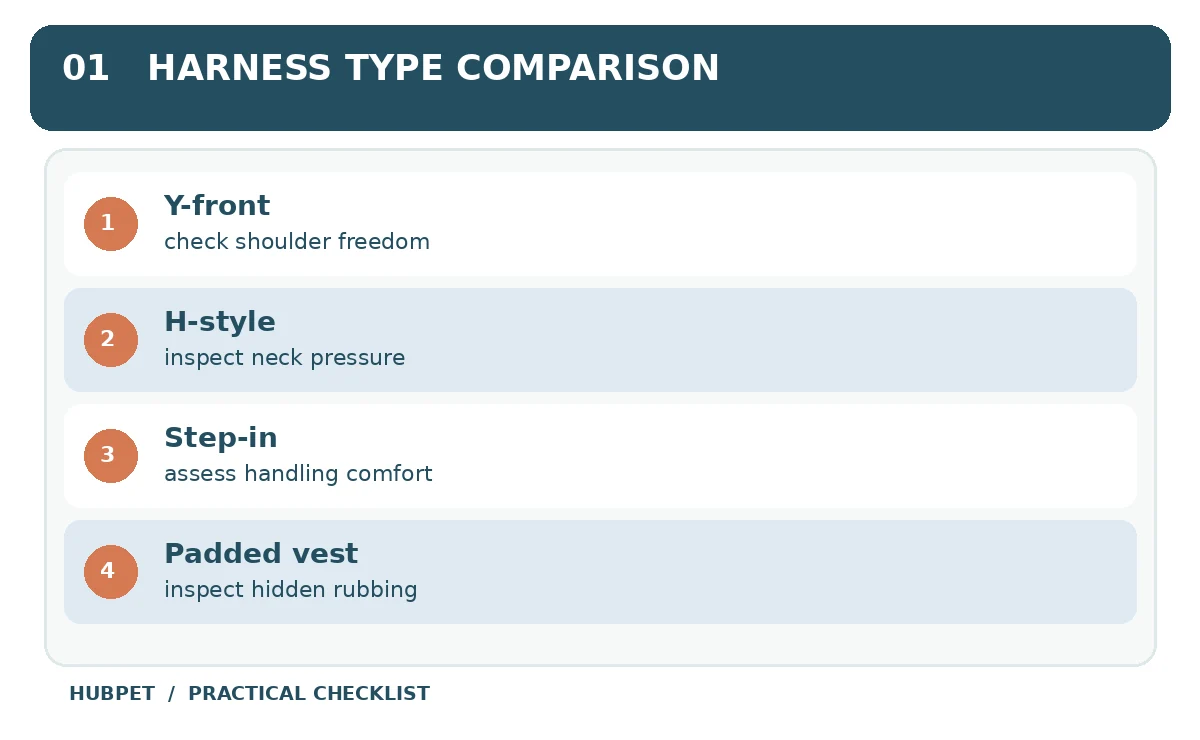
Understand Y-front and H-style layouts
A Y-front harness leaves a central opening near the base of the neck with straps arranged around the chest. A well-designed version can allow the shoulder joints to move more freely than a horizontal band crossing the front of the legs. The exact strap placement matters more than the marketing name.
H-style harnesses use connected loops and adjustable straps around the neck and chest. Many dogs tolerate them, but the neck loop must not press against the throat. Check from the side as well as above. VCA recommends looking for shoulder freedom, fit security and absence of chafing.
Compare step-in, vest and padded options
Step-in harnesses let a dog place its feet into openings before the fastener closes over the back. This can suit some dogs who dislike items passing over the head. However, a nervous dog may object to foot handling, so introduce the equipment gradually rather than forcing the legs into place.
Padded vest styles may spread pressure over a broad surface, but padding can hold heat or conceal rubbing beneath thick fur. Check every edge after a walk and allow the coat to dry. Choose construction that you can inspect and clean, not simply the softest product photograph.
Know what front and back leash clips actually change
A back clip behind the shoulders gives an uncomplicated attachment point for many everyday walks. A front attachment can help redirect some pulling forces, yet it can also alter movement or produce discomfort if the design crosses sensitive shoulder areas.
Neither clip teaches a dog to choose a loose leash. Therefore, continue reward-based walking practice, keep the leash from becoming constantly tight and avoid sharp corrections. Our guide to distractions on walks addresses the skill rather than the hardware.
Measure at the points the maker specifies
Use a flexible tape while the dog stands naturally, then compare measurements with the exact manufacturer chart. The chest girth, neck opening and distance between the front legs may all matter. Do not infer size from breed alone, because body shapes vary considerably within a breed.
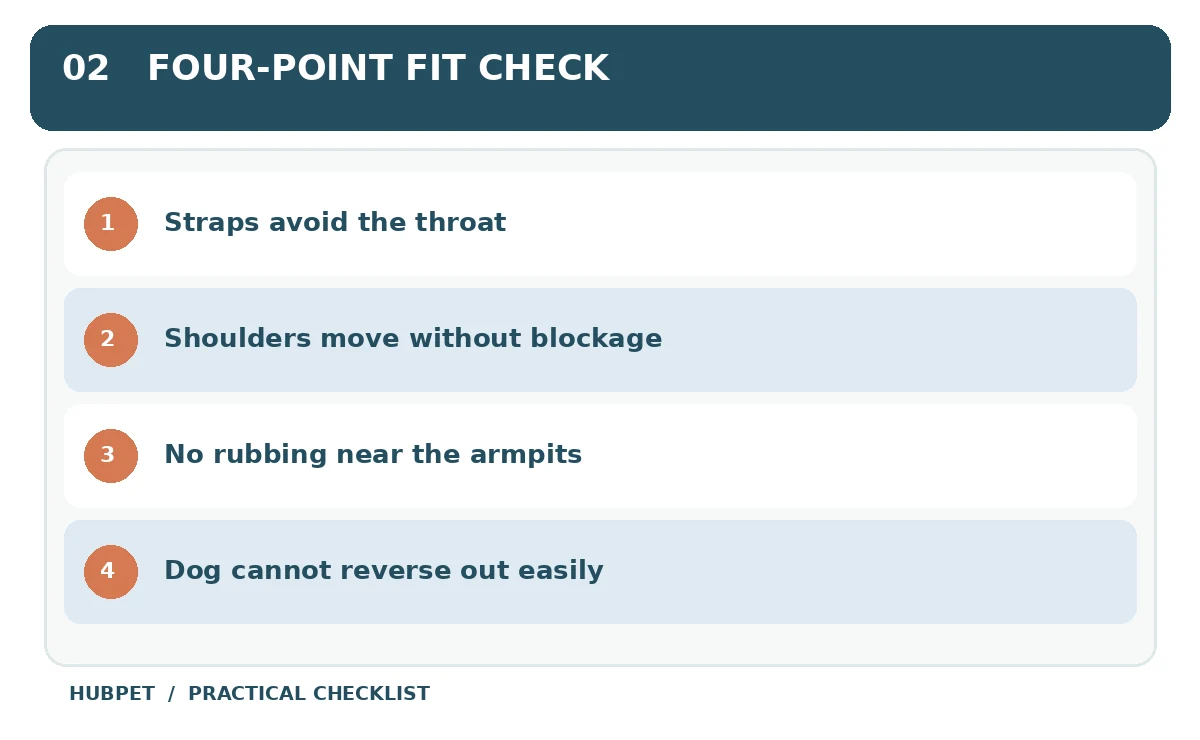
After fastening, test adjustments while the dog stands and moves. You should be able to inspect every strap and verify that the fit stays secure without squeezing. A general finger rule is only a rough starting point; rely on the specific design guidance and what you observe.
Watch the shoulder and armpit during movement
Ask the dog to take a few relaxed steps on a loose leash. Watch the front legs move forward and back; look for fabric sliding into the armpit or a band restricting the shoulder. A harness that looks neat when stationary may twist during actual walking.
Inspect the coat and skin afterward for redness, compressed fur or repeated rubbing. If the dog resists walking or changes gait, stop using the harness and seek advice. Adjusting a poor design tighter is not an appropriate response to ongoing discomfort.
Run a careful escape-resistance check
Hold the harness securely during a supervised indoor trial and see whether the dog can shift backward. Some slender or anxious dogs can reverse out of ordinary two-loop designs. A third waist strap or suitably shaped secure harness may help, but no product deserves an unconditional escape-proof claim.
For a dog who bolts, build management layers: suitable equipment, calm handling, secure doors and gradual training. Avoid testing escape resistance by pulling forcefully on the leash. Our doorway-wait guide helps reduce rushing at transitions.
Introduce harness handling with rewards
Show the harness, reward a calm look, and let the dog sniff it. Next, touch a strap to the shoulder briefly before fastening anything. Progress in short steps only while the dog remains comfortable. If a fastener sound startles the dog, practice it separately at a low intensity.
Allow the dog to walk indoors for a short supervised trial and reward relaxed movement. Then practice a quiet outside route before visiting busy spaces. AVSAB’s humane training position favors reward-based learning and cautions against frightening or painful handling.

Check hardware, cleaning and daily storage
Inspect buckles, seams, D-rings and adjusters for damage after regular use. Metal hardware can corrode, while plastic parts may crack. Replace equipment when the attachment or load-bearing stitching weakens rather than guessing whether another walk will be fine.
Remove the harness when the dog is no longer on the walk and follow care instructions. VCA notes entanglement risk from leaving harnesses on without supervision. Dry thoroughly after rain, and store the leash separately so it cannot wrap around the dog.
Make a personal fit checklist before buying
Choose two or three styles that seem appropriate to your dog’s anatomy and handling needs. Record ease of putting on, shoulder freedom, slip resistance, and any areas of rubbing during a supervised trial. If buying online, read the return policy before ordering a size.
Skip one-size-fits-all promises and avoid treating control features as substitutes for training. The suitable harness is the one your dog can wear and move in comfortably while a person can handle the leash safely. Recheck fit as a puppy grows or body condition changes.
How We Research
HubPet compared published guidance from veterinary and animal-welfare organizations with practical product-use criteria: fit, food safety, daily cleaning, and clear limits. We reviewed the linked material on October 26, 2026. We did not conduct laboratory or hands-on testing of named commercial models, and we do not claim brand endorsements. Learn about our process on the About HubPet page.
Sources
VCA: Controlling Pulling on Walks. Reviewed October 26, 2026.
VCA: Collar and Harness Options for Dogs. Reviewed October 26, 2026.
AVSAB: Humane Dog Training Position Statements. Reviewed October 26, 2026.
Peer-reviewed review: Review of Collars, Harnesses, and Head Collars for Walking Dogs. Reviewed October 26, 2026.
No. A Y-front layout can allow useful shoulder freedom, but actual strap placement and fit determine comfort. Observe your individual dog walking in the harness.
It should remain secure without squeezing, chafing or restricting movement. Follow the specific manufacturer’s fitting guide and check the dog while moving.
They may change leash leverage but do not teach loose-leash behavior. Pair suitable equipment with humane, reward-based walking practice.
Some dogs can back out of certain designs, especially if body shape and strap layout do not match. Test security gently under supervision.
Remove it outside supervised use unless your veterinarian recommends otherwise. Long wear may cause rubbing, tangling and other fit problems.