
Dog poop bags are a simple walking essential, but their real performance depends on whether they open easily, contain waste without tearing, and travel safely to an approved bin. Words such as biodegradable and compostable do not tell you where a used bag can legally or safely go. See the HubPet veterinary disclaimer for health and safety limits.
Use this guide to evaluate fit, thickness, seams, closure and handling in real walking conditions. The main goal is to collect dog waste promptly, avoid contact with it and dispose of the sealed bag through a system that actually accepts it.
Start with the dog’s waste volume, not the roll count
A bag should have enough usable width and length to collect one typical pickup without stretching dangerously or leaving too little material to tie. Waste volume varies with the dog and the walk. Large breed dogs may need a significantly roomier bag than the roll included with a compact dispenser.
Compare usable dimensions on the label, not only how many bags a package contains. Make a test with clean paper or another harmless object to see whether you can turn the bag over your hand, close it and tie a knot. Never handle actual waste to test a suspect product.
Look closely at seams and puncture resistance
Thin film can tear at a side seam or snag on twigs and gravel. Strong-looking color tells you little about construction. Check manufacturer specifications, customer reports of split seams and whether one bag can handle a normal pickup without needing a second layer every time.
Consider gloves or a scoop if the collection surface contains sharp debris. Do not squeeze bags to test leakage after filling them with waste. Carry a spare if a bag tears, and keep the contents away from children, pets and food containers.

Choose an opening you can use with one hand
Some tightly wound rolls are hard to open in wind or cold weather, especially when your other hand is holding a leash. Perforations should tear cleanly without ripping the next bag. A clear top edge, a sufficiently wide mouth and a simple dispenser can reduce fumbling.
Try opening one unused bag with dry hands before leaving home. If gripping small objects feels difficult, prefer a format with an easy-pull tab or loose folded bags. A complicated closure or novelty holder should not distract from controlling the dog safely near traffic and other pedestrians.
Test the knot and carrying experience
A long bag provides room to close and tie above the waste. Short bags may offer adequate capacity but leave no clean material for a secure knot. Handles can help if they are part of the bag design, yet weak handle joins may reduce reliability.
After tying, carry a waste bag separately from snacks, toys and clean supplies. A closed external holder or designated washable pouch may keep odor away from your hands, but it must not permit leaks. Dispose of the bag at an approved waste point instead of leaving it beside a trail.
Match the roll to your dispenser
Roll diameter, core size and bag width determine whether a refill fits a holder. Labels saying universal are not substitutes for checking actual dimensions. Overstuffed dispensers can jam when you need a new bag quickly, while loose rolls may unravel.
Use a small carabiner or secured holder that cannot swing into the dog or snag on an obstacle. Refill at home before the last bag disappears. In cold or wet conditions, store spare rolls somewhere dry so the perforations remain easier to separate.
Interpret biodegradable claims with care
The Federal Trade Commission warns that broad degradable claims for products destined for landfills may be deceptive because customary disposal conditions often do not allow rapid breakdown. A green-colored bag or plant-based ingredient is not proof that a sealed, soiled product will disappear harmlessly after disposal.
Look for precise statements about material, test method, disposal route and limitations. Avoid littering any bag because of a marketing claim. A responsible decision uses the waste system available in your community rather than an imagined ideal composting facility.
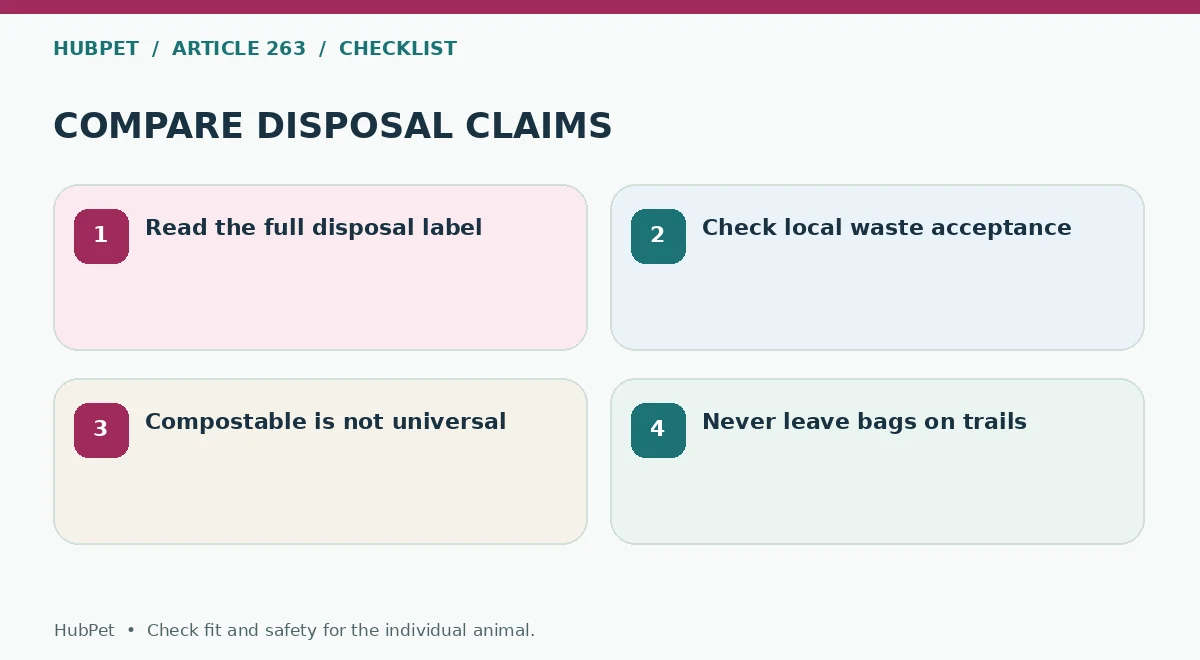
Check whether pet waste can actually be composted
A compostable label does not mean the local waste service accepts the bag or its contents. Many residential or municipal organics programs exclude dog feces because of pathogen concerns. Home compost piles used for edible crops are not an appropriate fallback for pet waste.
Ask the specific waste service whether it accepts dog waste and the type of bag required. If it does not, use the permitted trash stream under local rules. Do not flush bags down a toilet; product claims about materials do not turn film into a flushable item.
Build a hygienic walking routine
Carry more bags than you expect to need, keep your dog safely restrained and collect waste as soon as practical. Turn the bag over your hand, collect the stool without touching it, invert the film carefully and tie it securely. Avoid touching your face or personal belongings until your hands are clean.
CDC guidance recommends washing hands with soap and running water after contact with dog feces, even when people use a bag. Use hand sanitizer when a sink is unavailable, and wash properly when you return. Keep unused bags and used waste well away from children and pet mouths.
Compare per-pickup cost and waste
A very cheap roll may be poor value if bags split, run out too soon or require two layers for every pickup. Calculate approximate cost per usable bag, factoring in puncture risk, sizing and occasional additional pickups. There is no need to pay more for fragrance or decorative print if it adds no practical benefit.
Think about storage and routine too: bags that open reliably can shorten the time a dog waits near a road or busy sidewalk. If you choose thicker film, still consider responsible purchasing and avoid overstock that deteriorates in storage. Reliable collection and correct disposal matter more than branding.

Know the limits of bags alone
A bag will not safely collect diarrhea from every surface, handle contaminated sharps or solve problems with repeated loose stool. Use an appropriate washable scoop or absorbent material when needed, and follow local waste rules. Avoid direct contact with feces and clean reusable tools after use.
If your dog develops persistent diarrhea, blood in stool, vomiting or other illness signs, call a veterinarian. The bag is a hygiene tool, not a substitute for health evaluation. Responsible cleanup protects shared spaces and reduces avoidable contact with potentially infectious material.
How We Research
We checked this guide against the authoritative sources listed below on October 26, 2026. We reviewed practical differences, safety limits, and relevant home conditions rather than drawing conclusions from brand advertising. Specifications, warranty policies, and device capabilities change; check the manufacturer’s current manual. We did not purchase, laboratory-test, rank, or endorse individual products. Where a pet has pain, skin concerns, or fear, seek individual veterinary advice. See our approach at About HubPet.
Sources
CDC: Dogs: Healthy Pets, Healthy People. Accessed October 26, 2026.
Federal Trade Commission: Environmental Claims: Summary of the Green Guides. Accessed October 26, 2026.
Federal Trade Commission: FTC Staff Warns Dog Waste Bag Sellers about Environmental Claims. Accessed October 26, 2026.
No. Breakdown claims depend on disposal conditions and evidence. Bags in landfills may not degrade within advertised timelines.
Only if your specific local service explicitly accepts both dog waste and the bag; many programs do not.
Choose enough usable bag width and length for a normal pickup plus room to tie securely without overstretching.
Fragrance is optional and does not replace secure containment or prompt disposal. Unscented bags avoid unnecessary perfume.
Yes. The CDC recommends handwashing after handling dog poop, even when a bag was used.