
Packaging can call a dog-waste bag compostable, biodegradable, plant-based, or earth-friendly, but those words are not interchangeable. The important question is what will actually happen to a tied bag of dog feces after you put it out for collection. A material claim about the empty bag does not guarantee that a composting facility accepts the contents. This guide separates the label from the disposal pathway, explains why landfill claims are easy to misunderstand, and offers a practical decision process before you pay extra for environmental marketing. Never leave a bag of dog waste on a trail.
Separate the bag material from the waste inside
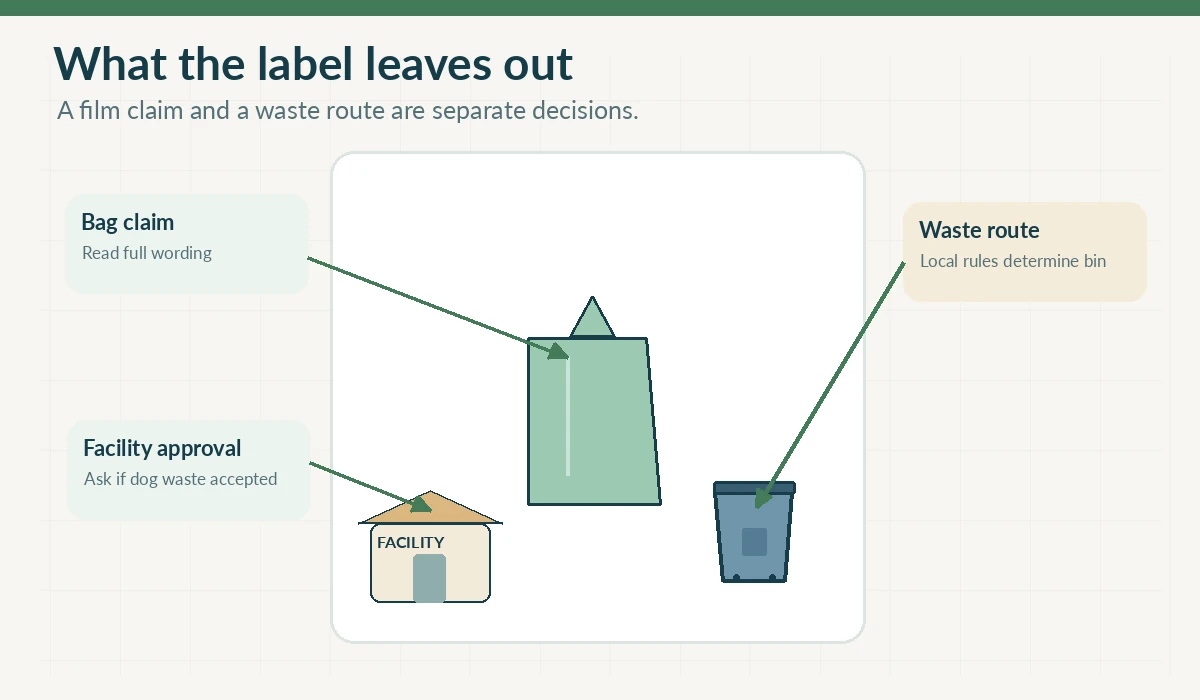
The bag and its contents create two distinct questions. A company may have evidence that a clean film breaks down under specified composting conditions, while the local compost operator may still prohibit dog feces. Some facilities collect food scraps only; others have different processing rules and permits. A green color, leaf icon, or vague claim about plants is not proof that a tied, used bag belongs in a green cart. If the destination does not explicitly accept pet waste and that bag type, follow the regular local trash instructions instead of guessing.
Read the exact words of a compostable claim
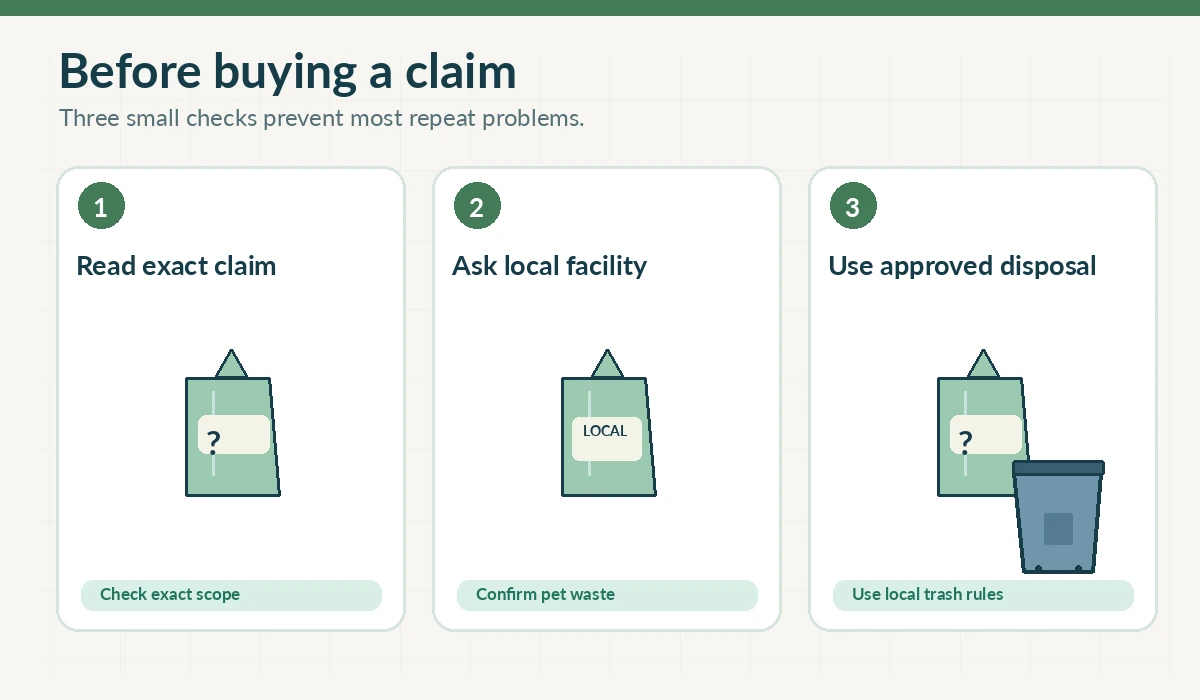
Look for the environment named on the package: home composting, industrial or commercial composting, or a defined standard with relevant scope. These are not the same conditions. A label that mentions only the empty film may not describe the filled waste bag. The FTC Green Guides say compostable marketing claims need sound evidence and qualifications where home composting or widespread facility access is not realistic. Ask the seller which testing supports the precise claim and what happens when the used product enters ordinary trash. A credible answer is more useful than a row of leaf graphics.
Understand the landfill limitation
Landfills manage waste by limiting water and air movement, so decomposition may be slow and unpredictable. A bag that can break down under controlled composting conditions may not disappear quickly in a landfill. The FTC has specifically warned dog-waste bag sellers that unqualified biodegradable or compostable claims can mislead shoppers. Buying a bag with a compostable claim does not give permission to litter. If no accepted composting route exists, prompt collection and correct trash disposal remain important regardless of the film material.
Ask local programs about pet waste specifically
Find the current rules for your city or hauler rather than relying on a national blog post. Ask three short questions: Does the program accept dog feces? Does it accept filled bags? Which exact bags or liners does the facility accept? Do not assume a municipal food-scrap cart takes pet waste. Rules can vary between nearby facilities and change as contracts or processing technologies change. If the answer is unclear, use the approved trash stream and keep the local answer for future reference. Never introduce used bags into compost collected for food crops without clear expert local guidance.
Compare practical strength and usability
An environmental label has little value if the bag breaks during pickup or you cannot open it when needed. Look for sound seams, adequate hand coverage, a tieable opening, and consistent tear perforations. Thickness alone does not guarantee strength, so inspect for pinholes and weak side seals. Carry backup bags even when a roll feels sturdy. Keep clean refills dry and away from heat until use, following the maker’s storage instructions. A bag that tears and leaves feces on the sidewalk fails the basic public-health job, whatever its marketing language.

Avoid backyard composting shortcuts
Do not add dog feces to a home compost pile intended for vegetables or other edible crops. Ordinary backyard systems may not reliably control pathogens, and a compostable bag can keep feces enclosed instead of making the contents safe. Dedicated pet-waste treatment programs, where available, require their own procedures and permissions. Do not bury bags in natural areas or leave them beside a path expecting them to biodegrade. Children and other pets can encounter contaminated soil or bags. Use an approved collection route even when an advertisement says the film comes from plants.
Know which marketing signals are weak
Terms such as natural, green, environmentally friendly, and plant-derived can be too broad to tell you how to dispose of a filled bag. A certification mark can help only if it is genuine, relevant to that bag, and describes a real processing pathway. Be cautious with photos of forest floors, unsupported claims of rapid disappearance, or language suggesting all bags are harmless once tossed outdoors. Ask for an exact applicable standard and check whether a nearby operator accepts the product with dog waste. The FTC cautions against unqualified general environmental-benefit claims.
Use a safe collection routine regardless of label
Invert the bag over one hand, pick up the full deposit without smearing it, turn the bag right-side out, and tie it securely. Place it in a permitted waste container. Do not flush the bag or dispose of it in storm drains. If a dog has diarrhea or a potential infection, follow veterinary advice for cleaning the area and keep other animals away until you clean it. Wash hands with soap and running water after handling waste, even with a bag. A reliable, hygienic habit matters more than any single packaging badge.
Make an evidence-first buying decision
Choose a bag that fits your hand, contains waste securely, and the real disposal route you use accepts. If a facility accepts the exact product and contents, follow its rules. Otherwise compare cost, durability, packaging, and verified material information without assuming extra climate benefits. Keep photos or notes of a product’s claims if you want to ask the manufacturer for supporting details. The responsible decision often sounds less exciting than advertising: pick up promptly, bag securely, and dispose of waste as locally instructed.
How We Research
We review public-health guidance, the actual functions of the tools discussed, and the practical disposal pathway before recommending a setup. Our checklist focuses on access, clean handling, failure points, and the difference between product claims and outcomes. We do not claim to have independently tested individual products, inspected local facilities, or verified a manufacturer’s unprovided performance data. Check current municipal rules and read our editorial approach. Sources reviewed October 28, 2026.
Sources
Federal Trade Commission, Environmental Claims: Green Guides. Read the original guidance. Accessed October 28, 2026.
FTC, Dog Waste Bag Environmental Claim Warning. Read the original guidance. Accessed October 28, 2026.
CDC, Ways to Stay Healthy Around Animals. Read the original guidance. Accessed October 28, 2026.
Safety note: Pet feces may contain germs or parasites. Use appropriate waste containers and wash hands after cleanup. This article offers general product and hygiene guidance, not veterinary advice. Read our veterinary information disclaimer.
No. Compostable describes conditions for processing material, not permission to litter. Collect the waste and use an approved disposal route.
Only if your local collection program explicitly accepts dog waste and the exact liner type. Most food-scrap rules should not be assumed to allow it.
Not necessarily. Landfills usually lack the conditions used by controlled composting processes, so decomposition can be very slow.
No. Feedstock and processing performance are different claims. Look for specific evidence and the type of facility required.
Choose a bag that does not leak or tear, pick up promptly, and place the tied waste in the locally approved trash stream.