
A dog nail grinder removes nail gradually, but gradual does not mean risk-free. The rotating head can get hot, loose fur can catch, and the sound or vibration may frighten a dog. The useful question is whether you can control the device while your dog remains comfortable. This guide compares real selection criteria rather than ranking untested products. Read the HubPet veterinary disclaimer before attempting nail care at home.
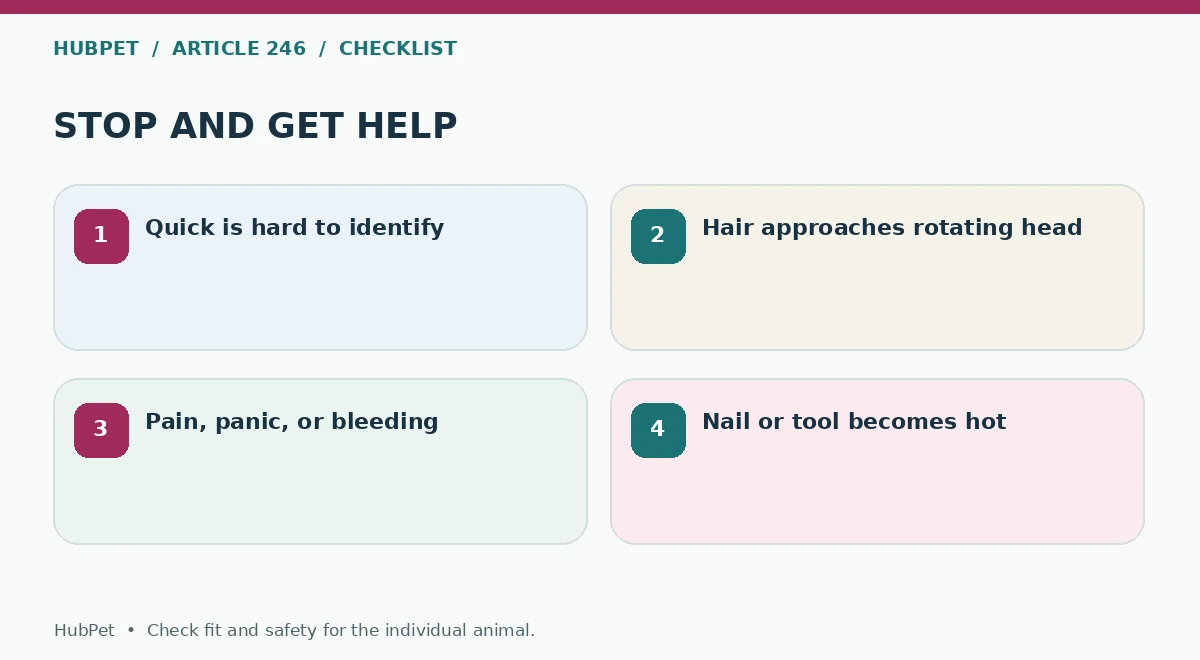
A grinder will not identify the quick, the sensitive part of the nail containing nerves and blood vessels. Ask a veterinarian or qualified groomer to demonstrate where to work on your dog. If nails are painful, unusually shaped, ingrown, or accompanied by limping, arrange professional care rather than testing a new gadget.
Decide whether grinding is suitable for this dog
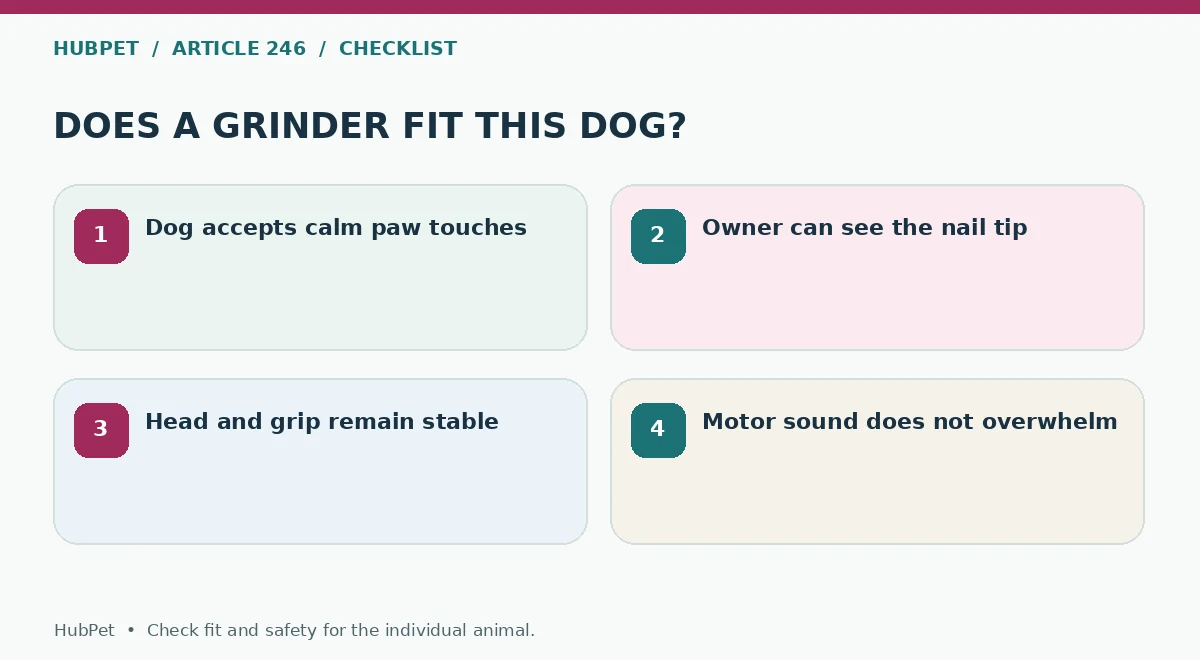
Consider your dog’s tolerance of paw handling before choosing a motorized tool. A dog that accepts gentle foot touches may still recoil from humming near a toe. Grinding may suit a person who prefers to remove nail in small increments, but it does not solve fear, pain, or uncertainty about nail anatomy.
Compare the work involved with a sharp manual clipper and professional trims. Some dogs dislike the clipping sensation yet tolerate a slow introduction to grinding; others show the opposite preference. Use the home nail-trimming guide to review the foundational steps before deciding.
Check head size and visibility around the nail
Choose a grinding attachment that lets you see the nail tip that you intend to shorten. Oversized guards can hide the contact point, while an exposed narrow head may require better hand control. A protective cover can reduce accidental contact in some positions, but never assume it shields fur or locates the quick.
Read the manufacturer’s instructions for compatible heads, abrasive replacement, and cleaning. Check how the device feels in your hand without touching the dog. A clear view, stable grip, and predictable on-off switch matter more than a long list of decorative settings.
Compare vibration, noise, and speed with care
A low setting may be easier to introduce, although sound character and vibration differ across designs. Speed labels alone do not predict whether your dog will relax. Observe breathing, body tension, attempts to move away, and willingness to take treats rather than assuming a still dog is comfortable.
If possible, practice turning the device on across the room before bringing it toward a paw. Follow the manufacturer’s operating limits. High speed does not justify longer contact, and it is never necessary to push through a frightened reaction. Our gentle handling exercises explain how to build consent-based routines.
Treat friction heat as a real safety limit
A spinning abrasive surface produces friction heat when it touches a nail. VCA recommends brief grinding contact and warns that extended grinding can become uncomfortable. Make very short passes, lift the tool completely, and check the dog’s response. Do not hold the head against a nail while you reposition your grip.
Avoid quoting a universal time or pressure as a guarantee. Nail thickness, abrasives, tool speed, and technique differ. Stop if the dog jerks, the tool smells hot, or the nail appears irritated. A professional can demonstrate conservative use on the individual animal before home sessions begin.
Keep long fur, skin, and accessories clear
Rotating parts can entangle hair near toes and paw pads. Review the protective head design without relying on it as a foolproof guard. Keep loose sleeves, strings, collar tags, and other objects away from the rotating attachment. Never grind next to an open wound or inflamed skin.
Good lighting and a stable, non-slip surface help you observe each toe. Do not wrestle the dog into place or force a tight restraint that adds fear. If you cannot safely separate loose fur from the rotating mechanism, ask a groomer to demonstrate an appropriate alternative.
Use an introduction ladder before contact
Begin with the grinder switched off on a nearby table. Reward your dog for calmly noticing it, then put it away. At a later session, introduce a brief sound from a comfortable distance. Shorten the distance only when the dog stays loose and engaged; never move directly from a loud sound to nail contact.
Next, practice touching the paw with your empty hand and pairing the stationary tool with a reward. Some dogs need multiple sessions for each stage. Allow the dog to step away. Progress means a relaxed response to small changes, not completing all nails in a fixed number of days.

Know the difference between a smooth edge and a short nail
Grinding can smooth a rough edge without significantly shortening the nail. That is useful after a tiny professional-demonstrated trim, but it does not mean you should keep grinding until the nail looks perfectly rounded. Monitor how nails contact the ground and ask your veterinary team about length and interval.
Dark nails can conceal the quick. Never assume a grinder prevents reaching it; gradual abrasion can still expose sensitive tissue. Check frequently and end the session before guessing. The daily dog care checklist can help you notice changes early.
Inspect battery, charger, and maintenance details
A cordless grinder needs a reliable charge indicator and safe storage. Check whether the charging cable stays out of the dog’s reach and whether the maker provides compatible replacement abrasives. A worn head may require extra pressure; do not compensate by pressing harder against the nail.
Clean nail dust from the device according to its manual after you switch it off. Avoid exposing electrical parts to bath water or wet surfaces. Before every use, inspect for a loose head, rough movement, or unexpected noises and replace faulty parts rather than improvising repairs.
Make a realistic buying comparison sheet
Write down five needs: your dog’s nail thickness, your ability to see the work area, the grip, the sound response, and replacement part access. Look for clear instructions and a return policy. Advertised quietness or an automatic safety feature needs independent verification, not proof of comfort.
Calculate the ongoing cost of abrasives and maintenance instead of comparing purchase price alone. A grinder that your dog will not tolerate offers little practical value. When your dog’s fear is significant, prioritize low-stress professional nail care over another device purchase.
End each session with a defined stopping rule
Practice with one paw touch or a single tiny safe pass under instruction. Reward, release, and stop while the dog remains comfortable. If you cannot locate the quick, a nail bleeds, or the dog shows pain, abandon the session and ask a veterinarian for advice. Keep a suitable styptic product only as directed by your veterinary team.
Record which stage the dog accepted and what triggered discomfort. This observation will guide the next visit or practice session much better than counting completed nails. For many owners, the safest purchase is ultimately a professional demonstration plus a simple, well-maintained tool.
How We Research
We checked this guide against the authoritative sources listed below on October 26, 2026. We reviewed practical differences, safety limits, and relevant home conditions rather than drawing conclusions from brand advertising. Specifications, warranty policies, and device capabilities change; check the manufacturer’s current manual. We did not purchase, laboratory-test, rank, or endorse individual products. Where a pet has pain, skin concerns, or fear, seek individual veterinary advice. See our approach at About HubPet.
Sources
VCA Animal Hospitals: How to Trim a Dog’s Nails. Accessed October 26, 2026.
VCA Animal Hospitals: Handling Exercises for Trimming Nails and Brushing Teeth. Accessed October 26, 2026.
ASPCA: Dog Grooming Tips. Accessed October 26, 2026.
Yes. Grinding removes nail gradually, but it can still reach the quick. Seek professional instruction and stop if you cannot clearly identify a safe endpoint.
A clipper makes a brief cutting sound; a grinder produces motor noise and vibration. Individual dogs respond differently, so introduce the sound before contact.
Use very brief contacts with complete breaks, as veterinary guidance advises. Do not press continuously, and stop when the nail or tool feels unusually warm.
No. Short successful sessions are safer for learning. You can stop after one toe or even after sound practice without touching any nail.
Stop immediately and return to easier training at a comfortable distance. If you notice pain, extreme fear, or difficult nails, ask a veterinarian or groomer for help.