
A quiet dog nail grinder may be easier for a sound-sensitive pet to investigate than a louder model, but volume is only one piece of the experience. Dogs also notice vibration through the toe, the smell of filing dust and the pressure of a rotating surface. Some dogs dislike even a soft motor sound; others prefer gentle grinding to the snap of a clipper. The best purchase is one you can operate in short, controlled touches without tangling coat hair or warming the nail. This guide provides a practical comparison and an introduction routine based on veterinary cooperative-care advice.
Interpret quiet and silent claims cautiously
There is no universal pet-specific label that makes a grinder silent in your home. Product demonstrations can be recorded at different distances and with different microphones, so two marketing clips are not necessarily comparable. Look for published sound measurements with a stated distance and operating mode, but still expect a change in pitch when the sanding head touches a nail. If possible, hear the device running in person. Your dog’s reaction is the final test: walking away, freezing or refusing food means the process needs a gentler introduction even if the noise sounds modest to you.
Notice vibration as well as volume
Place the powered grinder against your own hand without contacting a sanding surface and notice how much vibration reaches the grip. A bulky motor can feel secure but still transfer vibration to the toe. A small device may buzz at a pitch that bothers a dog despite low volume. Choose a grip you can steady without pressing the spinning head toward the skin. Adjustable speeds can help you find a tolerable combination, but faster is not automatically better. Start with the tool several feet away from the dog and discover which sensation becomes challenging before it touches a paw.
Check the sanding head and guard opening
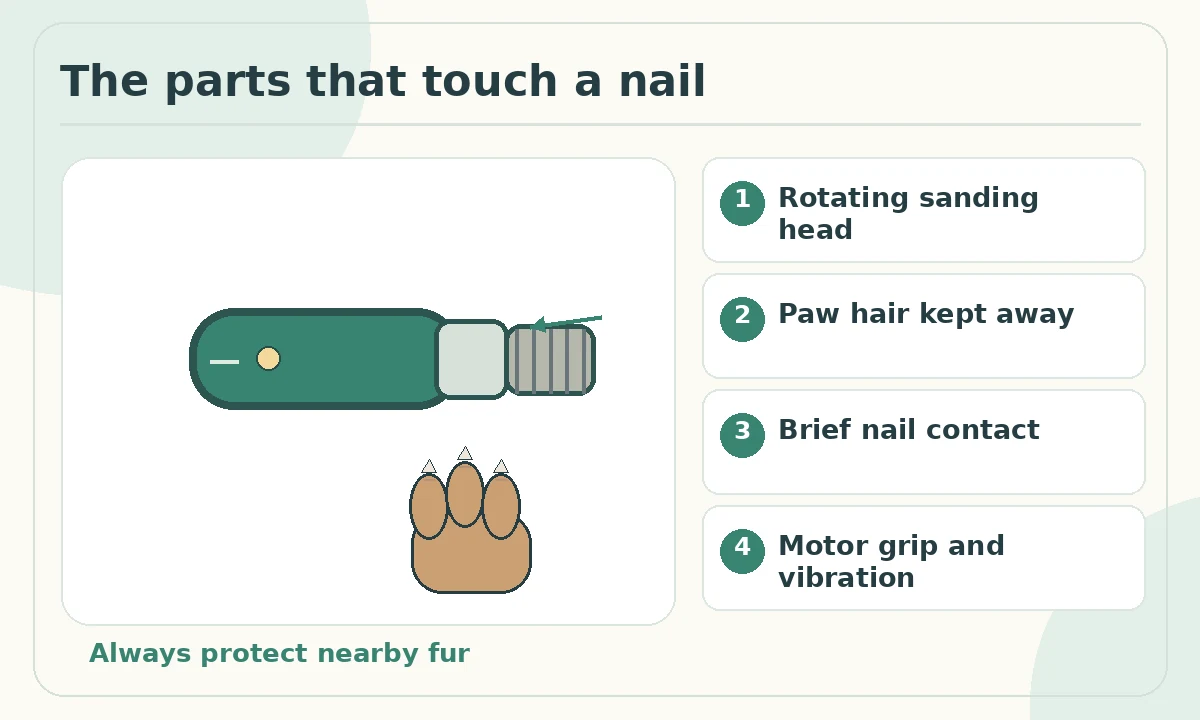
A compact abrasive drum should suit the dog’s nail size without forcing the entire toe against the housing. Some grinders have plastic guards with several ports; evaluate whether a port lets you view the nail and keep skin and fur outside. The guard can reduce accidental contact but cannot locate the quick or prevent friction heat. Replace worn abrasive material according to the maker’s instructions, because a clogged head may require longer contact. A spinning part exposed next to a long feathered coat deserves special caution even when the machine is marketed as pet-safe.
Protect paw hair and nearby skin
Long paw hair can twist around a rotating grinder head. Before switching it on, examine the toe, keep loose strands well clear and do not push a guarded opening through fur. A sleeve or gentle hair management method should not restrict circulation or cover your view of the nail. If you cannot safely separate the coat from the tool, choose another approach or consult a groomer. VCA warns about hair entanglement and accidental contact with skin. Work where your dog can balance comfortably rather than lifting a paw into a position that makes sudden movement more likely.
Avoid heat from sustained friction
Grinding converts movement into heat. VCA’s handling guide advises very brief contact, roughly one to two seconds at a time, followed by a break. Do not hold a spinning head in one spot while watching a clock or trying to create a perfect curve. Alternate short touches with visual inspection and rewards, and stop if the dog flinches or the nail seems warm. A quiet motor can still create painful heat. Practicing a light, controlled movement before approaching a dog makes the process safer than trusting a speed setting to prevent friction.

Introduce the sound before any nail contact
Begin with the switched-off device on the floor, let your dog choose to approach and offer a reward. During a separate session, turn it on at a comfortable distance for a moment and turn it off, pairing the sound with something the dog likes. Move closer only as long as your dog remains relaxed and willing to eat. Then practice gentle paw handling while the device stays off. This sequence follows VCA and University of Illinois cooperative-care principles: progress through small tolerable steps, not through forced exposure. The dog should always have an easy way to disengage.
Plan a first contact that feels manageable
Once the sight, sound and gentle paw handling are comfortable, briefly place the powered sanding surface against the outer nail tip and immediately withdraw it. Reward and end the session if that was a success. You do not need to smooth an entire foot on the first day. Keep your other hand stable but relaxed around the paw, avoiding pressure that traps a withdrawing dog. Examine the tip after each brief pass and stop well before the quick. If the dog jerks repeatedly or becomes distressed, go back to earlier stages rather than escalating restraint.
Compare power, runtime and cleaning access
Battery capacity and motor power affect convenience, but they are not direct measures of pet comfort. Ask whether the grinder maintains predictable rotation as a battery weakens and whether the sanding surface is easy to replace. Check how dust collects inside the guard and whether components can be cleaned without submerging electronics. Charge and store the device away from curious pets; damaged cables and loose batteries are hazards. A stable start-stop switch is important because you may need to release the tool promptly. Evaluate these features alongside the dog’s tolerance, not above it.
Know when clippers or a file may work better
If your dog tolerates clipper sounds but resists the vibration of a grinder, a sharp clipper for tiny trims may be the simpler choice. For rounding a rough edge, a manual nail file can avoid motor sound entirely, although the repetitive rubbing also needs a gradual introduction. Some dogs can learn a scratch board for front nails, as described by AKC, but that does not automatically maintain every toe. Avoid layering multiple tools into one stressful session. The best method is the one that keeps nails maintained and the animal comfortable enough to cooperate over time.

Stop for injuries, fear or uncertain anatomy
A torn claw, active bleeding, painful paw or nail curling toward the pad calls for veterinary guidance rather than another sanding attempt. So does marked fear that does not improve through short reward-based sessions. Ask a veterinary professional or cooperative-care groomer to demonstrate handling and a suitable tool. Never grind a nail down to an advertised universal length or assume a guard shows where the quick begins. Keep brief notes about the sound setting, nail contact and rewards your dog accepted. That practical record is more useful than chasing a claim of completely silent grooming.
How We Research
This independent guide reviews practical fit, handling, and tool safety rather than ranking products by unverified marketing claims. We cross-checked recommendations from veterinary sources and cooperative-care teaching materials that address quiet dog nail grinders. Our comparisons focus on features a reader can examine, the limitations of protective accessories, signs to stop, and ways to introduce the equipment with rewards. Illustrations are explanatory artwork, not photos of tested products. We did not conduct product trials, measure noise in a laboratory, or examine individual animals. Read About HubPet for our editorial approach.
Sources
University of Illinois College of Veterinary Medicine, Trimming Away the Terror: Source guidance. Reviewed October 27, 2026.
VCA Animal Hospitals, Handling Exercises for Trimming Nails and Brushing Teeth: Source guidance. Reviewed October 27, 2026.
VCA Animal Hospitals, How to Trim a Dog’s Nails: Source guidance. Reviewed October 27, 2026.
American Kennel Club, Good Grooming: Improve Your Dog’s Nail Care Routine: Source guidance. Reviewed October 27, 2026.
Safety note: Never force a frightened dog to accept nail care. Stop for bleeding, a split or embedded nail, significant pain, or uncertainty about the quick; ask a veterinarian or experienced groomer for hands-on help. This article is general information and not a veterinary diagnosis. See our veterinary disclaimer.
No. Motor sound and contact vibration remain, and a dog may still find them uncomfortable.
Yes. Heat comes from friction even when the motor is quiet. Use very brief touches and pauses.
No. The rotating head can catch fur or touch skin, and some dogs prefer clipping.
Pair the off tool, distant sound, paw handling, and eventually brief nail contact with rewards across separate sessions.
No. Stop, return to an easier step, and request professional support if fear or pain persists.