
Educational guidance only, not a veterinary diagnosis. New pain, sudden behavior changes, intense fear, or a bite risk call for professional assessment. Read the veterinary disclaimer.
When a dog starts barking after dark, the first job is to find the cause, not to assume stubbornness. Sounds outdoors may be easier to notice in a quiet house, while an uncomfortable bed, an urgent bathroom need, separation-related distress, or age-related changes can also disrupt the night. A puppy waking to eliminate and an older dog pacing through familiar rooms need very different responses.
This guide groups safe checks for tonight separately from signs that require veterinary attention. It does not recommend ignoring prolonged distress or using bark collars. For general daytime triggers, read the existing guide to excessive barking. Here the goal is a calmer night without missing a health issue or accidentally creating a nightly reward routine.
First Check Safety and Immediate Needs
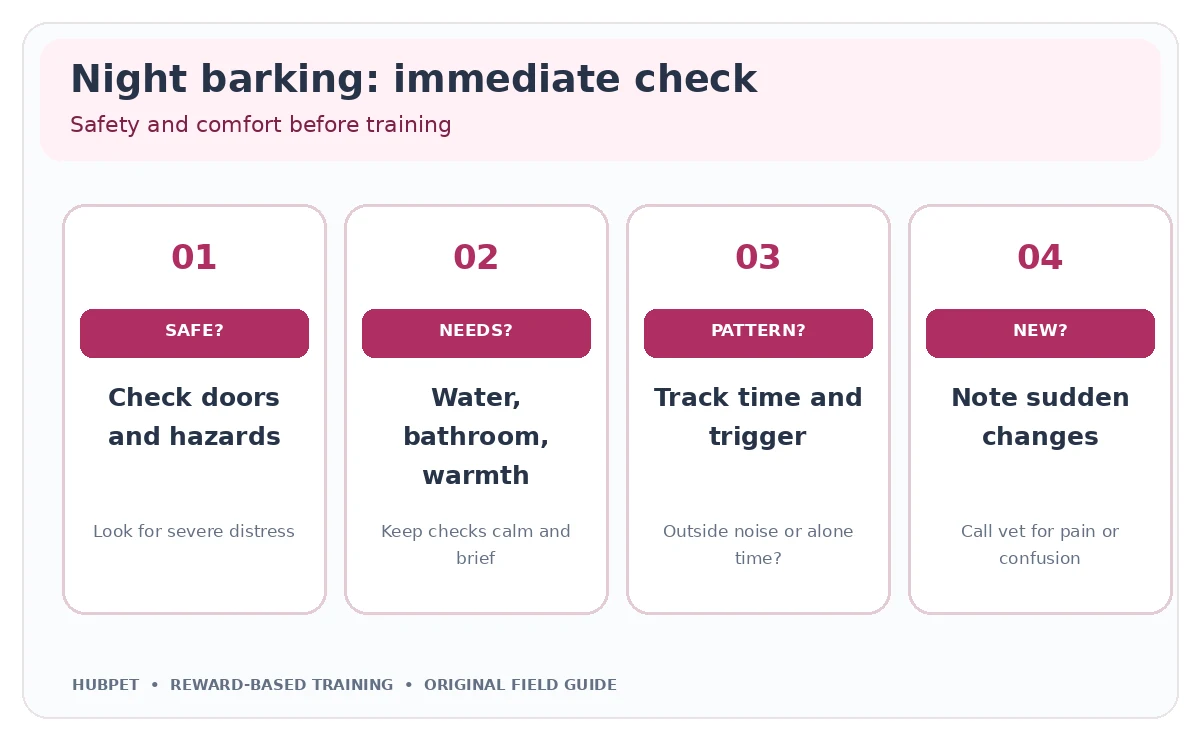
Approach calmly, switch on a light, and look for obvious hazards, an open gate, unfamiliar people, weather, or a distressed animal. Check whether your dog appears to need a bathroom break, water, or a comfortable resting temperature. If you take the dog outdoors, use secure identification and a leash where needed; avoid leaving a barking dog outside unattended.
Look for unusual panting, repeated attempts to settle, limping, vomiting, difficulty breathing, confusion, or signs of pain. These are reasons to call a veterinarian, with urgent assessment for severe symptoms. If your dog is otherwise well, record the time, the location, and what preceded the barking. Do not dismiss a sudden change in an older dog as a normal part of aging.
Identify Which of Four Night Patterns Fits
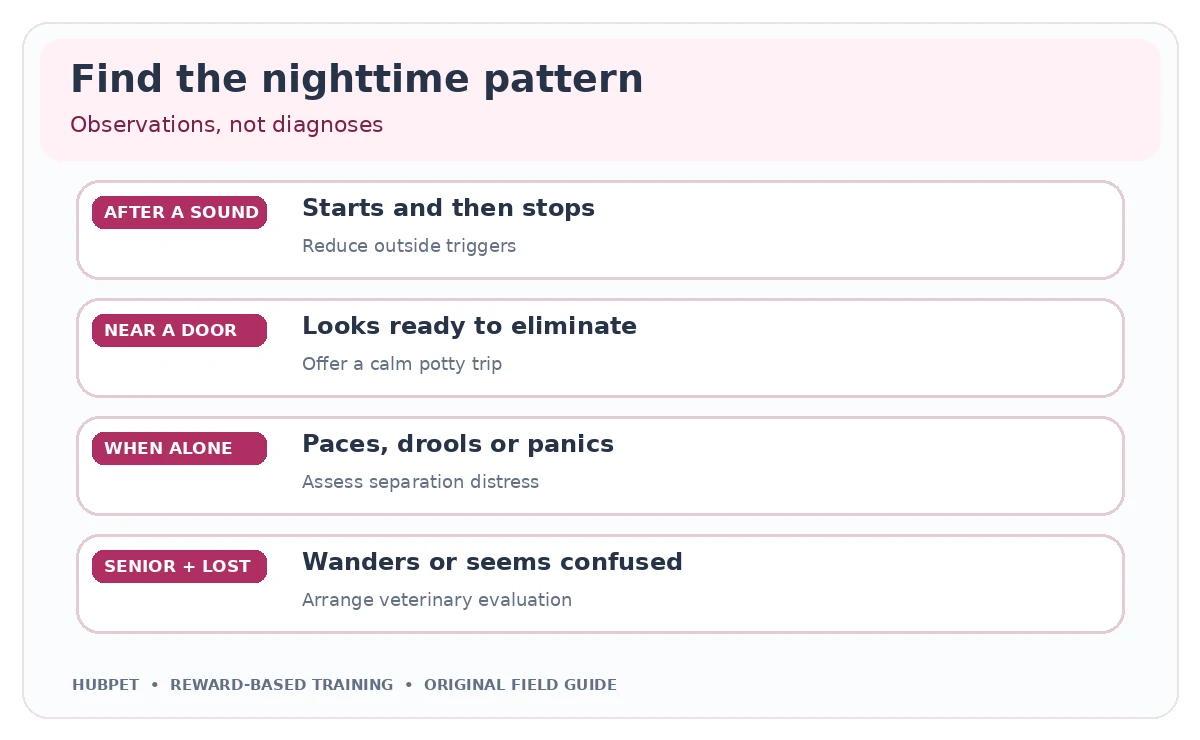
Noise-alert barking often starts abruptly after a vehicle, animal, voice, or movement outside and may stop when the scene changes. Bathroom-related barking is often followed by clear attempts to reach the door and a need to eliminate. Separation-related distress may occur when a person goes to bed or leaves the dog alone, with pacing, drooling, destruction, or persistent vocalizing. Disorientation may come with aimless wandering or getting stuck in familiar spaces.
These are possibilities, not diagnoses. A dog can have more than one reason for barking, and discomfort can look similar to anxiety. Make a short phone note: bedtime, last bathroom trip, episodes, body cues, and whether your dog was calm immediately afterward. If safe, a brief recording can help a veterinarian distinguish a pattern without repeatedly provoking it.
Change the Environment Without Creating New Risks
For clear external triggers, move the bed away from the front window, close curtains, and reduce disturbing noise where practical. Use a familiar, comfortable sleeping place that the dog can leave; do not suddenly lock a frightened dog in a crate. A consistent bedtime routine may help dogs anticipate rest, but routines should allow individual bathroom and comfort needs.
If a healthy dog settles after a predictable walk, a quiet sniff activity, and calm interaction, keep those steps steady. The calm evening routine guide covers broader household planning. Avoid making nighttime barking the only time the dog receives meaningful attention; provide daytime companionship and enrichment while responding compassionately to legitimate needs at night.
Handle Puppies and Newly Adopted Dogs Differently
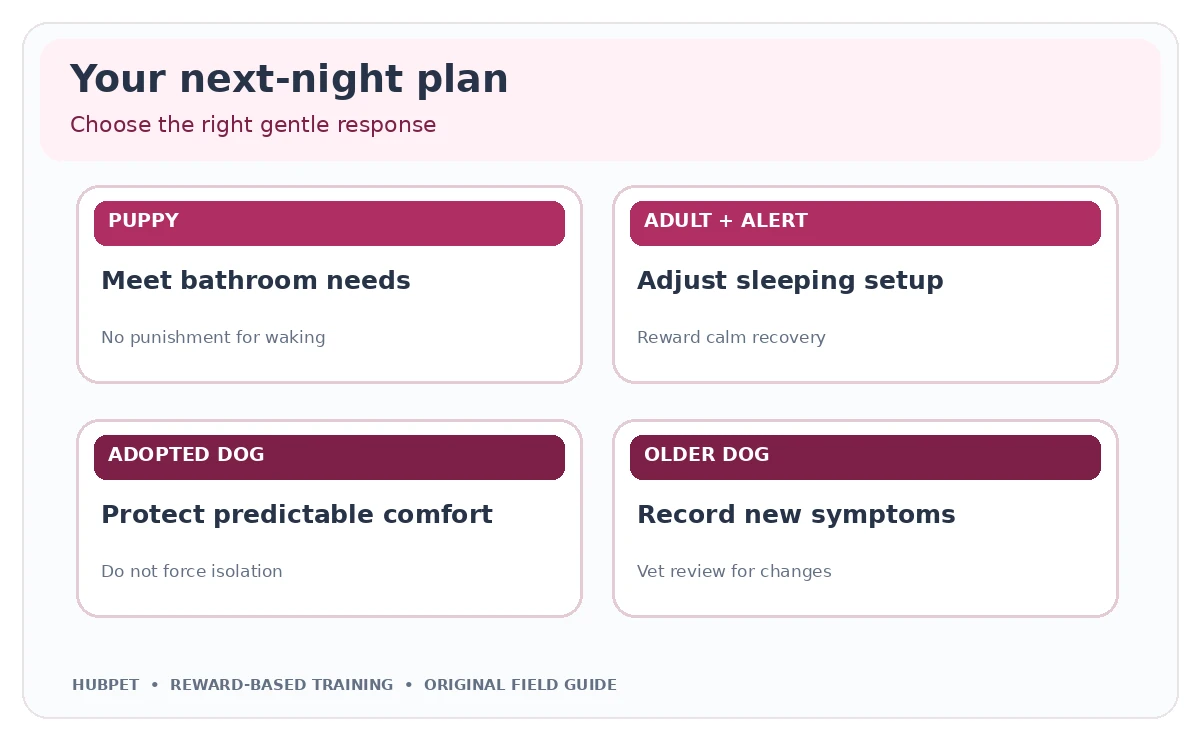
Young puppies may lack the bladder control needed to sleep through the night. Plan appropriate nighttime bathroom opportunities for the individual puppy, keep the trip quiet and brief, then return to a comfortable sleeping place. Reward successful toileting without turning the middle of the night into a vigorous game. Never punish an accident or leave a puppy crying in apparent distress.
Unfamiliar household sounds and routines can unsettle newly adopted dogs. A safe sleeping area near a familiar person can sometimes reduce distress while confidence grows. Give the dog a place to retreat and avoid forced isolation. Our post-adoption settling guide covers the wider adjustment process; nighttime vocalizing may improve as the environment becomes predictable, but worsening signs need review.
Be Especially Careful With Older Dogs
Pain, mobility difficulties, sensory changes, and other medical conditions can contribute to night waking. VCA guidance on aging dogs highlights nighttime restlessness as a possible pain clue, while veterinary resources on canine cognitive dysfunction describe evening disorientation and sleep disruption. Those facts do not mean an owner can diagnose dementia from barking.
If an older dog recently began barking at night, book a veterinary examination and bring your notes. Make routes to the water bowl and resting area safe, reduce slippery surfaces, and provide comfortable access while waiting for advice. Do not add medication, calming supplements, or pain relievers without veterinary guidance. Addressing a treatable discomfort may matter more than practicing a quiet cue.
Use a Calm Follow-Up Plan, Not Endless Trial and Error
After meeting immediate needs, choose one suitable adjustment for the most likely nonmedical trigger. Measure whether the dog wakes less often and settles more easily over several nights; some patterns will vary naturally. If barking mainly happens when left alone, assess separation distress rather than punishing noise. The separation-anxiety overview explains why confinement or simply ignoring panic can make matters worse.
Contact a veterinarian for any sudden pattern, voice change, repeated confusion, pain clues, or persistent disruption. After a veterinarian assesses medical issues, seek an experienced reward-based behavior professional if fear remains. A successful plan protects sleep and animal welfare: the dog can rest comfortably, the household knows how to respond, and nobody is asked to tolerate escalating distress.
How We Research
We reviewed the linked veterinary and animal-behavior resources on October 26, 2026, separating published guidance from our practical at-home examples. See the HubPet editorial approach. We checked each recommended response against animal welfare, ordinary owner safety, and situations requiring veterinary or professional assessment. We created original teaching diagrams and observation tools; they are not diagnostic instruments or clinical trial data. Dogs differ in temperament, age, and history; the material is educational, not an individual assessment.
Sources
ASPCA: Barking: identify the function before choosing a response. Reviewed October 26, 2026.
VCA Animal Hospitals: Pain and changes in behavior in aging dogs. Reviewed October 26, 2026.
PetMD: Signs of canine cognitive dysfunction and evening disorientation. Reviewed October 26, 2026.
VCA Animal Hospitals: Separation anxiety and barking during absences. Reviewed October 26, 2026.
Check for changed sounds, bathroom needs, new household routines, pain, and signs of anxiety. A new and persistent pattern, particularly in a senior dog, deserves veterinary attention rather than an assumption that the dog wants attention.
First check whether the puppy needs a bathroom trip, comfort, or help with a frightening environment. Respond quietly and consistently; prolonged distress and very young puppies should not be left to cry as a training strategy.
Canine cognitive dysfunction is one possible explanation for night pacing and disorientation, but pain and other health problems can look similar. A veterinarian must evaluate the dog; barking itself is not a diagnosis.
A steady familiar sound may reduce some outside noise triggers, but it will not resolve pain, bathroom urgency, or separation distress. Test changes gently and stop if your dog appears more worried.
No. Startle or punishment devices can increase fear and do not address the cause. Check safety and health needs, reduce manageable triggers, and use reward-based help for persistent behavior concerns.