
This guide offers general information, not individualized veterinary advice. For pain, distress, illness, sudden changes, or unsafe behavior, contact your veterinarian. Read HubPet’s veterinary disclaimer.
A large grey dog bed looks like a simple home accessory, but comfort depends on the dog’s shape and habits. Grey is a versatile color, not a clue to firmness, hygiene or actual sleeping area. Start by measuring how your dog rests when fully stretched, then compare that footprint with a bed’s usable surface. Next, inspect the cover, seams and washing instructions. This guide separates large gray dog bed styles by sleeping posture, room placement and care needs. It also explains when a stylish raised edge or plush fabric creates more work than comfort. No color or brand guarantees that a bed will suit an individual pet.
Measure the usable sleeping surface, not the outside bolster
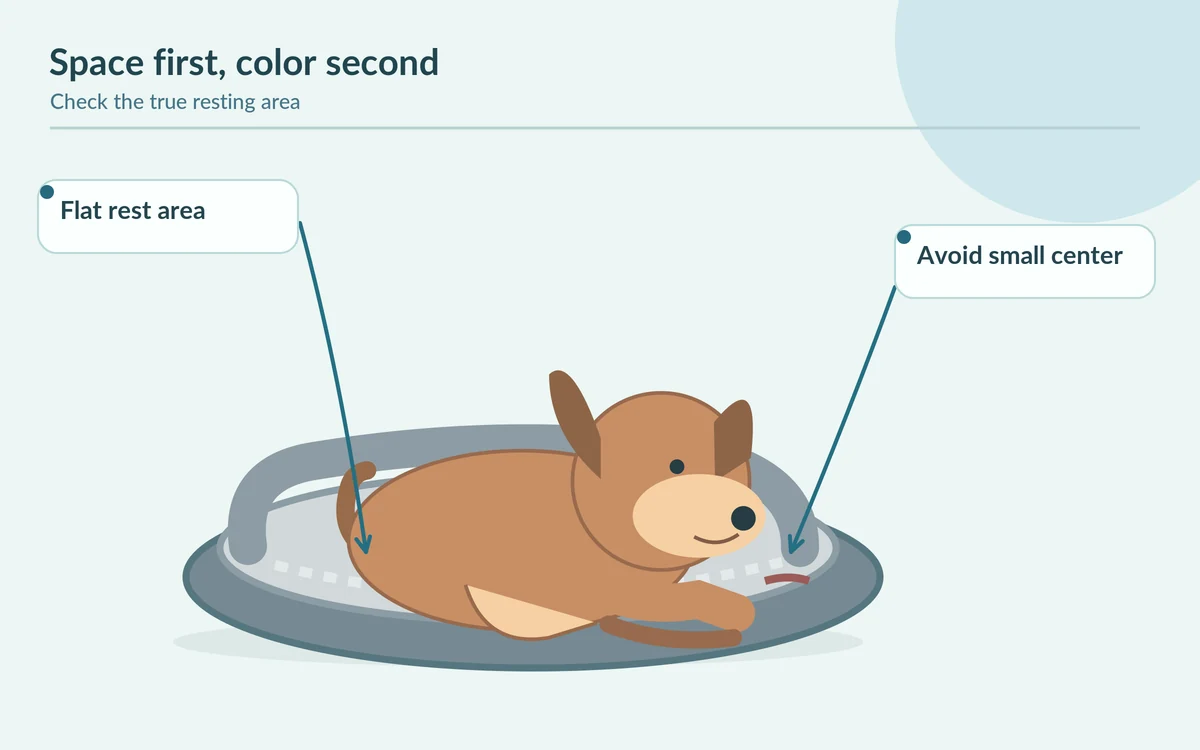
Watch the dog settle in its current favorite spot and note whether it curls, stretches sideways or rests its chin on an edge. Measure the area from the nose to the back feet when stretched, with enough margin for relaxed movement. A product may be listed as large even though tall bolsters take up considerable floor space. Therefore, read the internal sleeping-area dimensions separately from the outside dimensions. Also consider whether the bed needs to fit under a table or near a door. Keep a clear walkway to avoid the dog being stepped over. A dog should be able to stand up easily without climbing a high ridge.
| Sleeping habit | Starting bed shape | Measure carefully |
|---|---|---|
| Stretches full length | Flat rectangular mattress | Unobstructed inside length |
| Curls in a nest | Wide oval with low rim | True inner diameter |
| Resting chin on edge | Low supportive bolster | Opening and floor area |
| Prefers cooler floors | Thin breathable pad | Ventilation and non-slip base |

Compare grey upholstery without confusing appearance and durability
Light grey fabric may show dark mud and some coats clearly. Charcoal can hide surface marks, but it does not make the bed cleaner. By contrast, woven fabric can trap short hairs in its texture even when it appears tidy. Smooth removable covers often release fur during brushing before the wash. Examine the underside too. A non-slip base matters on tile and smooth wood, although a glued-on coating that sheds pieces may create a chewing hazard. Check stitching along the corners where a large dog may scratch before lying down. Choose the material you can realistically maintain every week.
Evaluate cushioning without assuming a high price means better support. An even foam core should not create a ridge through the middle when the dog changes position. However, specific medical claims about joint relief need a veterinarian’s input, especially for dogs with arthritis or mobility problems. Large beds can be heavy and awkward to wash. A removable cover may be more practical than a fully stuffed, machine-washable mattress. The HubPet oversized bed guide offers extra ideas for fitting a shared floor lounge into a room.
- Measure the dog while resting in its common sleeping positions.
- Compare the actual open sleeping area, not the outside border.
- Inspect the seam, cover closure, underside and removable layers.
- Check whether the selected cover fits your washing machine.
- Place the bed on a stable, dry surface and observe a voluntary rest.
Choose a cover you can clean thoroughly
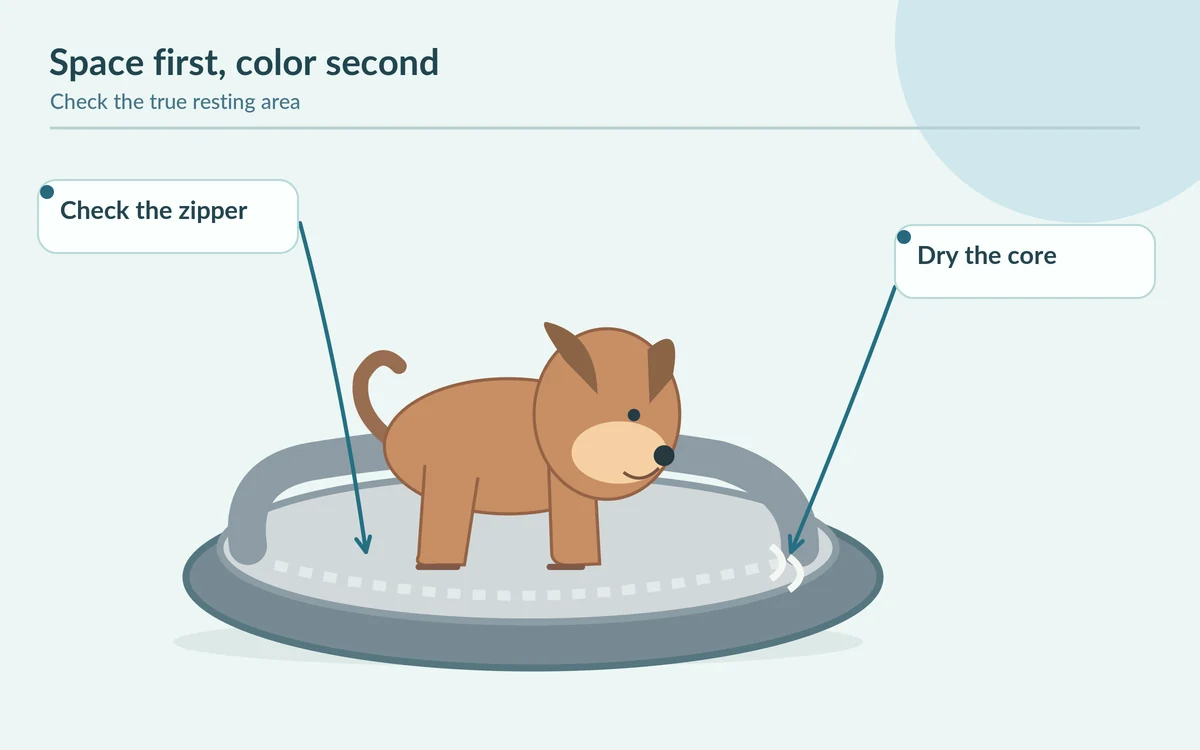
The CDC recommends weekly cleaning for pet bedding, with earlier washing when items become dirty. Always follow fabric and filling labels. Also check how long a large insert takes to dry. A cool, damp foam core can smell unpleasant even under a clean grey cover. If accidents are a concern, look for a separate protective liner and a machine-washable top. A marketing claim such as stain-resistant does not automatically mean waterproof. Check closure placement and turn the cover inside out before washing when the care instructions allow it. Keep a backup cover if drying takes most of a day.
| Cover or fill | Advantage | Trade-off |
|---|---|---|
| Smooth removable fabric | Fur and crumbs brush off readily | Zipper and seams require inspection |
| Textured plush surface | Soft tactile feel | Hair can collect in pile |
| Low firm mattress | Easy step-on access | May lack headrest rim |
| High bolster bed | Defined edge for resting chin | Less interior space; harder washing |
Use the bed as part of a quiet household zone
Place the bed away from main walking routes, drafty doors and direct heat. A dog might prefer a corner with a view of family activity rather than a secluded storage room. Offer the bed without forcing the dog to use it. Then reward voluntary settling with gentle praise or a treat. If the bed slides, add a stable non-slip layer or choose a different base. If the dog repeatedly leaves after a minute, compare temperature, texture and size before buying another model. The adult crate-introduction guide also explains patient, choice-based rest routines.
Inspect the bed at the end of the week. Look for loose threads, exposed stuffing, damaged zipper pulls and compressed edges. Remove a damaged item before the dog swallows pieces. Also compare the grey surface against a clean white cloth if you suspect dust, moisture or body oils. The color should never replace your cleaning schedule. When moving the bed between rooms, check that the floor remains level and the underside dry. For senior dogs or those with stiffness, ask a veterinarian about entry height, stability and the kind of surface that suits their mobility needs.
When to Call Your Vet
Ask your veterinarian about any sudden difficulty lying down, stiffness, skin irritation or repeated sleep disruption. These signs need more than a product recommendation. If your dog eats torn fill or fabric, seek prompt veterinary advice. Avoid claiming that a grey orthopedic-style bed treats a joint condition; professional assessment should guide specific supportive equipment.
How We Research
We applied CDC guidance on cleaning soft pet items, VCA advice on damaged bedding and Cornell’s emphasis on adequate resting space. Bed styles in the comparison table are design categories, not tested product rankings. Read HubPet’s research process for our sourcing principles.
Sources
CDC — Pet Bedding Cleaning — source consulted for the relevant section of this guide.
VCA — Bedding Material Safety — source consulted for the relevant section of this guide.
Cornell — Resting Room and Crates — source consulted for the relevant section of this guide.
No. The label large is inconsistent between products. Compare the usable interior surface with your individual dog’s stretch length and preferred sleeping posture.
Color may hide certain marks, but it does not prevent bacteria or odors. Choose a washable cover and maintain the same routine you would for another color.
Some dogs enjoy a low chin rest, while others need open space to stretch. Check the inner usable area and whether the edge creates a trip obstacle.
Follow the exact care label. Some large beds have washable covers but cores that cannot go in a washing machine.
Offer it calmly in a familiar room and check temperature, placement and texture. Persistent pain or difficulty settling warrants a veterinarian’s opinion.