
General pet-care information, not veterinary advice. Special diets, allergies, chronic illness, puppies and kittens may require individualized guidance from your veterinarian. If your pet swallows a foreign object, seems unwell or may have eaten a toxic ingredient, contact a veterinarian promptly. Read our veterinary disclaimer. High reward treats for dogs are the foods a particular dog finds especially motivating in a particular moment. They are not necessarily the most expensive, smelliest or largest treats in the store. Some dogs work enthusiastically for kibble at home but prefer a tiny soft piece of plain cooked meat outdoors; others value a toy or praise more. Build a reward ladder around your own dog’s preferences, the difficulty of the task and your dog’s health rather than treating every training session as a snack buffet.
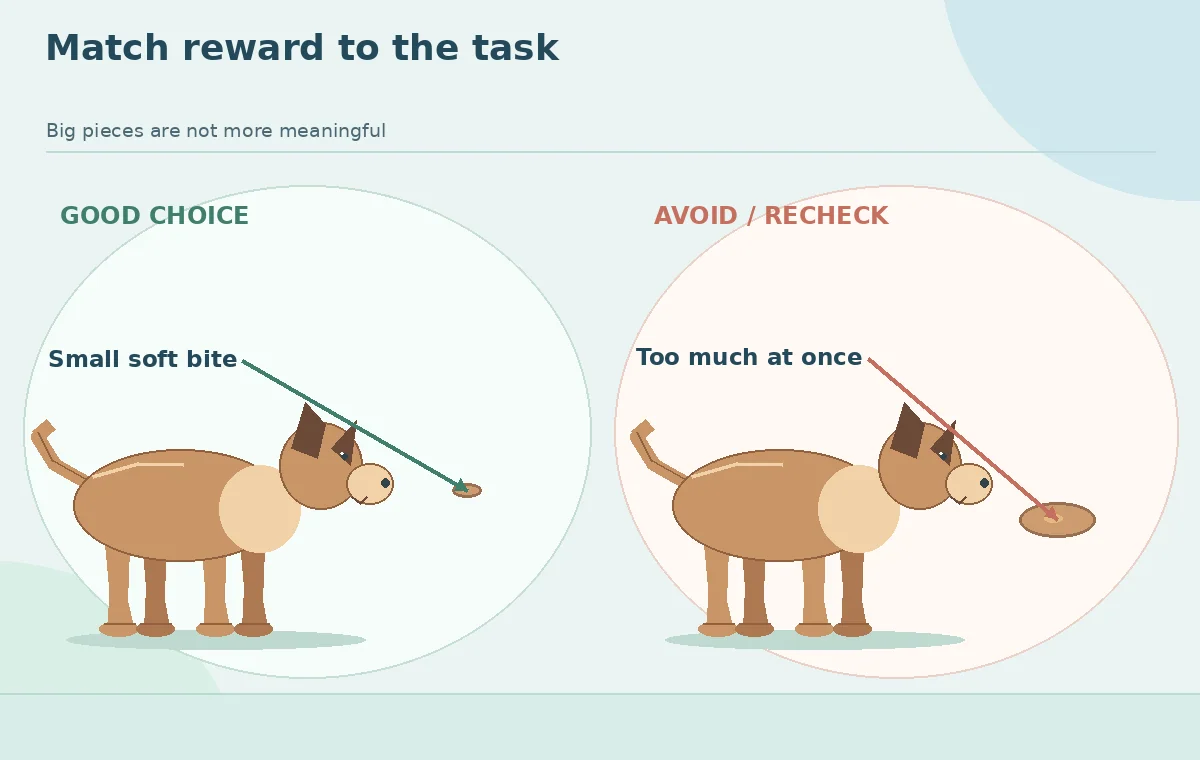
Test a few safe, small rewards in a quiet place and notice what your dog chooses willingly. Reserve especially valued options for difficult new skills or distracting locations, and use regular food or play for easier repetitions. Break training treats into tiny soft pieces that the dog can swallow comfortably. Follow your veterinarian’s calorie limits, and avoid any ingredient your dog cannot tolerate. Do not withhold meals to make your dog hungry enough to work.
A reward is high value only if your dog says so
The same reward can have different value depending on context. Kibble may earn a quick sit in the kitchen but fail to compete with a squirrel outside. Dogs can also lose interest if offered the same piece repeatedly, or turn away when worried or overheated. These are information about motivation and comfort, not proof that the dog is stubborn. Observe whether your dog approaches freely, takes the reward gently and returns attention to you. A dog that will not take any food in a stressful place needs more distance and an easier environment, not a more forceful cue.
| Training context | Possible starting reward | When to upgrade or change |
|---|---|---|
| Known cue in quiet room | Measured regular kibble | Only if interest is low |
| New skill in quiet space | Small preferred soft treat | If repetition becomes frustrating |
| Recall in a safe distracting space | Tiny high-preference reward | Adjust distance first if dog cannot focus |
| Sensitive or worried dog | Space, safety and dog-chosen reinforcement | Do not pressure dog to eat |
| Dog on restricted diet | Vet-approved meal portion | Ask veterinary team before adding extras |
Build a three-level reward ladder
Write down what your dog actually likes, not what reviewers call “premium.” Measured regular kibble can serve as an everyday tier. A mid-level reward might be an approved small soft treat. A special tier could be a more appealing veterinarian-approved food, used sparingly where the dog can still learn. Value can also come from access to sniffing, a toy game or the chance to greet someone when appropriate. Avoid using a long jerky strip as a single reward for a simple behavior; one small piece can communicate the same success more cleanly.

Run a short, fair preference test
- Choose two or three dog-safe rewards your veterinarian considers appropriate.
- Cut or break them into similarly small, easy-to-swallow pieces and account for their calories.
- Offer the options one at a time in a calm place; note interest rather than forcing a choice.
- Practice one familiar cue and deliver the chosen reward immediately after the correct response.
- Move to only a slightly more distracting place; if the dog cannot respond, make the task easier.
- Rotate food, praise and play as the skill strengthens while retaining a special reward for harder wins.

Change one variable at a time. If the dog ignores a reward outside, you cannot tell whether it dislikes the flavor, feels worried or is too distracted unless you simplify the environment. Dogs Trust and VCA explain the value of selecting rewards that matter to the individual and pairing them with humane training. For a practical teaching sequence, read the recall training guide; high-value food supports training but does not replace safety management or a leash in an unfenced area.
Compare treat formats by training job
Soft bite-sized treats suit fast repetitions because the dog does not need to stop and crunch. Hard biscuits can work for pauses but may slow a cue sequence. Strong-smelling foods sometimes gain attention outdoors but can be high in calories or fat; use tiny pieces rather than increasing serving size. For a dog that prefers toys, a brief tug game after a correct response can be highly rewarding without adding snack calories. The goal is efficient communication, not maximal stimulation or endless food. In mixed dog-and-cat homes, our cat chew-toy safety guide addresses a different enrichment concern: detachable toy parts.
| Format | Best practical fit | Watch out for |
|---|---|---|
| Regular kibble | Easy low-distraction practice | Count within total food plan |
| Tiny soft commercial treats | Quick new-skill repetitions | Calories and hidden ingredients |
| Small plain cooked meat pieces | Occasional exciting reward if approved | Storage and food hygiene |
| Large hard biscuit | Slow occasional reward | Chewing delay and excess calories |
| Tug or sniff break | Dogs motivated by activities | Safety, environment and individual preference |
Make rewards meaningful without overfeeding
The label “high reward” does not make something free of calories. AAHA recommends treating all extras as part of the daily nutrition plan, usually no more than about 10% of intake. Preportion training rewards into a small pouch, subtract used kibble from meal allocation as appropriate and share the plan with the household. Do not use chocolate, grapes, onion, garlic or products with xylitol. If the dog is on a therapeutic diet, ask before using meat, cheese or new training snacks. Review the full positive-reinforcement method before increasing task difficulty.
When to Call Your Vet
Seek veterinary guidance if your dog suddenly refuses favorite rewards, has vomiting or diarrhea after a new snack, has food allergies or is on a weight-management or prescription diet. A sudden change in appetite or activity is not a training problem to solve with richer food. Trouble swallowing, collapse or severe reaction needs urgent assessment. For a fearful or reactive dog or repeatedly unable to work around distractions, a qualified reward-based professional can adapt the training environment.
How We Research
We used VCA guidance on dog-preferred rewards, training with food and timely delivery, plus Dogs Trust positive reinforcement and AAHA treat-calorie recommendations. The comparison ranks reward usefulness by context instead of naming commercial winners. It rejects coercion, meal deprivation and medical claims that a treat changes fear on its own. Learn about our research approach on About HubPet.
Sources
VCA — Using Predictable Rewards to Train Your Dog; VCA — Using Food and Treats for Training Dogs; Dogs Trust — Positive Reinforcement Training With Rewards; AAHA — Prevention of Obesity; ASPCA — People Foods to Avoid Feeding Your Pets.
A reward your individual dog particularly wants in that context. The dog’s response determines its value, not by a premium label.
No. Some dogs prefer kibble, approved soft treats, tug play or sniffing opportunities depending on the task and environment.
Usually reserve special rewards for demanding or new skills; you may reward known easy tasks with regular food or other preferred rewards.
Increase distance from distractions and reduce difficulty; refusal can signal stress, discomfort or competing interests.
Yes. Tiny pieces still have calories. Account for all training food within a veterinary-approved daily feeding plan.