
This article is general information, not veterinary advice. If your pet seems unwell, is in pain or may have eaten something harmful, contact your vet or an animal poison control line right away. Read our vet disclaimer.
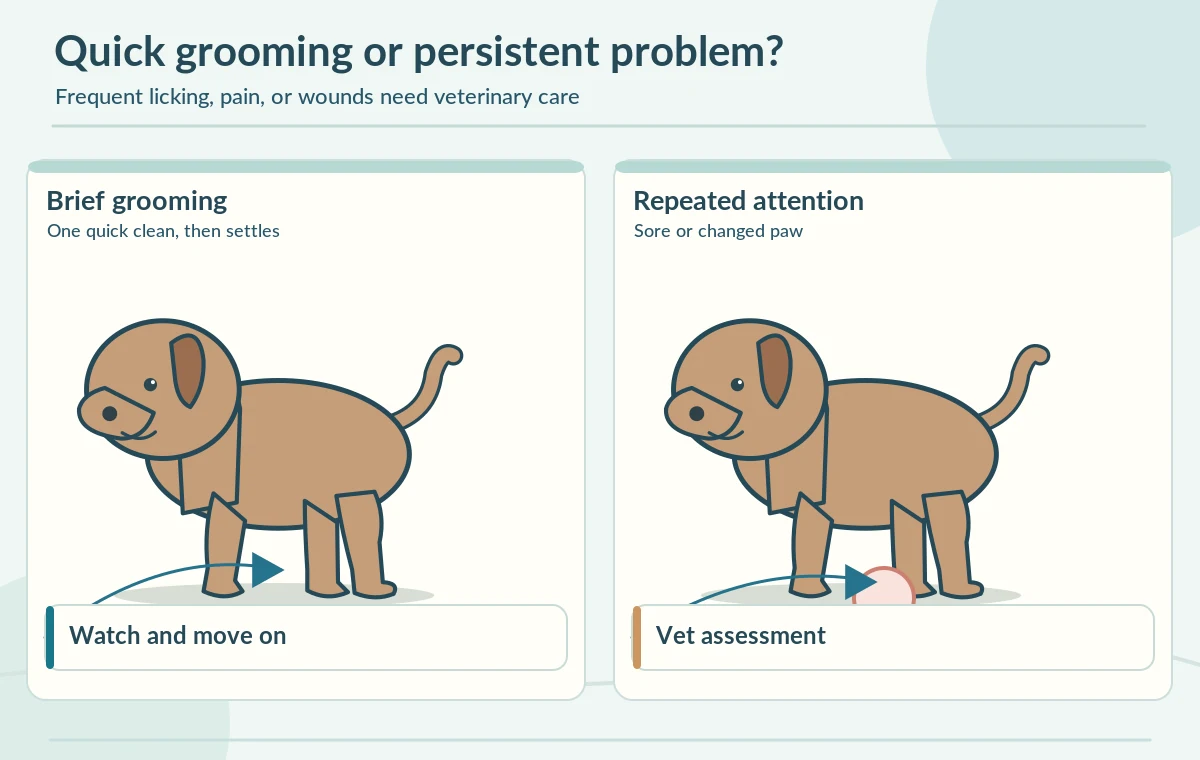
For general education only, not a diagnosis or a substitute for veterinary care; see our veterinary disclaimer. Why is my dog licking and biting his paws? A brief lick after a walk may be routine grooming, but repeated chewing, focusing on one paw, soreness or changes in walking deserve attention. Paw licking can reflect itch, irritation, a foreign object, injury or a secondary skin problem; behavior alone cannot tell which one is responsible.
The safe first step is to observe how often it happens, whether the dog targets one or several paws, and whether there is redness, swelling, odor, discharge, a wound or limping. Avoid guessing an allergy or starting home medication based on a picture. If you notice broken skin or the licking keeps recurring, arrange a veterinary examination.
Quick triage: the pattern matters more than the label
| What you notice | What it could suggest (not a diagnosis) | Next step |
|---|---|---|
| Brief licking after outside time; dog otherwise comfortable | Dirt or short-lived irritation is possible | Gently inspect and watch for repeated licking |
| One paw repeatedly chewed or sudden limping | Localized pain, a nail issue or trapped material is possible | Prevent further injury; contact a vet promptly |
| Several paws itchy, especially recurring | Allergies, parasites or another skin condition are possible | Arrange a veterinary skin and paw assessment |
| Redness, odor, moisture or broken skin | Inflammation or secondary infection may be present | Book a vet visit; avoid self-prescribed creams |
| Marked swelling, bleeding, severe pain or inability to bear weight | Significant injury or other urgent problem is possible | Seek urgent veterinary care |
What you can safely look for around the paw
With the dog willing and calm, check the top of the foot, between the toes, nails and visible pads. Look only—do not dig into the skin, pull embedded material or force a painful foot. Note whether the licking targets the toe spaces, pad surface or one particular nail. If handling causes distress or pain, stop and let the clinic examine it.
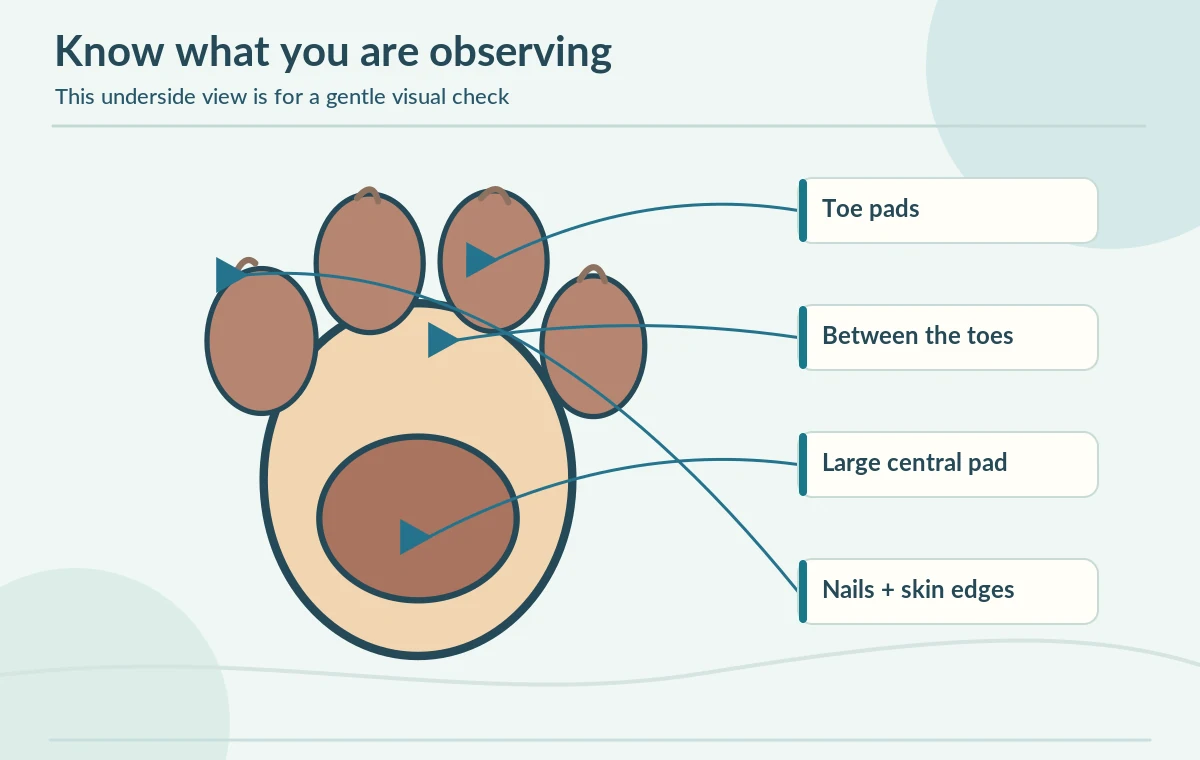
A paw that appears normal from above can still be uncomfortable. Licking itself may further irritate skin and make a problem harder to evaluate. A photo and short video of the dog walking and licking can help your veterinarian understand the pattern, especially if it is intermittent.
Possible reasons a dog keeps licking or biting paws
VCA notes that itchy skin is a common reason for paw licking. Allergic skin disease and parasites are among potential causes, and repeated licking may contribute to secondary bacterial or yeast overgrowth. Environmental contact, a splinter or thorn, a damaged nail, and other painful conditions also belong on the clinician’s differential list; the location of licking alone cannot confirm them.
Some dogs lick more during stress or inactivity, but calling it a habit without checking for discomfort risks missing a treatable condition. A veterinarian should evaluate persistent symptoms before assuming a primarily behavioral cause. Never punish the dog for licking; address comfort, access and veterinary treatment recommendations instead.
A low-stress observation plan before the appointment
- Record when the licking starts: after walks, at night, after play, or throughout the day. Note which paws are involved.
- Take a clear photo in good light without stretching toes or pressing tender tissue. Stop if the dog withdraws.
- Look for a change in gait, appetite, energy or tolerance for handling; these details can affect urgency.
- Keep walking areas free of obvious irritants and follow the veterinarian’s advice on cleaning and protection. Do not use essential oils, human anti-itch products or improvised bandages.
- Ask your vet what signs require immediate care and whether photos, an examination or follow-up skin testing would help.

Avoid a forced at-home treatment experiment. Steroids, antibiotics, antifungal products and flea medicines have different indications and safety requirements; a veterinarian should guide their use. Similarly, licking the same foot after a cold or salty walk calls for an environment check, not an automatic allergy diagnosis.
When to Call Your Vet
Contact your vet for persistent chewing or licking, recurring symptoms, redness, odor, hair loss, moist skin or any discomfort. Seek urgent care for bleeding, deep wounds, rapidly growing swelling, severe pain, inability to bear weight or suspected embedded sharp objects. A dog that tries to bite when you touch the paw may be in pain; stop handling and tell the clinic.
For useful context on paws exposed to cold and deicing salt, see our outdoor care guide.
Licking has more than one meaning: read about why dogs lick people and dog behavior and attention. Neither article replaces a veterinary exam for paw symptoms.
What to tell the veterinary team and what to avoid
For the appointment, organize the information into four groups. First, note onset: did the paw chewing begin suddenly or slowly? Second, mark the distribution: one foot, two front paws, all feet, or a moving target? Third, describe visible changes such as swelling, staining, redness or a broken nail, without trying to decide what they mean. Fourth, list environmental context, including walks, new surfaces, wet weather and recent changes in grooming products. This information helps the clinician ask better questions but cannot replace examining the dog.
A video can be useful if it shows the behavior naturally and safely: the dog walking across the room, pausing to lick, or shifting weight away from a foot. Do not make the dog run, handle a tender paw or remove a protective device just to collect footage. If the paw looks painful or your dog will not let you near it, that refusal is information worth sharing. Photographing in good light is sufficient; detailed home probing can make an injury worse.
It is tempting to treat every itchy paw with a rinse, wipe or cream. Repeated cleaning can itself irritate damaged skin, and ingredients safe for people may not be safe when swallowed by a dog. The right approach varies depending on whether the clinician finds contact irritation, a nail injury, parasites or skin disease. Keep the area free of obvious hazards without trying to extract material or diagnose infection. Ask the clinic before using a collar, boot, wrapping, topical product or any medication.
If the licking seems to occur only during boredom, still check for physical clues and seek veterinary advice when it repeats or damages skin. Once your veterinarian has addressed health problems, low-pressure enrichment and a predictable routine may be useful. Do not use punishment or physically hold the muzzle shut to stop licking. A dog may continue because the foot is uncomfortable, and interrupting the behavior without investigating why can hide the problem rather than solve it.
How We Research
This practical guide cross-checks established veterinary or animal-behavior guidance against the specific question a reader is trying to answer. The age ranges, signs, and examples below are navigation aids, not diagnostic tests. Read our editorial approach for how we select and explain sources. We prioritize veterinary sources about itch, irritation and paw health. We do not infer a diagnosis from a photo or recommend medications, dosing or treatment regimens.
Sources
Sources: VCA Animal Hospitals: Paw Licking and Itch; AKC: Why Does My Dog Lick Their Paws?. These are educational resources; your veterinarian must assess the individual dog.
One-paw focus can occur with a localized irritant, injury or other discomfort. It is not possible to identify the cause by the pattern alone; persistent licking needs a veterinary check.
Yes, itch associated with allergic skin disease is one possibility, but parasites, infection, foreign material or pain can look similar. Your veterinarian can narrow it down.
No. Human products can be inappropriate or harmful if a dog licks them. Ask your veterinarian before applying medications or topical products.
A brief lick can be normal. Repetition, skin change, limping, pain or inability to stop are reasons to investigate rather than dismiss the pattern.
Bleeding, a deep wound, marked swelling, severe pain or inability to bear weight need urgent veterinary advice. Stop handling a painful paw.