
This article provides general pet-care information, not individual veterinary advice. For painful mats, skin changes or sudden grooming intolerance, consult your veterinarian. See our veterinary information disclaimer. Some dogs grow long hair around the underside of their feet. You may see tufts extending over the pads, especially after a walk on damp pavement. Not every tuft needs trimming. The practical questions are whether fur hides debris, forms painful knots or interferes with comfortable contact on the floor. A relaxed visual inspection comes before any grooming tool. The skin and webbing between toes are delicate, and sharp cutting equipment in that small space can injure a moving paw. This guide focuses on looking, gentle cleaning and knowing when a skilled groomer or veterinarian should help.
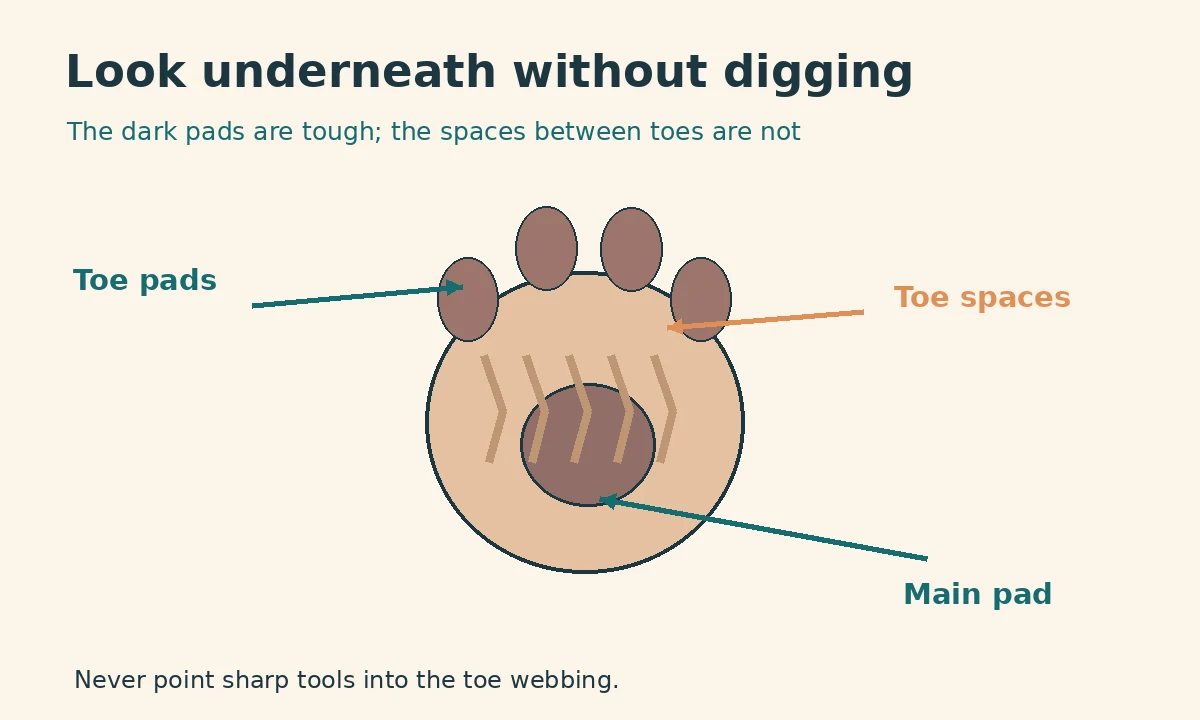
Know the parts you are inspecting
A dog’s paw includes several visible pads, toes, nails and sensitive webbing between the digits. Hair may grow around the edges and between these structures. Do not assume all hidden tissue is tough padding. Use a lamp and a comfortable resting position to see the surface. Never push a blade into the toe gaps to expose more hair. A simple outline drawing helps distinguish fur that extends past the pad face from deeper hair near the webbing. If you cannot see the boundary clearly, stop the trim plan and ask a professional.
Start with consent and light touch
Practice touching one foreleg for a moment and reward the dog before asking to look at the paw. Gradually progress to a gentle lift that the dog can comfortably tolerate. Give a clear chance to withdraw. A paw that jerks away, a stiff body or repeated lip licking tells you the session may be too much. Return to a simpler step rather than restraining the animal tightly. Short comfortable practice outside grooming time is more useful than a hurried procedure after a muddy walk. Some dogs need an individualized cooperative-care plan.
Check for foreign material first
Look for small pebbles, dried mud, burrs or other debris visible on the outside of the foot. Do not dig at lodged objects, swollen skin or a painful spot with a comb. Rinse ordinary surface dirt using a gentle pet-safe routine and dry around the paws well. A foxtail or sharp object can require prompt veterinary evaluation. Observe whether the dog limps, repeatedly licks one foot or reacts when a particular toe is touched. Those are reasons to stop home grooming rather than search blindly through the skin folds.
Compare short tufts and tight tangles
Fur that lies loosely over the pad is different from a knot pulled close to the skin. You may gently separate a small free tuft with your fingers while the dog rests. A compact mat between toes can tug every time the dog steps and should not be yanked out. Never try to cut a tight knot at skin level with household scissors. If you cannot slide a comb comfortably through exposed hair, arrange help from a groomer or veterinarian. Comfort takes precedence over making the paw look neat.

Observe traction without inventing a cause
Watch your dog walk naturally on a familiar, dry surface with reasonable grip. Smooth floors can be slippery for many reasons, including the floor finish and how the dog moves. Fur over a pad may affect contact in some dogs, but a sliding foot is not a diagnosis. Check nail length and signs of pain through appropriate professional care if slipping is new or frequent. A non-slip rug can reduce risk while you assess the environment. Do not trim deep between toes as an untested fix for gait problems.
Keep trimming outside your skill limit
If your dog needs a close paw trim, a trained professional can evaluate the coat and choose safe tools and handling. Ask the groomer to keep sensitive webbing protected and avoid an extremely close clip. If you have never used clippers near a paw, do not learn on a wiggling dog with a tight mat. An animal who panics or snaps needs a slower care plan, not stronger restraint. Avoid pointing blades into gaps or cutting around inflamed skin. Pause and contact a veterinarian when wounds, swelling or persistent licking appear.
Dry feet thoroughly after washing
After a muddy walk, wipe and rinse the visible paw surface as needed, then dry gently with a clean towel. Pay attention to moisture left on the outside of the toes without rubbing sensitive skin raw. Damp fur may hold grit that becomes uncomfortable later. Replace a soaked floor mat and keep the resting area dry. Do not apply human lotions, powders or scented disinfectants to a paw unless your veterinarian recommends them. Good cleaning is about removing debris and observing the foot, not sterilizing healthy skin after every outing.
Record changes over several walks
Make a short note if one paw consistently traps dirt, the dog hesitates on a surface, or a particular toe seems sore. Compare conditions before and after rain without making the dog repeat slippery walking tests. If the fur looks ordinary and the dog moves comfortably, monitoring may be enough. If the dog shows pain, limping, odor, redness, discharge or sudden reluctance to bear weight, seek veterinary care. A groomer can assess routine hair management, but a painful foot needs a medical assessment rather than cosmetic trimming.
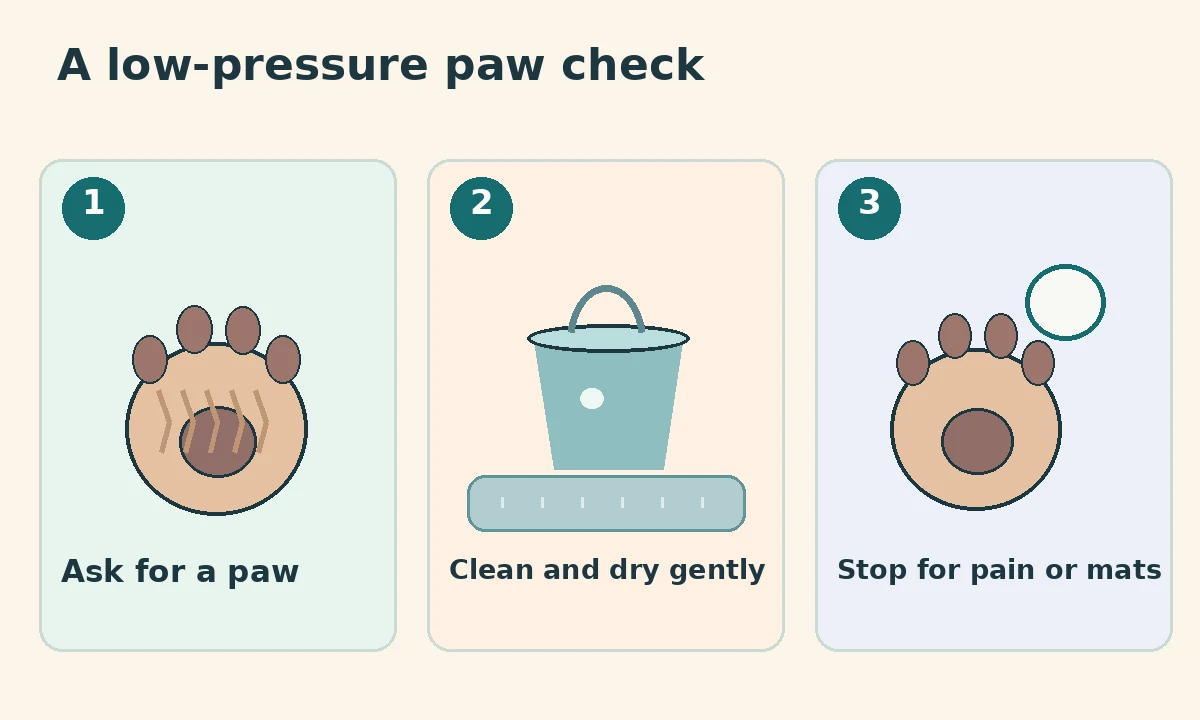
Build a manageable paw check routine
Place a dry towel and small reward container near the door. Let the dog settle before briefly checking one paw, then give a break. Use adequate light so you are not trying to feel blindly between toes. Clean an accessible spot gently and dry it before the dog walks away. Only increase the number of paws handled as comfort improves. Track whether your dog remains relaxed and whether debris or mats recur. Keeping the routine predictable supports safer inspections and reduces pressure to do too much at once.
How We Research
We compare veterinary grooming and animal welfare guidance with manufacturer instructions where equipment compatibility matters. We distinguish routine coat maintenance from painful matting and medical problems. Our practical checks focus on the actual tool, coat contact, the dog’s comfort signals and safe stopping points. Learn about our editorial process. These illustrations explain general principles rather than certify any specific product or replace a professional examination.
Sources
ASPCA — Dog Grooming Tips and Paw Care — Guidance on coat care, comfort, tool use and safe limits.
VCA — Grooming and Coat Care — Guidance on coat care, comfort, tool use and safe limits.
RSPCA — Why and How to Groom Your Dog — Guidance on coat care, comfort, tool use and safe limits.
No. Some dogs have comfortable feet with visible hair. Assess mats, debris and pad contact, and ask a groomer about coat-specific care.
Avoid cutting near the webbing or any tight mat with household scissors. A sudden paw movement can cause a serious skin injury.
Fur may affect contact for some dogs, but flooring, nails and pain also matter. New or repeated slipping needs an appropriate assessment.
Do not dig into swollen or painful skin. Contact your veterinarian if the object is embedded or your dog limps or resists touch.
Practice very brief voluntary touches with rewards and breaks. Stop when the dog withdraws and seek cooperative-care help for persistent distress.