
A self-warming dog bed sounds like a heater, but most versions do not contain one. They rely on fluffy insulation, a reflective insert, or both to conserve a portion of the warmth your dog already produces. That distinction matters when you are outfitting a drafty room, comparing the bed with an electric pad, or shopping for a senior dog. A passive bed may feel cozier, but it cannot create heat on its own. This guide explains how the layers work and what to check during everyday use.
Understand where the warmth comes from
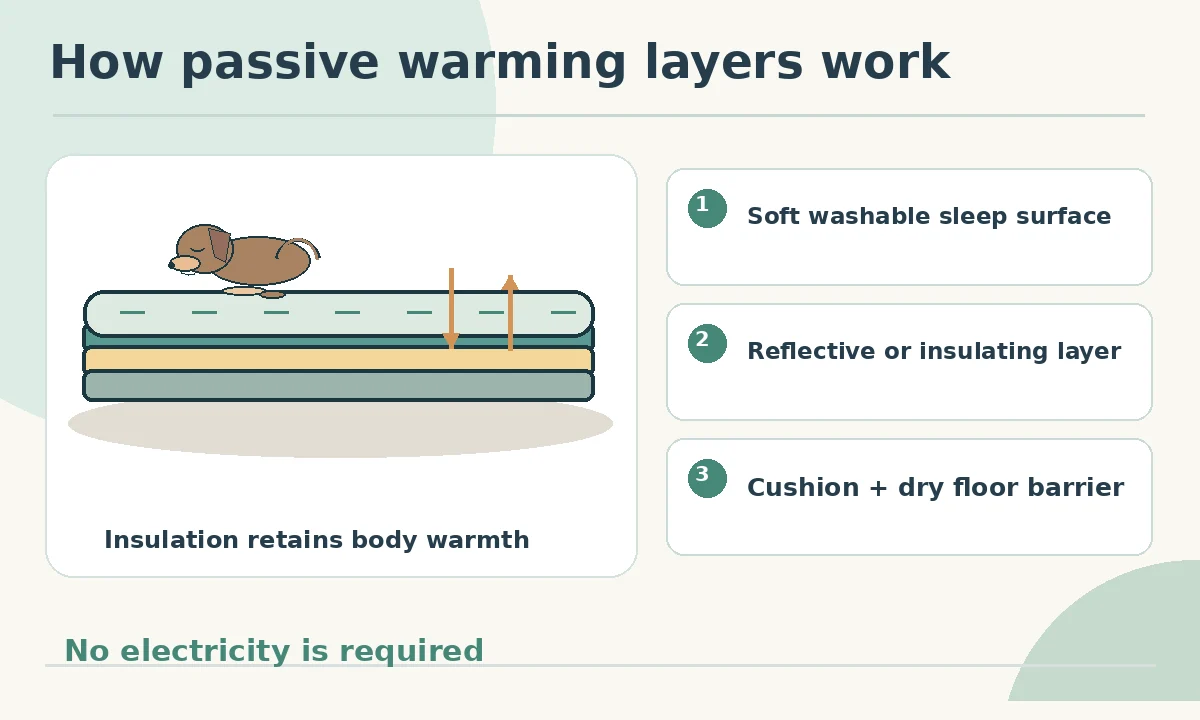
A dog warms nearby bedding through body contact. Soft fibers hold pockets of air and slow the loss of some heat. A reflective liner may return part of the radiant heat toward the surface, though construction and contact determine the result. Marketing language such as thermal, heat-reflecting, and self-heating describes designs rather than a standardized temperature guarantee. Do not expect the cushion to become warm while empty. The AKC distinguishes non-electric self-warming beds from electrically heated models. Check the actual product cross-section or written materials instead of relying on a winter-themed photo.
Read the layer diagram and inspect the seams
Identify the sleep surface, insulating fill or thin reflective sheet, and bottom barrier. Each layer serves a different purpose: softness, heat retention, moisture separation, or floor traction. A shiny sheet that crinkles loudly may bother a sound-sensitive dog. Flex the sample material gently and listen before buying if possible. The insert should stay enclosed within durable seams; a dog must not be able to pull it out and chew it. If the surface tears or the dog begins swallowing fabric, remove the bed and discuss persistent destructive chewing with a qualified professional.
Choose a size that permits a cooler position
Warmth is easier to regulate when the dog can stretch out, move toward an exposed edge, or step onto cooler flooring. Do not force a dog into a small covered space because warmth is the selling point. Size the bed for ordinary resting poses and place it where your dog can leave freely. In a crate or enclosed pen, do not fill every inch with thick insulating bedding. Dogs with restricted mobility may have difficulty moving away from unwanted warmth, so observe them closely and discuss special needs with a veterinarian.
Passive and electric beds have different trade-offs
A passive bed has no power cord, plug, or temperature controller. An electric dog bed may add warmth but introduces a heat source and electrical components that require careful product-specific handling. Never assume either type is chew-proof or appropriate for outdoor exposure. The AKC recommends considering a dog’s needs and the ability to move away when comparing heated beds. Do not add household heating pads, chemical warmers, or improvised hot-water packs under the cushion. Follow instructions for products specifically designed for animals, and seek veterinary guidance for vulnerable dogs.
Avoid the mistake of warming an already hot spot
Place the bed away from direct sun pouring through a window, hot radiators, heat registers, and enclosed spaces that can trap heat. Some dogs like a cozy nap while others deliberately seek tile or hardwood when warm. Watch for frequent departures, restlessness, or unusual panting. Offer a plain mat and clean water nearby so your dog has a choice. A passive bed does not make heatstroke impossible; the surrounding environment still determines much of the risk. If your dog appears overheated or ill, seek urgent veterinary advice.

Match fabric to coat and cleaning needs
Short-coated dogs may appreciate a soft lining in a cooler room, while dogs with thick coats may find the same material unpleasant in warm weather. Choose an easily washable cover when your dog sheds heavily or tracks moisture indoors. Fuzzy shag holds hair differently from close-knit fleece; check whether brushing and vacuuming the surface are manageable. A reflective insert may require separate handling rather than machine washing with the cover. Read the complete care label, not only a machine-washable badge on the product page.
Use a dry resting place before adding another layer
A dry, quiet location matters more than a shiny insulating sheet. A damp cushion against a cold floor can feel uncomfortable and is harder to keep clean. Elevate and inspect a floor-level bed regularly for trapped moisture, especially after a spill or on a poorly ventilated surface. Avoid drafts from frequently opened exterior doors. Do not place bedding in a damp garage or outdoor kennel as a substitute for appropriate shelter. If your living space is extremely cold or your dog cannot stay comfortably warm, address the room conditions and seek veterinary advice where needed.
Introduce the texture without insisting
Unpack the bed in a familiar room, let it air according to instructions, and place a small familiar washable cloth on top if safe for your dog. Let the dog investigate. Reward voluntary settling if your dog enjoys that routine, then step away. A dog that avoids a rustling lining may prefer a simple flat mattress, and that preference deserves respect. Never pin a dog in place or cover them so thoroughly that they cannot move. If several days pass without interest, reconsider the fabric feel, location, or size before buying more accessories.

Keep a simple seasonal maintenance routine
Vacuum or shake away loose hair as the label allows, wash the cover after soiling, and let every layer dry completely. CDC guidance describes laundry-based cleaning for soft pet supplies while emphasizing manufacturer instructions. Check seams, zippers, and the underside for damage every time you make the bed. Keep the area free of cords, chewable tags, and loose foil inserts. Rotate a second plain sleeping mat into use during warmer weather. The goal is comfort that adapts to your dog, not a fixed temperature or a promise of therapeutic warmth.
How We Research
This independent buying guide compares fit, construction, usability, and common safety limitations. We reviewed veterinary guidance from VCA Animal Hospitals and relevant pet-care recommendations from the American Kennel Club and CDC, focusing on the claims that apply to self-warming dog beds. We examined dimensions a shopper can verify, everyday cleaning requirements, and observable signs a dog finds a bed usable. Illustrations show principles, not a tested or endorsed product. No purchases, laboratory durability tests, or veterinary examinations took place. Read About HubPet for our editorial standards.
Sources
American Kennel Club, Heated Dog Beds: Safety and Choosing the Right One: Read the guidance. Accessed October 27, 2026.
American Kennel Club, Sleepy Time: Choosing a Dog Bed: Read the guidance. Accessed October 27, 2026.
CDC, Cleaning and Disinfecting Pet Supplies: Read the guidance. Accessed October 27, 2026.
Safety note: Inspect beds for torn fabric, exposed fill, and unsafe hardware. Remove bedding if the dog chews or swallows components. New problems standing, walking, breathing, or resting need veterinary evaluation rather than assumptions about the bed. See our veterinary disclaimer.
Most passive self-warming beds do not. They depend on insulation or heat-reflecting layers rather than a plug-in heating element.
Generally no. It can conserve some heat from a resting dog but does not produce its own steady source of warmth.
Warm surroundings and heavy bedding can still cause discomfort. Provide a cool alternative, keep exits open, and watch your dog’s behavior.
Any exposed inner layer can become a swallowing hazard. Inspect seams, supervise destructive dogs, and remove torn bedding immediately.
Only if the care label explicitly permits it. Removable covers and special reflective inserts may need different cleaning methods.