
Some dogs finish a bathroom break, scrape backward with both rear feet, and scatter grass across the sidewalk. That dramatic flourish usually is not an attempt to bury their poop. Researchers describe ground scratching as a form of canine communication, which may include visible marks and scent from the feet. However, not every dog does it, and one performance cannot tell you exactly what message another dog receives. The main owner decision is whether the surface and surroundings make the behavior safe. For limping or sudden pain, contact your veterinarian; see HubPet’s veterinary information disclaimer.
What the backward kicking probably communicates
Dogs use scent and movement to exchange information about their presence. Ground scratching may leave marks that other dogs can see and help distribute odor from the paws. It often happens after urination or defecation, although a dog may scratch without either event. In contrast to a cat covering litter, a dog frequently sends material backward with a bold posture. That difference helps explain why the behavior can appear conspicuous rather than secretive. Treat communication as the leading explanation without assigning a precise territorial intention to every episode.
Scent and sight may work together
Veterinary writers describe ground scratching as a combined visual and scent-related signal. Paw pads contain scent-associated structures, and scraping can move substrate and create visible disturbance. However, exact interpretations vary by context and individual dog. You cannot reliably infer dominance, anger, or an intent to challenge a specific animal from a few kicks. Instead, observe where the dog scratches and what happens next. Does it leave normally, sniff the ground, or react to another dog nearby? The answers help distinguish ordinary signaling from tension.
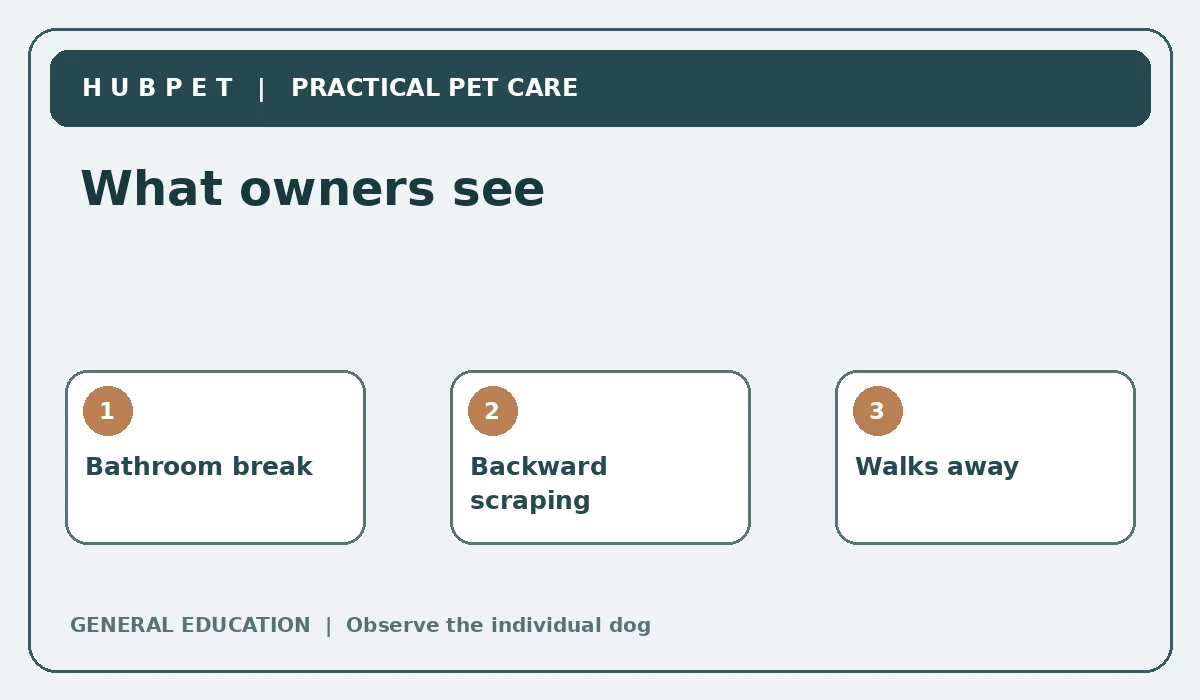
Why some dogs do it more often than others
Individual habit, prior experience, environment, and social context influence the behavior. One dog may scrape after nearly every bowel movement; another may never do it. Also, a dog might kick more often on grass than on hard pavement because the movement gives different feedback. There is no universal correct frequency. Compare the dog to its own baseline rather than another pet. A sudden change that includes lameness, guarding a paw, or reluctance to walk deserves a veterinary check.
Keep the leash relaxed but control the space
Allow enough room for a safe finishing movement when the setting permits. Nevertheless, keep people, parked bicycles, traffic, and other dogs out of the kicking path. Hold a regular leash with a comfortable hand position and avoid sharp corrections. If the dog faces a busy sidewalk, calmly guide it a little farther from pedestrians before the bathroom break. A predictable route and simple cue to move on can make walks smoother. Do not drag the dog while a foot is planted or a claw catches the ground.
Prevent grass and dirt from hitting others
Kicking can scatter mulch, grit, or loose soil. First, assess where the dog has stopped. A patch of dirt near a child, another pet, or a person sitting outdoors is a poor location. Choose a wider open area when possible and keep the leash short enough for practical control. Afterward, clean up the waste as usual; scratching does not replace responsible disposal. For surfaces that break easily, a gentle “let’s go” cue and movement to a more suitable spot may be enough.
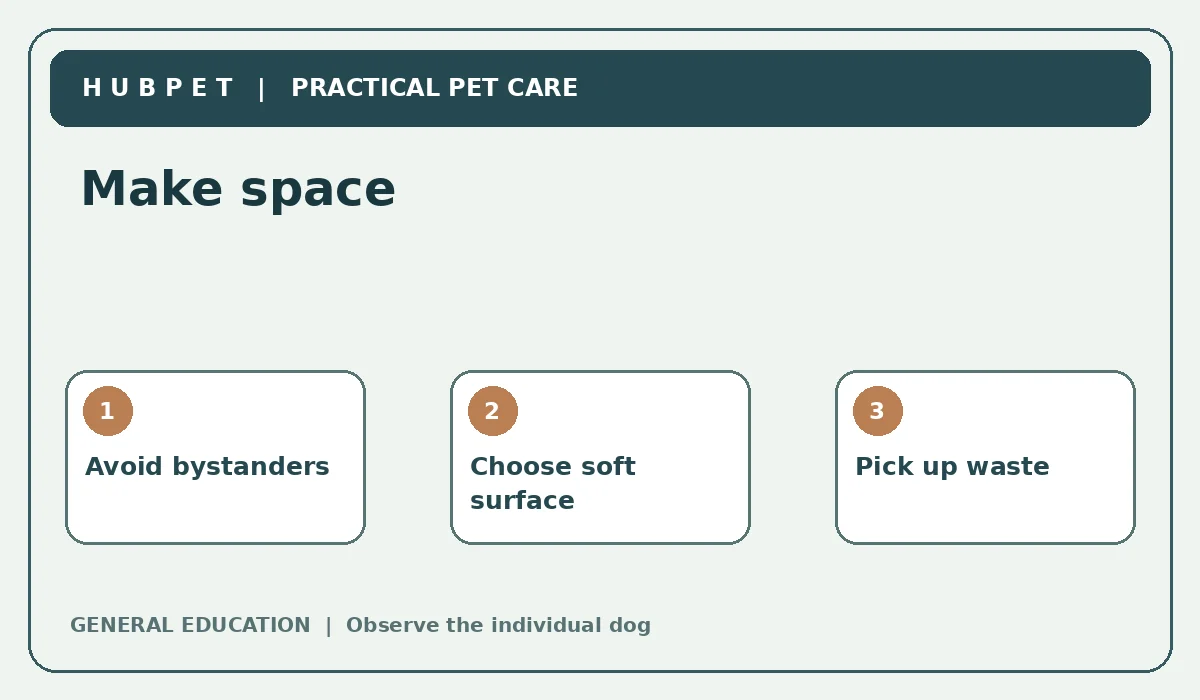
Avoid turning marking into a confrontation
Pulling harshly, shouting, or startling the dog can associate bathroom breaks with conflict. Instead, wait for a safe pause, invite a small step forward, and reward the dog for following. Practice that departure cue away from the potty area first. Gradually use it on walks with low distractions. If the dog becomes tense around other dogs during marking, increase distance and choose quieter routes. The goal is predictable movement and public safety, not forcing the dog to stop communicating altogether.
Check paws after rough-ground scraping
Scraping across hot pavement, sharp stones, deicing salt, or broken glass can hurt paws. Examine the pads and nails after a walk if the dog scraped vigorously on abrasive terrain. For example, a torn nail may cause sudden limping or repeated attention to one foot. Rinse ordinary dirt with water and dry the paws; avoid applying irritating products. Ask a veterinarian about bleeding, deep cuts, swelling, or persistent pain. Also consider whether claws have grown long enough to catch during normal movement.
Understand behavior near other dogs
A dog may scratch where many dogs pass, but this alone does not prove resource guarding or aggression. Read posture, facial tension, distance, and response to approaches. If the dog starts freezing, staring intensely, or lunging, focus on creating space rather than interpreting the kicks. Meanwhile, a relaxed dog that scratches and walks on presents a different concern: simple environmental management. Do not assume every scrape is a challenge to other dogs. That story can lead owners toward unnecessary punishment.
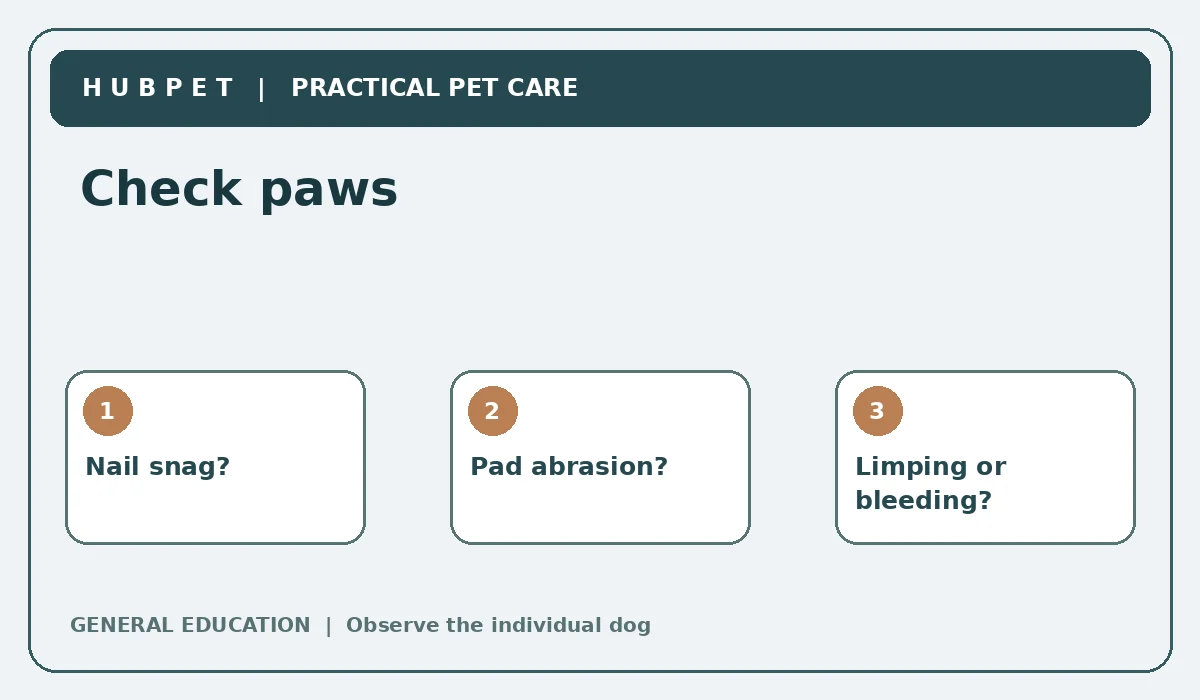
Use the simplest workable response
For most dogs, the practical plan is straightforward: pick a safe bathroom location, allow brief ordinary behavior, dispose of waste, and move on calmly. If the dog damages landscaping, move the bathroom break to a more tolerant surface. Record any new pain signs rather than trying to suppress the movement by force. Success means safer walks with predictable choices, not eliminating every natural gesture. Over time, a consistent departure cue can help the dog leave a location without a struggle.
How We Research
Our editorial team reviewed veterinary and animal-welfare guidance on dog body language, everyday routines, and safe handling. We compared practical owner observations with the limits of behavioral interpretation. These materials support general education; they do not allow us to diagnose pain, anxiety, or other conditions from a single behavior. We did not test commercial products or claim endorsement by any organization. Learn more About HubPet and ask your veterinarian about new or severe symptoms.
Sources
American Kennel Club: Why Does My Dog Kick the Grass After Pooping?. Reviewed October 27, 2026.
PetMD: Why Do Dogs Kick Their Feet After Pooping?. Reviewed October 27, 2026.
VCA Animal Hospitals: Dog Marking Behavior. Reviewed October 27, 2026.
Usually not. Ground scratching more often appears to support social communication through scent and visible marks.
No. Some dogs do it often and others rarely or never; individual patterns differ.
No single ground-scratching episode can establish a dominance claim. Look at context and other behavior instead.
Manage location and safety. A calm cue to walk on helps when dirt could strike others or damage property.
Contact a veterinarian if the dog limps, yelps, bleeds, or suddenly avoids using a foot.