
Why dogs scratch the carpet depends on what happens immediately before and after the pawing. Some dogs scrape briefly, turn and lie down. Others target a particular seam, crumb or scent, and some paw repeatedly while struggling to settle. These patterns need different responses. This guide helps you observe the behavior, protect floor fibers, provide an appropriate outlet and recognize when a veterinary check matters. A dog is not trying to damage your home out of spite.
Notice when the carpet scratching starts
Watch from a comfortable distance and write down the time, location and action before the pawing. A few scratches just before sleep may be a settling ritual. Pawing beside a snack area can reflect leftover food or an interesting smell. Scraping by a closed door may occur during frustration or a request to leave the room. The floor damage looks similar, but the likely motivation differs. Avoid interrupting with yelling because the dog may associate your presence with conflict rather than learn a better place to settle.
Separate nesting from searching for a scent
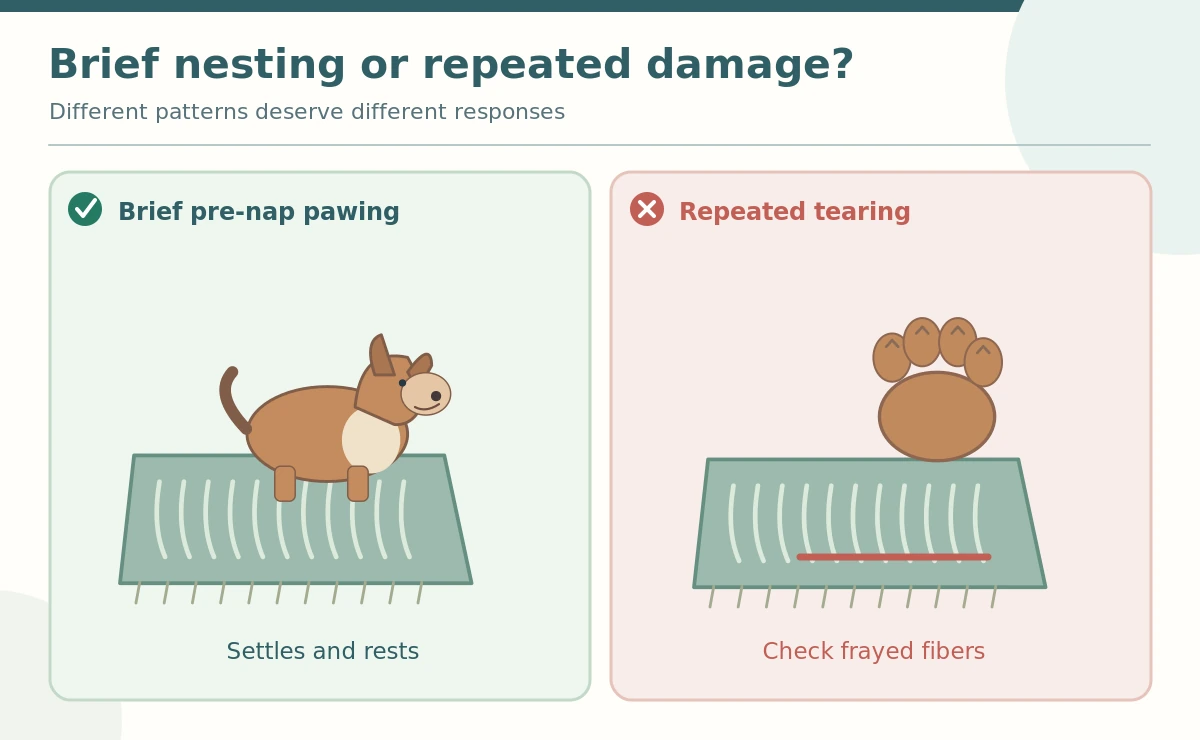
A dog that circles, gives the carpet several short scratches and curls up may be rearranging a resting spot. This resembles normal bedding preparation described by VCA. A dog that fixes its nose to one corner, sniffs intensely and scrapes repeatedly may instead investigate something trapped among fibers. Check the area for crumbs and odors after moving the dog safely away. Never use irritant sprays or scatter substances to make that patch unpleasant; the pet still needs a safe resting or investigation outlet.
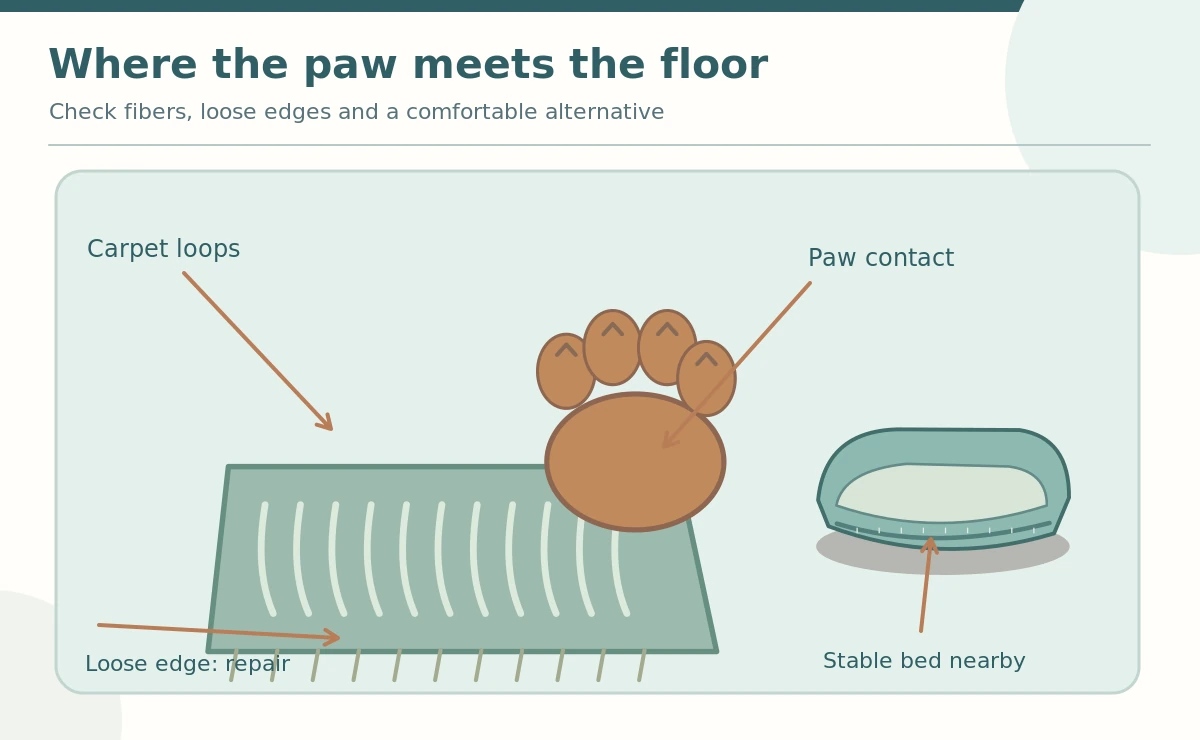
Inspect the damaged spot before offering a solution
Look for raised loops, fraying edges, exposed backing or a loose threshold strip. Pull away loose threads and restrict access until you can repair the area; dogs may swallow fibers. Check whether flooring adhesive or a cleaning product is accessible under the damaged spot. Vacuum crumbs when the dog is elsewhere, and follow the carpet manufacturer’s instructions. A small washable mat over an intact area can be useful, but a mat with loose tassels or sliding edges creates a new hazard.
Offer a durable, comfortable nesting surface
Place a properly sized bed or blanket near the dog’s preferred resting area, provided the dog does not tear or ingest fabric. A nonslip base can help the bed stay in place during turning and pawing. Observe whether the dog chooses the new surface without being forced onto it. If your dog digs enthusiastically, use a durable material with intact seams and supervise the introduction. The goal is not to suppress every natural movement, but to direct it toward a surface that can tolerate it.
Respond calmly when scratching begins
Interrupt with a cheerful invitation or a familiar cue that the dog already understands, then guide the dog toward the alternative resting surface. Reward the moment its paws settle there. Do not grab paws, startle the dog or apply harsh corrections. If the dog returns immediately to the carpet, consider whether a crumb, temperature, uncomfortable bed or unmet need remains. Repeated redirection without addressing the trigger often becomes an endless contest. Practice during easy, calm moments rather than only during the most intense scratching.
Give natural digging a permitted outlet
Some dogs enjoy moving material with their paws, apart from preparing a bed. A supervised digging box or safe yard patch can let them express that behavior without pulling carpet threads. Choose materials suited to the dog, avoid sharp objects and prevent access to anything the dog may eat. Reward use of the designated area. For an indoor dog, a supervised forage activity that involves sniffing rather than shredding may help. A designated outlet complements exercise and rest; it should not substitute for either.
Check activity, stress and household patterns
Pawing may increase after a long day without activity, during changes in the household or near a noisy doorway. Offer regular walks at the dog’s ability level, sniffing opportunities and predictable quiet time. Record whether scratching happens only when a visitor arrives or the dog is left alone; that context can matter more than how many scratches occur. Avoid assigning a diagnosis from one behavior. If you notice pacing, barking or distress when separated, seek qualified behavioral guidance rather than assuming simple boredom.
Try a tiny comparison between two evenings
If your dog usually scratches just before bed, compare a calm evening with one after a busier day. Keep the sleeping location the same and note whether the dog circles, paws and settles, or instead returns to scrape repeatedly. Check the bed firmness and whether its cover slides across the floor. Do not run an experiment that leaves the animal without water, comfort or needed walks. This simple comparison helps you make a measured adjustment, such as offering an intact nonslip bed, rather than trying several changes at once.

Protect paws as well as carpets
Repeated scraping can wear nails and leave a sensitive paw sore. Keep nails maintained through gentle, routine care, but do not assume trimming fixes the motivation. Inspect for a split nail or visible irritation only when your dog permits comfortable handling; do not force a painful paw. If you notice bleeding, limping or licking at one foot after scratching, arrange veterinary guidance. Avoid covering an unstable or damaged carpet edge with a loose throw that may slip under the dog when it stands up.
Know when a new pattern needs veterinary advice
A dog that suddenly scratches and circles much longer than usual, struggles to lie down, limps or repeatedly rises may be uncomfortable. VCA notes that difficulty settling can accompany orthopedic and other problems. Contact your veterinarian if the pattern changes sharply or comes with painful movement, appetite changes or apparent distress. Video of the whole sequence can help explain what happened, but it does not replace examination. Do not give human pain medication or try to manipulate a sore limb at home.
Build a floor-friendly weekly check
Each week inspect the favorite carpet spot, the bed seams and the nonslip backing. Wash or replace the bed cover as directed and remove loose thread before your dog finds it. Note whether shorter scratching episodes follow better rest, a nearby bed or removal of an interesting scent. Keep a simple log with time, trigger and duration; this avoids interpreting one odd evening as a lasting problem. Reward calm settling whenever you see it, not only after redirecting destructive digging.
How We Research
Our review compares veterinary and animal welfare guidance on canine communication, normal behavior and warning signs. The review separates likely motivations from diagnosis and values the whole dog more than any one gesture. Our latest source review took place on October 28, 2026. Read about HubPet to learn our editorial approach. This article does not claim direct testing or veterinary examination.
Sources
VCA Animal Hospitals, Why Dogs Turn Around Before Lying Down. Read the original guidance.
UC Davis School of Veterinary Medicine, Digging in Dogs. Read the original guidance.
RSPCA, What Does My Dog’s Body Language Mean?. Read the original guidance.
Safety note: This is general behavior education, not a veterinary diagnosis. If behavior changes suddenly, includes pain, swallowing fabric, distress or unsafe interactions, consult your veterinarian or a qualified reward-based behavior professional. See our veterinary disclaimer.
Brief scratching and turning can be a normal settling ritual. The surrounding behavior and ability to relax matter more than an isolated scratch.
Avoid aversive sprays and irritating substances. Protect the surface, address possible scents, and reward an appropriate alternative resting spot.
Yes. Nails can pull loops and lift seams, especially on fragile carpeting. Inspect and repair damaged spots before the dog swallows fibers.
Check that corner for crumbs, smells, loose fibers or a hidden object, and keep your dog away while you clean and inspect it.
Seek guidance if scratching starts suddenly or comes with limping, restlessness, difficulty lying down, distress, or other concerning changes.