
Why dogs lick each other is best understood as a conversation between two animals, not a single fixed message. One dog may gently clean a companion’s face, investigate an interesting smell or lick during a greeting. The other dog may lean closer, turn away or freeze. Those responses help you decide whether to leave the pair alone or calmly give them space. This guide focuses on observable signals, hygiene and respectful interruptions instead of assigning rigid rank labels to every lick.
Look first at the dog receiving the licks
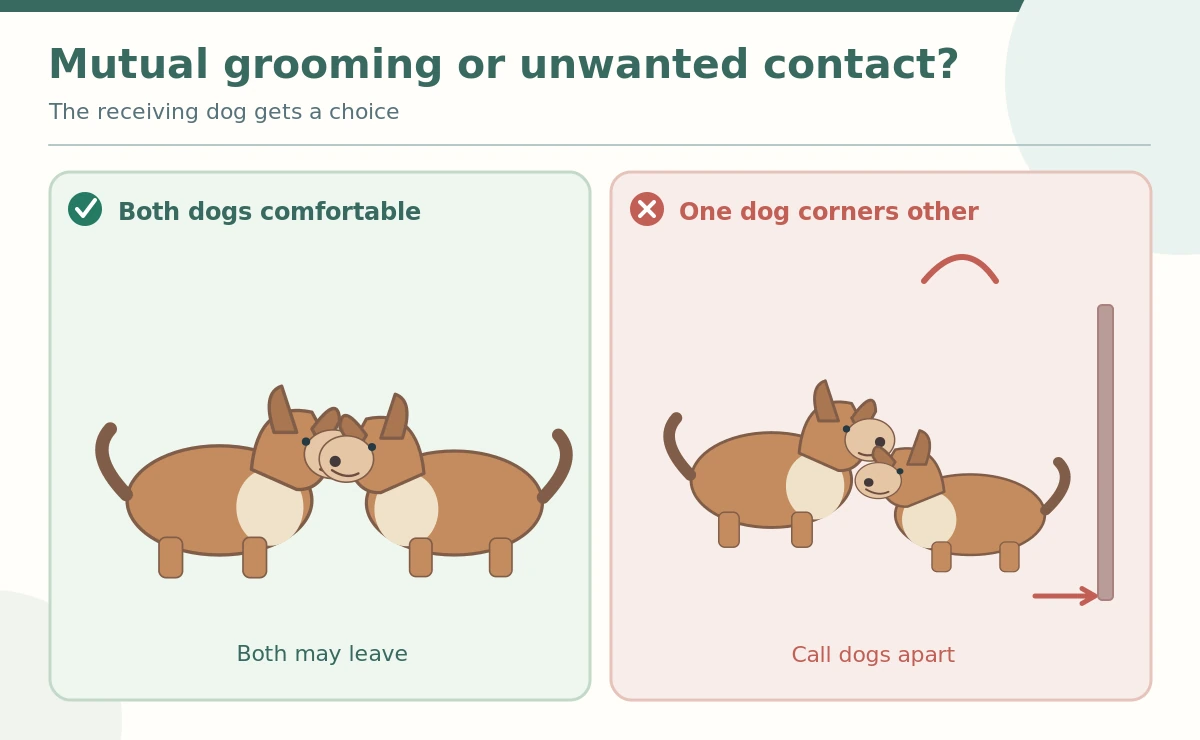
A dog that stays loose, approaches again or voluntarily moves closer may welcome gentle interaction. A dog that turns its head away, stiffens, tries to escape or repeatedly leaves may want it to stop. Do not label the lick friendly without noticing the receiver. Both dogs should have room to move away, especially in hallways and doorways. If a smaller dog cannot leave a crowded couch, open a clear path. The best interpretation usually comes from watching both bodies rather than one tongue movement.
Understand gentle social grooming
Dogs sometimes lick companions around the face, ears or coat as part of social contact, although individual preferences differ. A brief lick followed by relaxed behavior may not need intervention. Never force dogs together to create bonding, and do not assume every pair will groom each other. Dogs may share a home comfortably without touching much. Respect the individual that prefers distance. Grooming-like behavior is an observation, not a promise that the pair will never have conflict over food, toys or resting places.

Recognize greeting and appeasement signals
A dog may lick another dog’s muzzle during greeting or a tense moment. VCA describes several appeasement signals that need whole-body context. Look for lowered posture, turning away, soft approach or signs of uncertainty alongside the lick. Do not interpret licking as automatic submission to an alpha dog. Watch whether movement stays fluid and both dogs can disengage. When a greeting grows intense, guide each dog away with a cheerful cue or reward-based recall so neither becomes trapped in close contact.
Distinguish inspection from persistent targeting
A dog may briefly lick a companion’s wet muzzle after drinking or investigate a smell on the coat. Repeated attention to one ear, eye, wound or skin patch deserves inspection. Check the receiving dog for redness, odor, discharge or discomfort without restraining it roughly. Excessive licking can irritate already sensitive skin. Separate calmly if the receiver keeps moving away. Contact your veterinarian if one area becomes the persistent target, particularly when the affected dog shows pain or a visible skin change.
Provide exits and calm breaks in shared spaces
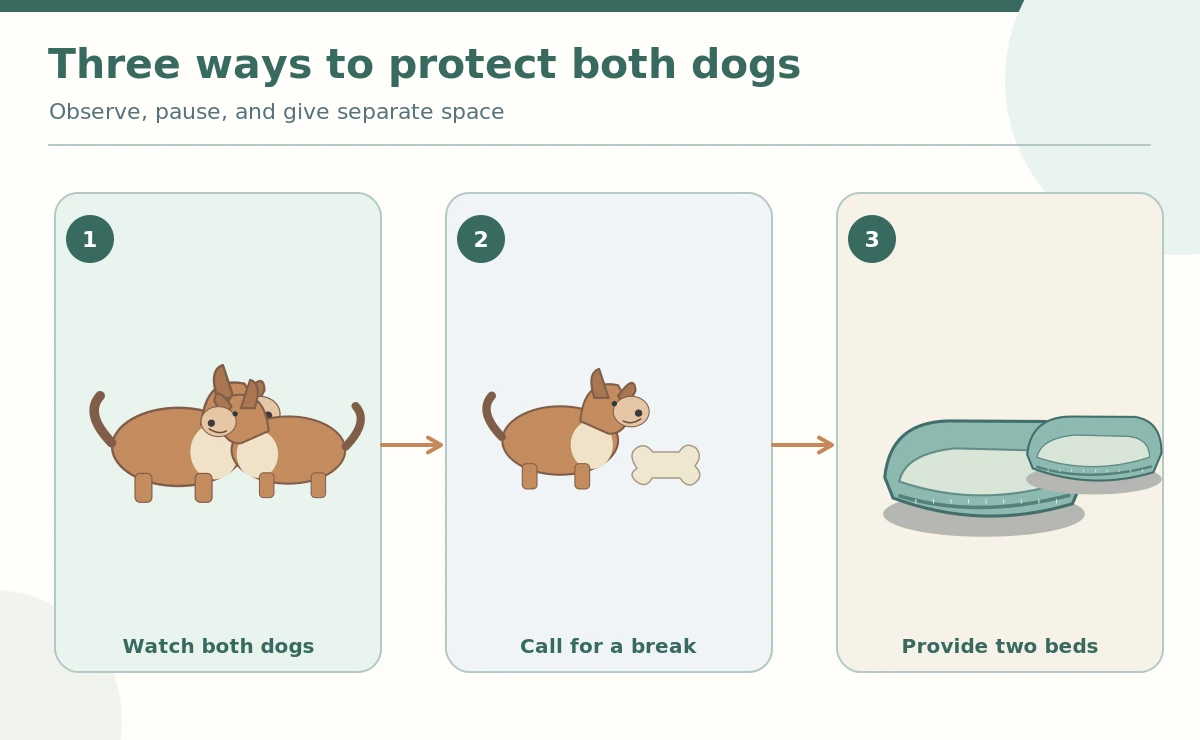
Arrange beds and water so each dog can use them without passing through a narrow bottleneck. Do not make dogs compete for one resting surface. During a long licking bout, call the licking dog toward you with a practiced, cheerful cue and reward a short break. Avoid shouting or grabbing collars near tense faces. Let the receiving dog choose whether to reapproach. If the licking starts again immediately and one dog appears bothered, keep them separate for a while and reassess their routine.
Supervise puppies and large size differences
Puppies may solicit attention persistently and miss subtle warnings from older dogs. Let a calm adult dog disengage while you guide the puppy elsewhere, and help the puppy practice recall and resting nearby. Be especially careful when one dog is tiny, elderly or recovering from an injury. Supervision means actively watching and being prepared to create distance; it does not mean forcing the adult to tolerate repeated licking. Reward the puppy for checking in with a person and for taking voluntary pauses during play.
Keep food and wound hygiene separate
Do not encourage dogs to lick each other’s open wounds, eyes, medical treatments or sutures. Saliva is not sterile, and repeated moisture can worsen irritation. Follow your veterinarian’s wound-care instructions and use any protective equipment only as directed. Keep dishes and shared resting areas clean. If you notice a dog repeatedly licking topical medication from another dog, prevent access and contact your veterinarian or a pet poison service for guidance. Avoid applying homemade creams that are unsafe to ingest.
Pause greetings before either dog becomes crowded
When two familiar dogs approach in a narrow corridor, give them more room before there is conflict. Call each dog toward a different person or resting spot using cues they know and reward the separation. Avoid holding one dog in place while the other continues sniffing or licking its face. On a walk, do not allow tangled leashes to trap dogs in a forced greeting. A short break is useful even when neither animal growls; both should be able to choose distance early.
Keep notes when a pattern changes
When licking suddenly increases between long-term housemates, check whether their routines, health or resting spaces have changed. A dog might target a new odor, a damp patch of coat or a sore area. Do not assume the recipient appreciates attention just because it does not growl. Note whether it leaves, freezes or returns voluntarily. A brief recording made from a safe distance can help a veterinarian or behavior consultant understand the sequence without forcing the dogs to recreate it.
Know when to interrupt or ask for help
A dog that pins, corners or persistently follows another while licking is not offering a mutually chosen interaction. Interrupt early with distance, not physical confrontation. Watch for freezing, hard staring, growling, snapping or retreat to a hiding place. Seek a qualified, reward-based behavior professional if interactions escalate or one dog cannot relax near the other. Seek veterinary attention for wounds, pain or sudden changes in behavior. Never punish a warning growl; it is important information about discomfort.
Use a simple two-dog observation checklist
During a calm shared moment, watch the approach, the receiver’s response and whether both dogs can separate. Note where licking begins, whether it targets the same body part, and how long it lasts. Give each dog a separate resting space and independent attention. Record changes after moving beds, widening a passage or providing a break. If the behavior remains reciprocal and brief, no training program may be needed. If one dog avoids the other repeatedly, prioritize space and a professional assessment over guessing motives.
How We Research
Our review compares veterinary and animal welfare guidance on canine communication, normal behavior and warning signs. The review separates likely motivations from diagnosis and values the whole dog more than any one gesture. Our latest source review took place on October 28, 2026. Read about HubPet to learn our editorial approach. This article does not claim direct testing or veterinary examination.
Sources
VCA Animal Hospitals, Canine Communication. Read the original guidance.
RSPCA, What Does My Dog’s Body Language Mean?. Read the original guidance.
Merck Veterinary Manual, Diagnosing Behavior Problems in Dogs. Read the original guidance.
Safety note: This is general behavior education, not a veterinary diagnosis. If behavior changes suddenly, includes pain, swallowing fabric, distress or unsafe interactions, consult your veterinarian or a qualified reward-based behavior professional. See our veterinary disclaimer.
No. It can occur during greeting, grooming, investigation or uncertainty. The receiving dog’s posture and freedom to leave are essential context.
Brief contact may be ordinary, but inspect persistent licking or signs of redness, odor, discharge or discomfort and contact a veterinarian when needed.
No. Muzzle licking alone does not establish a fixed hierarchy. Read the full greeting, including tension, movement and both dogs’ choices.
Call the dogs apart with familiar reward-based cues, make space and allow the receiving dog to decide whether to approach again.
Do not allow wound licking. Follow veterinary wound instructions because repeated saliva contact can irritate tissue and contaminate treatments.