
This article is for general cat behavior and household safety education, not a diagnosis or medical advice. For sudden physical or behavior changes, suspected swallowing of a nonfood object, painful urination, or injuries, contact a veterinarian. Read our veterinary disclaimer.
A cat may curl up on a fleece throw, knead with both front paws, and mouth a corner as if nursing. This habit is not the same as eating cloth. Some cats use soft fabric for comfort; others chew off fibers or swallow pieces, which is a real safety concern. The useful question is not simply why cats suck on blankets but what happens to the fabric afterward, how often the behavior occurs, and whether the cat can stop and return to ordinary activities. This guide separates quiet fabric mouthing from risky ingestion and gives a gentle, practical home observation plan. It is not a diagnosis of a compulsive disorder.
Watch the blanket, not only the cat
Begin with one short observation during a quiet, comfortable moment. Does the cat lightly hold a clean fold in its mouth, or pull fibers out with repeated chewing motions? Check the exact spot afterward for new holes, loose yarn, damp clumps, or missing pieces. A blanket that looks intact before and after is a different situation from one that loses strands. Note whether kneading and purring accompany the behavior, and whether the cat walks away normally. Do not pull fabric from an actively biting mouth or open the jaws to inspect unless a veterinarian directs you. Record what you actually see; do not assume every wet corner means the cat swallowed material.
Understand why soft fabric can be appealing
Cats may mouth blankets as a comfort-seeking pattern associated with early nursing-like behavior. Cornell Feline Health Center notes that fabric sucking and chewing can also reflect exploration or play, and that some cats continue the habit into adulthood. A reliable one-cause explanation is not possible from one short episode. Softness, familiar scent, a favorite resting place, and household routine can all matter. Some cats knead and suck a blanket before settling for sleep; others seek fabric when under-stimulated or unsettled. Neither purring nor choosing a favorite throw proves the cat is happy or healthy. The surrounding behavior and a change from the cat’s usual pattern matter more.

Inspect loops, fringe, seams, and missing threads
Loose fringe, tassels, chunky knitted loops, and unraveling seams are easier to catch with teeth than a tightly finished surface. Check for a torn edge or a fabric core the cat can pull out. Remove blankets with accessible string or missing material rather than leaving them for an unsupervised cat. The danger is not a special chemical in every blanket: swallowed cloth and long threads can create intestinal problems. Cornell warns that ingested fabric may cause serious gastrointestinal obstruction. A blanket that becomes frayed during sucking is not a safe comfort object simply because the cat has used it for years.
Offer a safer resting setup
If the cat only mouths intact fabric, provide a stable, clean, low-fray resting area that is easy to inspect after use. Keep pillows with removable decorative strings, yarn balls, and craft supplies out of reach. If your cat repeatedly tears or eats fabric, do not keep leaving textile substitutes out as an experiment. Choose a durable resting surface that resists tearing, and discuss persistent chewing with your veterinarian. Change one variable at a time: move the resting spot to a quieter corner or adjust the fabric access, then observe for several days. Never apply fragrance, hot sauce, oils, or bitter homemade mixtures to the blanket.
Compare harmless-looking sucking with chewing
An intact blanket after gentle mouthing supports a different risk assessment than a blanket with fresh holes or missing pieces. Even a cat that appears calm can ingest fibers, so inspect rather than assuming. If you cannot account for a torn-off piece or you actually saw ingestion, call a veterinarian promptly, even if the cat still seems playful. Watch for reduced appetite, vomiting, pain, lethargy, or difficulty passing stool, but do not wait for these signs to appear before seeking guidance about possible swallowed fabric. Take a photo of the damaged blanket and identify the material if possible; that information is more useful than attributing the episode to affection.

Build a predictable enrichment routine
Fabric-focused behavior may become easier to manage when the cat has other appropriate outlets. Play briefly with a wand toy, then store it. You can scatter some regular food into a cat-appropriate puzzle feeder or provide a stable lookout perch. Match the activity to the cat’s age and ability and avoid loose string toys without supervision. Try play before the time the cat usually seeks the blanket, then offer a quiet place to settle. These activities provide alternatives but cannot explain or resolve persistent ingestion of nonfood material, sometimes called pica. A cat who eats fabric needs veterinary assessment.
Notice changes in pattern and body language
Keep a simple log: time, setting, duration, whether the cat kneads, and whether any fibers were torn free. Track whether the habit remains brief and easy to interrupt with a voluntary toy invitation or becomes longer, frantic, or hard to disengage from. Also watch eating, bowel movements, energy, and oral comfort. Sudden changes can be more useful than a generalized online label. Avoid punishing, startling, or physically restraining the cat; stress can make observation harder and damage trust. If your cat leaves a torn blanket to follow a tossed toy, that alone does not exclude swallowed material from the earlier episode.
Know when professional help is important
Seek prompt veterinary guidance after any known or suspected swallowing of fabric, thread, or yarn. Vomiting, refusal to eat, a painful abdomen, weakness, or straining can indicate urgent problems and need an immediate call. Do not tug a string seen at the mouth or rear end; pulling can injure the intestine. Persistent chewing without witnessed swallowing also deserves a veterinary visit because behavior and medical issues can overlap. Bring photographs of damaged objects and your observation log. A veterinarian can determine whether further examination, dietary history, or referral to a qualified behavior professional is appropriate. Home management should prioritize prevention rather than treating this as stubbornness.
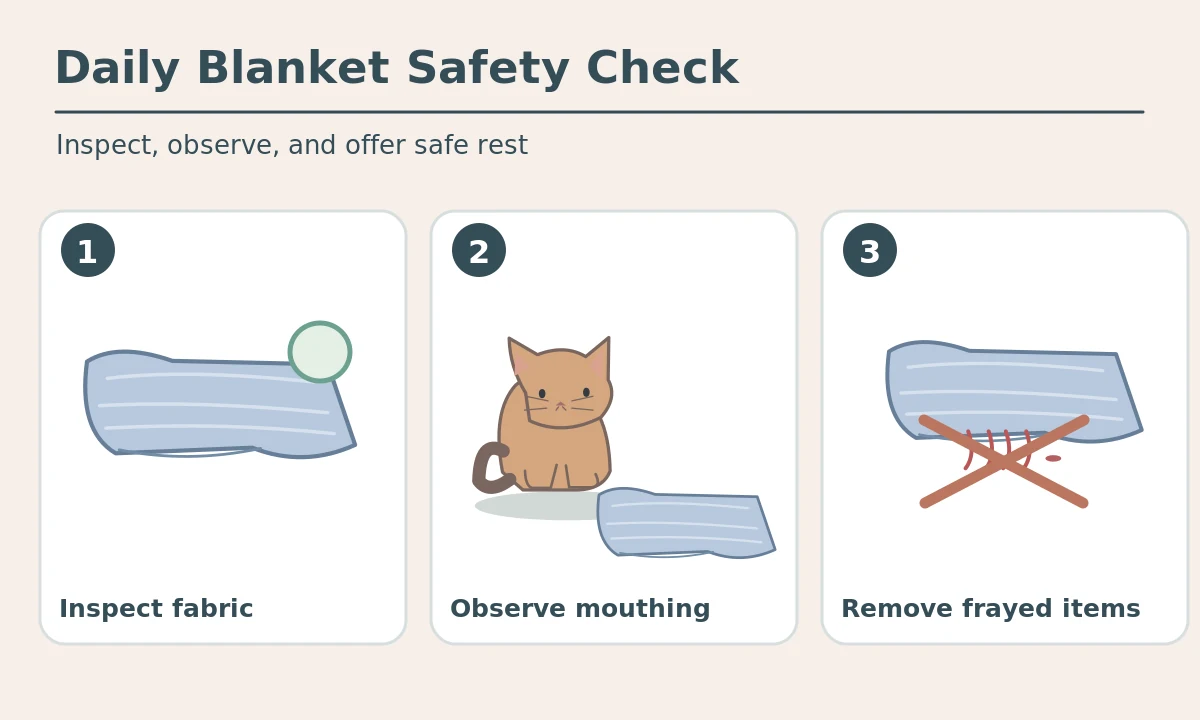
Use a three-part safety check each day
First, inspect the resting fabric before you put it down: no loose seams, tassels, or missing threads. Second, observe the cat during a normal calm moment and note whether any chewing actually removes material. Third, check the fabric again, put hazardous textiles away, and provide safe play and rest options. If you cannot supervise a cat with a history of eating fabric, close access to blankets or rooms containing unsafe chewables. Tell every household member the same rules so one person does not inadvertently return a damaged throw. This routine is simple enough to follow without constantly disturbing the cat.
How We Research
We reviewed first-party behavioral and veterinary guidance from Cornell Feline Health Center, VCA Animal Hospitals and ASPCA. We separated directly described behavior from possible explanations, checked how risk differs when an object is swallowed or pain signs appear, and wrote practical observations that do not involve punishing a cat. The illustrations are explanatory drawings, not diagnostic measurements. Our recommendations are general, not a veterinary examination, product test, or medical treatment. Learn about our editorial process at About HubPet.
Sources
Cornell Feline Health Center, Feline Behavior Problems: Destructive Behavior. Read the source.
VCA Animal Hospitals, Pica in Cats. Read the source.
ASPCA, My Pet Ate Something! When Should I Seek Help?. Read the source.
Safety note: Suspected ingestion of cloth, string, or plastic requires prompt veterinary advice. Do not induce vomiting or attempt to pull visible thread unless a veterinarian directs you. Emergency signs require immediate care.
No. Lightly mouthing intact fabric is not automatically pica. Pica concerns persistent ingestion of nonfood items; ask a veterinarian if the cat eats pieces of cloth.
Only consider an intact, low-fray fabric when the cat does not chew or swallow fibers. Remove loose wool, yarn, fringe, and any textile with missing pieces.
Some adult cats keep nursing-like comfort patterns. Context matters, and sudden changes or destructive chewing need a separate medical and safety check.
Call your veterinarian or emergency clinic promptly, even before symptoms. Do not pull visible string or try to induce vomiting without professional direction.
Play and predictable routines offer appropriate outlets, but they do not guarantee the behavior stops and cannot make fabric ingestion safe.