
This guide provides general pet-product information, not veterinary advice. For new pain, illness, suspected ingestion, or movement changes, contact a veterinarian; read our veterinary disclaimer.
A floor-to-ceiling cat tree uses vertical room that an ordinary cat tower leaves empty. It can be useful in a small apartment, but its narrow footprint also makes correct installation unusually important. Some systems use an adjustable compression pole, some require screws into structure, and some combine both. A seller’s phrase “no drilling” does not mean every ceiling works. Before you buy, inspect the ceiling, review the manufacturer’s full height range and surface requirements, and decide whether your cat has safe platforms for climbing down as well as up.
Measure the actual floor-to-ceiling distance
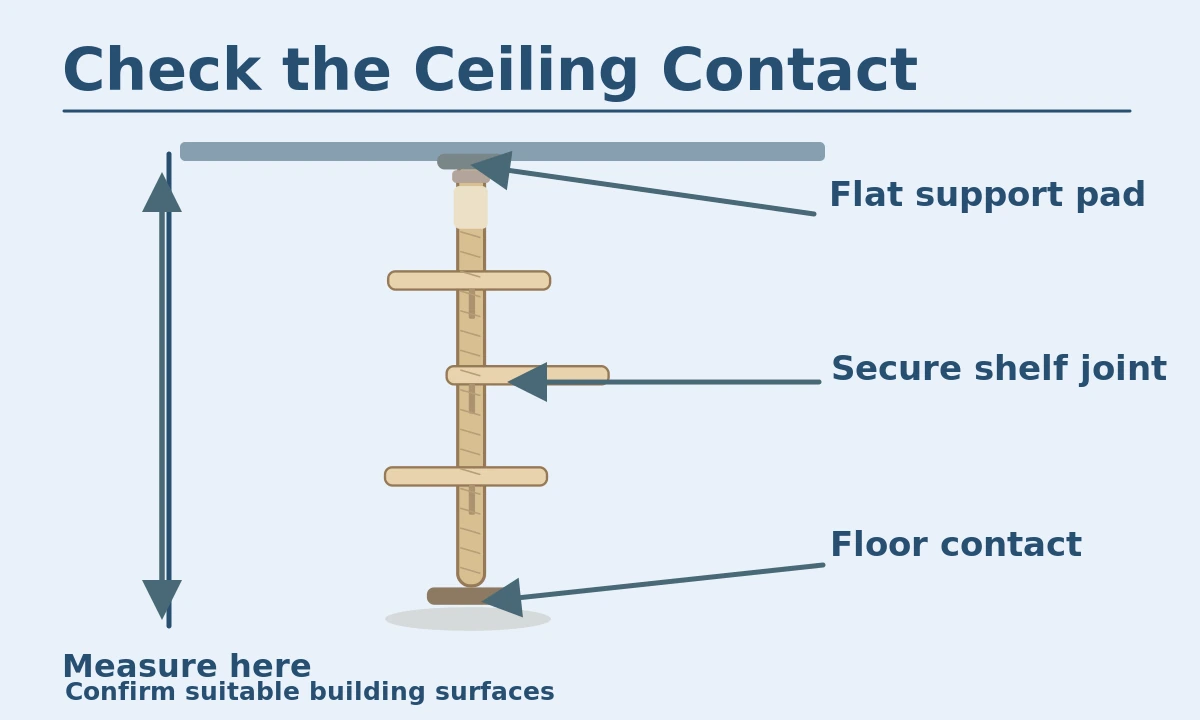
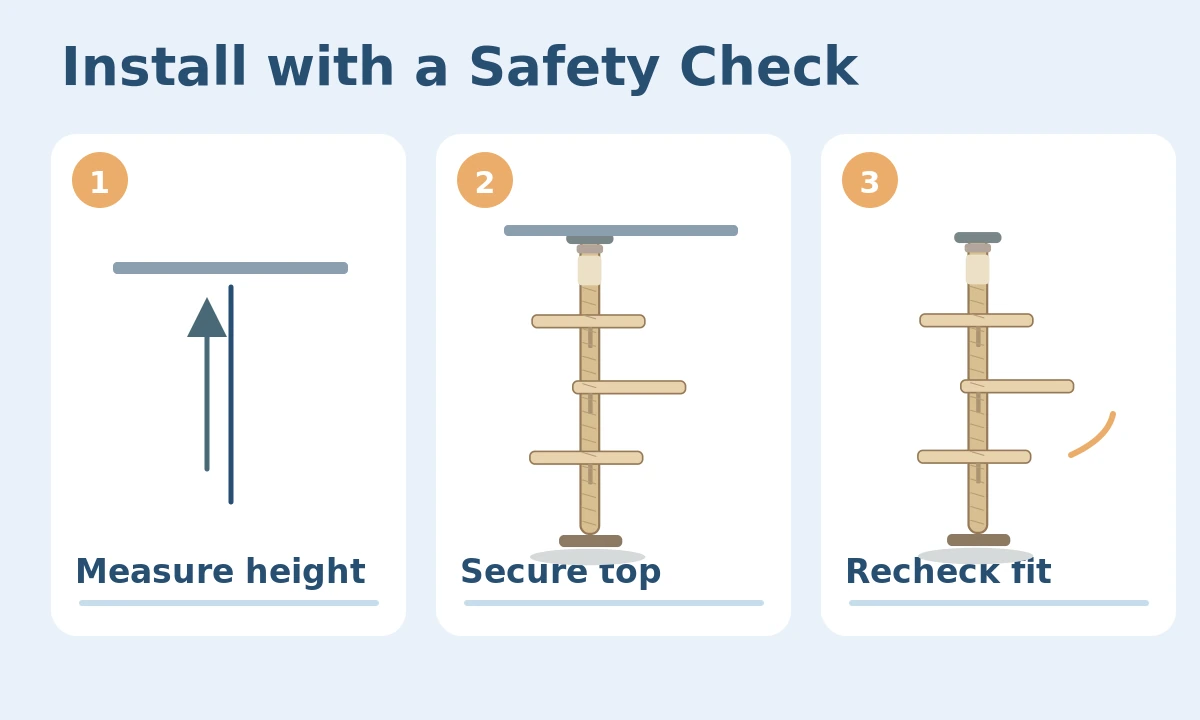
Measure vertically from the finished floor to the actual contact surface at the intended spot, not beside a taller baseboard or under a ceiling light. Check at more than one point if the floor or ceiling slopes. Match the measurement to the specific kit’s adjustment range, allowing for pads and extensions exactly as its instructions explain. Never extend a pole beyond its approved range simply because it nearly reaches. A telescoping section with too little engagement or an improvised block above the pole can be unstable when a cat launches from a high platform.
Understand the top contact point
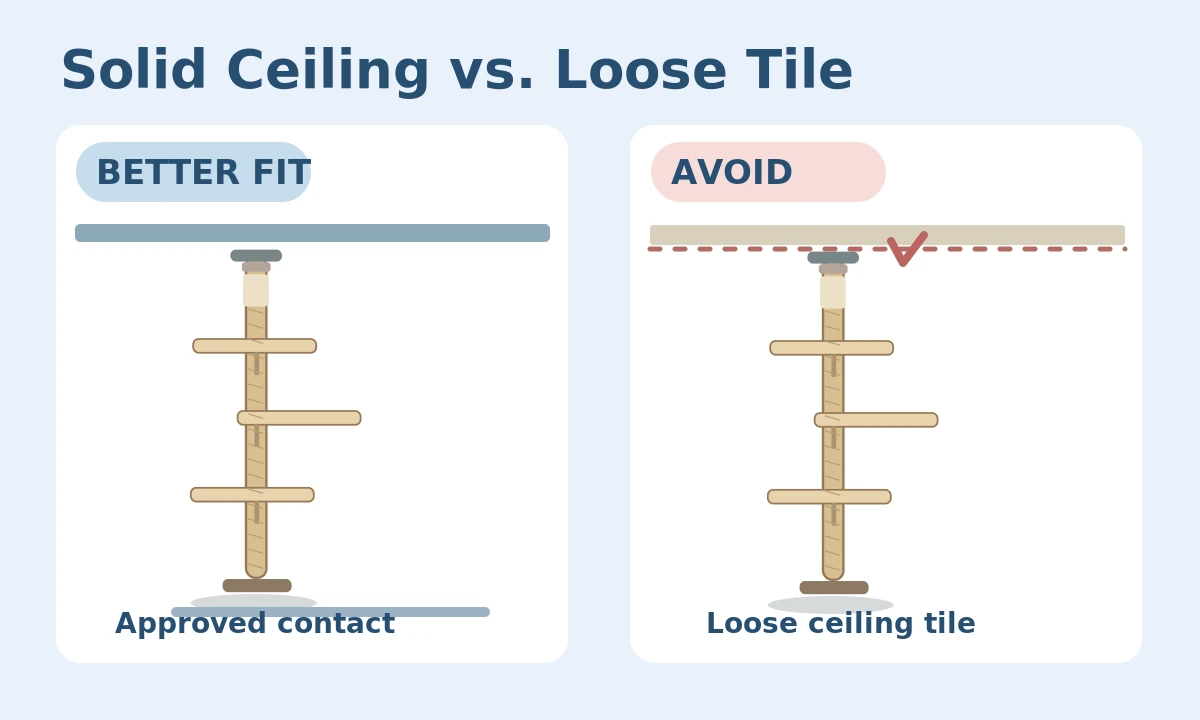
The top pad is where a compression-only design transfers load to the ceiling. A smooth, flat, intact surface is different from a suspended ceiling tile, a sloped panel, or a loose decorative layer. Review the instructions for approved ceiling types, beam or joist requirements, maximum ceiling height, and any anti-tip fasteners. Do not mount against a fragile drop ceiling or an unverified surface. Where the manual requires structural attachment, use a suitable fixing into the specified support instead of simply tightening harder against drywall.
Check the floor and base beneath it
The bottom pad or foot must sit flat and resist sliding. Check for thick rug pile that compresses under load, slippery tile, uneven transitions, and furniture legs that might obstruct the base. A narrow tower is not automatically unstable, but it often has less resistance to a sideways force than a broad freestanding tree. Follow the maker’s instructions for floor protection and leveling. Do not add a loose fabric pad that reduces grip. Keep the base away from room exits and from a location where people might brush the pole while walking.
Trace the load path through every platform
Each shelf creates a small lever when a cat lands near its edge. Look for positive hardware connections, broad shelf brackets, and enough post engagement between sections. Inspect the joining collars, threaded rods, and platform fasteners before attaching the top pad. Soft fabric coverings should not hide loose screws or a cracked mounting plate. The cat needs landings that face usable directions; a stack of shallow perches with no clear descent route makes the impressive height less helpful. Favor staggered levels and a lower exit option.
Compare tension-only and fixed installations
A tension-mounted column may be convenient where a lease prohibits drilling, but it depends on its approved contact surfaces and continued compression. A properly designed anchored system relies on structural fasteners and may have different positioning flexibility. Neither method is universally safe without following its specific manual. Do not convert one style into the other with unapproved brackets. Check tenant restrictions, service access above the ceiling, and the ability to inspect the installation later. If you cannot verify the supporting structure, choose a low, wide freestanding alternative.
Avoid false reassurance from a quick shake
A gentle pre-use stability check can reveal obvious movement, but it cannot certify the structure against every dynamic jump. An empty tower may feel firm and still loosen after repeated use, temperature changes, or carpet compression. Note whether the upper pad stays centered and whether the pole is vertical when viewed from two directions. If the top cap slides, the pole twists, or any shelf creeps sideways, remove access and redo assembly according to the manual. Do not ask a cat to test the setup for you.
Give the cat a sensible route
Place the first step low enough for comfortable access and ensure the descent does not demand a blind leap onto hard furniture. Offer alternate resting locations and a safe path to a window perch if appropriate. Keep dangling cords, blinds, breakables, and open windows out of reach. A cat may like the top resting point but still hesitate to come down if levels do not overlap well. Let the animal explore voluntarily with familiar toys or treats at the lower platforms; forcing the first visit can make the equipment less appealing.
Recheck after the first week
Revisit the manufacturer’s recommended tightening and inspection schedule. Check that pads remain centered, connecting collars are snug, screw heads are flush, and shelf covers have not bunched around the joints. Photograph the initial top-pad position to help notice movement, but a picture does not replace a hands-on inspection of an empty structure. Recheck immediately after moving furniture, cleaning the floor, or changing carpet under the base. Treat any damage to ceiling material as a reason to remove the tower from use and reassess the installation.
Keep cleaning and repairs predictable
Vacuum platforms regularly and clean coverings only as instructed; moisture in composite shelves may weaken screw-holding material. Replace frayed rope or a damaged shelf with components the manufacturer approves. Store the installation manual where you can find the assembly diagram and model-specific weight limits. Never let a child climb or hang from a cat tower, and do not use it as a household support post. If the unit requires repeated improvised adjustments to stay straight, retire that location or choose a different design.
Choose fit over maximum height
A useful buying checklist is shorter than a sales page: approved ceiling material, exact floor-to-ceiling range, secure base contact, accessible bolts, serviceable pads, appropriate load rating, and comfortable platforms. Check all seven before evaluating color or number of levels. Consider whether a shorter anchored wall system or broad freestanding tree gives your cat the same enjoyment with easier maintenance. A tower is suitable only when both the building surfaces and your cat’s movement fit the installation described by the product maker.
How We Research
Our research approach compares design and safety considerations with published feline behavior and care guidance from veterinary organizations. Product dimensions, structural load ratings, fasteners, and installation restrictions vary by model; check the current manufacturer instructions before use. We do not claim hands-on laboratory tests, safety certification, veterinary diagnosis, or that one product fits every cat.
Sources
FelineVMA, Your Cat’s Environmental Needs (2026). Read source.
Cat Friendly Homes, Living with a Clawed Cat. Read source.
VCA, Cat Behavior and Training: Play and Play Toys. Read source.
Safety note: Inspect cat furniture and toys for damaged parts before use. Supervise unfamiliar equipment and remove anything unstable or swallowable. For pain, altered movement, persistent chewing of nonfood items, or suspected ingestion, contact a veterinarian; this buying guide is not veterinary care.
Do not assume that a suspended ceiling tile can carry the load. Use only surfaces the manufacturer explicitly approves; if the support is uncertain, choose another location or design.
Pressure pads can mark a surface, and inappropriate force can damage finishes or structure. Read the exact product instructions and inspect the ceiling before installation.
Only within the manufacturer’s stated extension and overlap limits, including any approved extension parts. Never fill a gap with improvised blocks.
Yes. Recheck compression, vertical alignment, pads, joints, and screws on the schedule in the instructions and whenever the tower moves.
Check that each route and landing is comfortable, provide a lower alternative, and allow exploration by choice. Height is not useful if the cat cannot descend confidently.