
This article offers general pet-care and hygiene information, not individualized veterinary advice. For persistent diarrhea or illness, contact your veterinarian. See our veterinary information disclaimer. A daily scoop may contain sharp litter granules, heavy clumps, and damp solids. The right disposal bag needs enough opening width for the scoop and enough material at the top for a closed tie. Thin shopping bags can split along seams, while oversized bags waste material and may be awkward inside a small bin. This guide focuses on the bag itself rather than the design of a disposal pail. We compare handling, puncture risk, and permitted trash routes without assuming that “plant-based” or “biodegradable” wording makes cat feces safe for compost or flushing.
Size the opening around your scoop
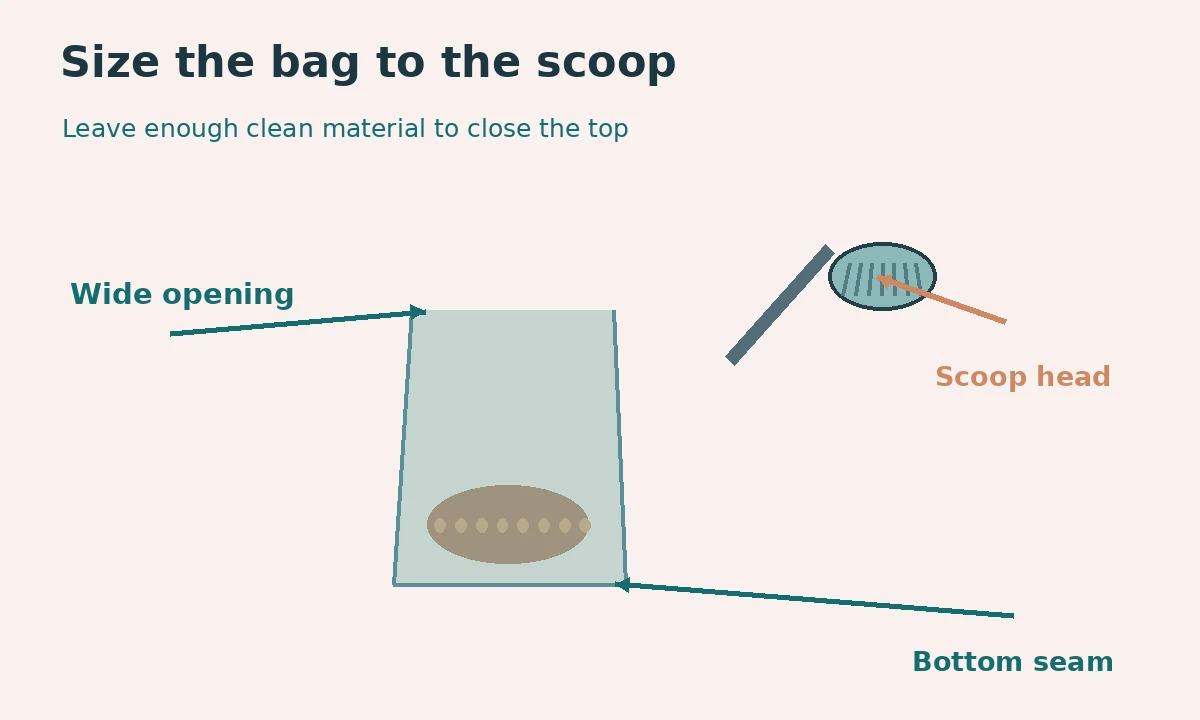
Measure the width of the scoop head with its contents in mind. A bag opening that barely clears the metal edges forces you to brush litter against the rim. Choose enough extra width so you can tip the scoop without spilling. Then check the usable height: the bag must hold the day’s waste while leaving space at the top to close it. A bag that fits perfectly in an empty bin may be too short after the liner folds over its rim. Test the handling with clean dry litter before selecting a large package of refills.
Look closely at seams and corners
A bag can be thick but still weak at a poorly bonded bottom seam or drawstring channel. Hold a clean bag up to light and check for uneven seals, holes, or tearing where the side joins the base. Do not test puncture strength with your fingers near contaminated litter. Coarse crystals and sharp scooper corners may strain the film. If the bag is intended as a pail liner, verify that the rim does not slice it when the lid closes. A secondary container catches accidents but does not excuse a damaged primary bag.
Match bag capacity to waste weight
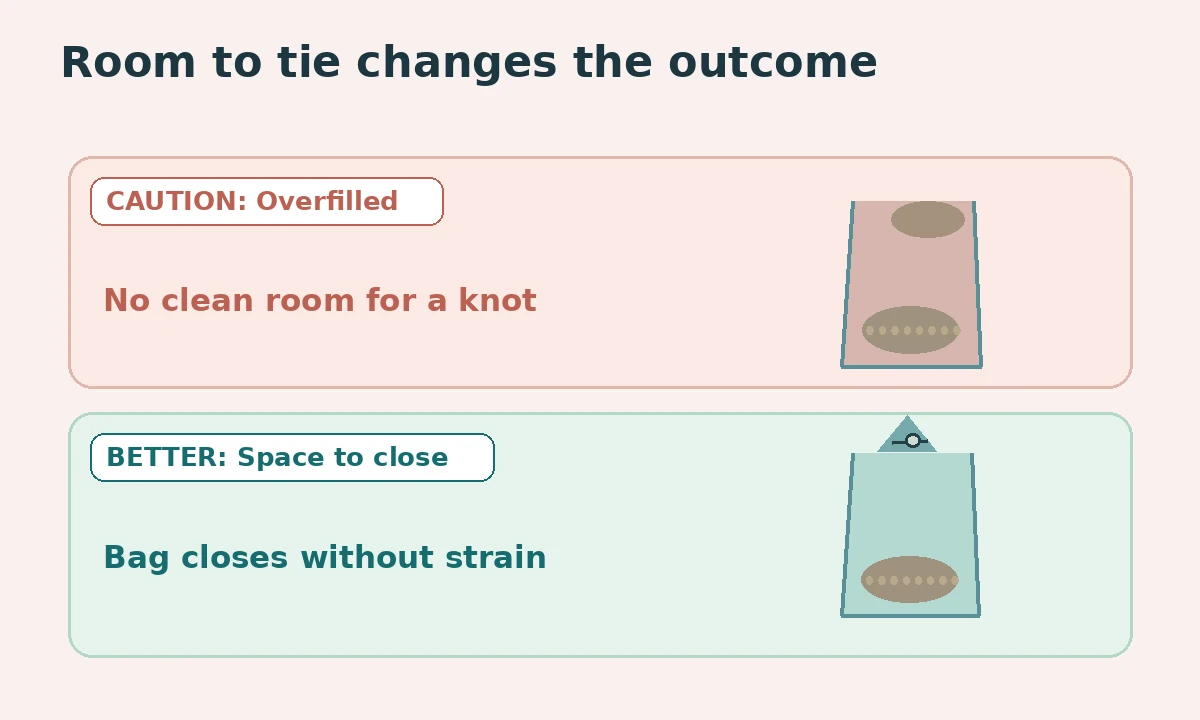
Clumping litter adds weight much faster than it fills volume, especially when large damp clumps collect in one corner. Do not keep adding waste until a small bag stretches tight around a knot. Carry it by a secure closed top with support underneath when it is heavy. Consider dividing the load into smaller sealed bags, following local waste rules, rather than lifting one overloaded liner. A manufacturer’s liter capacity describes volume, not necessarily the maximum safe weight. Do not assume a drawstring automatically supports a heavy load of used litter.
Compare drawstrings and hand ties
Drawstrings can close a bag quickly, but the channel may tear under a concentrated load. Plain open-top bags require extra length for a firm twist and knot. A tie handle can help when the bag holds only a modest daily scoop. Test which closure you can operate without brushing contaminated plastic against your clothing. The finished bag should remain closed when carried normally; a loose fold is not a reliable seal. Keep the outside of the bag as clean as practical and wash your hands after completing the litter box task.
Keep scooping and disposal separate
Place a small lined receptacle near the box only if it does not block the cat’s access or escape route. Transfer waste without resting the scoop on counters or food-preparation surfaces. Close the bag promptly, then place it in an appropriate lidded trash container according to local rules. Do not pour used litter into a toilet unless local wastewater guidance and the specific product both permit it; as a general routine, use approved trash disposal. EPA advises against putting pet waste and cat litter in home compost. Labels about bag material do not change what is inside it.
Understand material labels carefully
A bag may be described as recycled plastic, plant-derived, compostable, or biodegradable. These are different claims, and none makes cat feces safe for a garden compost pile. Some compost facilities do not accept compostable bags or pet waste at all. Review the local collection program before choosing a bag for environmental claims alone. A dependable seal and correct disposal matter more than a generic green-looking design. Avoid products that make vague promises without specifying conditions or verification. Never bury or leave used litter outside as a substitute for waste collection.
Control odor with routine, not perfume
Daily removal, correct closing, and a covered disposal container can reduce how long waste remains exposed. Fragrance in a bag may mask odor but does not remove pathogens or make handling safer. If a tied bag smells strongly, check whether it is too full, has a puncture, or has been stored too long. Keep the bin and surrounding floor clean, and empty the waste regularly. Cats may avoid strongly scented products near their litter box; use a simple unscented setup when possible. Do not spray chemicals near the cat to cover a disposal problem.
Clean up a torn liner safely
If the bag tears, put on appropriate gloves, lift solid material into a new bag, and clean the contaminated bin or floor using its surface-safe instructions. CDC advises handwashing after handling cat litter even when a scoop was used. For people who are pregnant or immunocompromised, another household member should handle the litter when possible. Avoid shaking dry litter into the air. Follow disinfectant labeling; never mix cleaning agents. A worn bin edge or sharp internal clip may be the root cause, so check hardware before replacing the liner.
Make a practical refill checklist
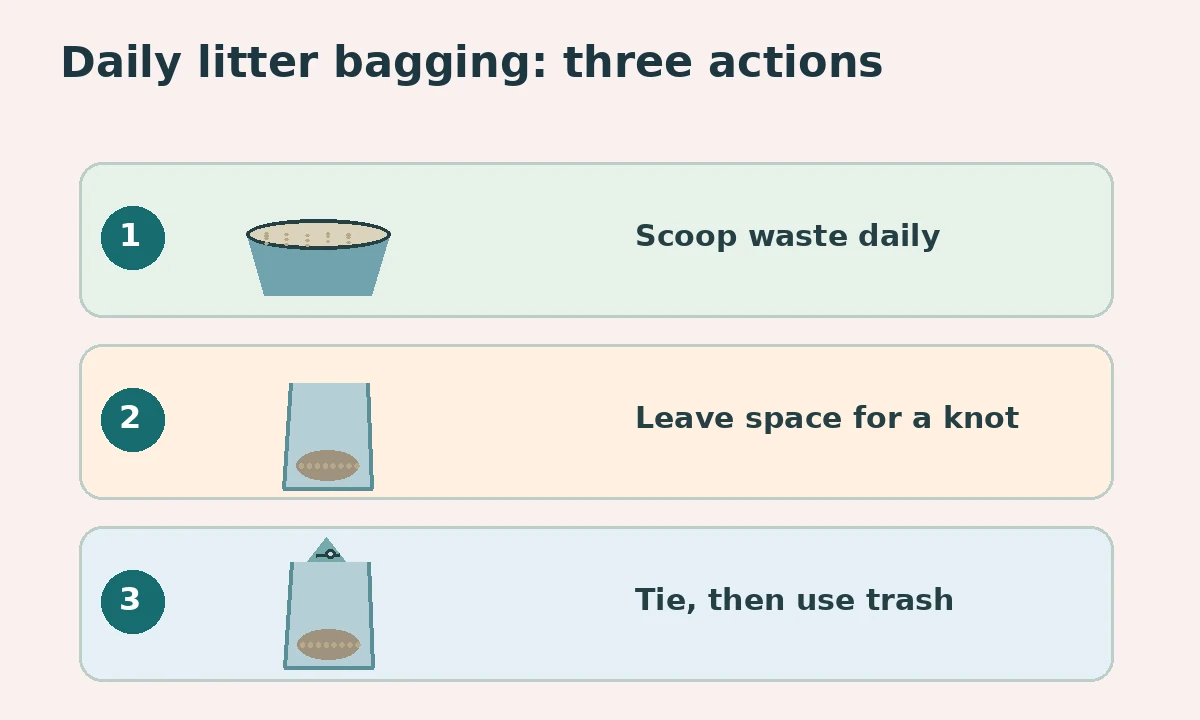
Confirm the bag opening, usable height, seam quality, closure method, and availability of compatible refills. Store clean rolls high and dry, away from pets that chew plastic. Keep a spare bag nearby so you do not overload the final liner. When a refill brand changes, test the first bag with clean contents. Regularly inspect the waste container rim and lid hinge for sharp edges. A good bag is one you can close, lift, dispose of, and replace without loose clumps or contaminated touchpoints.
How We Research
We compare public health and animal-care guidance with the visible features that an owner can actually inspect, such as the pickup edge, closure, hinge, or washing surface. We keep disposal rules separate from product marketing and explain when local collection instructions or manufacturer-specific guidance control the choice. These illustrations are explanatory diagrams, not product certifications. Learn more about our editorial approach.
Sources
CDC — Cats and Litter Hygiene — Source guidance on waste handling, sanitation, environmental limits, or equipment care.
EPA — Composting at Home — Source guidance on waste handling, sanitation, environmental limits, or equipment care.
CDC — Toxoplasmosis Prevention — Source guidance on waste handling, sanitation, environmental limits, or equipment care.
EPA advises against putting pet waste and cat litter in backyard compost. Follow local disposal rules.
No. Bag material claims do not make contaminated litter suitable for home compost or a collection program.
Not always. Strength depends on the seam, material, closure, and weight of the used litter.
It should clear the scoop opening, hold the expected load without strain, and leave enough length for a secure closure.
Yes. CDC advises soap-and-water handwashing after cleaning a litter box, even when using a tool.