
Velvet furniture needs a different pet-hair routine from ordinary flat-weave upholstery. Its pile changes appearance with pressure and direction, so forceful rubbing can leave a visible track even after the fur has gone. Start with the exact furniture maker’s instructions, then inspect the nap and try a gentle dry method on a hidden patch. The objective is to lift loose strands without changing the velvet’s feel or sheen. This guide gives a practical sequence and clear reasons to stop.

Why velvet changes the cleaning plan
Velvet is a pile fabric: its upright fibers reflect light differently as their direction changes. A patch can look darker after pressure even when the cloth remains clean. Pet fur often sits between those fibers, making aggressive rubbing tempting. However, rubbing can flatten or disorder the nap and leave visible marks. Begin with the care instructions for the specific sofa or chair rather than a universal pet-hair trick. Some velvets tolerate only gentle vacuuming; other finishes have their own approved techniques.
Find the nap direction with your hand
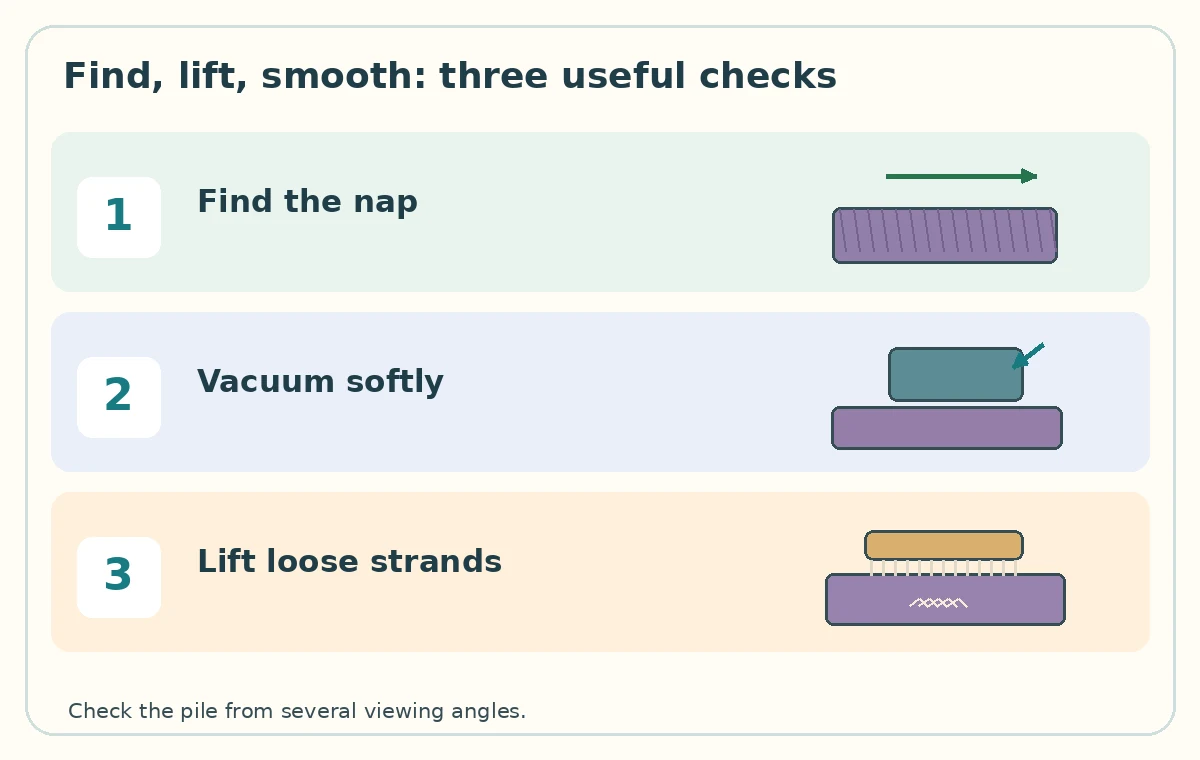
On an inconspicuous area, pass an open hand lightly over the fabric in each direction. One way may feel smoother and change the appearance of the pile. This is the nap direction. Record it before applying any tool, and check separate cushions because their panels may not all run alike. A soft upholstery brush should generally follow the manufacturer’s prescribed direction. Never use a stiff wire or rubber comb to chase a few hairs. The goal is to lift fur while keeping the nap visually uniform.
Read the tag and manufacturer guide
Look beneath a loose cushion or at the furniture frame for the full care label. Codes about cleaning solutions do not automatically authorize steam, detergents, or wet cloths. A fabric marked for vacuum-only care should remain dry. Even a maker who recommends moisture for certain pile marks may not recommend it for hair removal. Write down the fabric name if known and avoid untested household formulas. When the label is missing, start with the least intrusive dry option and consider professional advice for high-value upholstery.
Use a soft upholstery nozzle correctly
Select a smooth, clean nozzle designed for furnishings rather than a hard floorhead with exposed edges. On a hidden patch, make one very light pass in the recommended direction of the nap. Look for tracks in angled light. If the nozzle pulls the pile into ridges, reduce suction where possible or stop. Clean open cushions in overlapping, slow passes rather than grinding repeatedly in one spot. A crevice tool may collect hair along the back seam, but its sharp corners should not dig into the velvet.
Collect remaining hair with a gentle brush
When a few strands remain, a soft clothing or upholstery brush may help if the furniture maker allows it. Keep the bristles nearly parallel to the pile and follow the approved direction. Lift gathered hairs by hand or vacuum them with a gentle nozzle. Do not use a stiff pet de-shedding blade meant for an animal’s coat. Decorative buttons and piping require extra care because concentrated friction can loosen threads. Stop if you see a shiny crushed patch or a changed fabric texture.
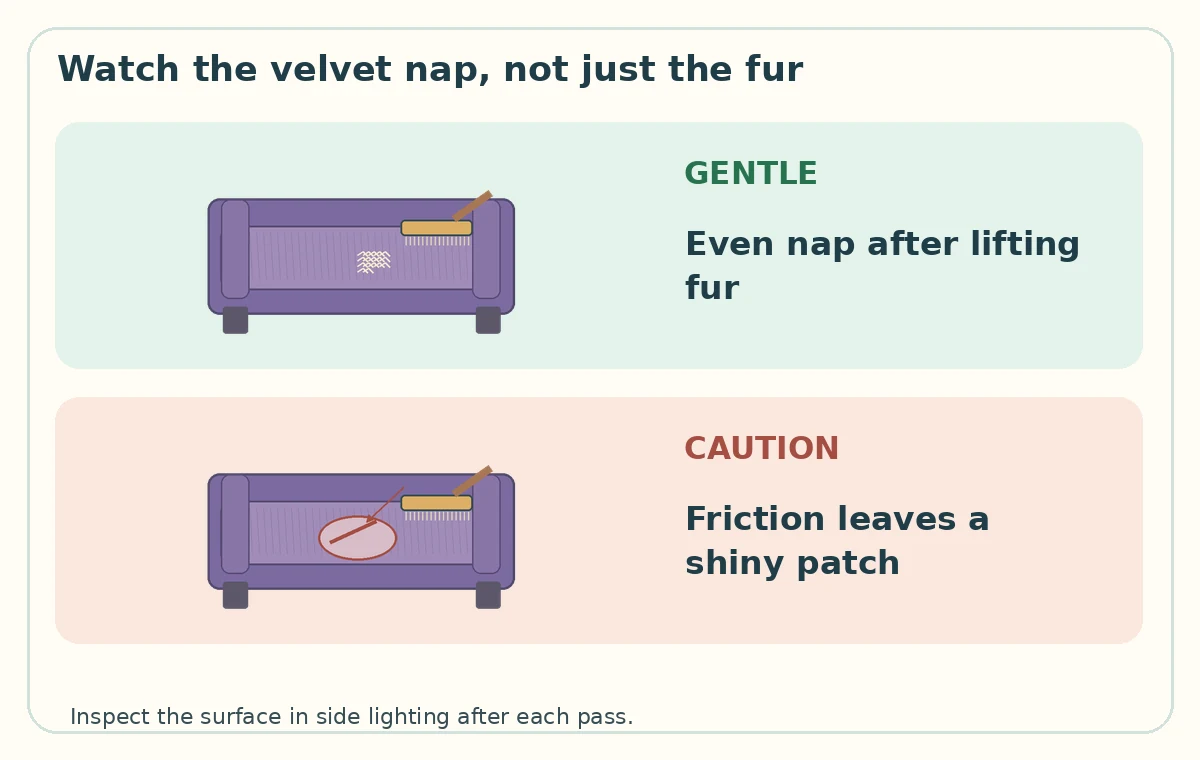
Compare even nap with a rubbed patch
The better illustration shows a cushion with an even velvet sheen and loose fur collected along a soft brush path. The caution illustration shows a strong back-and-forth scrub that leaves a lighter patch. These are differences in pile behavior, not proof that any tool is universally safe. Examine the surface from more than one angle because a nap shift may appear only in side lighting. If a mark develops, do not immediately add water or steam; consult the fabric care instructions first.
Do not confuse fur removal and stain cleaning
Loose hair is a dry debris problem; a food, oil, or pet-accident stain is a different cleaning task. A solvent-only or vacuum-only code changes what can safely touch the upholstery. Never apply a stain remover simply to make hair stick to a cloth. Avoid soaking the cushion or aiming steam at it without explicit manufacturer approval. If the furniture was recently wet, let it dry as directed before deciding how to address remaining loose fur. Keep pets away from active cleaning supplies.
Work carefully around seams and cushions
Hold a removable cushion steady instead of stretching the cover. Follow the direction of its nap, then use a suitable crevice nozzle near piping. Avoid catching decorative ties, loose threads, or tufted buttons. If a cushion cover comes off, that does not mean the maker permits machine washing; removal can be for manufacturing or access only. Examine the back and underside before putting the cushion down again. A predictable sequence is gentler than switching between multiple rough tools when the first pass leaves stray hairs.
Make a low-friction maintenance routine
A light weekly or occasional touch-up, based on furniture use and maker instructions, can prevent fur buildup that invites scrubbing. Wash or vacuum the pet’s favorite throw separately if its care label permits it. Provide an easy-to-clean resting blanket for the pet without leaving it where it creates a trip risk. Groom the pet gently on a routine suited to the coat. Persistent new shedding, skin irritation, or bald patches are reasons for veterinary assessment, not for harsher upholstery cleaning.
A repeatable cleanup and maintenance checklist
Before each session, identify the material, confirm that your equipment is suitable, and start with the gentlest method. Inspect the result under good light before moving across the whole surface. Stop if you notice a snag, a change in finish, abnormal noise, unstable equipment, or discomfort in the pet. Keep cords and small loose tool pieces away from animals. Collect gathered fur into the trash and clean or store the device using the maker’s instructions. These checks matter more than a product claim that any one tool removes all pet hair.
How We Research
HubPet reviewed manufacturer guidance for upholstery, vacuum attachments, and carpet-cleaning tools, along with established humane pet-grooming information. We distinguished instructions for one manufacturer’s product from general safety principles; not every material accepts identical pressure, moisture, or brushroll use. We did not conduct independent laboratory comparisons or test removal percentages. Recommendations prioritize a visible hidden-area test, appropriate equipment fit, gentle technique, and realistic limitations. For unusual skin shedding, painful coat changes, or persistent bald patches, contact a veterinarian. See our editorial method and veterinary disclaimer.
Sources
Fritz Hansen — Velvet Care and Maintenance. Reviewed for material-care precautions, specific tool use, and stated limitations.
DAN-FORM — Care and Maintenance for Velvet. Reviewed for material-care precautions, specific tool use, and stated limitations.
Electrolux — How to Clean a Fabric Sofa With a Vacuum. Reviewed for material-care precautions, specific tool use, and stated limitations.
Follow the specific furniture maker’s directions; many recommend the direction of the nap with a soft brush.
It may flatten or abrade the pile. Avoid rough tools unless your furniture manufacturer explicitly approves them.
Not necessarily. Velvet changes appearance with pile direction and pressure, so inspect before attempting stain removal.
Do not steam merely for loose hair. Use steam only where the specific fabric care instructions permit it.
Choose a conservative dry method and ask the furniture maker or a professional cleaner before using moisture or chemicals.