
“Stand” sounds simple, but to a dog trained mostly to sit, moving all four feet into a relaxed standing position can be a new skill. A reliable stand cue helps you put on a harness, inspect muddy paws or prepare for brushing without physically lifting the animal. This guide focuses on a comfortable, voluntary stand from a sit or down, followed by a clear release. It does not teach restraint or require a dog to tolerate unpleasant handling. Separate the posture from grooming at first so your dog learns that standing itself predicts good things, not an unwanted procedure. Read our veterinary disclaimer if discomfort or health concerns affect training.
Choose a level floor and a relaxed starting position
Select a steady rug where front and back paws can land without sliding. Keep brushing equipment out of sight during the first lesson. Place treats at hip height so you can deliver them without bending over the dog’s head. If your dog does not easily shift from sitting to standing, first check for signs of stiffness or reluctance during ordinary movement. Older dogs and dogs with orthopedic problems may need comfortable alternatives. Ask for only one or two stands initially. The dog should be free to move away; avoid positioning the legs manually or pulling up on the harness.
Lure straight forward from a sit
Hold a treat at nose height while the dog sits comfortably. Move the treat a short distance horizontally, away from the nose, rather than up over the head. When the dog reaches forward, the hindquarters should lift and all four paws should settle on the floor. Mark immediately and feed while the dog remains standing. If the dog walks several steps forward instead, decrease how far your hand travels. If they remain seated, start with a particularly appealing reward or capture a natural stand when the dog gets up to greet you. Never drag the dog forward by the collar.

Reinforce a balanced four-paw stance
The target picture is a normal standing dog: four paws planted, knees and elbows in their usual positions, weight distributed comfortably. A dog leaning far forward for food may take a step, while a dog whose hind legs are still folded has not completed the stand. Make the treat arrive at nose height in front of the dog, not high enough to trigger a jump. Allow small weight shifts. This is a posture exercise, not a rigid show-ring stack. In the beginning, reward as soon as the dog stands rather than demanding a long, perfectly still pose.
Switch from food to an empty-hand cue
After easy repetitions with a treat lure, present the same short horizontal motion using an empty hand. Mark the stand and feed from your other hand. Gradually reduce the size of the movement until a small forward gesture predicts standing. Only then add the word “stand,” once, immediately before the hand cue. If the dog sits again while watching the reward, move your treat hand to the dog’s nose faster rather than repeating the word. Keep the cue distinct from “come,” which asks for travel toward you rather than one small position change.
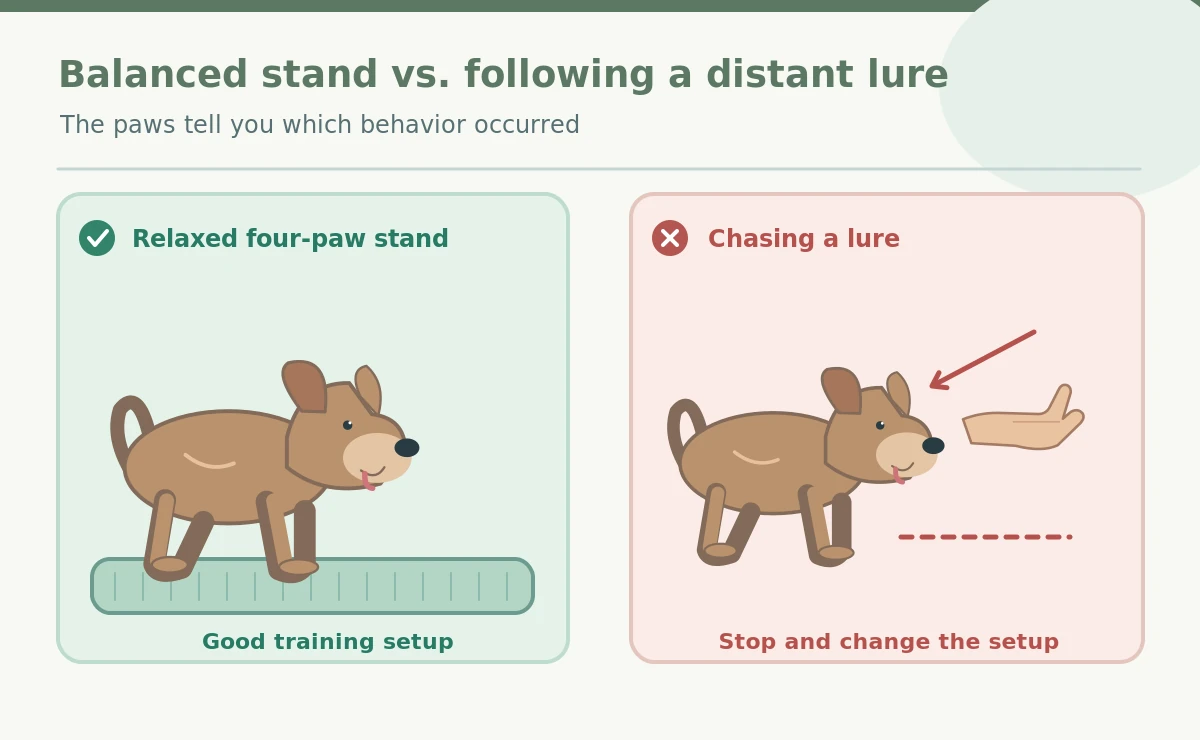
Spot the difference between standing and stepping
A clear stand shows the dog rising into place and stopping with a comfortable base. A step-forward response shows the dog pursuing a treat across the floor; it does not mean the dog is refusing to cooperate. You can place a wide, nonslip mat under the dog to give the paws a predictable starting area. Avoid narrow platforms, slippery counters or grooming tables during beginner practice. The mat is a location aid, not a restraint. If the dog repeatedly shifts or sits, you may be holding the treat too high, expecting too much time or practicing when tired.
Teach release before increasing duration
Say a consistent release word such as “free” after the reward and invite the dog to walk a step away. This creates a clear beginning and end to the posture. As practice gets easier, wait one extra second before rewarding; do not abruptly jump to a long stand. Some dogs naturally prefer sitting after a few seconds, and that is useful feedback. Reward balance while the animal is still standing. Avoid using the stand cue as a substitute for comfortable breaks. Several short successes are more informative than one prolonged hold that ends in restlessness.
Introduce the grooming context in separate layers
When the cue feels familiar, place a brush nearby, ask for one stand and reward without touching the dog. On a later attempt, let your dog investigate the brush. Then practice a very brief light touch to the shoulder or back if the dog stays relaxed and chooses to remain. A chin-rest or other cooperative-care signal can add clarity. Stop at the first sign of avoidance and practice a lower-intensity step next time. Standing on cue does not mean the dog has agreed to nail trimming, restraining, bathing or an examination. Any procedure needs its own comfortable introduction.

Use calm everyday opportunities
After a walk, ask for a brief stand before wiping an already clean paw. Before clipping on a harness, reward the animal for standing naturally and stop if they move away. Work in several quiet rooms with the same brief cue. New floors, people and equipment change the difficulty, so lower expectations for each new setting. In busy households, ensure children do not poke a standing dog or treat the cue as a trick to immobilize them. If you notice trembling, crouching or reluctance, give the dog space and seek appropriate professional help when needed.
Measure progress by comfort, not stillness
A useful progress check is whether your dog willingly stands after the empty-hand signal and can calmly accept the reward without rushing away. Try five short opportunities over the day instead of a single long lesson. If the posture deteriorates, reset on an easier surface or from a different starting position. If only the food-filled hand works, return to alternating a treat lure and an empty hand. You do not need to eliminate food rewards entirely. The goal is a safe request that helps the dog understand your routine while preserving the option to pause.
How We Research
Our editorial team compared current training guidance from veterinary behavior specialists, established dog-training educators and humane welfare organizations. We checked the cited sources on October 28, 2026. Learn about our editorial approach on the About page. The illustrations are original teaching diagrams, not photographs of a supervised clinical trial. We recommend adapting the exercise to each dog’s comfort and abilities rather than forcing a prescribed posture.
Sources
American Veterinary Society of Animal Behavior, Humane Dog Training Position Statement. Read source.
American Kennel Club, How to Teach Your Dog to Stand on Cue. Read source.
VCA Animal Hospitals, Sit, Down, Stand and Stay Training. Read source.
Safety note: These are general reward-based training ideas, not a substitute for veterinary diagnosis or individualized behavior treatment. Stop if a dog shows pain, panic, guarding or escalating distress. Ask a veterinarian or qualified humane trainer for help when appropriate.
Yes. Mark and reward natural stands, then add a short hand signal and later a verbal cue.
Your hand may move too far. Make the lure smaller and reward as soon as all four paws support the dog.
Yes, as preparation, but introduce brushing separately and let your dog opt out of uncomfortable handling.
No. A voluntary posture and short sessions are safer than restraint during training.
Only long enough to rise and receive a reward. Add duration gradually while the dog remains comfortable.