
Pet safety note: Training advice cannot assess pain, illness, hearing, vision, or movement concerns. Ask your veterinarian about new or concerning changes and read our veterinary information disclaimer.
When you teach your dog their name, you are building a quick attention cue. The first measurable response is simple: ears turn, head turns, or eyes orient toward you when they hear that familiar sound. This is not identical to a recall command, which asks the dog to travel to you. Keeping those tasks separate makes both easier to train. A newly adopted adult dog can learn a new name just as a puppy can. Start with the actual response you can see, rather than assuming a dog knows a name because people have used it for months.
Set up a calm, fair first session
Work in a quiet room with safe footing and an animal that is comfortable, awake, and not already overwhelmed. Have a few tiny, appropriate rewards in a pocket or container out of the dog’s immediate reach. Say the chosen name with a friendly, normal voice once. Avoid moving the treat toward your face to trick a glance, because you want the sound itself to become meaningful. If several family members use the name, agree on the pronunciation and reward strategy. Short successful turns beat long drills.
Catch the first little head turn
Wait until your dog is looking away but is not deeply engaged with something exciting. Say the name once. The moment the dog turns toward you, say a consistent marker such as ‘yes’ or click, then reward close to your position. The early success can be a head tilt or an ear flick toward you; eye contact is not a necessary first requirement. Avoid looming over the dog to demand attention. Make the first task easy enough that looking toward a person feels like a pleasant choice instead of a test.
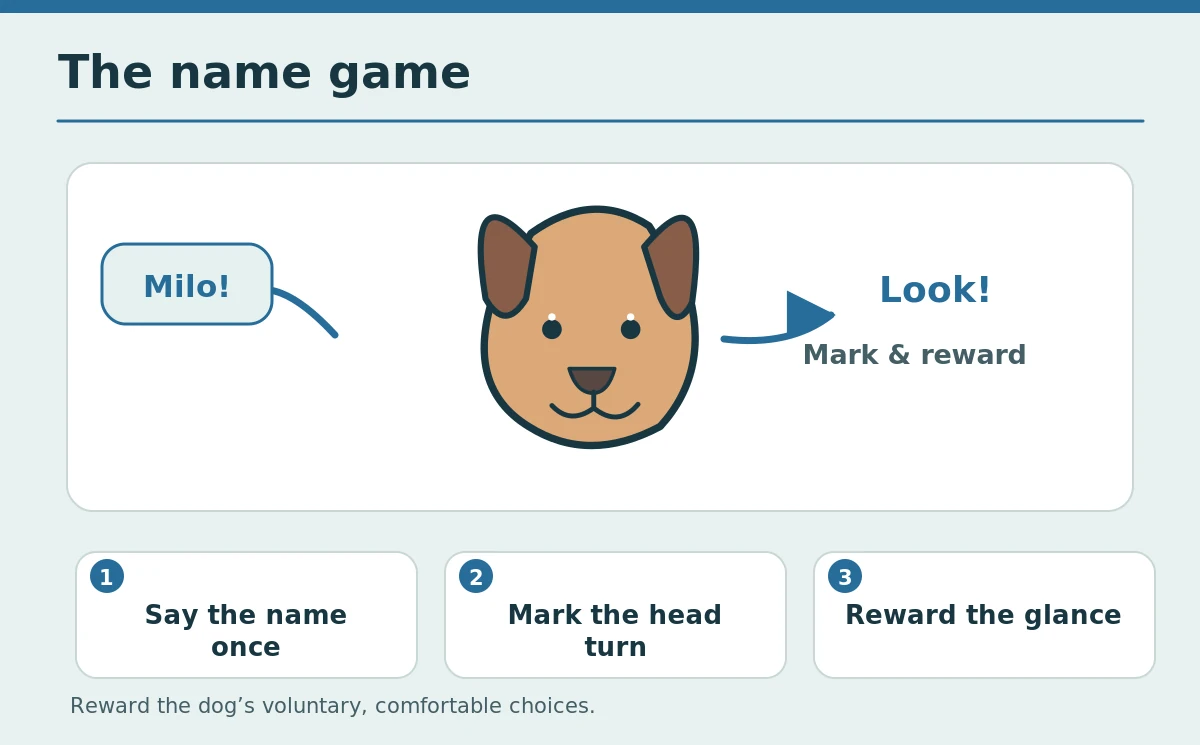
If there is no response, change the setup
Do not chant the name three or four times. Move closer, lower background noise, or make the reward more interesting for the next attempt. You can briefly make a neutral sound to re-engage a distracted dog, but keep that separate from teaching the name cue. Dogs may fail to respond because they are absorbed, worried, or simply have not learned the association. Do not interpret that as stubbornness. Review whether someone has paired the name with scolding; such a history can weaken your dog’s willingness to orient toward you.
Pair the sound with good outcomes
At first, make most responses worth the dog’s effort. Food, a quick game, an invitation to sniff, or a short friendly interaction can be rewards if they matter to that dog. Say the name, mark the glance, reward, and then allow the dog to relax. Do not attach the name mainly to nail clipping, end-of-play signals, or uncomfortable handling. If a puppy hears their name before nearly every prohibition, it loses its pleasant predictive value. Protect the cue by using other, clear management strategies when you need to prevent trouble.
Practice near and far within one room
After several easy glances from a step away, change only the distance. Move two or three steps across the room; say the name once and reward orientation toward you. Reset by letting the dog look elsewhere. Work from both sides so the cue does not become dependent on standing in one spot. A dog is not required to run over at this stage—looking your way is the task. If the distance causes failures, return to the previous successful position. The important measurement is the first orientation after one cue.

Turn the game into ordinary life
During a calm part of the day, wait until the dog is near you and looking at a toy or toward a doorway. Say the name and reward a glance. After success in several quiet rooms, practice in a sheltered yard or low-distraction outdoor space with a secure leash. Take the reward to the dog when appropriate instead of tugging them toward you. Do not demand attention in situations where the dog needs to move away from something frightening. Training should not force a dog closer to a trigger.
Explain the cue to every person at home
A family name game needs common rules: one spoken name, one moment to respond, then useful feedback. Children should not shout the name repeatedly or hold rewards above the dog’s head. Supervise interactions and keep treat delivery gentle. Visitors can play only if the dog is relaxed around them and chooses to engage. Avoid making the dog perform on command for a crowd. Consistency is less about identical voices and more about the same predictable meaning: hearing a name leads to an opportunity to look and receive something good.
Troubleshoot barking, jumping, or staring at food
When your dog starts barking to make you say the name, pause and let quiet return before another easy trial. For dogs who leap at your hand, deliver the treat lower, keep fingers safe, and reward calm orientation rather than grabbing. A dog watching your treat pouch instead of your face needs food hidden until after the marker. Avoid requiring prolonged eye contact from a worried dog; a brief head turn is enough to build the association. Training succeeds when the cue becomes useful outside the staged practice, not when the dog stares intensely during drills.
Keep attention and recall distinct
Once the name reliably earns a glance, you can follow it with a separate cue such as ‘come,’ but reward the name response as its own skill while learning. Never rely on name recognition alone to bring a dog back near traffic or other hazards. Recall needs gradual distance training and secure management. Likewise, a name is not an emergency stop cue. AKC training guidance distinguishes the dog’s name, which asks for attention, from the recall cue, which asks the dog to come. Teach both in settings where failure is safe.
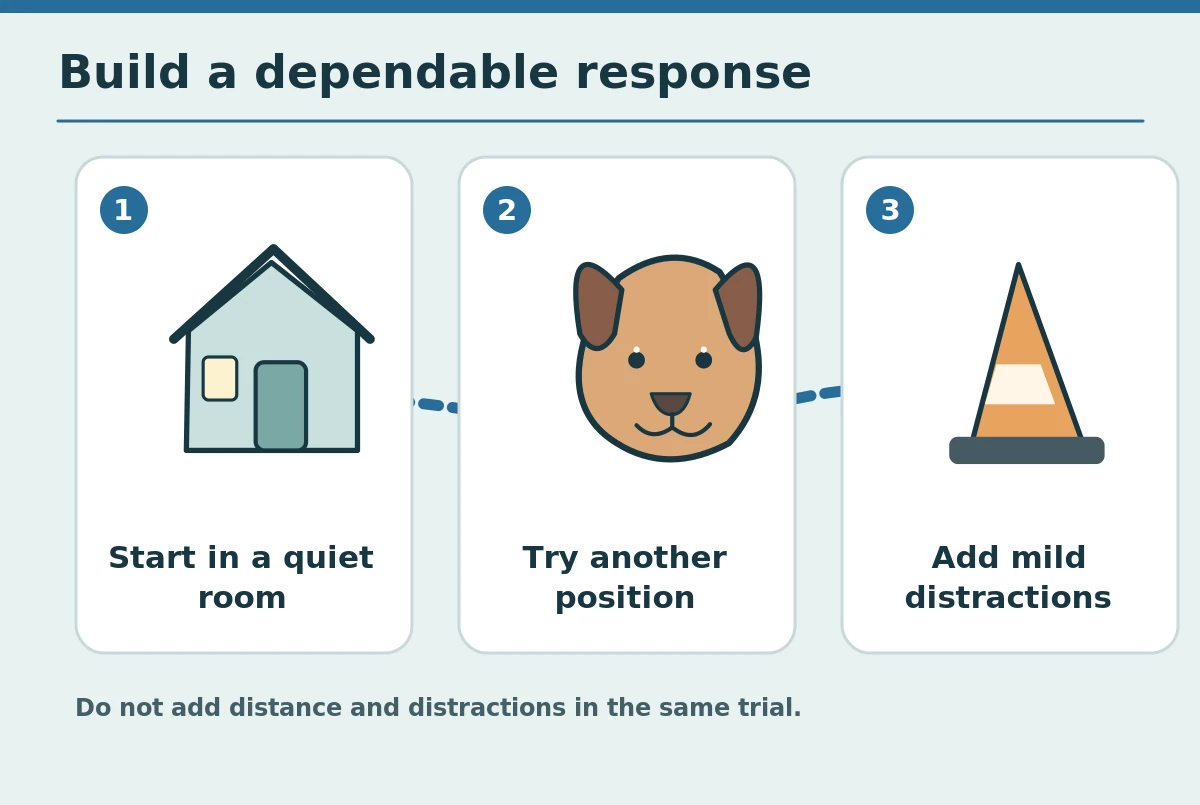
Use a small progress tracker instead of guessing
Record five opportunities in one familiar setting: did the dog orient after the first name, with relaxed body language? If most are easy, vary one factor such as room or handler position. If responses slow down outdoors, reduce distractions before asking for speed. Avoid promising a fixed number of days to reliable recognition; dogs and contexts differ. A successful session might be three easy glances and a break. Continue giving the cue pleasant consequences during daily life even after the dog knows the sound well.
How We Research
We drew the name-game sequence from AKC training guidance, using AVSAB reward-based principles to avoid punishment or pressure. We distinguish attention from recall and do not promise a training timetable; the examples are not a substitute for individual behavior support. Learn more about our approach at About HubPet.
Sources
American Veterinary Society of Animal Behavior: Humane Dog Training Position Statement and 2025 clarification: Read source. Reviewed October 27, 2026.
American Kennel Club: How to Teach Your Dog Their Name: Read source. Reviewed October 27, 2026.
American Kennel Club: How to Train Your Dog to Come When Called: Read source. Reviewed October 27, 2026.
Not necessarily. Name recognition initially means orienting or paying attention; “come” is a separate recall behavior that should be taught and reinforced independently.
Say it once, then lower the difficulty if the dog cannot respond. Repeating the name in a rapid string can teach the dog to wait for the third or fourth repetition.
Yes. Pair the new sound with calm, positive interactions and reward early signs of attention. Consistency matters more than the dog’s age or the previous name.
Keep rewards hidden until after the response and marker. Reward the dog for orienting to your voice, not merely for noticing food already in your hand.
Avoid making the name a warning of scolding or uncomfortable handling. Keep it associated with attentive, positive experiences and manage unwanted behavior through safer, reward-based methods.