
“Find it” is a gentle cue that invites a dog to put their nose to work searching for small rewards. It can provide a satisfying activity without demanding a hard workout, and it works in an ordinary living room. The useful distinction is that the dog should search for treats you deliberately placed on a safe surface, not start scavenging unknown objects on walks. Begin with two or three visible pieces of food, say your cue as the dog starts investigating, and keep the game predictable. This guide covers treat size, floor cleanliness, signal timing and the transition to a quiet yard without teaching indiscriminate picking up. Read our veterinary disclaimer if discomfort or health concerns affect training.
Choose a safe search surface first
Begin on a clean, dry, level area where you can see and retrieve each reward. A nonslip mat or smooth floor works for the first lesson; thick carpet can hide crumbs and encourage repeated scavenging after training ends. Remove loose household items, medications, cords and other pets before you scatter food. Use small pieces from the dog’s normal food allowance if appropriate, and make sure no ingredient conflicts with their diet. Dogs who gulp, have food-related guarding concerns or need a special veterinary diet may benefit from individual professional advice before food-scatter games.
Show the dog how a tiny search works
Let the dog watch you place two or three treats a short distance apart on the floor. Say “find it” just as the nose lowers toward the first piece. You can point to an easy treat rather than pushing the dog’s head down. As the dog sniffs and collects each piece, stay quiet and allow the natural search to continue. At the end, say “all done” and show empty hands. Do not keep sprinkling food until the dog is frantic. A clear start and stop help prevent the dog from searching your floor continuously for more food.
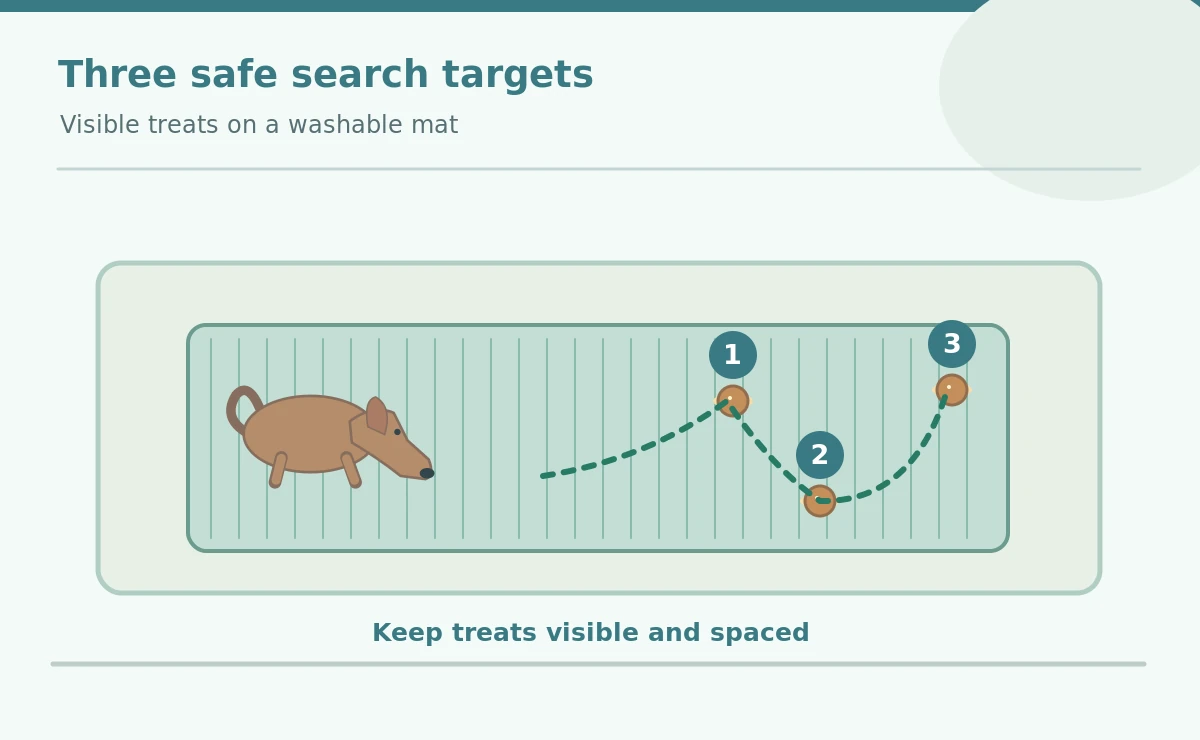
Make the cue predict searching, not grabbing
After several easy sessions, say “find it” before placing a couple of visible rewards. Wait until the dog looks toward the floor, then scatter them on the familiar clean surface. The cue should tell your dog when you start the approved search game. It does not give permission to investigate garbage, fallen pills or unidentified food outdoors. Practice a separate leave-it or trading skill for unexpected objects; never encourage a dog to mouth something hazardous to practice this game. Keep sessions short and stop before enthusiasm turns into frantic scraping or rushing.
Increase difficulty with distance, not hidden hazards
Move one treat a little farther apart while all pieces stay on the clean floor. You can later put a treat near the edge of a washable mat, but not under furniture, behind electrical cords or in deep fabric where you may miss it. The dog should have room to turn without bumping into chair legs. Keep each treat inside a search zone you have checked and avoid piling them into one spot. A dog that circles repeatedly may need a more obvious placement. Reward the investigative behavior; do not make the game difficult merely to prove that the dog has a good nose.
Compare a controlled search area with a risky one
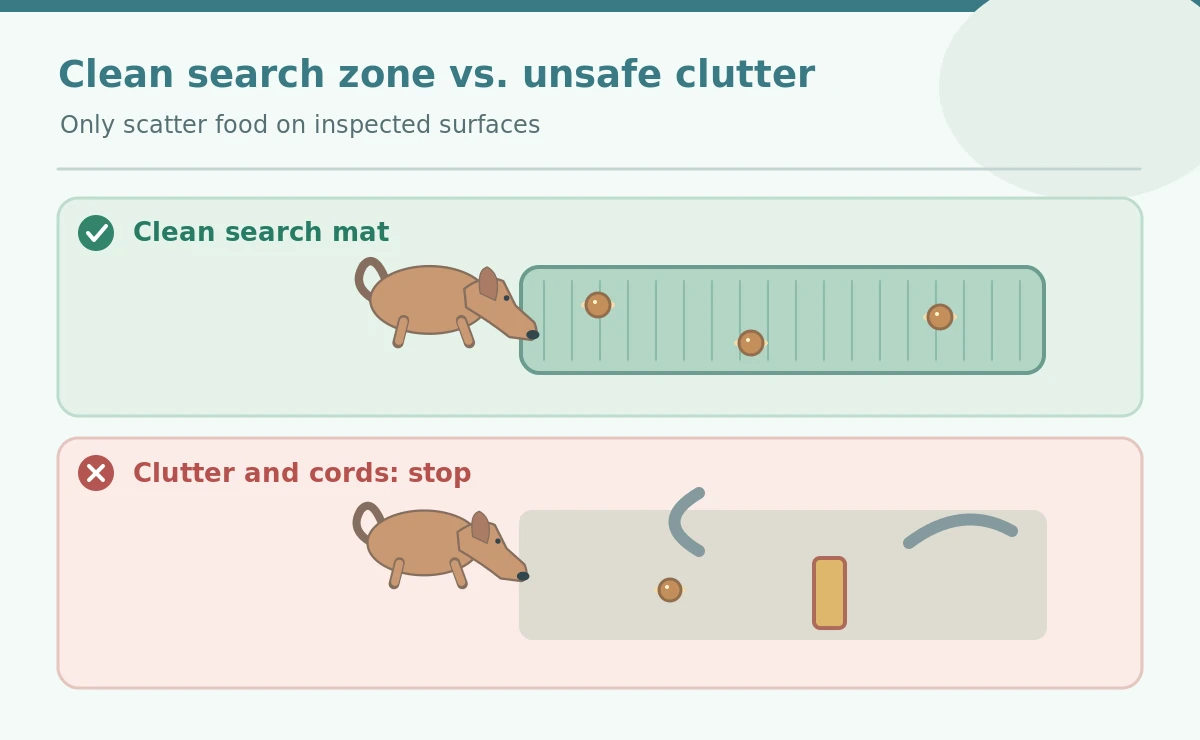
A good setup shows a few pieces of food spaced on a clean mat, with the dog calmly sniffing and a person supervising nearby. An unsuitable setup shows food spread among small toys, power cords, spilled cleaners or objects that can be swallowed. The important lesson is where searching is allowed. Never scatter treats near stairs, moving vehicles, broken glass or unknown plants. Outdoor areas can contain fertilizer, pesticides, animal waste and dropped food, so inspect the ground before beginning. The best search game is safe, predictable and easy to clean up.
Try a quiet yard only after indoor success
Move outdoors to a fenced, supervised space after the dog readily responds indoors. Check that the grass or patio is free from hazardous materials and that other animals cannot rush in to compete for food. Use only a few easy-to-see treats at first. In damp or muddy conditions, choose a washable mat instead of tossing food on soil. Say the cue once and allow the dog to sniff. If the dog turns toward something unfamiliar, pause the game and guide them away with a familiar cue and reward. Do not rely on scent games to keep a dog safe from traffic or approaching animals.
Use find it as enrichment, not a universal solution
A sniffing game can add variety to an ordinary day and help some dogs focus on a familiar activity. It does not replace exercise, rest, veterinary care or individualized behavior work for severe fear and reactivity. Dogs Trust describes find-it games as one useful engagement option around distractions when practiced gradually. Start well below the dog’s stress threshold and preserve enough distance from triggers. If your dog barks, lunges or stops eating, creating space is more important than scattering additional treats. Ask a humane, qualified professional to help with persistent distress.
Finish by checking that every reward is gone
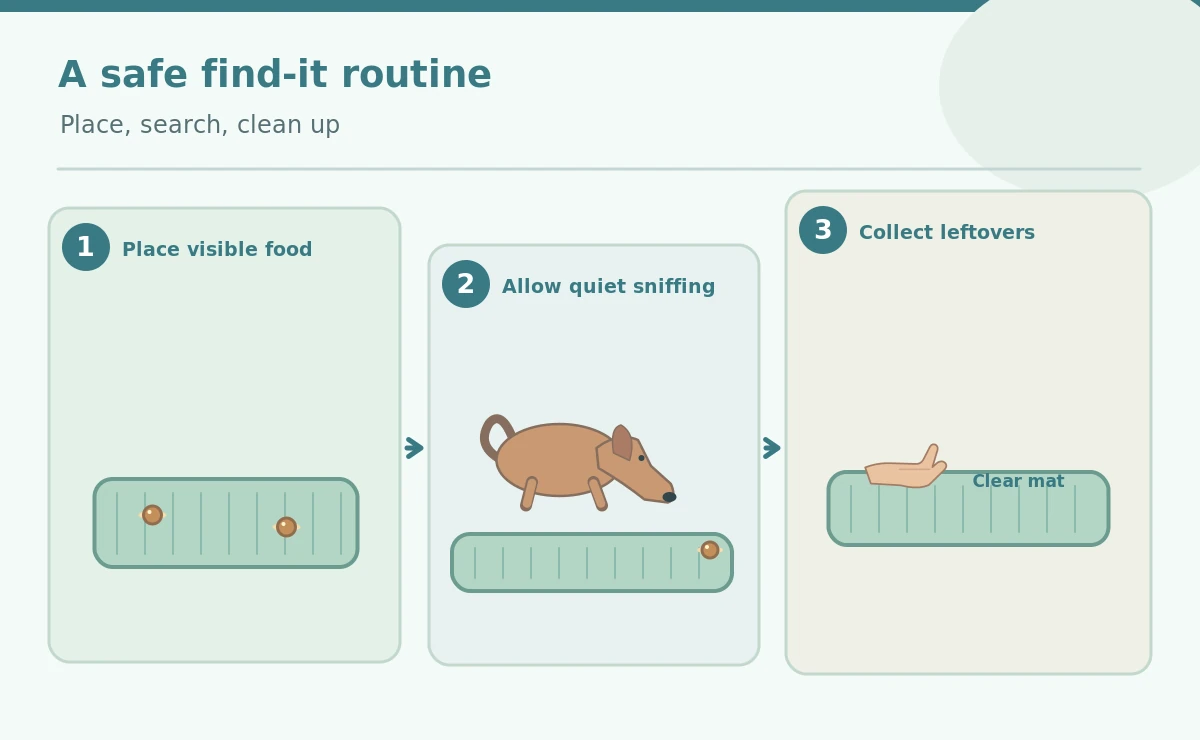
When the search ends, walk through the area and pick up any missed food. This matters in multi-pet homes where other animals may have allergies, dietary restrictions or conflicts over food. Wash sticky mats and keep small rewards out of children’s reach. Use the same calm end cue each time and put away the container. If the dog keeps sniffing the area, move to another activity without scolding. The dog is responding to food smells, not disobeying. A consistent cleanup helps keep ordinary floors from turning into a permanent search game.
Troubleshoot searching that becomes too intense
For carpet scratching, reduce treat difficulty and use a smooth washable mat. When food is grabbed without sniffing, space treats farther apart and slow your placement. For an ignored outdoor cue, return indoors and practice again without distractions. Avoid increasing the number of treats to compensate for uncertainty. For dogs who compete or guard food, train separately behind a safe barrier and consult a behavior professional when needed. Successful progress looks like a relaxed nose-down search with a clear start and end, not a frantic race for crumbs.
How We Research
Our editorial team compared current training guidance from veterinary behavior specialists, established dog-training educators and humane welfare organizations. We checked the cited sources on October 28, 2026. Learn about our editorial approach on the About page. The illustrations are original teaching diagrams, not photographs of a supervised clinical trial. We recommend adapting the exercise to each dog’s comfort and abilities rather than forcing a prescribed posture.
Sources
American Veterinary Society of Animal Behavior, Humane Dog Training Position Statement. Read source.
Dogs Trust, Understanding Reactive Dogs and the Find It Game. Read source.
American Kennel Club, Training Dogs to Ignore Distractions. Read source.
Safety note: These are general reward-based training ideas, not a substitute for veterinary diagnosis or individualized behavior treatment. Stop if a dog shows pain, panic, guarding or escalating distress. Ask a veterinarian or qualified humane trainer for help when appropriate.
Start with two or three small, clearly visible pieces from your dog’s appropriate food allowance.
Avoid hard-to-check spaces, cords or objects that can trap food. Use a clean, accessible search mat.
Keep the cue linked to approved search areas. Teach separate leave-it skills and prevent access to unknown objects.
Yes, only after checking the surface and supervising the dog. Avoid chemical treatments, waste and unsafe plants.
No. It may be one enrichment or engagement tool, but distressed dogs need distance and qualified behavior support.