
Pet safety note: Training advice cannot assess pain, illness, hearing, vision, or movement concerns. Ask your veterinarian about new or concerning changes and read our veterinary information disclaimer.
To teach a dog to touch your hand, you reward a brief, voluntary nose contact with an offered palm. Nose targeting gives you a clear, low-pressure way to guide direction and practice communication. It can help a relaxed dog move into position beside you or approach a familiar mat, but it should not be used to pull an anxious dog into feared situations. A nose target is different from paw targeting, which requires balancing and foot placement. Choose the simpler nose-to-palm behavior first; it is easy to observe and reward accurately.
Check that hands are welcome
Some dogs dislike hands near their faces, especially if they have experienced rough restraint or are uncomfortable. Offer an open palm near—but not touching—the dog’s nose and watch the response. A dog who voluntarily investigates is ready for an easy first trial. If the dog retreats, freezes, turns away repeatedly, or shows discomfort, lower the social pressure and consult a qualified force-free trainer if needed. Do not chase a dog’s head, close your fingers around the muzzle, or push a palm forward. Nose targeting only makes sense when the dog chooses contact.
Offer a still, flat palm
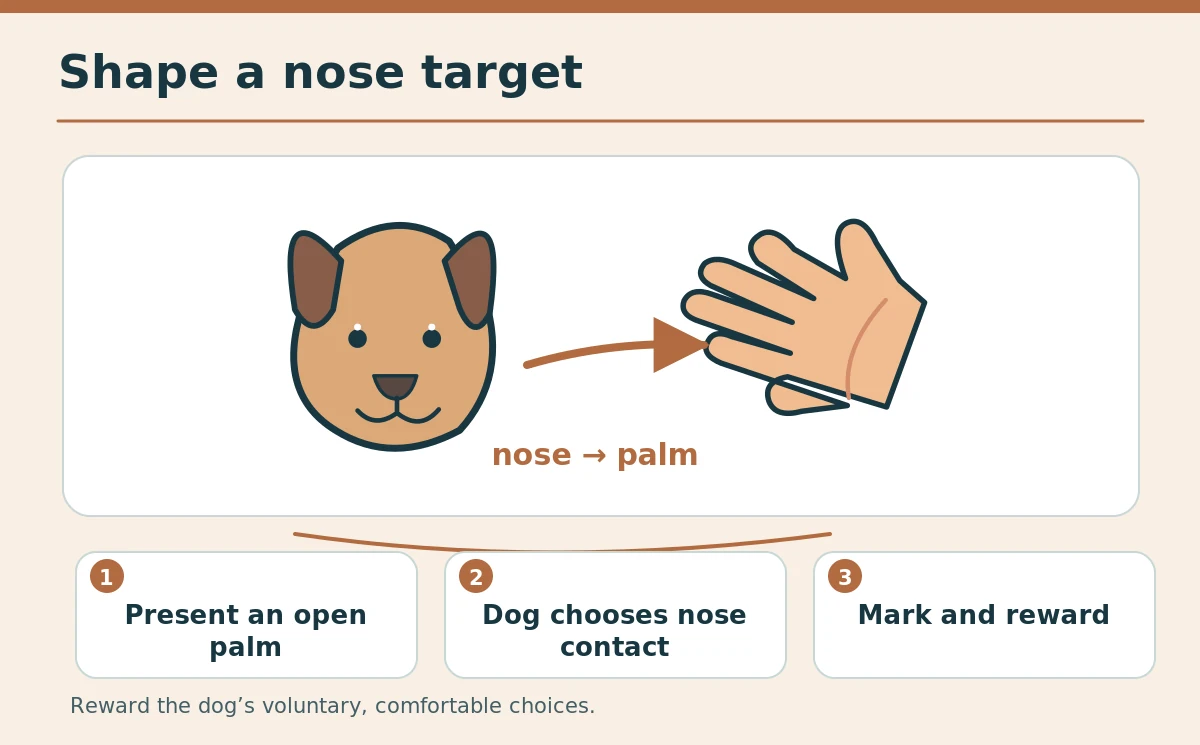
Stand or sit sideways at a comfortable angle and present an open palm a short distance from the dog’s nose. Keep fingers relaxed and the hand still. Most curious dogs lean forward to sniff. Mark the instant the nose makes gentle contact and immediately deliver a reward from your other hand. Avoid waving the palm around; otherwise your dog may learn to follow a moving lure rather than touch a clear target. If the dog does not investigate, bring the palm slightly closer or begin by rewarding a glance toward it.
Separate your target hand from the reward
After a successful nose bump, keep the target hand easy to find and deliver the food from the opposite hand. This prevents the palm from becoming a permanent container for snacks. Place the reward so your dog has space to reset before the next offered palm. A treat that lands on the floor can sometimes create a natural step away and return, but choose a nonslip, safe surface and avoid encouraging frantic lunging. Keep food rewards tiny and suitable for the dog. The marker identifies contact; the treat reinforces it afterward.
Wait for an intentional bump
At first, a sniff or brush of the nose may earn a reward. After a handful of clear successes, wait for a slightly more deliberate touch rather than rewarding every glance at your hand. Keep the challenge small enough that your dog remains engaged. Do not withhold reinforcement until the dog becomes upset or begins pawing and mouthing. If there is confusion, return to the easiest approximation. Gradual shaping works by making success likely and clear. Keep the palm stationary so the dog controls the final inch of movement.
Add the word only when the action is predictable
When your dog repeatedly bumps the palm promptly, present the hand and say ‘touch’ in the same calm tone. Put the verbal cue just before the familiar opportunity to perform the behavior, then mark and reward the contact. Avoid repeating ‘touch, touch, touch’ during hesitation. The dog first learned a behavior and now learns the word for it. Ask other family members to use the same label and open-palm gesture if they practice. Do not assume all dogs understand a word simply because it has been spoken while they were investigating.

Adjust one difficulty variable at a time
Try a hand a little to the left, then right, then a short step away. Return to the original near-nose position whenever reliability drops. The target should remain within comfortable reach, never above the head so the dog must jump, nor across a slippery floor. Later, add a second room with minimal distraction and repeat the easy position. Increasing distance, hand height, and novelty simultaneously makes it hard to tell what failed. Reward effort and stop before the dog becomes frantic or tired.
Use targeting to guide, not to lure into fear
A dog who willingly follows a hand target may be able to move from one side of a doorway to another, step onto a familiar non-slip mat, or stand calmly in a cooperative-care setup. That does not make targeting a shortcut through noise phobias or stranger fear. If the dog hesitates, allow space and reduce the request. Never use a palm to place a dog near a frightening object or force greetings with unfamiliar people. For serious fear or aggression concerns, seek qualified behavioral support and keep everyone safe.
Know the difference between a touch and a bite
Teach only soft, momentary nose contact. If teeth make contact, close the training opportunity neutrally, offer a calmer setup, and reward gentler investigation. Do not punish, jerk the hand, or wave fingers as a teasing game. Young dogs who mouth rapidly may need a broader break and a suitable chew or play opportunity. If your dog repeatedly lunges toward the target, present it closer and lower the energy of rewards. Precision should feel like a thoughtful choice, not a contest to catch a moving hand.
Transfer the target to safe objects later
After a confident hand target, you can place a visible target sticker on your palm, then slowly position it on a safe non-breakable object while marking nose touches. Keep objects free of sharp edges or small parts the dog could swallow. Do not target hot surfaces, switches with electrical access, or doors that could pinch a nose. A target can help a dog understand where to go, but object use deserves its own gradual plan. The hand remains an easy fallback if the new object is confusing.

A short routine to maintain the skill
Begin with two easy palm touches from close range, then vary position once and finish with another easy repetition. Take a break if the dog loses interest or repeatedly turns away. Record which side or height was easiest so future sessions start from success. Play the game in ordinary low-stress moments, not solely when you need the dog to leave something exciting. With regular reinforcement, the cue can remain a friendly way to communicate rather than a hand gesture that predicts restriction.
How We Research
We cross-checked AKC nose-target exercises and progression advice with AVSAB reward-based welfare guidance. Illustrations show only voluntary, gentle nose contact. We excluded forced handling, triggering greetings, and untested claims that targeting treats anxiety. Learn more about our approach at About HubPet.
Sources
American Veterinary Society of Animal Behavior: Humane Dog Training Position Statement and 2025 clarification: Read source. Reviewed October 27, 2026.
American Kennel Club: How to Teach Your Dog to Nose Target or Touch: Read source. Reviewed October 27, 2026.
American Kennel Club: Targeting Techniques for Dogs: Read source. Reviewed October 27, 2026.
No. Hold your palm still within comfortable reach and let the dog choose to move forward. Reward voluntary contact, not contact that occurs because you chase the muzzle.
Add the verbal cue after the dog reliably offers a nose bump to the palm. Say it once before the familiar target opportunity, then mark and reward the response.
Reset with your palm near nose level, keep it still, and reinforce gentle nose investigation. Avoid punishing pawing; make the intended movement easier to discover.
It can be useful when a dog is calm and willing, but never use it to lure a fearful dog toward a trigger or force an unwanted greeting. Seek qualified support for significant fear or reactivity.
Move your palm only slightly farther away after the close target is reliable. Change distance without simultaneously adding height, location, or new distractions.