
Carpet scratching is not the same problem as a cat climbing the sofa. Many cats deliberately stretch their front legs forward and pull against a horizontal surface. A tall post across the room may look like the obvious solution to a person but feel completely different to that cat. Instead, treat the damaged patch of rug as a clue about angle, texture and location. Protect the flooring while you offer a comparable scratching outlet and observe whether your cat uses it. This guide addresses floor-level scratching and practical fiber protection. For pet-health questions, see HubPet’s veterinary disclaimer.
Learn the difference between digging and scratching
Watch what the cat actually does. A cat extending both front paws and dragging its claws toward the body may be engaging in ordinary scratching and scent marking. Repeated digging beside a litter box could instead be associated with toileting habits, box discomfort or a wish to cover waste. Scratching at a doorway may relate to a route through the home. Do not apply one generic training response to all three situations. Write down where the paws land, which surface the cat chooses and whether the episode follows sleep, play or a trip to the litter box.
Match the angle before changing the material
For a cat that scrapes a carpet while crouched low, start with a horizontal corrugated-cardboard pad or firm scratching mat. A sloped scratcher may suit a cat that stretches upward slightly, but let behavior guide the choice. The new pad should not skate across the floor: anchor it safely without leaving loose cords or exposed metal. Choose an area long enough for a comfortable full-body stretch. Ohio State explains why horizontal scratching options often better match cats that target rugs. Do not force the paws onto the board; reward voluntary contact.

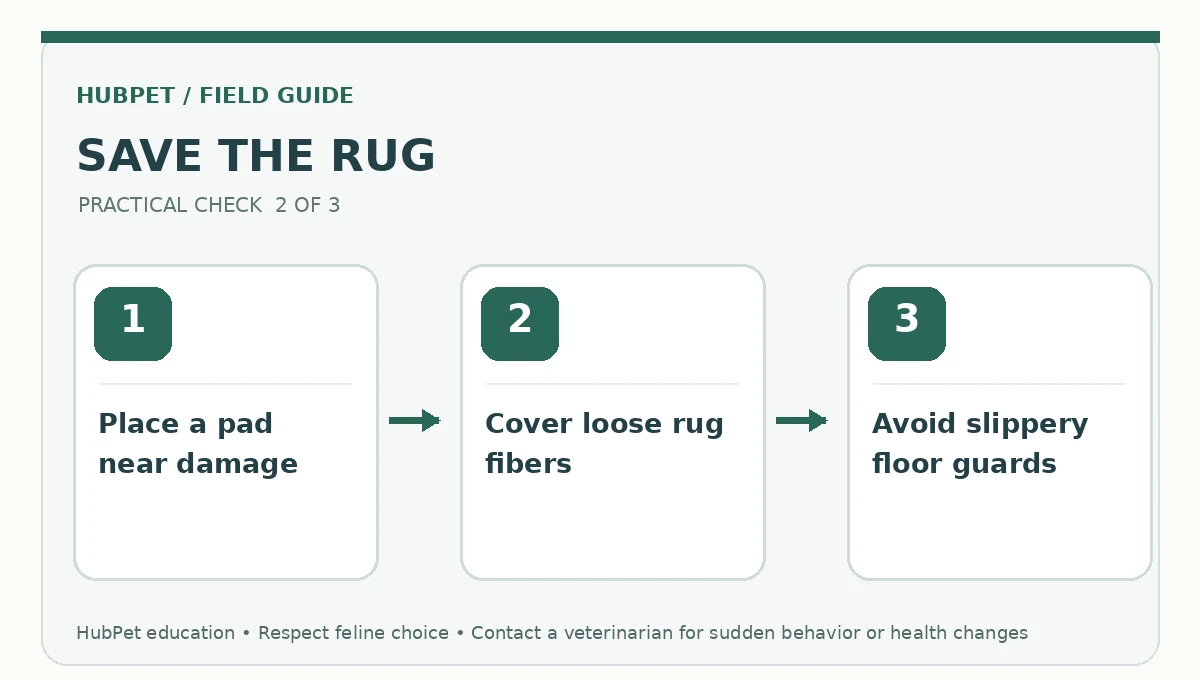
Place the new surface over the old habit route
Put the scratcher directly alongside or partly over the favorite carpet patch, provided it will not block walking or a door. A pad hidden behind furniture will not compete with a prominent hallway rug that the cat scratches daily. If a cat favors several locations, provide more than one pad. Observe whether the cat switches to the new texture when it is within a few steps of the old spot. Leave a familiar pad in place after progress rather than immediately relocating it to a distant room. Placement is often more important than an expensive material.
Protect carpet fibers during the transition
Use a stable, non-slip cover or an appropriately sized temporary mat over the damaged zone. Test adhesives and floor protectors in an unobtrusive area because some products lift fibers or leave residue. Avoid upside-down spiked mats, loose plastic pieces, or edges that could snag a claw. Do not install a runner that slides and creates a slip hazard for people or pets. A washable barrier makes sense only if the cat can still reach an acceptable scratching surface close by. Check the rug for unraveling fibers and remove loose threads that a curious pet could swallow.
Help the pad become a rewarding option
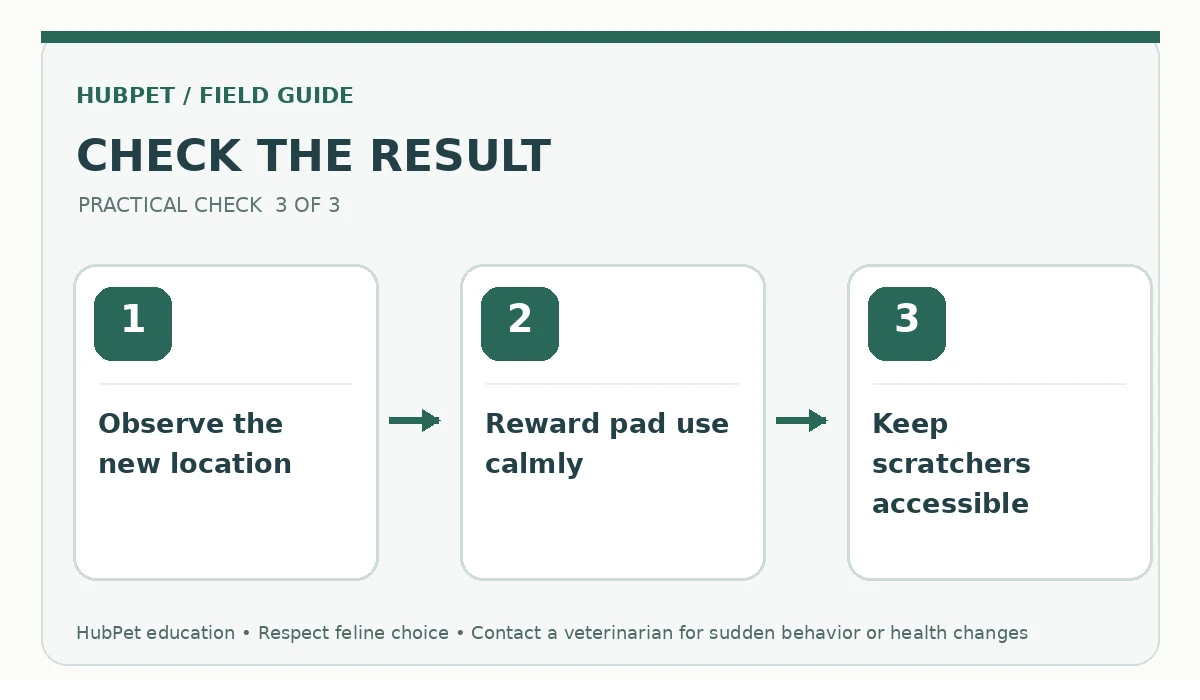
Use short play sessions around the pad and reward any spontaneous scratching on it. A toy moved across the scratcher can draw the cat to the area, but put away string toys after supervised play. Some adult cats respond to catnip, while many kittens do not; catnip is optional rather than the foundation of training. Offer a second material if the cat sniffs the pad once and walks away. Praising the correct behavior is more useful than repeatedly correcting carpet scratching from another room. Expect to adjust the pad, not the cat’s natural need to scratch.
Keep floor scratchers clean and stable
Cardboard pads eventually shed pieces and may become too torn to use safely. Remove loose staples, backing films, sharp edges and detached decorations as soon as they appear. A fabric mat should stay flat after cleaning and not develop curled corners that catch paws. Replace damaged pads rather than letting the cat chew large pieces of substrate. Place the pad away from wet floors and routine cleaning chemicals. For a multi-cat household, offer several pads so one animal cannot monopolize the only acceptable surface. A stable alternative encourages confidence and makes progress easier to measure.
Handle scratching by doors and stair edges carefully
Cats often mark or stretch along busy household routes. If the damaged carpet sits at a threshold, a nearby wall scratcher may help, but a floor-level pad is still worth offering. Never cover stair treads with a slick mat; a slippery repair can be more dangerous than cosmetic damage. On stairs, choose a stable appropriate outlet on a landing instead of obstructing the steps. Repair snagged fibers that could form loops around a claw. If the cat scratches only when a door closes, investigate access frustration rather than focusing exclusively on carpet texture.
Check whether another problem is masquerading as scratching
Watch for a cat crouching beside the litter tray, visiting the box repeatedly or straining. Those are not ordinary rug-scratching training issues and can need prompt veterinary care. Similarly, a sudden increase in scratching paired with hiding, irritability or hair loss warrants professional advice. Do not blame a cat for distress signals. Where several cats share one hallway, observe whether one animal blocks access to resources. Environmental changes may reduce conflict better than a stronger furniture deterrent. The right solution begins by separating normal marking from fear, pain or toileting concerns.
Evaluate progress with a simple floor map
Mark the spots that were damaged before the trial, then count where the cat scratches during a few ordinary days. Note whether the new pad is available, whether the rug was protected and whether anyone rewarded scratcher use. Compare behavior rather than relying on a single quiet afternoon. If the cat moves to a new section of carpet, you may need another pad or a different angle. Once use of the alternative becomes regular, reduce the temporary floor protection gradually while keeping the scratcher in a practical location. There is no universal schedule for this change.
Choose the long-term setup, not a one-time trick
A good long-term plan gives the cat safe horizontal scratching choices in the same rooms where it rests and travels. Keep at least one vertical alternative too, since many cats enjoy both. Trim claws when appropriate and when the kitten accepts handling; nail care can limit accidental snagging but does not eliminate scratching motivation. If the surface is expensive or fragile, consult a flooring professional about suitable protection rather than applying untested sprays. The practical win is a cat using a comfortable, replaceable pad while the rug stays usable.
How We Research
Our editorial review compared veterinary and animal-welfare guidance on feline scratching behavior, scratching-surface preferences, safe environmental redirection, household stress signals, and gentle training. We used published feline guidance as the basis for practical behavior guidance and contrasted it with the limitations of quick-fix marketing claims. We did not run controlled behavior trials, conduct product tests or endorse brands. Surface preference, behavior and household arrangements vary by cat and home; ask a veterinarian about persistent behavior changes. We last reviewed the sources on October 27, 2026. Read about our editorial process on the About HubPet page.
Sources
Ohio State Indoor Pet Initiative: Scratching and suitable surfaces. Accessed October 27, 2026.
Cornell Feline Health Center: Destructive behavior in cats. Accessed October 27, 2026.
ASPCA: Destructive scratching. Accessed October 27, 2026.
San Francisco SPCA: Scratching posts and preferences. Accessed October 27, 2026.
A floor-level scratch can match the cat’s preferred body position and fabric texture. Offer a stable horizontal pad near the chosen carpet instead of relying only on a tall post.
Trimming can reduce snagging and damage, but it does not remove the natural motivation to stretch, mark and maintain claws. Continue providing suitable surfaces.
Be cautious: adhesives may damage fibers or leave residue. Follow product instructions and patch-test first; a stable protective mat may be safer for the material.
Observe whether the behavior relates to elimination, box access or substrate preference. Straining, frequent unproductive visits or toileting changes need veterinary advice.
Start near each heavily used target area and watch whether other cats block access. Multiple conveniently placed pads often work better than one hidden in a spare room.