
Stainless-steel cat food bowls are popular because they are light, washable, and widely available. But a polished metal label does not tell you whether the rim suits your cat, whether the dish slides on tile, or whether the weld and base stay intact after repeated cleaning. A good bowl is one your cat uses comfortably and that you can keep sanitary. Read our veterinary information disclaimer for individual health questions.
This guide compares fit and daily ownership rather than inventing a winner between stainless steel, ceramic, and glass. Cornell advises keeping clean food and water dishes away from the litter box. FDA and CDC also emphasize routine washing; those evidence-based basics matter more than broad claims that one bowl material prevents feline illness.
Watch how your cat eats now
Set a familiar meal on a stable dish and observe without hovering. Does the cat lift pieces onto the floor, pause at the edge, or walk around to reach the last bites? Those behaviors have multiple explanations. Note the physical layout before assigning a cause such as the often-advertised concept of whisker fatigue.
A shallow wide dish may simply offer easier access for some cats, especially for soft food spread across the base. Any sudden appetite change, pain when eating, or unexplained weight loss needs veterinary assessment. A new bowl cannot replace that evaluation.
Choose diameter and depth for the meal
Measure the edible area rather than the outer lip. Dry kibble piles differently from a single serving of wet food; a broad shallow base can distribute soft food so the cat does not chase it into a steep corner. High-sided dishes may contain scatter but can complicate access.
For older cats or cats with mobility challenges, compare placement and approach as well as dish depth. Do not buy an elevated bowl on the assumption that it treats arthritis or reflux. Discuss any accommodation for a diagnosed condition with a veterinarian.
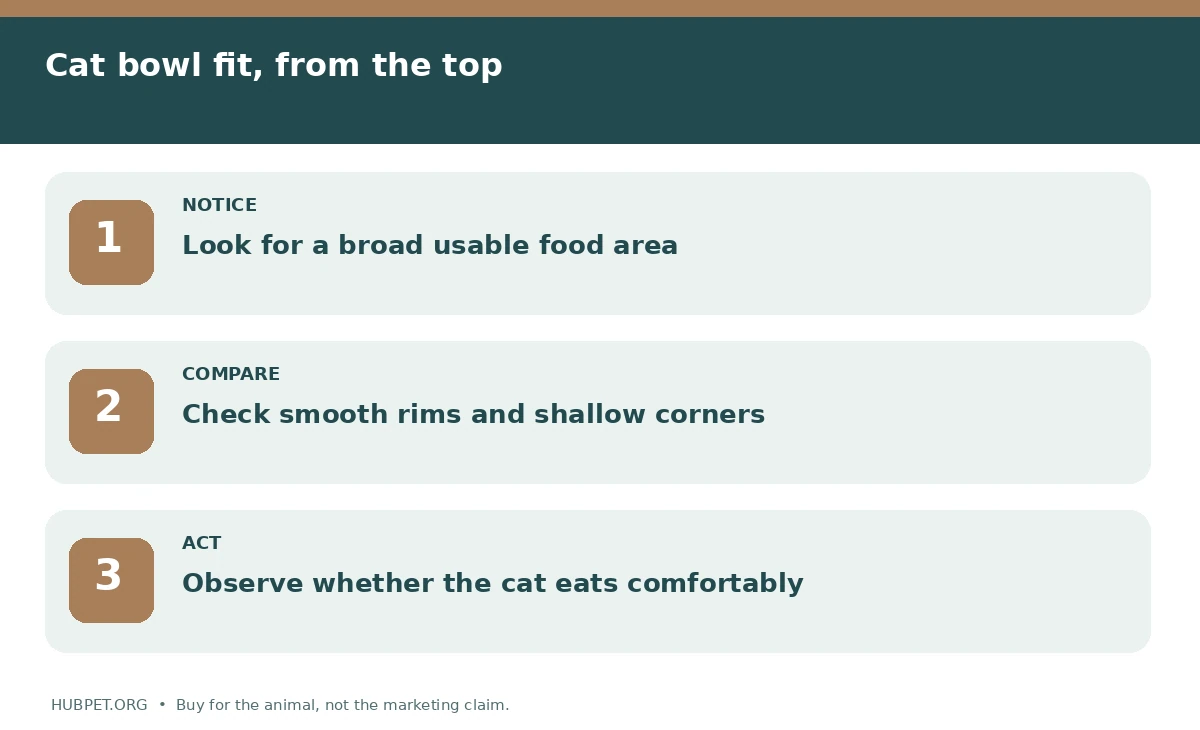
Inspect steel edges and construction
Run a clean finger carefully around the unfilled rim and underside to check for burrs, rough folds, and sharp seams. The interior should have a smooth finish without exposed joins that trap food. Avoid bowls that arrive with dents, rust spots, peeling coatings, or a sharp rolled lip.
Food-contact stainless steel can be practical, but product listings may give incomplete information about alloy or finish. Treat unsupported claims such as medical-grade or antibacterial as marketing until a seller provides credible test evidence. A simple smooth bowl often makes inspection easier.
Prevent sliding, spinning, and rattling
A low bowl with a broad base may sit securely on some floors and slide on others. Test it empty with gentle pressure, then with water or a small measured food portion. If a detachable silicone ring provides grip, ensure it is firmly attached and cannot become a chewing target.
Some cats dislike a loud metallic clang against tile or a feeding stand. A washable nonslip mat beneath the dish can reduce movement without changing the eating surface. Remove any damaged grips immediately and check that the mat does not introduce a raised tripping edge.
Separate food from fresh water and litter
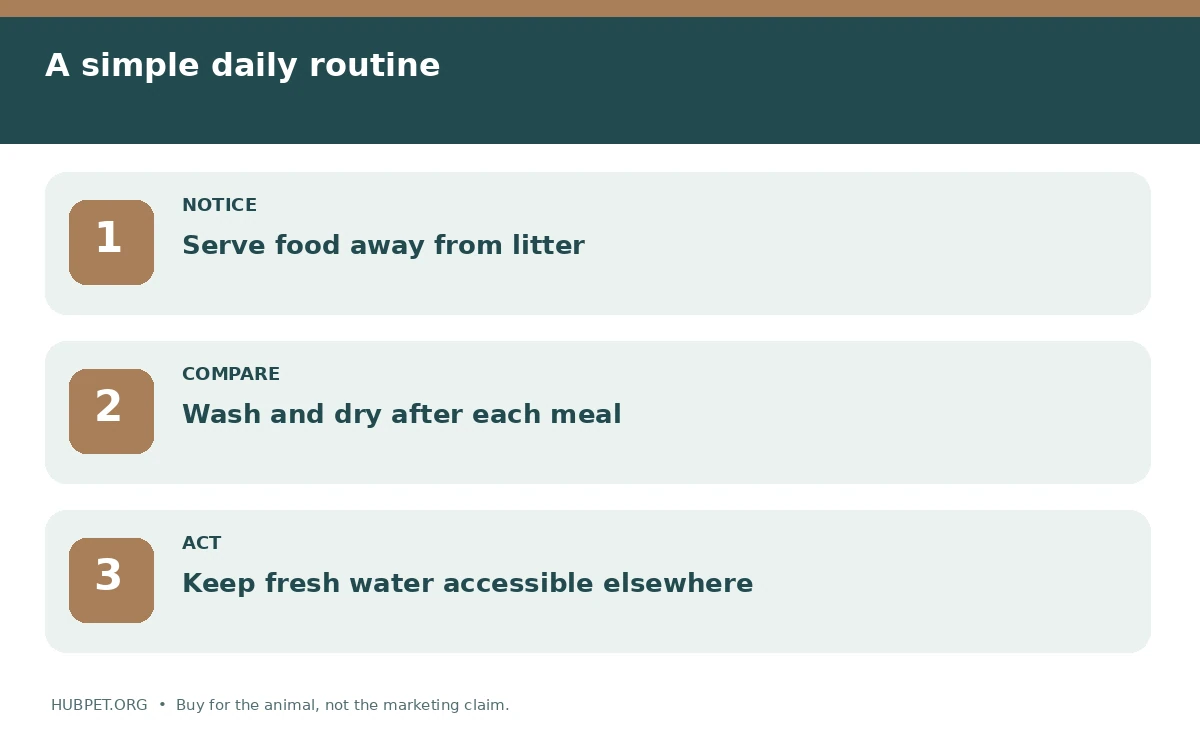
Cornell recommends placing food and water dishes away from the litter box. Many cats also benefit from several accessible water locations. The bowl material alone does not guarantee that your cat will drink enough; hydration depends on access, preferences, diet, and health.
Do not assume a matching two-bowl stand is the best layout. Try food and water in separate convenient positions if the cat avoids one dish. In a multi-cat home, provide enough stations so a shy cat does not have to pass another cat to eat.

Clean daily and inspect the underside
FDA recommends washing and drying pet food bowls after each use. CDC provides guidance for washing hard items with soap and warm water and for using dishwashers when the manufacturer allows it. Stainless steel is not self-sanitizing; visible shine does not prove a bowl is clean.
Lift off removable rings and scrub the underside where crumbs and water gather. Rinse well, dry completely, and check for scratches and rough patches. A second inexpensive dish can make it easier to keep a clean replacement ready for the next meal.
Compare cost by years of use, not branding
Compare rim finish, weight, footprint, and warranty terms rather than choosing by a decorative finish. A heavier dish can resist movement but may be harder for some owners to lift and wash. A thin bowl may bend when dropped, while oversized bowls take more storage space.
Ask whether you can replace a lost grip ring or insert without buying an entire stand. Check actual dimensions and dishwasher compatibility. A higher price or fancy surface treatment does not establish better feline comfort in the absence of direct comparative testing.
Introduce a new bowl without changing food
Put the new dish near the familiar one at a regular mealtime, using the same food portion. Let your cat approach voluntarily. You can offer the same meal in each dish for a brief comparison, accounting for the total ration rather than doubling calories.
Notice where food remains, whether the dish shifts, and whether the cat resumes normal eating. If the cat consistently avoids the new dish, return to the familiar option. Do not withhold food to force acceptance or interpret one preference test as a medical diagnosis.
Use a practical final checklist
Confirm a smooth finish, a comfortable shape, a stable base, and cleaning instructions you will realistically follow. Check the floor location, nearby traffic, and whether each cat has access without conflict. Keep water clean and fresh, and provide space between feeding and toileting resources.
If food refusal, drooling, chewing difficulty, or vomiting persists, contact a veterinarian. The best bowl is not a treatment, and metal composition alone does not solve behavioral or medical problems. A comfortable, repeatable feeding routine is the lasting goal.
How We Research
HubPet reviewed published veterinary, animal-welfare, and public-health guidance relevant to stainless steel cat food bowls. We separated established safety and hygiene recommendations from product features that have not been independently measured. These are desk-researched criteria, not hands-on product tests or professional endorsements. Sources were checked October 26, 2026. See About HubPet and our editorial approach. This information does not replace individualized veterinary care.
Sources
Cornell University College of Veterinary Medicine: Choosing and Caring for Your New Cat. Accessed October 26, 2026.
Cornell University College of Veterinary Medicine: Feeding Your Cat. Accessed October 26, 2026.
U.S. Food and Drug Administration: Proper Storage of Pet Food and Treats. Accessed October 26, 2026.
Centers for Disease Control and Prevention: Cleaning and Disinfecting Pet Supplies (2026). Accessed October 26, 2026.
No single material fits every cat. Consider smooth edges, usable depth, stability, and cleaning access.
There is no basis to promise that metal alone solves feeding discomfort. Try a broad shallow shape if your cat prefers it.
Only if the manufacturer labels it dishwasher-safe; inspect any rings or coatings separately.
FDA recommends washing and drying pet food bowls after every use.
Cornell recommends keeping food and water dishes far from the litter box.